• KGS/USD = 0.01143 0%
  • KZT/USD = 0.00202 0%
  • TJS/USD = 0.10599 -0.19%
  • UZS/USD = 0.00008 0%
  • TMT/USD = 0.28575 0%
  • KGS/USD = 0.01143 0%
  • KZT/USD = 0.00202 0%
  • TJS/USD = 0.10599 -0.19%
  • UZS/USD = 0.00008 0%
  • TMT/USD = 0.28575 0%
  • KGS/USD = 0.01143 0%
  • KZT/USD = 0.00202 0%
  • TJS/USD = 0.10599 -0.19%
  • UZS/USD = 0.00008 0%
  • TMT/USD = 0.28575 0%
  • KGS/USD = 0.01143 0%
  • KZT/USD = 0.00202 0%
  • TJS/USD = 0.10599 -0.19%
  • UZS/USD = 0.00008 0%
  • TMT/USD = 0.28575 0%
  • KGS/USD = 0.01143 0%
  • KZT/USD = 0.00202 0%
  • TJS/USD = 0.10599 -0.19%
  • UZS/USD = 0.00008 0%
  • TMT/USD = 0.28575 0%
  • KGS/USD = 0.01143 0%
  • KZT/USD = 0.00202 0%
  • TJS/USD = 0.10599 -0.19%
  • UZS/USD = 0.00008 0%
  • TMT/USD = 0.28575 0%
  • KGS/USD = 0.01143 0%
  • KZT/USD = 0.00202 0%
  • TJS/USD = 0.10599 -0.19%
  • UZS/USD = 0.00008 0%
  • TMT/USD = 0.28575 0%
  • KGS/USD = 0.01143 0%
  • KZT/USD = 0.00202 0%
  • TJS/USD = 0.10599 -0.19%
  • UZS/USD = 0.00008 0%
  • TMT/USD = 0.28575 0%
15 February 2026

Viewing results 19 - 24 of 964

Uzbekistan Clarifies Nuclear Plant Timeline After Reports of Delay

Uzbekistan’s plans to begin construction of its first nuclear power plant have come under renewed scrutiny following the publication of a draft state program suggesting the start of work could be postponed until December 2026. The draft made public on the regulation.adliya.uz portal prompted widespread media speculation. According to the document, Uzbekistan intends to spend 2026 negotiating, signing, and registering an additional agreement with Russia’s state nuclear corporation, Rosatom. The proposed agreement would revise the configuration of the integrated nuclear power plant project, combining a large-capacity VVER-1000 reactor with small modular RITM-200N reactors. Some outlets interpreted this language as a sign that the pouring of the first concrete might not occur until the end of 2026. In response, the Uzatom nuclear energy agency issued an official clarification, stating that previously announced timelines remain unchanged. In a statement released after the draft’s publication, Uzatom stressed that the document does not stipulate any postponement of construction. The agency noted that the December 2026 date reflects a conservative planning scenario in which all preparatory and licensing procedures are finalized by that time. Uzatom emphasized its adherence to national legislation and international standards on nuclear and radiation safety. It added that the first concrete pouring, considered a key milestone, will only proceed after receiving all necessary permits and approvals from relevant authorities. “We clearly understand the level of responsibility involved in this stage,” the agency said, adding that work on the project is advancing across all areas. The clarification comes amid sustained public interest in Uzbekistan’s nuclear energy plans. Speaking at World Atomic Week in Moscow in September last year, Uzatom Director Azim Akhmedkhadjaev stated that Uzbekistan aims to fully commission a high-capacity nuclear power plant by 2035. According to him, the first small modular reactor in the Jizzakh region is expected to begin operations in 2029, with a second unit following six months later. The first reactor of the large-scale facility is scheduled to come online in 2033, with full capacity reached by 2035, though Akhmedkhadjaev noted that final timelines are contingent on the completion of contractual agreements. Uzatom said it will continue to provide timely updates as the project progresses through its key phases.

Uzbekistan’s Central Bank Reaffirms Commitment to Reforms and Free Exchange Rate

Uzbekistan’s central bank has reiterated that the som’s exchange rate will be left to market forces, arguing that a 'free float' is key to its inflation-targeting framework. In a statement released this month, the Central Bank of Uzbekistan said the exchange rate should be treated as an indicator, not a policy target. Attempts to hold the currency at a chosen point, it warned, can build pressure that later unwinds in sharper moves.  Any foreign exchange operations, it added, would be aimed at smoothing excessive, short-term volatility, rather than steering the market. The stance continues a shift that began with the 2017 liberalisation of the currency market, which gave more access to foreign exchange, and narrowed the gap between official and black market rates. Recent fluctuations in the som have been closely watched. An earlier report on why the som has held up at times pointed to remittance inflows, export earnings and a tighter domestic monetary stance. Uzbekistan adopted inflation targeting in 2020, using the policy rate as its main lever. The central bank has kept the key rate at 14% since December 2025. It is due to review it again on January 28. In its monetary policy guidelines for 2026–2028, the bank projects headline inflation easing to about 7% by the end of 2026 and returning to a 5% medium-term target in 2027, assuming monetary conditions remain restrictive, and external price pressures fade. A floating rate can cushion swings in commodity prices, remittances and trading partner demand. But it also passes currency shifts more directly into the cost of dollar-priced imports, from consumer goods to industrial inputs. That risk is heightened when energy shortages and higher fuel costs feed broader price pressures, as described in coverage of the region’s growing energy deficit. International lenders have broadly backed Uzbekistan’s direction, while urging deeper reforms. In late 2025, the IMF welcomed greater exchange-rate flexibility and called for continued structural changes, according to its latest review.

Analysis: Three Decades of Parliamentary Reform in Central Asia — and What Changed

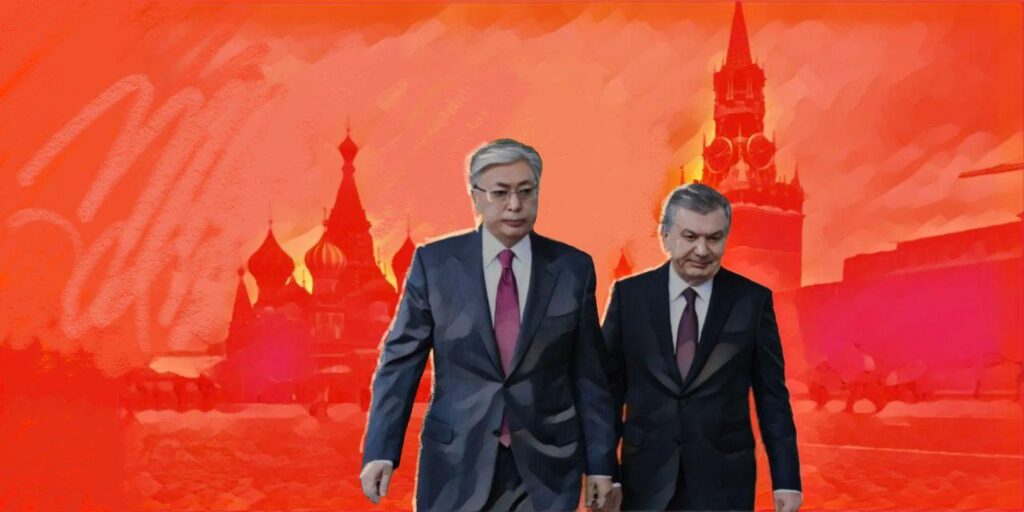
Kazakhstan’s President Kassym-Jomart Tokayev announced his reform plans on January 20, including structural changes to the government. Arguably, one of the least consequential of those changes is replacing the current bicameral parliament with a unicameral parliament. Across Central Asia, over the last 35 years, parliaments have repeatedly switched from unicameral to bicameral parliaments, or vice versa, the number of deputies has increased and decreased, and in some cases, parallel bodies have come into existence and later disappeared. Kazakhstan When the Soviet Union collapsed in late 1991, each of the former republics, including the Central Asian countries of Kazakhstan, Kyrgyzstan, Tajikistan, Turkmenistan, and Uzbekistan, had a unicameral, republican Supreme Soviet elected in 1990. These Supreme Soviets continued functioning after independence until 1994, and in the case of Kyrgyzstan and Tajikistan, until 1995. In Kazakhstan, in December 1993, the majority of the 360 deputies in the Supreme Soviet voted to dissolve the body. In March 1994, there were elections to the new parliament (Supreme Kenges) that had 177 seats. During the tumultuous year of 1995, the parliament was dissolved by then-President Nursultan Nazarbayev, who ruled by decree until snap parliamentary elections in December of that year. However, on August 29, 1995, voters approved a new constitution in a national referendum. That constitution created a bicameral parliament with 67 deputies in the Mazhilis, the lower house, and 50 deputies in the Senate, 10 of them directly appointed by the president. Deputies to the Mazhilis were chosen in popular elections. Senators were chosen in indirect elections involving deputies from local, provincial, and municipal councils of large cities. In the snap parliamentary elections of October 1999, 10 seats were added and chosen by party lists, while the original 67 continued to be contested in single-mandate districts. That structure lasted until 2007. Constitutional amendments adopted in late May that year increased the number of seats in the Mazhilis to 107, of which 98 were to be chosen by party lists. Nazarbayev’s Nur-Otan party won all 98 of the party list seats in the August elections. The remaining nine representatives came from the Assembly of Peoples of Kazakhstan, a group representing the various ethnic groups in Kazakhstan that Nazarbayev created in 1995. Eight additional members of the Assembly were given seats in the Senate. The Assembly held its own elections to fill those seats. Kazakhstan conducted a constitutional referendum in June 2022, in part aimed at mollifying discontent that lingered from the mass unrest in early January that year, which left 238 people dead. Some amendments stripped away powers in the executive branch that had accumulated during the 28 years Nazarbayev was president, and more power was given to parliament. Another amendment removed the nine Mazhilis seats reserved for members of the Assembly of Peoples of Kazakhstan. One amendment reduced the number of Senate members appointed by the president back to 10, after it had been raised to 15 under a 2007 amendment. Kyrgyzstan A referendum in Kyrgyzstan on constitutional amendments in October 1994 created a bicameral...

Astana and Tashkent Engage Washington’s Central Asia Vector

On January 22 at the World Economic Forum in Davos, Kazakhstan’s President Kassym-Jomart Tokayev and Uzbekistan’s President Shavkat Mirziyoyev signed President Donald Trump’s new Board of Peace charter. The document matters less than what their participation signifies: recognized access to the White House and a willingness to be publicly associated with a U.S.-led initiative. This is all the more significant as Washington’s relations with several long-standing partners have recently become more fraught and publicly contested. The Central Asian response is part of that story. Their participation indicates that the Trump White House regards them as interlocutors of consequence, and that both Central Asian capitals are embracing that status. On December 1, Washington assumed the G20 presidency for 2026 and set three priorities: limiting regulatory burdens, strengthening affordable and secure energy supply chains, and advancing technology and innovation. It has also scheduled the leaders’ summit for December 14–15, 2026, in the Miami area. On December 23, Trump said that he was inviting Tokayev and Mirziyoyev to attend as guests. That invitation places Kazakhstan and Uzbekistan inside a host-defined agenda whose working tracks overlap with their strongest external bargaining assets, including energy, critical minerals potential, and transport connectivity. Trump publicly tied the invitations to discussions of peace, trade, and cooperation, which is in line with his subsequent Board of Peace invitations. Diplomatic Logic and Multi-Vectorism It is worthwhile situating these developments in the context of Central Asian cooperation, which Kazakhstan and Uzbekistan have driven as the regional core. At the August 2024 Consultative Meeting in Astana, all five leaders signed a Roadmap for the development of regional cooperation for 2025–2027, and adopted a “Central Asia 2040” conceptual framework. Tokayev and Mirziyoyev referenced their 2022 allied-relations agreement and announced plans to adopt a strategic partnership program through 2034, including large-scale joint economic and energy projects. Moscow’s preoccupation with the war in Ukraine has widened the room for maneuver by other external actors, and Central Asian capitals have pursued these opportunities selectively. For example, the EU’s then foreign-policy chief Josep Borrell visited Kazakhstan and Kyrgyzstan in early August 2024, Japan has pursued its “Central Asia plus Japan” line as a counterweight to China’s influence, and Azerbaijan has been building an energy bridge between Central Asia and Europe via the South Caucasus with Kazakhstan and Uzbekistan. Washington’s main channel into this complex is the C5+1, and the current U.S. emphasis is to create routines that survive individual summits. The U.S. Special Envoy for South and Central Asian Affairs Sergio Gor and Deputy Secretary of State Christopher Landau travelled to Kazakhstan and Uzbekistan in October 2025 ahead of the Washington summit that Trump hosted the following month for the five leaders. Such formats can concentrate attention on the implementation of standardized procurement procedures and regularized dispute resolution that new supply-chain corridors require for interoperable paperwork and predictable customs treatment. Kyrgyzstan is scheduled to host the second B5+1 forum (the business counterpart to C5+1) on February 4–5, 2026. This has already been prepared by a joint briefing...

Kazakhstan, Uzbekistan, and Azerbaijan Join Trump-Initiated Board of Peace

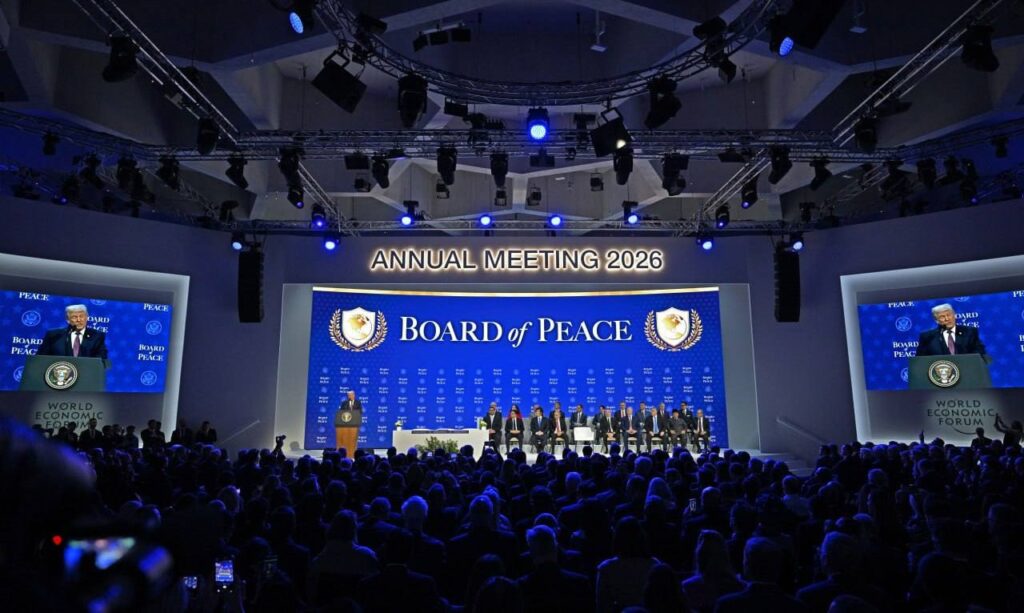
A new international organization, the Board of Peace, was formally established yesterday on the initiative of U.S. President Donald Trump. The charter for the board was signed on the sidelines of the World Economic Forum in Davos by representatives from 19 countries. Joining Kazakhstan and Uzbekistan as founding signatories, the other parties are Argentina, Armenia, Azerbaijan, Bahrain, Bulgaria, Hungary, Indonesia, Jordan, Qatar, Saudi Arabia, Turkey, the United Arab Emirates, Morocco, Mongolia, Pakistan, Kosovo, and Vietnam. The United States is not counted among the 19 signatories, acting instead as the initiative’s convener and chair. The Board of Peace is designed as a consultative platform rather than a treaty-based organization, with no enforcement powers and voluntary participation by member states. Following the signing, a comprehensive development plan for the Gaza Strip was unveiled, which envisions transforming the enclave into a regional economic hub by 2035, with a projected GDP of over $10 billion under the proposal. The plan includes restoring water, electricity, sewage systems, and hospitals, creating jobs, and developing coastal tourism. The concept was presented by entrepreneur Jared Kushner, Trump’s son-in-law. Kushner will serve on the Board of Peace’s executive board, alongside U.S. Secretary of State Marco Rubio, Special Envoy Steve Witkoff, World Bank President Ajay Banga, and former British Prime Minister Tony Blair, among others. The inclusion of Kazakhstan and Uzbekistan, the two largest economies in Central Asia, as founding members underscores their growing role in global diplomacy. Azerbaijan, which has recently expressed interest in joining the Central Asia-focused C5 regional format, also signed the charter. Separately, observers have begun referring to the growing cooperation between Central Asia and Azerbaijan as the “C6,” which could pave the way for greater collaboration on the development of the Trans-Caspian International Transport Route, including the Zangezur Corridor through Armenia. [caption id="attachment_42672" align="aligncenter" width="1280"] Image: president.uz[/caption] Uzbekistan’s participation reflects Tashkent’s increasingly active multi-vector foreign policy under President Shavkat Mirziyoyev, which has sought to expand the country’s diplomatic footprint beyond its immediate neighborhood. In recent years, Uzbekistan has stepped up engagement with the United States, the European Union, and the Middle East, while positioning itself as a pragmatic regional actor on development, connectivity, and post-conflict reconstruction initiatives. During the signing ceremony, President Kassym-Jomart Tokayev of Kazakhstan and Trump reportedly had a brief but cordial exchange. In a statement to the press, Ruslan Zheldibay, spokesperson for the Kazakh president, said Tokayev pointed out that Kazakhstan’s accession to the Abraham Accords was listed as item 177 in a document titled 365 Victories of President Donald Trump in 365 Days, distributed at the Davos Forum. Tokayev also wished Trump success in pursuing a “common sense” domestic policy. Trump, in turn, thanked Tokayev for supporting the Board of Peace initiative. [caption id="attachment_42673" align="aligncenter" width="2560"] Image: Akorda.kz[/caption] The press service of Akorda, the presidential residence of Kazakhstan, later clarified that joining the Board of Peace is based on a sovereign decision and entails a standard three-year term. Participation does not require a financial contribution, though the charter allows member states...

Central Asia Launches Regional Electricity Market with World Bank Support

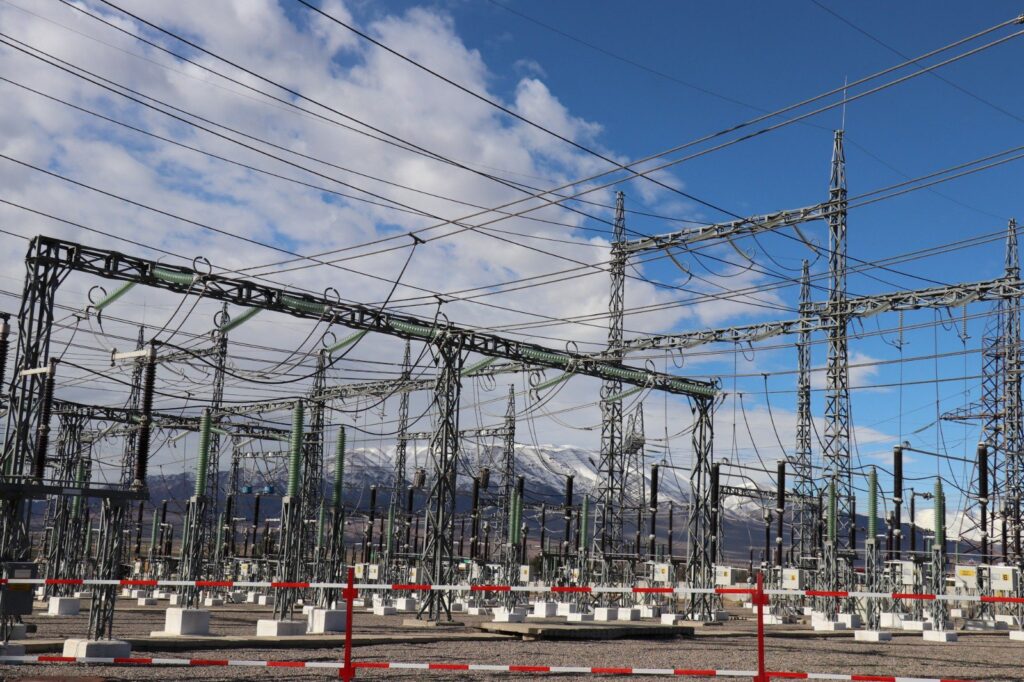
On January 22, the World Bank’s Board of Executive Directors approved the 10-year Regional Electricity Market Interconnectivity and Trade (REMIT) Program, an ambitious initiative to establish Central Asia’s first regional electricity market. The program aims to boost cross-border electricity trade, expand transmission capacity, and lay the foundation for large-scale renewable energy integration across the region. Electricity demand in Central Asia is projected to triple by 2050 under a business-as-usual scenario. Yet electricity trade in the region currently accounts for only 3% of total demand. The REMIT Program seeks to harness Central Asia’s diverse and complementary energy resources: hydropower in Kyrgyzstan and Tajikistan, thermal power from coal and natural gas in Kazakhstan, Turkmenistan, and Uzbekistan, and the region’s rapidly expanding solar and wind potential. Over the next decade, REMIT aims to: Increase regional electricity trade to at least 15,000 GWh annually, enough to supply millions of consumers Triple regional transmission capacity to 16 GW Enable up to 9 GW of clean energy integration The initiative is designed to enhance regional energy security, reduce power outages, lower electricity costs, and promote a more resilient and interconnected grid system. Total indicative financing for the program is $1.018 billion, to be deployed in three phases. These funds will support the creation and operation of a regional energy market, boost transmission infrastructure, introduce digital technologies to improve grid reliability, and strengthen regional energy institutions and coordination mechanisms. Investments are also expected to generate both construction-related employment and high-skilled jobs tied to market operations. In the program’s first phase, Kyrgyzstan, Tajikistan, Uzbekistan, and the Central Asian Countries’ Coordinating Dispatch Center (CDC) Energia will benefit from grants and concessional financing totaling $143.2 million. This comprises $140 million from the World Bank’s International Development Association (IDA) and $3.2 million from the Central Asia Water and Energy Program (CAWEP). “The REMIT Program supports Central Asian countries’ ambition to deepen energy cooperation and create a regional electricity market,” said Najy Benhassine, World Bank Regional Director for Central Asia. “This will enable more efficient use of energy resources, including cross-border deployment of clean energy, improve access to reliable and affordable electricity, and support jobs. By 2050, stronger regional connectivity could generate up to $15 billion in economic benefits.” Charles Cormier, World Bank Regional Infrastructure Director for Europe and Central Asia, added that REMIT will advance energy security and unlock private sector investment. “The first phase alone is expected to enable about 900 MW of new clean energy capacity, leveraging $700 million in private investment. This will pave the way for a more resilient and interconnected power system across this dynamic region,” he said. CDC Energia will lead the implementation of market and institutional activities, while national transmission companies will be responsible for infrastructure investments.