• KGS/USD = 0.01144 0%
  • KZT/USD = 0.00206 0%
  • TJS/USD = 0.10699 -0.19%
  • UZS/USD = 0.00008 0%
  • TMT/USD = 0.28571 0%
  • KGS/USD = 0.01144 0%
  • KZT/USD = 0.00206 0%
  • TJS/USD = 0.10699 -0.19%
  • UZS/USD = 0.00008 0%
  • TMT/USD = 0.28571 0%
  • KGS/USD = 0.01144 0%
  • KZT/USD = 0.00206 0%
  • TJS/USD = 0.10699 -0.19%
  • UZS/USD = 0.00008 0%
  • TMT/USD = 0.28571 0%
  • KGS/USD = 0.01144 0%
  • KZT/USD = 0.00206 0%
  • TJS/USD = 0.10699 -0.19%
  • UZS/USD = 0.00008 0%
  • TMT/USD = 0.28571 0%
  • KGS/USD = 0.01144 0%
  • KZT/USD = 0.00206 0%
  • TJS/USD = 0.10699 -0.19%
  • UZS/USD = 0.00008 0%
  • TMT/USD = 0.28571 0%
  • KGS/USD = 0.01144 0%
  • KZT/USD = 0.00206 0%
  • TJS/USD = 0.10699 -0.19%
  • UZS/USD = 0.00008 0%
  • TMT/USD = 0.28571 0%
  • KGS/USD = 0.01144 0%
  • KZT/USD = 0.00206 0%
  • TJS/USD = 0.10699 -0.19%
  • UZS/USD = 0.00008 0%
  • TMT/USD = 0.28571 0%
  • KGS/USD = 0.01144 0%
  • KZT/USD = 0.00206 0%
  • TJS/USD = 0.10699 -0.19%
  • UZS/USD = 0.00008 0%
  • TMT/USD = 0.28571 0%

Viewing results 13 - 18 of 757

Tashkent Signs $3.5 Billion in China Deals for Infrastructure and Exports

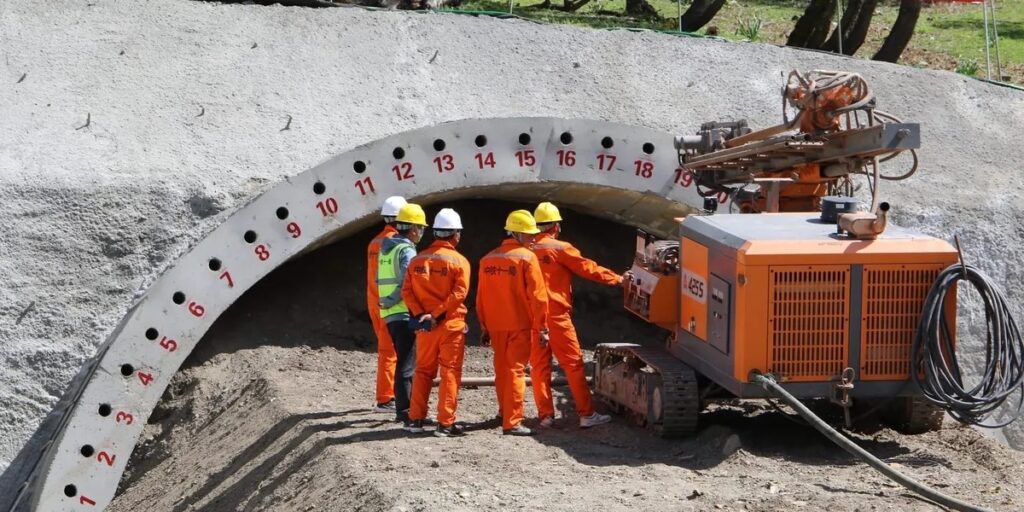
The third Uzbekistan-China Interregional Forum, held in the Chinese city of Xi’an, concluded with Tashkent signing more than $3.5 billion in investment and export agreements with Chinese partners, according to the Tashkent city administration. The agreements include $3.35 billion in investment projects and $156 million in export contracts spanning infrastructure, transport, construction, environmental technology, and industrial production. Officials said the deals are aimed at modernizing the Uzbek capital’s urban infrastructure and improving transport systems, public spaces, environmental services, and industrial capacity. The forum comes as China’s economic role in Uzbekistan continues to expand. According to Uzbekistan’s Dunyo news agency, speakers at the Xi’an forum said bilateral trade reached $18 billion last year, while Chinese investment in Uzbekistan totaled $17 billion. China has become one of Uzbekistan’s most important economic partners, with cooperation expanding from trade and construction into transport, energy, industry, and urban development. Dunyo’s report on the forum also presented the Xi’an meeting as part of a broader push to build direct ties between Uzbek regions and Chinese provinces, rather than limiting cooperation to central government agreements. Among the largest planned projects are a $1 billion initiative to develop Bus Rapid Transit, known as BRT, overpasses, and road infrastructure under the EPC+F financing model, and another $1 billion package focused on transport and social infrastructure projects. Additional agreements include $500 million for modern residential complexes in renovation zones and $400 million for drainage, irrigation, and stormwater systems. The city administration said financing is expected to come from Chinese partners without the direct use of Uzbekistan’s state budget or sovereign guarantees, although repayment would still depend on future municipal revenue streams. The projects are planned under the Engineering, Procurement, Construction, and Financing model, known as EPC+F. The financing structure is significant as many of the largest projects are municipal rather than national in scope. It allows Tashkent to pursue major road, drainage, and transport upgrades while presenting the deals as externally financed. Nevertheless, projects of this type can still create long-term obligations if future city revenues are used to cover repayments. The forum also focused on the development of Tashkent’s Yangi Avlod special industrial zone. Agreements worth $130 million were signed with Chinese companies, including Jwise, Zhongke Honghu, CAS Cloud, and UMGG. The projects are expected to support manufacturing infrastructure, digital management systems, and high-tech industrial production in the capital. Yangi Avlod has been promoted as one of Tashkent’s main industrial expansion sites. According to the zone’s official website, it is located in the Yangihayot district and is planned as a 764.5-hectare industrial area with logistics, warehouse, administrative, and commercial infrastructure. Other agreements include investments in decorative stone manufacturing, ceramic production, and smart waste-sorting equipment. Export contracts signed during the forum included three agreements worth a combined $150 million for jewelry exports, as well as deals covering cotton yarn and silver concentrate supplies. Separately, during the official visit to China, Tashkent Mayor Shavkat Umurzakov met with executives from China Railway Construction Corporation to discuss urban renovation projects, transport infrastructure, and...

Top U.S. State Department Official Travels to Turkmenistan, Uzbekistan

Sarah B. Rogers, a senior official at the United States Department of State whose job includes engaging foreign publics through educational, cultural, and other means, will visit Turkmenistan and Uzbekistan as part of a trip to Central Asia and South Asia. Rogers, the under secretary of state for public diplomacy and public affairs, will also visit India and Nepal during the May 27-June 10 tour, according to the State Department. President Donald Trump nominated Rogers, a lawyer, to the post early last year and she was sworn in on October 10, 2025. The president has since nominated her to head the U.S Agency for Global Media, a federal agency tasked with disseminating information to international audiences that has been in turmoil since early in Trump’s second term. If confirmed, Rogers would keep her current job while also running the agency. The Trump administration sharply scaled back the operations of the global media agency, which oversees Voice of America and other U.S.-funded outlets, as part of a broader reduction in funding for U.S. aid projects around the world. Central Asia was among the affected regions where some U.S. funding was withdrawn, even as Washington ramped up economic and diplomatic initiatives with governments in that region. U.S. administration officials have alleged that the global media agency was vulnerable to political bias and management, though supporters said it played a valuable role in disseminating information in countries led by authoritarian governments. Lawsuits and court rulings have slowed the push to dismantle the agency. In her role as under secretary, Rogers has criticized what she calls censorship in Europe, saying speech regulation there is placing unfair restrictions on U.S. tech companies and undermining democracy. Opponents say she is seeking common cause with ideological allies of the Trump administration in Europe. “Truth-telling and censorship circumvention, including in closed societies, are critical causes for me,” Rogers said after her March nomination to lead the U.S. Agency for Global Media.

Opinion: Silk Seven or the OTS? Central Asia May Not Have to Choose

A new proposal circulating in Washington – the Silk Seven Plus (S7+) initiative – aims to reshape Central Asia by linking its five post-Soviet states with Afghanistan and Pakistan into an integrated economic region. Azerbaijan is also seen as a potential addition. The idea, advanced by the New Lines Institute for Strategy and Policy, is straightforward: connect landlocked Central Asia to the Black Sea and Arabian Sea through new trade corridors. On paper, the bloc looks compelling. The seven countries form a contiguous zone in the heart of Eurasia, potentially turning geography from a constraint to an advantage. “Central Asia needs an organization built by Central Asian states and for Central Asian states,” said Justin Burke, a resident senior fellow at the New Lines Institute, at a recent event in Washington. “If Central Asia can speak with one voice rather than five different voices, that will make it a more reliable investment destination.” There are signs of momentum. Kazakhstan’s President Kassym-Jomart Tokayev and Uzbekistan’s President Shavkat Mirziyoyev made back-to-back visits to Pakistan earlier this year, highlighting regional connectivity. Proponents argue that if Afghanistan stabilizes, the Silk Seven could become a formidable cluster. But that is a big “if.” It also raises a deeper question: why construct a new, geographically convenient bloc when an existing organization – the Organization of Turkic States (OTS)—already offers something deeper: shared language, history, and identity? While the Silk Seven spans broadly Muslim-majority countries, it is linguistically and culturally diverse. The grouping spans Turkic-speaking Central Asia, Persian-speaking Tajikistan, and Indo-Aryan Pakistan. ASEAN offers a cautionary example. Despite decades of cooperation, its religious, linguistic, and geopolitical diversity – combined with consensus-based decision-making – has often prevented it from speaking with one voice, particularly on China. In The Clash of Civilizations, Samuel Huntington wrote that when ASEAN was created in 1967 by Indonesia, Malaysia, the Philippines, Singapore, and Thailand, it was an organization of “one Sinic, one Buddhist, one Christian, and two Muslim member states.” Such multicivilizational regional organizations have limits, he said. The Silk Seven risks similar limitations. The OTS, by contrast, rests on a narrower but deeper foundation: its core members—Azerbaijan, Kazakhstan, Kyrgyzstan, Turkey, and Uzbekistan—share closely related languages and overlapping historical experiences. Tucked away in the eight-page document issued after the informal OTS summit earlier this month was a revealing signal of intent: clauses dedicated to cataloguing Turkic cultural heritage, promoting youth engagement through Khiva’s designation as the 2026 Youth Capital, and launching a “Turkic Heritage” digital platform. Together, they show that the OTS is actively building a shared cultural space. Yet even as members emphasize common heritage, differences remain over how far the organization should evolve politically. Kazakhstan’s President Kassym-Jomart Tokayev, the summit host, stressed in his remarks that “the Organization of Turkic States is neither a geopolitical project nor a military organization,” but rather “a unique platform” for cooperation across trade, technology, culture, and humanitarian ties. Azerbaijan’s President Ilham Aliyev struck a more ambitious note, saying that “the Turkic world must grow into one of the influential geopolitical centers of the 21st century,” and pledging...

Central Asia Feels Fuel Strain as Kazakhstan Prices Edge Higher

Kazakhstan's fuel market is moving into a new phase after the end of the government freeze on AI-92 gasoline and diesel. Pump prices have risen by small amounts so far. Retail prices are rising cautiously amid growing pressure from neighbors where fuel costs more. Kazakhstan still has some of the cheapest gasoline in the region, but that advantage creates a risk: cheap fuel attracts cross-border demand and makes it harder to fund the refining capacity the country says it needs. On October 16, 2025, Kazakhstan's government introduced a moratorium on further increases in AI-92 gasoline and diesel as part of a wider anti-inflation package. The decision also put the Energy Ministry, the competition agency, and regional authorities in charge of keeping supplies stable. The measure came after inflation and tariff reforms had raised concerns about household costs. The freeze ended on April 1, 2026, but by mid-April, the Energy Ministry was still trying to calm expectations. Kazinform cited Vice Minister of Energy Kaiyrkhan Tutkyshbayev on April 14 as saying most prices had risen mainly by one tenge after the moratorium was lifted, and that the state would not allow a sharp jump. The tone matched what drivers were seeing: a controlled rise rather than a sudden reset. The memory of January 2022, when an LPG price jump helped spark unrest, still hangs over fuel policy. The end of the freeze also fed into inflation expectations. National Bank Governor Timur Suleimenov warned in April that renewed growth in fuel prices and utility tariffs had to be handled cautiously, because a sharp reset could reverse the slowdown in inflation. The National Bank later said reforms in utility tariffs and fuel prices accounted for 32.9% of household inflation expectations in March. That made the fuel moratorium more than a pump-price measure: it was one of the state’s main tools for containing expectations while inflation remained in double digits. An April 9 check by Tengri Auto found that most filling stations in Almaty and the surrounding area were still selling fuel close to the previous price range. Several major networks, however, had already moved AI-92 toward 240 tenge per liter. AI-95, which was not covered by the main freeze, had risen to 328 tenge at one network. A Kazinform market check published on May 25 showed the same gradual pattern. AI-92 was listed at 238-239 tenge per liter in Astana, 238-241 tenge in Almaty, and 224-227 tenge in Shymkent. Diesel stood at 329 tenge in Astana, 330-337 tenge in Almaty, and 332-335 tenge in Shymkent. The figures point to a market that is moving, but still under close control. Fuel is also feeding into Kazakhstan's broader inflation picture. The Bureau of National Statistics put annual inflation at 10.6% in April 2026. Petrol prices were up 16.1% year-on-year and added 0.53 percentage points to annual price growth. Transport as a category added 1.1 percentage points. Fuel is one of the costs households notice most directly, and its effects spread through freight, food distribution, agriculture, taxis,...

Uzbekistan AI and 5G Push in Focus at GSMA M360 Eurasia

Policymakers, telecom executives, investors and technology leaders gathered in Samarkand on May 20-21 for GSMA M360 Eurasia 2026, a regional summit focused on digital transformation, artificial intelligence, connectivity and the future of telecommunications across Eurasia. The event brought together government representatives and industry figures to discuss how countries in Central Asia and neighboring regions can translate expanding mobile connectivity into long-term economic growth. Questions surrounding 5G deployment, AI infrastructure, education, startup ecosystems and digital skills featured prominently throughout the discussions. In an interview with The Times of Central Asia, Tair Ismailov, Strategic Engagement Director at the GSMA, discussed what governments should realistically expect from 5G, the challenges of building AI ecosystems and why education may ultimately determine whether countries benefit from rapid technological change. His comments come as Uzbekistan expands investment in telecommunications, data infrastructure and AI education while positioning itself as one of Central Asia’s fastest-growing digital economies. Why 5G May Matter More to Industry Than Consumers For many governments, 5G deployment has become a symbol of technological progress. Yet Ismailov said the economic benefits differ significantly depending on how countries adopt the technology. “Each country has its own path,” he said. “There are countries that have been pioneers in 5G, for example the U.S., South Korea and China, because they have ecosystems of equipment that they need to produce and drive.” Other countries, he argued, may benefit from moving later. “Sometimes it’s better for developing countries not to be in the avant-garde, but rather to follow examples and learn from existing cases,” he said. According to Ismailov, one of 5G’s most immediate functions is helping networks manage growing internet demand. Digital consumption patterns have changed dramatically over the last decade, he noted. “Back in the day, we never streamed videos, now we take it for granted,” Ismailov said. “Average internet consumption in the region is around 17GB per month per user. These are big numbers.” As traffic increases, networks require greater efficiency and capacity. “For networks simply to cope with this traffic, they need to be more productive, and 5G brings this productivity,” he explained. However, he suggested that the technology’s most significant economic impact may emerge outside consumer markets. “If you look at China and other markets, the biggest 5G benefits are granted to the B2B sector,” Ismailov said. “Businesses benefit from low latency and higher speeds.” Consumers may not immediately notice improvements, he added, but industries relying on automation, logistics, manufacturing or cloud services could see larger gains. “On the consumer side, you might not notice it,” he said, “but when you don’t have it, you start noticing it.” [caption id="attachment_49335" align="aligncenter" width="2560"] Image: TCA/Sadokat Jalolova[/caption] Building AI Requires More Than Data Generation As artificial intelligence expands globally, governments have begun viewing data as a strategic resource. Asked whether Uzbekistan has enough high-quality and accessible data to build a meaningful AI ecosystem, Ismailov argued that generating information is no longer the primary challenge. “I don’t think the question is generating data,” he said. “The question is...

GSMA M360 Eurasia in Samarkand Highlights Push for Faster Digital Growth

Government officials, telecom executives, investors and startup founders gathered in Samarkand this week for GSMA M360 Eurasia 2026, an event focused on one of the region’s biggest questions: how to turn expanding connectivity into long-term economic growth. Held on May 20-21, the summit brought together policymakers and technology companies to discuss artificial intelligence, 5G deployment, digital public services, investment and startup ecosystems. New data released by the GSMA during the event suggests the mobile industry is becoming an increasingly important economic engine across Eurasia. According to the newly published Mobile Economy Eurasia 2026 report, mobile technologies and services generated $270 billion in economic value across Eurasia in 2025, equivalent to 8.1% of regional GDP. That contribution is projected to reach $300 billion by 2030. Opening the event, John Giusti, Chief Regulatory Officer at the GSMA, said decisions made now on regulation, infrastructure and investment will shape Eurasia’s digital future. “The mobile industry is a powerful driver of growth across Eurasia, contributing around $270 billion to the regional economy today and set to reach $300 billion by 2030,” Giusti said during the keynote session. “Hosting M360 Eurasia in Samarkand is especially fitting. Uzbekistan’s rapid digital progress shows how mobile connectivity can modernize public services, boost productivity and improve lives across the region.” The GSMA report estimates that the mobile ecosystem supported approximately 750,000 jobs across Eurasia in 2025. By 2030, mobile’s economic contribution is expected to grow faster than overall regional GDP growth. Yet expansion remains uneven. Despite wider internet coverage, a significant usage gap persists: nearly 29% of people covered by mobile networks across Eurasia still do not use mobile internet. The report identified affordability, digital literacy and trust as the main barriers. [caption id="attachment_49256" align="aligncenter" width="2560"] Image: ТСА, Sadokat Jalolova[/caption] Uzbekistan’s 5G Push and Why 4G Still Matters One of the summit’s recurring themes was 5G deployment. The GSMA forecasts that by 2030, almost 30% of all mobile connections in Eurasia will use 5G technology. Uzbekistan is expected to exceed that average, with more than 40% of connections projected to run on 5G by the end of the decade. Still, Giusti cautioned against focusing exclusively on next-generation networks. In an interview with The Times of Central Asia, he said maintaining investment in existing technologies remains critical. “I think obviously Uzbekistan is leading in terms of 5G deployment,” Giusti said. “But I think it’s very important that we not lose sight of continued investment in 4G.” “We have a lot of 4G devices out there, and I think LTE is offering a huge amount of opportunity for citizens. So, I think it’s this complementary approach of making sure we invest both in the next generation of technology and continue to facilitate the growth of existing technologies.” His comments reflect a broader debate in emerging digital economies: whether governments and operators should prioritize cutting-edge infrastructure or maximize access through already established networks. For many consumers, especially outside major urban centers, 4G remains the primary gateway to digital services. Digital Services Beyond...