• KGS/USD = 0.01143 0%
  • KZT/USD = 0.00205 0%
  • TJS/USD = 0.10724 0.09%
  • UZS/USD = 0.00008 0%
  • TMT/USD = 0.28571 0%
  • KGS/USD = 0.01143 0%
  • KZT/USD = 0.00205 0%
  • TJS/USD = 0.10724 0.09%
  • UZS/USD = 0.00008 0%
  • TMT/USD = 0.28571 0%
  • KGS/USD = 0.01143 0%
  • KZT/USD = 0.00205 0%
  • TJS/USD = 0.10724 0.09%
  • UZS/USD = 0.00008 0%
  • TMT/USD = 0.28571 0%
  • KGS/USD = 0.01143 0%
  • KZT/USD = 0.00205 0%
  • TJS/USD = 0.10724 0.09%
  • UZS/USD = 0.00008 0%
  • TMT/USD = 0.28571 0%
  • KGS/USD = 0.01143 0%
  • KZT/USD = 0.00205 0%
  • TJS/USD = 0.10724 0.09%
  • UZS/USD = 0.00008 0%
  • TMT/USD = 0.28571 0%
  • KGS/USD = 0.01143 0%
  • KZT/USD = 0.00205 0%
  • TJS/USD = 0.10724 0.09%
  • UZS/USD = 0.00008 0%
  • TMT/USD = 0.28571 0%
  • KGS/USD = 0.01143 0%
  • KZT/USD = 0.00205 0%
  • TJS/USD = 0.10724 0.09%
  • UZS/USD = 0.00008 0%
  • TMT/USD = 0.28571 0%
  • KGS/USD = 0.01143 0%
  • KZT/USD = 0.00205 0%
  • TJS/USD = 0.10724 0.09%
  • UZS/USD = 0.00008 0%
  • TMT/USD = 0.28571 0%

Viewing results 31 - 36 of 813

Uzbekistan and Azerbaijan Plan New Parks in Tashkent and Baku

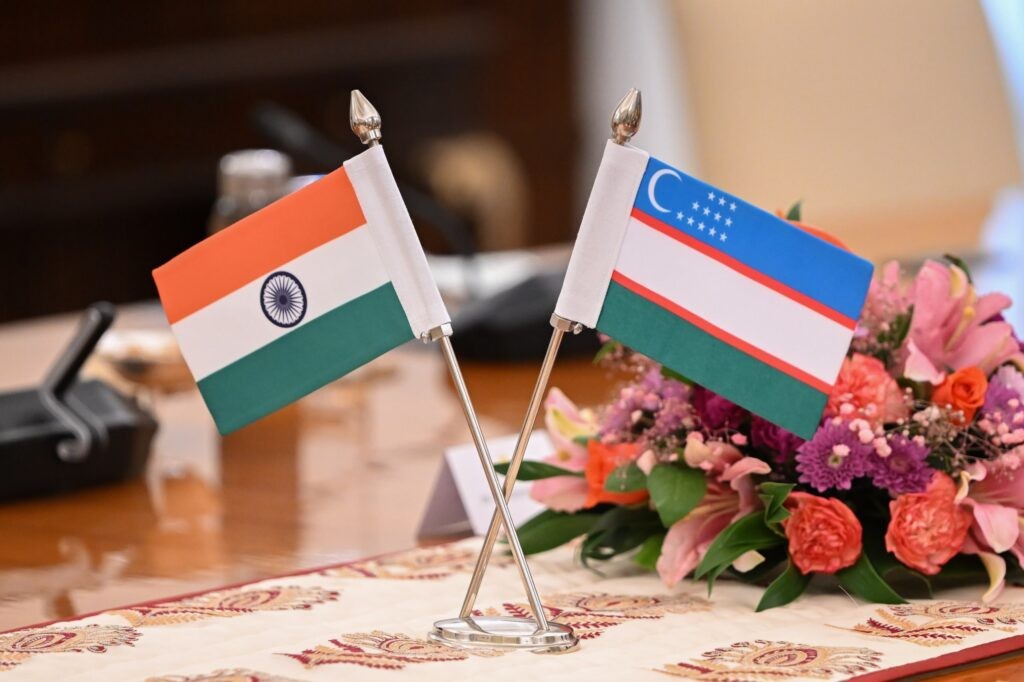
Uzbekistan and Azerbaijan have agreed to establish new public parks in each other’s capitals as part of broader efforts to expand bilateral cooperation, Uzbekistan’s Ministry of Investment, Industry and Trade has reported. The announcement followed an official visit to Azerbaijan from April 22 to 24 by a delegation led by Minister Laziz Kudratov. During the trip, talks were held with Azerbaijan’s Ministry of Economy and senior executives from major companies on joint projects and future cooperation. According to the ministry, both sides identified several priority areas, including mining, construction materials, transport and logistics, urban planning, agriculture, and pharmaceuticals. Particular attention was given to plans to create an “Uzbekistan” park in Baku and an “Azerbaijan” park in Tashkent, alongside expanding pharmaceutical retail networks and developing fruit and vegetable processing projects. Trade between the two countries has been growing steadily. In 2025, bilateral trade turnover reached $307.3 million, marking a 14.6% increase compared to the previous year, the ministry said. The Times of Central Asia previously reported that trade rose by 25% in 2024, while the number of joint ventures approached 300, with a combined project portfolio valued at around $4 billion. The two countries have set a target of increasing annual trade and investment to $1 billion by 2030, supported by a comprehensive cooperation program covering sectors such as industry, infrastructure, agriculture, healthcare, tourism, and banking. Progress has also been noted in transport and energy cooperation. Both sides highlighted growing cargo volumes along the Trans-Caspian International Transport Route, also known as the Middle Corridor. Uzbek shipments along the route increased by 25% in 2024, exceeding one million tonnes, aided by the introduction of a new electronic permit system.

Russia Offers Support for Uzbekistan’s First Cosmonaut and Satellite Launch

Russia is ready to help Uzbekistan prepare and send its first national cosmonaut into orbit and launch its first artificial satellite, Russian First Deputy Prime Minister Denis Manturov was quoted as saying by TASS. Manturov noted that Uzbekistan has set an ambitious goal of entering space exploration. “At the end of last year, President Shavkat Mirziyoyev outlined the task of preparing and sending the country’s first national cosmonaut into near-Earth orbit and launching its first artificial satellite,” he said. “As a strategic partner of Uzbekistan, we welcome these plans and are ready to use all our extensive experience and expertise to help implement them,” Manturov added. He also said Russia is currently engaged in preliminary discussions with several countries across the Commonwealth of Independent States, as well as in Asia, Africa, and the Middle East, on training astronauts and developing communication and Earth observation satellites. Russia has made similar offers to other Central Asian states. A few days earlier, Russia’s ambassador to Turkmenistan, Ivan Volynkin, said Moscow would support the training of a cosmonaut from Turkmenistan if Ashgabat expressed interest. His comments were published on the embassy’s official Telegram channel during an event marking the 65th anniversary of the first human spaceflight. Volynkin also highlighted the achievements of Oleg Kononenko, a native of Turkmenabat, who holds the record for the longest cumulative time spent in space, exceeding 1,100 days. He currently heads the Gagarin Cosmonaut Training Center. According to the ambassador, cooperation between Russia and Turkmenistan in the space sector could also include satellite production, launch services, navigation technologies, and joint scientific research.

Political Analyst Karazhanov: Stability Is Central Asia’s Greatest Advantage

International events where Kazakhstan and Central Asia present their agenda and demonstrate the benefits of predictability bring significant advantages to the region. In an interview with The Times of Central Asia, Kazakh political analyst Zamir Karazhanov explains how the region is gradually changing its approach to addressing key challenges. According to Karazhanov, Kazakhstan and other Central Asian countries, particularly Uzbekistan, have recently begun positioning themselves on the international stage in a far more pragmatic and modern way. A prime example is the speech delivered on April 17 by Kazakhstan’s President, Kassym-Jomart Tokayev, at the Antalya Diplomacy Forum in Turkey. Observers noted that Tokayev outlined the role Kazakhstan is seeking to play in the evolving geopolitical landscape. The key message was that global governance is becoming less effective through traditional institutions, while the role of so-called “middle powers” is increasing. These countries may not define the global order on their own, but they are capable of promoting peaceful solutions, engaging in dialogue, and offering predictability. In addition, on April 22, Astana hosted the first Regional Environmental Summit (RES), which brought together around 1,500 participants from Central Asia, the European Union, the Shanghai Cooperation Organization, and the Middle East. The forum aimed to develop practical solutions to environmental and climate challenges facing both the Eurasia region and the wider world. During the discussions, representatives of Central Asian countries presented a realistic assessment of environmental issues and proposed a number of solutions. Environmental Threats Karazhanov noted that Kazakhstan has long faced difficult environmental conditions. “In addition to urban pollution, we have zones of ecological disaster, such as the Aral Sea. The country [Kazakhstan] hosts numerous extractive industries, and it is landlocked, located deep within the continent. Any environmental catastrophe here would have far more severe consequences than in countries without such constraints. Climate change is intensifying, temperatures are rising, and Central Asia is already experiencing acute water shortages. Without timely measures, the situation could become critical,” he said. According to him, Kazakhstan has long been dealing with environmental migration and has proactively begun building the necessary legal and social frameworks. Conflicts over water resources have already occurred in Central Asia. Karazhanov emphasized the importance of including representatives of countries that regulate the region’s water systems in the Astana forum. “This creates an opportunity for dialogue. Take the example of the two rivers that feed the Aral Sea, the Amu Darya and Syr Darya. At one point, Kyrgyzstan suspended its participation in the International Fund for Saving the Aral Sea because it felt its interests were constrained. It is essential to create a platform where all five countries in the region are satisfied with water distribution,” he said. He also highlighted Afghanistan as an increasingly important factor that has not been fully accounted for. As the country rebuilds after decades of conflict, its agriculture and other sectors will expand, increasing demand for water from transboundary rivers. “That is why the summit should be viewed in the broader context of regional development and good neighborly...

Astana Is Turning Ecology into Regional Statecraft

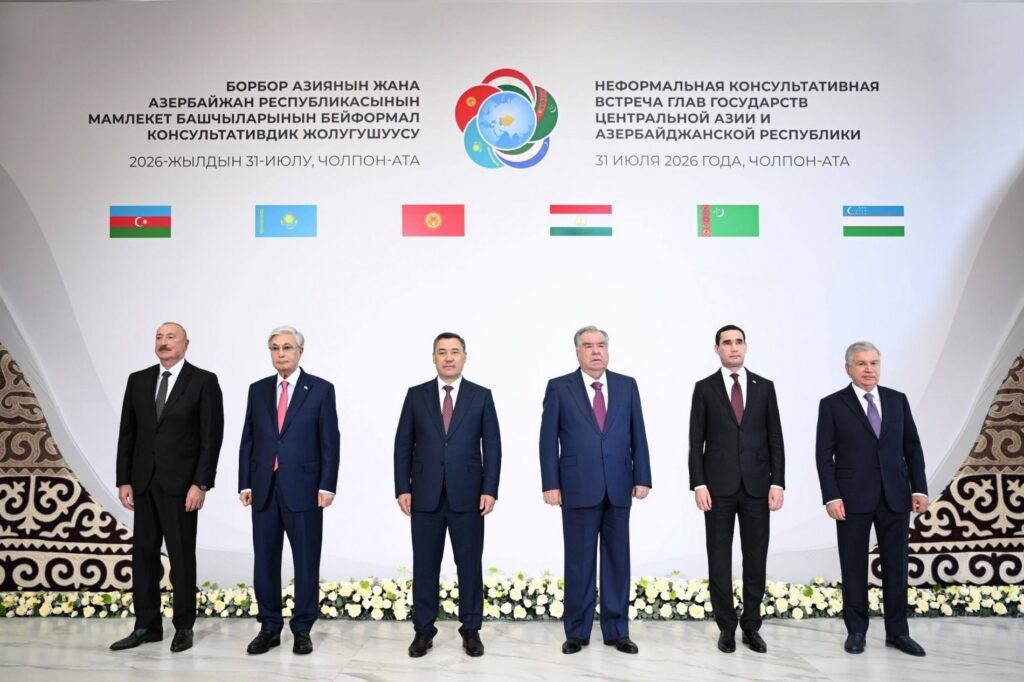
On April 22–24, Astana will host the Regional Ecological Summit with the participation of numerous United Nations agencies and international partners. It is expected to produce a joint declaration and a Regional Program of Action for 2026–2030, giving it a formal ambition beyond that of a standard diplomatic conference. Kazakhstan is presenting the event as a region-wide platform through which shared ecological pressures may become a more regular channel for Central Asian coordination. Officially, the summit is framed as a platform for regional solutions to climate and environmental challenges. It is also a more ambitious test of whether Kazakhstan can use ecology to sustain a more regular pattern of regional cooperation under multilateral auspices. Here, Astana is using ecology to include water, health, food systems, natural-resource management, pollution, resilience, and financing. The broader the issue area becomes, the more usable it is as a basis for cooperation among states whose interests diverge elsewhere. The summit grew out of the Regional Climate Summit that President Kassym-Jomart Tokayev proposed at the Astana International Forum in June 2023. Since then, the agenda has widened from climate policy in the narrow sense to ecology more generally. This broadening fits the constraints the five Central Asian states share, which extend beyond emissions or adaptation metrics. They include water stress, land degradation, cross-border environmental risks, public-health effects, and the need for outside financing and technical coordination. A climate-only frame would have been too narrow for those overlapping pressures. The broader ecological frame is therefore more politically useful. The meeting also has a prehistory in earlier regional backing and multilateral development. A key point came on July 21, 2022, at the Fourth Consultative Meeting of Central Asian heads of state in Cholpon Ata, where the Green Agenda Regional Program for Central Asia was adopted. At the same meeting, a joint statement, a roadmap for regional cooperation for 2022–2024, and a concept for Central Asian interaction in multilateral formats were also adopted. The Green Agenda itself was linked to decarbonization, alternative energy, mutual electricity supply, water-saving and environmentally friendly technologies, and the rational use of water resources. Later UNDP material tied that program more explicitly to regional cooperation on climate action, water and energy management, and the use of United Nations platforms for advancing shared initiatives. The Astana summit builds on that earlier momentum. The scale of the UN presence indicates that the summit is meant as more than a ceremonial gathering. UN Kazakhstan says that 18 UN agencies are co-organizing 27 sessions and five workshops. For a regional meeting of this kind, that is a dense working structure. The same UN summary says that one expected outcome is a Joint Declaration by the Heads of State of Central Asia on regional environmental cooperation, followed by a Program of Action for 2026–2030 developed in partnership with the United Nations. Kazakhstan’s own framing presents the summit as a permanent platform for dialogue among governments, international organizations, scientific institutions, business, and civil society. The event is thus situated at the...

Over 12,600 Central Asians Identified in Russian Army

A Ukrainian state initiative has identified nearly 13,000 citizens from Central Asia who have signed contracts with Russia’s Defense Ministry and have served or are serving in the Russian army, according to data released by the “I Want to Live” project as part of the Ukraine-Central Asia Inquiry. As of 2026, the project reports it holds personal data on 12,666 individuals from the region. Uzbekistan accounts for the largest share, with 4,853 identified citizens. Tajikistan ranks second with 3,407 individuals, followed by Kazakhstan with 2,389 and Kyrgyzstan with at least 1,439. Turkmenistan has the lowest figure, with 578 identified nationals. The figures represent a sharp increase compared to 2025, when the same project reported around 5,740 individuals from Central Asia. At that time, it also began publishing named lists of recruits from each country who had joined Russia’s war in Ukraine. The issue remains sensitive across the region. Uzbekistan and Kazakhstan prohibit their citizens from taking part in foreign conflicts, and several cases have been brought against individuals who returned after fighting abroad. Last year, speaking at the St. Petersburg International Legal Forum, Alexander Bastrykin, Chairman of the Investigative Committee of Russia, said authorities had identified 80,000 individuals who had avoided military registration. “We’ve registered them for military service, and about 20,000 of these ‘new’ Russian citizens, who for some reason no longer want to live in Uzbekistan, Tajikistan, or Kyrgyzstan, are now on the front lines,” he said at the time. His remarks highlighted ongoing efforts to replenish military ranks, including through contract-based recruitment and incentives. Observers say such measures, alongside migration trends, may help explain the rising number of Central Asian nationals identified in the conflict.

Central Asia Came to Antalya With a Clearer Voice and a Wider Agenda

The Antalya Diplomacy Forum, from April 17 to 19, brought together heads of state, foreign ministers, and senior officials at a tense moment in international politics. The official theme, “Mapping Tomorrow, Managing Uncertainties,” reflected the backdrop: war in the Middle East, pressure on trade, and growing doubts about the strength of international institutions. Central Asia did not dominate the gathering, but the region was visible across the program and in the meetings around it. Kazakhstan’s President Kassym-Jomart Tokayev was the highest-profile regional figure in attendance, while Kyrgyzstan sent Foreign Minister Jeenbek Kulubaev, Turkmenistan sent Foreign Minister Rashid Meredov, and Tajikistan sent Deputy Foreign Minister Farrukh Sharifzoda. Uzbekistan was also active through Foreign Minister Bakhtiyor Saidov in meetings held during the forum dates. The strongest Central Asian intervention came from Tokayev. Speaking at a panel session, he said the United Nations remains indispensable, but also made clear that its present structure is failing to keep up with current crises. “We must honestly acknowledge that the Security Council is the central element in the reform of the United Nations,” he said. He also warned that many key negotiations now take place outside the UN system, in separate capitals and closed rooms, rather than through the institution that was built for that purpose. Tokayev framed the problem in practical terms rather than abstract ones. He said global leaders must approach peace and security “with a strong sense of responsibility,” adding that “we must act more responsibly and exercise restraint.” Tokayev also said Kazakhstan calls on all countries involved in the Iran conflict to cease hostilities while keeping the focus on the core issue of nuclear proliferation. His language matched the line Astana has tried to hold for years: avoid escalation, preserve room for dialogue, and keep diplomatic channels open. Tokayev went further when he turned to the role of what he called “middle powers,” naming Kazakhstan and Türkiye among the states that, in his view, show a high degree of responsibility in both diplomacy and practice. He said it would “not be an exaggeration to say that today middle powers often demonstrate a greater degree of responsibility than major powers represented in the Security Council, which, regrettably, often obstruct the resolution of key global issues.” That was one of the sharper lines delivered at the summit. It also showed how Kazakhstan now wants to place itself in the world: not as a passive actor caught between larger powers, but as a state that can help steady an increasingly unstable system. Türkiye was central to that framing. At the start of his remarks, Tokayev praised President Recep Tayyip Erdoğan’s role in the region and said Kazakhstan was looking forward to Erdoğan’s state visit next month. That also reflects a broader trend of closer coordination between Kazakhstan and Türkiye, including in the Trans-Caspian transport route (Middle Corridor) and shifting Caspian dynamics. Uzbekistan approached the summit in Antalya differently. Tashkent did not have a presidential intervention on the main stage, but it used the gathering for...