• KZT/USD = 0.00225
  • TJS/USD = 0.10810
  • UZS/USD = 0.00009
  • TMT/USD = 0.29760
  • KZT/USD = 0.00225
  • TJS/USD = 0.10810
  • UZS/USD = 0.00009
  • TMT/USD = 0.29760
  • KZT/USD = 0.00225
  • TJS/USD = 0.10810
  • UZS/USD = 0.00009
  • TMT/USD = 0.29760
  • KZT/USD = 0.00225
  • TJS/USD = 0.10810
  • UZS/USD = 0.00009
  • TMT/USD = 0.29760
  • KZT/USD = 0.00225
  • TJS/USD = 0.10810
  • UZS/USD = 0.00009
  • TMT/USD = 0.29760
  • KZT/USD = 0.00225
  • TJS/USD = 0.10810
  • UZS/USD = 0.00009
  • TMT/USD = 0.29760
  • KZT/USD = 0.00225
  • TJS/USD = 0.10810
  • UZS/USD = 0.00009
  • TMT/USD = 0.29760
  • KZT/USD = 0.00225
  • TJS/USD = 0.10810
  • UZS/USD = 0.00009
  • TMT/USD = 0.29760
24 September 2026

Viewing results 37 - 42 of 872

As Two Wars Reach the Caspian, Central Asia’s Middle Corridor Holds

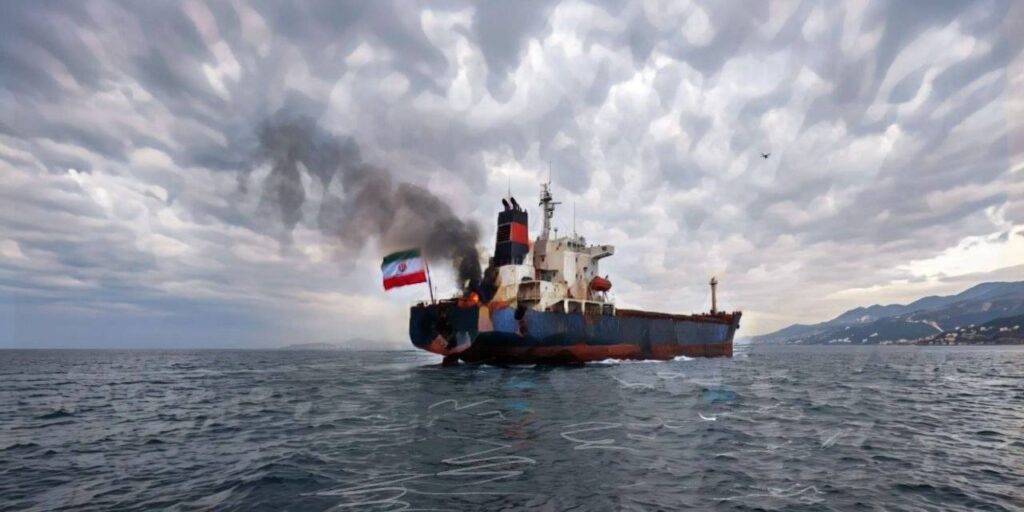
On July 25, two wars met in waters that Central Asian governments had tried to keep apart. Ukraine reported successful long-range strikes in the Caspian Sea. President Volodymyr Zelenskyy said the targets included vessels involved in carrying military cargo from Iran and a warship. Tehran said an Iranian commercial vessel had been struck, killing one sailor and injuring another, and accused Kyiv of trying to widen the war. It remains unclear whether the vessel identified by Iran was among the targets described by Zelenskyy. Diplomacy produced a limited off-ramp. On July 28, Ukrainian Foreign Minister Andrii Sybiha told his Iranian counterpart, Abbas Araqchi, that the strike on the Iranian ship was unintended. Both governments said they wanted to avoid further escalation. The call reduced the immediate risk of retaliation, but it did not remove the new danger. The Caspian is now one of the places where Russia’s war against Ukraine and the war involving Iran, Israel, and the United States intersect. Central Asia is exposed through the infrastructure and trade routes linking them. A “Sea of Peace” Under Pressure Turkmenistan responded to the incident with unusually direct language. Its Foreign Ministry called attacks on vessels in the Caspian “inadmissible” and described the waterway as a “sea of peace, harmony and good-neighborliness.” Ashgabat did not name Ukraine or endorse Iran’s account. Its restraint was characteristic, but the public criticism was unusual. Turkmenistan’s permanent neutrality normally produces guarded statements during external conflicts. The intervention showed that Ashgabat viewed the attack as a challenge to the regional order. Turkmenistan faces Iran across a 1,148-kilometer land border and the southern Caspian. Turkmenbashi port is also central to its plans for a larger role in Eurasian trade. The principle is set out in the Convention on the Legal Status of the Caspian Sea, signed in Aktau in 2018. Its text calls for the peaceful use of the sea, prohibits the use or threat of force, and bars armed forces belonging to non-Caspian states. The convention has not entered into force because Iran has not ratified it. Its provisions were designed to govern relations among the five littoral states. They do not address a long-range strike carried out by a non-littoral state. But modern drones can cross distances that once provided strategic shelter. A landlocked sea can no longer be assumed to sit beyond the reach of surrounding wars. The Iran-Russia Link Ukraine has clear military reasons to look toward the Caspian. Iran has supplied Russia with drone technology used against Ukrainian cities and infrastructure. The sea also provides a direct commercial route between Iranian ports and Russia’s Volga region. Kyiv now treats vessels on that route carrying military cargo as part of Russia’s military logistics. Iran described the vessel struck on July 25 as civilian. The dispute over the ship’s cargo is central because commercial and military supply chains can overlap. A vessel may be civilian by flag and registration while carrying goods that Ukraine considers part of Russia’s war effort. That uncertainty reaches beyond...
Kazakhstan Uzbekistan Council of Regional Leaders Holds First Meeting

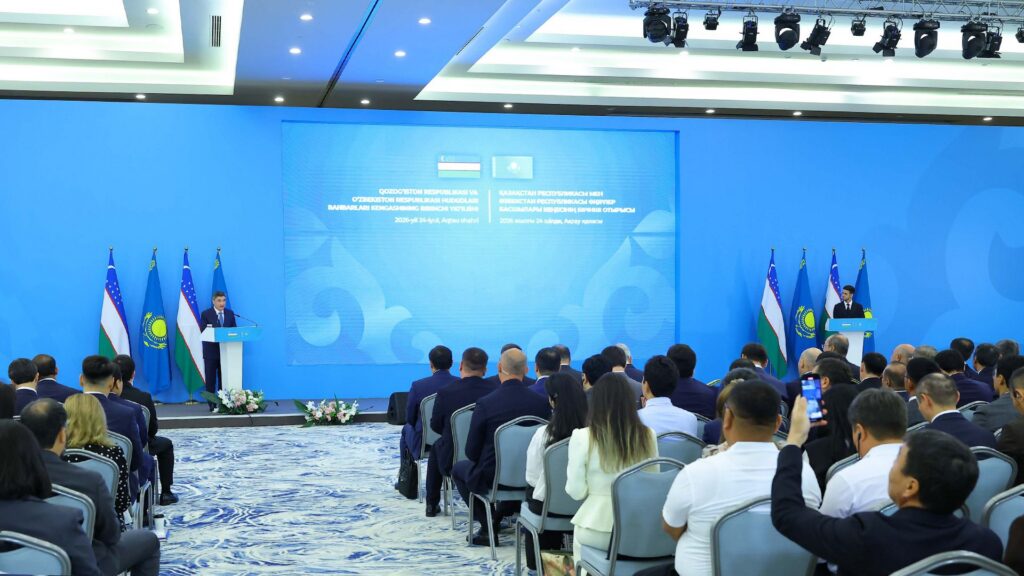
The first meeting of the Kazakhstan-Uzbekistan Council of Regional Leaders was held in the Caspian city of Aktau on July 24, involving Kazakh Prime Minister Olzhas Bektenov and Uzbek Prime Minister Abdulla Aripov, according to the Kazakh government. The new platform for regional cooperation is aimed at facilitating trade and investment, as well as strengthening transport links and cross-border partnerships. “We attach special importance to the comprehensive development of our strategic partnership with our brotherly Uzbekistan,” Bektenov said, describing the  establishment of the Council of Regional Leaders as a "logical" step in the two countries' relationship. Bektenov noted that direct ties between regions would play an important role in expanding trade and investment, adding that he was confident the council “will make a significant contribution” toward achieving the goal set by the two presidents of increasing bilateral trade to $10 billion. Aripov, his Uzbek counterpart, described Aktau as a symbolic venue for the inaugural meeting, calling it “the pearl of the Caspian Sea” and one of the region’s key transport and logistics hubs. “Kazakhstan is not only a close neighbor for Uzbekistan, but also a reliable strategic partner and ally,” Aripov said. “Interregional cooperation has become one of the priority areas of our partnership, and that is why our respected presidents decided to establish the Council of Regional Leaders.” He said direct contacts between regional authorities would provide “a powerful impetus” for further strengthening Uzbek-Kazakh relations. Bektenov also highlighted the importance of fully launching the Central Asia International Center for Industrial Cooperation, saying the project should be filled with competitive and mutually beneficial initiatives. Transport and logistics featured prominently in the discussions. Kazakhstan and Uzbekistan two countries share a border of approximately 2,300 kilometers and officials stressed the need to further develop infrastructure connecting the two countries. Particular attention was given to the Trans-Caspian International Transport Route, which is linked to the North-South corridor and the Trans-Afghan route. According to the Kazakh government, cargo handling through the ports of Aktau and Kuryk reached 8 million tons last year. During the first half of 2026, container traffic through Kazakhstan’s ports increased by 5%, surpassing 50,000 twenty-foot equivalent units (TEUs). The two sides also discussed expanding tourism cooperation, citing growing interest among citizens of both countries in visiting historical and cultural destinations. Regional leaders from both countries presented development plans during the plenary session. Participants included the governors of Kazakhstan’s Mangystau and Turkistan regions, the deputy mayor of Shymkent, and the governors of Uzbekistan’s Jizzakh, Syrdarya, and Tashkent regions. More than 300 business representatives from Kazakhstan and Uzbekistan also attended the event. The meeting concluded with the signing of several memorandums between the regions of the two countries, along with commercial agreements worth more than 80 billion tenge, or approximately $170 million. According to the Kazakh government, the new agreements are expected to strengthen cross-border cooperation, support joint investment projects, and contribute to the long-term economic development of Central Asia.

Tashkent and Kabul Rush to Deny Taliban Minister’s Criticism of Uzbekistan

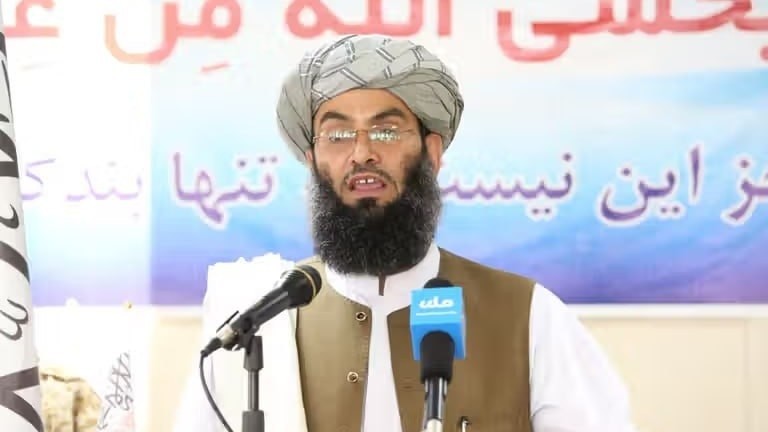
A diplomatic row erupted between Uzbekistan and Afghanistan this week after a senior Taliban official was reported to have said that Islam in Uzbekistan exists only in name. After the remarks were widely covered by Uzbek and Afghan media, officials on both sides rejected the reports, although questions remain over whether excerpts of the speech were published and later deleted by the Taliban ministry itself. The dispute is sensitive because Uzbekistan has built close working relations with the Taliban administration on trade, transport, energy, and border security, while remaining wary of religious extremism and stopping short of formally recognizing its government. Public criticism of Uzbekistan’s religious policies by a senior Taliban figure could therefore strain a relationship both sides have worked carefully to preserve. The controversy centers on Sheikh Mohammad Khalid Hanafi, the Taliban’s acting minister for the Propagation of Virtue and Prevention of Vice. Afghanistan International reported that Hanafi referred to Samarkand, Bukhara, and Termez, Uzbek cities associated with prominent Islamic scholars including Imam al-Bukhari and Imam al-Tirmidhi. He was quoted as saying that Islam in the cities remained “only on people’s lips,” and blaming religious scholars for leaving the enforcement of Islamic rules to the government. Some regional media paraphrased the remark as a claim that “only the name of Islam remains” in Uzbekistan. The comments were reportedly made during a speech in Afghanistan’s Paktia Province. Afghanistan International said Hanafi’s ministry published several excerpts from the address. Reports cited by Uzbek media said the passage concerning Uzbekistan also appeared on a ministry spokesman’s account on X before being removed. The reports attracted widespread attention in Uzbekistan, prompting the country’s embassy in Kabul to seek an explanation. On July 16, the embassy said it had received a letter from the Taliban’s Ministry for the Propagation of Virtue and Prevention of Vice rejecting what it described as distorted reporting intended to damage relations between the neighboring countries. The letter praised Uzbekistan as the homeland of major Islamic scholars, including Imam al-Bukhari, and stressed the countries’ shared religious, historical, and cultural ties. It said statements presented as criticism of Uzbekistan “do not correspond to the truth” and described the reports as a distortion of the facts. However, the letter did not explicitly state that Hanafi had never made the remarks or explain why the passage was reportedly removed. Uzbekistan’s Ministry of Foreign Affairs issued a stronger denial. Speaking to Portal24.uz, ministry spokesperson Omonulla Fayziyev described the claims as “completely unfounded” and “disinformation.” Fayziyev said no such statement had been officially issued or published by Afghan state media. He added that Uzbekistan’s ambassador had discussed the controversy directly with the Taliban authorities. That explanation leaves the central question unresolved. The Uzbek and Taliban statements reject the reporting, yet neither directly addresses Afghanistan International’s account that the ministry itself released excerpts from Hanafi’s speech. Uzbekistan has emerged as one of the Central Asian countries most actively engaged with the Taliban since its return to power in 2021. The two sides are expanding trade...

Patient Capital, Fast Deals: Japan and South Korea Take Different Paths into Central Asia

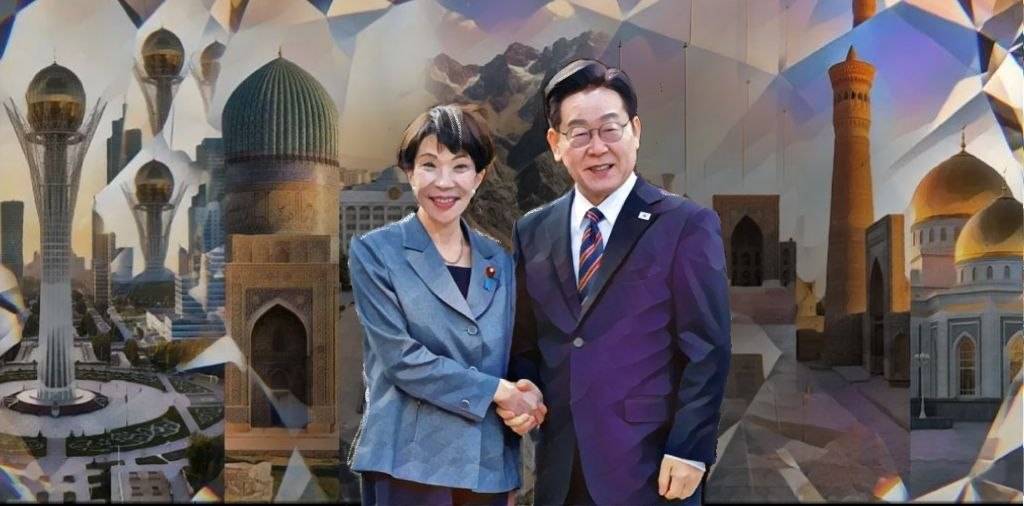
Japan and South Korea have reached the same strategic conclusion: Central Asia matters to their economic security. Yet they are pursuing that goal through markedly different playbooks. In December 2025, Tokyo hosted the first leaders' summit of the "Central Asia plus Japan" Dialogue, 21 years after the format was launched. All five Central Asian presidents attended. Japan set a target of three trillion yen in business projects across the region over five years - roughly $19 billion at the time - while placing critical-mineral supply chains among the summit's priority areas. The bilateral announcements were equally significant. Uzbekistan presented a proposed project portfolio worth more than $12 billion and called for a joint investment platform to advance it. Kazakhstan and Japan announced a package of public- and private-sector agreements worth $3.7 billion. These included a long-term uranium contract and an offtake agreement under which Kazakhstan's Eurasian Resources Group would supply gallium to Mitsubishi Corporation RTM Japan. The timing was no accident. By May 2026, Chinese shipments to Japan of dysprosium and terbium remained close to zero, while exports of finished rare earth magnets to Japan fell 35% from the previous month. These materials are essential to high-performance magnets. For Tokyo, diversifying critical mineral supply is no longer a distant policy objective; it is an immediate industrial requirement. South Korea has been moving toward the same destination by a different route. During then-President Yoon Suk Yeol's state visit to Kazakhstan in 2024, the two countries signed a critical minerals memorandum allowing Korean companies to participate in the exploration and development of lithium, chromium, uranium, and rare earths. Seoul is now preparing to host the first Korea-Central Asia summit on September 16-17, 2026, elevating years of bilateral and multilateral engagement to the leaders' level. [caption id="attachment_52351" align="aligncenter" width="1280"] Image: Japan Cabinet Public Affairs Office[/caption] Why Central Asia Counts Both Japan and South Korea are resource-poor manufacturing powers whose leading industries depend on secure supplies of imported minerals. South Korea imports more than 95% of the critical minerals it consumes. Japan received its own warning in 2010, when Chinese rare earth shipments were disrupted during a territorial dispute, and the pressure has returned in a sharper form in 2026. Central Asia cannot replace China in the short term, but it offers Tokyo and Seoul a credible route toward diversification. Kazakhstan and Uzbekistan combine substantial mineral potential with governments eager to attract investment, technology, and new export markets. Kazakhstan is already a major producer of uranium and chromium, and has significant copper, titanium, and rare earth prospects. In April 2025, Kazakhstan announced the possible discovery of a rare earth deposit containing more than 20 million metric tons of resources. If further exploration confirms that estimate, the country could possess one of the world's largest rare earth resource bases. However, the distinction between a resource estimate and a usable supply chain is crucial. A discovery is not a producing mine, and a mine is not a processing industry. Exploration, environmental approvals, infrastructure, separation, refining, and...

Belarus Plans to Recruit 5,000 More Workers From Uzbekistan as Labor Partnership Expands

Belarus plans to recruit another 5,000 workers from Uzbekistan’s Andijan Region, significantly expanding a labor migration program that has become one of the most visible outcomes of the growing partnership between the two countries. The announcement was made by Belarusian President Alexander Lukashenko during a working visit to the Orsha district of the Vitebsk Region on July 14. Speaking alongside Andijan regional governor Shukhrat Abdurakhmanov, Lukashenko said the additional workers would begin arriving in groups of 500 from September 2026. The new recruitment drive follows agreements reached during Uzbek President Shavkat Mirziyoyev’s official visit to Belarus earlier this month, when the two countries elevated their relationship to a strategic partnership and pledged to deepen cooperation across multiple sectors, including labor migration. During his visit to Vitebsk, Lukashenko described the project as beneficial for both sides. “I promised the President that we would do this. It is beneficial for us,” he said. “This will help develop the Vitebsk Region.” He also sought to reassure future workers that they would receive the same treatment as local residents. “When they come here, they must know that they are not strangers to us,” Lukashenko said. “Everything we build will be for people for Uzbeks and Belarusians alike. There will be no difference. Your children will attend kindergartens and schools under the same conditions as Belarusian children. The only thing is that they should work.” According to Belarusian officials, Uzbek citizens will work in agriculture and construction. They will also work in industry and the service sector, while some will take junior medical roles. Authorities said the first group of 255 workers had already arrived and been assigned to workplaces across the region. The partnership extends well beyond employment. Belarus plans to provide the Uzbek side with 10 cattle-fattening facilities across seven districts together with 8,000 hectares of agricultural land. The meat produced there is expected to be exported to Uzbekistan. Another 2,000 hectares in the Beshenkovichi district will be allocated to Uzbek partners for potato cultivation, while Belarus will provide seed potatoes and technical support, including agricultural expertise. Officials are also discussing projects in wood processing, including a modern timber-processing plant backed by Uzbek investment and a facility producing pellets for export to Uzbekistan. Lukashenko said implementation should begin without delay. “We should start doing it without postponing,” he said. Plans also include establishing an Uzbek construction trust staffed by Uzbek workers to build and maintain Uzbekistan’s facilities in Belarus. An Uzbek trade house has already opened in Vitebsk, while premises have been selected for an Uzbek restaurant. Belarusian authorities also intend to transfer a former boarding school in Bahushewsk that will be converted into a recreation center for Uzbek citizens. On the Uzbek side, the Migration Agency reported that more than 250 residents of Andijan Region recently flew to Belarus on a charter flight to work temporarily in agriculture and livestock farming. The agency said the project is being implemented under a simplified procedure based on a trilateral agreement involving the Andijan regional government, the...

Central Asia Builds a Regional Track for Engagement with Afghanistan

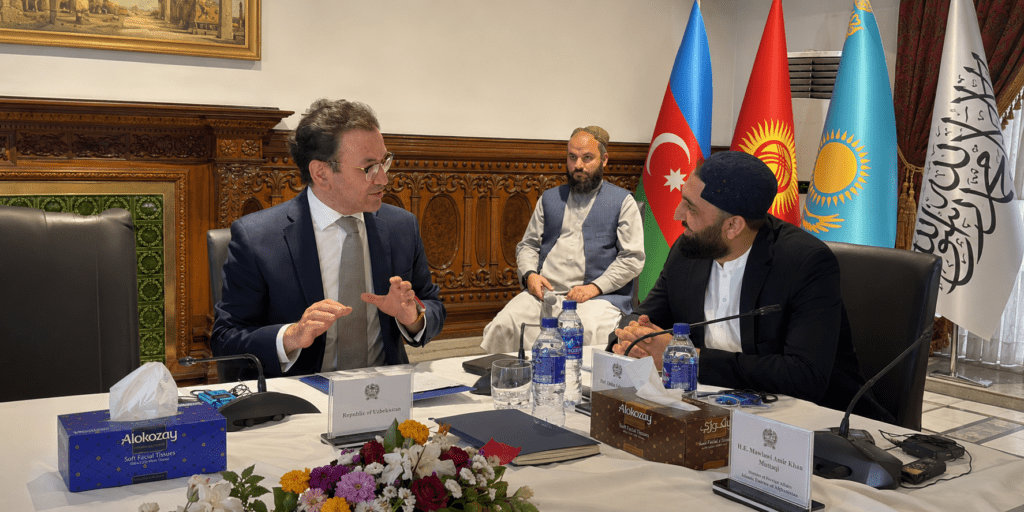
The United States and Europe may have stepped back from Afghanistan, but the country’s instability still affects migration, security, trade, and humanitarian pressures far beyond its borders. Given their proximity, Central Asian states cannot and have not disengaged, and their efforts to keep Kabul connected to regional diplomacy and commerce serve interests that are also shared by the West. On June 16, the Center for Strategic Studies of Afghanistan's Ministry of Foreign Affairs convened the first Afghanistan-Central Asia Think Tank Forum in Kabul, bringing together leaders and senior representatives from strategic research institutions across the region. Held under the theme "The Strategic Role of Think Tanks in Advancing Regional Cooperation," the forum included delegations from Turkmenistan, Uzbekistan, Kazakhstan, Tajikistan, Kyrgyzstan, and Azerbaijan alongside their Afghan counterparts. [caption id="attachment_52266" align="aligncenter" width="1080"] Image: Ministry of Foreign Affairs of Afghanistan[/caption] In his keynote address, Afghanistan’s Foreign Minister Mawlawi Amir Khan Muttaqi observed that the international order stands at a delicate crossroads, divided by competing narratives and opposing camps: “Given the developments and challenges in the global structure, the current international order finds itself at a sensitive juncture in history — a period marked, on the one hand, by various illusions and contradictory narratives, and, on the other, by efforts toward cooperation and multilateralism.” In essence, Muttaqi was advocating for an international order that allows Afghanistan and its neighbors to chart their own courses while engaging constructively with willing partners. Speaking to those in his immediate region, he drew attention to shared challenges, among them climate change, water shortages, economic headwinds, and conflict spillover, and asserted that “There is no doubt that, in order to make more effective and constructive decisions and to develop indigenous narratives for our region and shared future, specialists and researchers from academic and intellectual institutions must draft practical and comprehensive roadmaps for future cooperation across various fields.” Muttaqi underscored to participants the growing recognition that regional states stand to gain more through practical cooperation than through isolation or unilateral approaches. He reaffirmed Afghanistan's commitment to advancing the research-based proposals discussed at the April Consultative Dialogue in Kabul to help inform regional political and economic decision-making. His remarks reflected a view that broad-based economic development and good-neighborly relations are mutually reinforcing foundations of societal stability within a shared civilizational context—a perspective widely shared across the Central Asian republics. That is why, for example, he highlighted the need to follow through on economic and connectivity opportunities, citing projects such as CASA-1000, Turkmenistan-Afghanistan-Pakistan-India (TAPI) gas pipeline, Turkmenistan-Afghanistan-Pakistan electricity transmission project (TAP-500), the Lapis Lazuli Route, and the Afghan-Trans railway. These initiatives are in various stages of development, some having been stalled for decades. Javlon Vakhabov, former Uzbek ambassador to the United States and currently Director of the International Institute for Central Asia (IICA) in Tashkent, travelled to Kabul for the Forum. In his address, he summed up the mood of the participants: “In this emerging Greater Central Asia, Afghanistan is not a periphery. It is the southern gateway of our region, linking Central...