• KGS/USD = 0.01144 0%
  • KZT/USD = 0.00206 0%
  • TJS/USD = 0.10760 0%
  • UZS/USD = 0.00008 0%
  • TMT/USD = 0.28571 0%
  • KGS/USD = 0.01144 0%
  • KZT/USD = 0.00206 0%
  • TJS/USD = 0.10760 0%
  • UZS/USD = 0.00008 0%
  • TMT/USD = 0.28571 0%
  • KGS/USD = 0.01144 0%
  • KZT/USD = 0.00206 0%
  • TJS/USD = 0.10760 0%
  • UZS/USD = 0.00008 0%
  • TMT/USD = 0.28571 0%
  • KGS/USD = 0.01144 0%
  • KZT/USD = 0.00206 0%
  • TJS/USD = 0.10760 0%
  • UZS/USD = 0.00008 0%
  • TMT/USD = 0.28571 0%
  • KGS/USD = 0.01144 0%
  • KZT/USD = 0.00206 0%
  • TJS/USD = 0.10760 0%
  • UZS/USD = 0.00008 0%
  • TMT/USD = 0.28571 0%
  • KGS/USD = 0.01144 0%
  • KZT/USD = 0.00206 0%
  • TJS/USD = 0.10760 0%
  • UZS/USD = 0.00008 0%
  • TMT/USD = 0.28571 0%
  • KGS/USD = 0.01144 0%
  • KZT/USD = 0.00206 0%
  • TJS/USD = 0.10760 0%
  • UZS/USD = 0.00008 0%
  • TMT/USD = 0.28571 0%
  • KGS/USD = 0.01144 0%
  • KZT/USD = 0.00206 0%
  • TJS/USD = 0.10760 0%
  • UZS/USD = 0.00008 0%
  • TMT/USD = 0.28571 0%

Our People > Anton Chipegin

Anton Chipegin's Avatar

Anton Chipegin

Anton was born and grew up in Bishkek, Kyrgyzstan. He worked as a television correspondent, editor and TV presenter on the main television channels of the republic, such as NTS and MIR 24, and also as an economic observer at international news agencies and other media resources of Kyrgyzstan.

Articles

Experts Call for Seismic Study Ahead of Kambarata-1 Hydropower Construction

At a recent parliamentary session, Kanatbek Abdrakhmatov, director of the Institute of Seismology and president of Kyrgyzstan’s National Academy of Sciences, warned that seismic microzonation has not been conducted at the site of the planned Kambarata-1 hydropower plant (HPP), a critical prerequisite for infrastructure projects of this magnitude. Located in western Kyrgyzstan, the Kambarata-1 HPP is a joint venture between Kyrgyzstan, Uzbekistan, and Kazakhstan, with financial support from the World Bank. The facility is expected to have a capacity of 1,860 MW, with a reservoir volume of 4.5 billion cubic meters. The dam is projected to stand 256 meters tall and house four turbines capable of generating over 5.5 billion kWh annually. The total estimated cost of the project is $5-6 billion. The statement has raised alarms over the country’s most ambitious hydroelectric initiative since independence. Abdrakhmatov said scientists had twice appealed to the Ministry of Energy requesting the study, but received no response. He cautioned that the ministry is underestimating the potential seismic risks. “We are about to launch the Kambarata-1 project. It is crucial to understand that seismic microzonation must be carried out before projects of this magnitude begin. Unfortunately, this has not been done,” Abdrakhmatov said. “This raises serious concerns, because if an earthquake occurs, the dam could collapse, which in turn could destroy Kambarata-2 and other hydropower plants downstream on the Naryn River.” He further noted that the dam is planned between two mountain ridges, one significantly higher than the other. Since seismic waves interact differently with varying topographies, a powerful earthquake could cause destabilization and structural damage. Conducting a microzonation study would help mitigate such risks. The Ministry of Energy has dismissed the concerns raised by domestic seismologists, maintaining that the design of the curved gravity dam is safe. According to the ministry, AFRY Switzerland Ltd, the company preparing the project’s feasibility study, engaged international experts to assess the seismic profile of the region. The ministry stated that the expert team conducted an analysis of seismic sources, earthquake history, and regional tectonics using data from the National Institute of Seismology and the Central Asian earthquake catalog. Based on their findings, a curved gravity dam design was proposed to enhance both hydraulic performance and structural resilience. “Following comprehensive studies and numerous expert-level discussions, a seismic hazard assessment of the construction area was provided. The curved gravity dam design proposed for Kambarata-1 is expected to improve both efficiency and resilience,” the ministry reported. Nevertheless, the ministry added that it remains open to further in-depth seismic studies and may still conduct a microzonation survey as recommended by local scientists. “To date, enormous preparatory work has been carried out for Kambarata-1. We are moving toward the start of major construction. However, speculation by some of our seismology experts, who are unfamiliar with the latest reports, is deeply regrettable, it is nothing but slander and sabotage,” the ministry added in a strongly worded statement.

9 months ago

Sharp Rise in Global Gold Prices Expected to Benefit Kyrgyz Economy

A significant surge in global gold prices is presenting new economic opportunities for Kyrgyzstan. Over recent weeks, gold has risen by more than $400 per troy ounce on the London Commodities Exchange, signaling potential gains for the country’s gold-dependent economy. Back in 2022, amid escalating global geopolitical tensions, Kyrgyz authorities began encouraging citizens to hold their savings in gold. Three years on, that strategy appears vindicated: gold prices have nearly doubled. According to the National Bank of Kyrgyzstan, the country’s international reserves reached over $7 billion in 2025, growing by $2 billion in just one year. A substantial portion of these reserves is held in gold bullion, highlighting the precious metal’s role as the cornerstone of Kyrgyzstan’s financial resilience. The current price surge is expected to further insulate the national economy from external shocks. In 2024, Kyrgyz mining enterprises produced 24 tons of gold. If production levels remain steady, export revenues could exceed $2.5 billion in 2025. This would provide a significant boost to tax revenues, the national budget, and the country’s foreign currency reserves. Economist Kubanychbek Idinov told The Times of Central Asia that the Kumtor mine, the country’s flagship gold asset, remains the primary driver of state revenue. “Thanks to the nationalization of Kumtor in 2022, government revenues from the enterprise have increased several times. These funds are already being used to build social housing and develop new industries. With the launch of underground mining, authorities now have the capacity to further expand social spending and finance industrial growth,” said Idinov. He estimates that Kumtor still holds between 500 and 700 tons of gold, which could support Kyrgyzstan’s economic stability for up to two more decades. However, experts warn against overreliance on gold. “Prices may rise, but they can also fall,” Idinov noted. “While current conditions offer windfall revenues, these should be strategically invested into infrastructure, trade, and industrial development. That is the path to a more resilient and diversified economy.” The latest rally in gold prices offers Kyrgyzstan a rare window of opportunity. But capitalizing on this moment will depend on how effectively authorities can translate resource wealth into long-term national development.

9 months ago

Kyrgyzstan Sees Growth in Mining Output Despite Fewer Licensed Operators

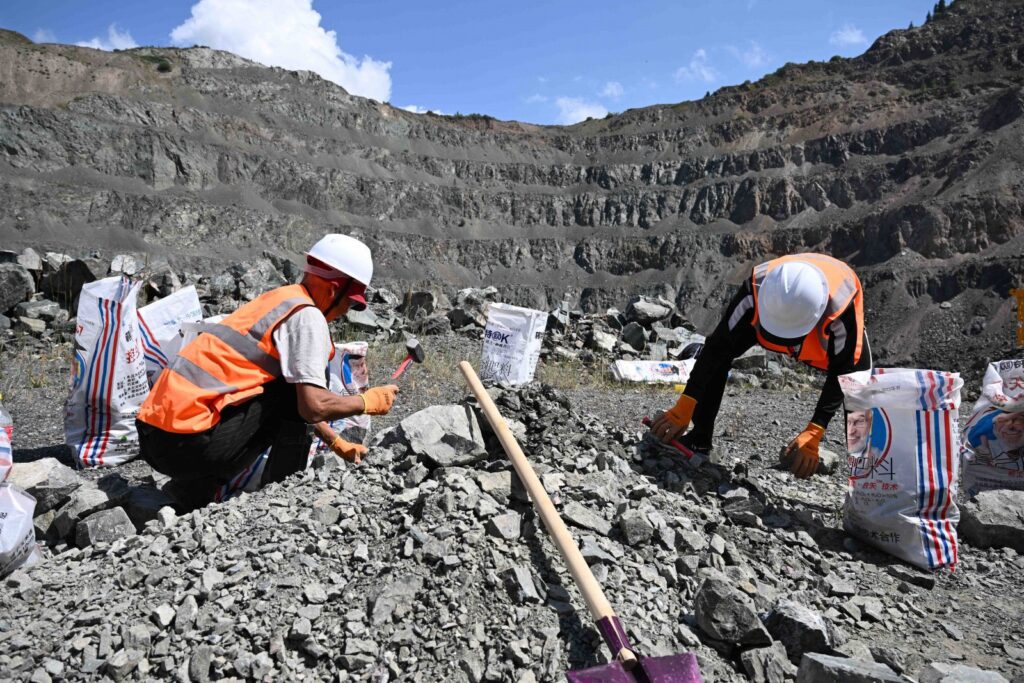
Kyrgyzstan recorded a notable increase in the extraction of gold, silver, coal, and natural gas in the first half of 2025, even as the number of companies operating in the sector declined, according to data from the Kyrgyz Geological Service. Compared to the first six months of 2024, the country produced an additional 700 kg of gold and 1.1 million m³ more natural gas in 2025. Silver and coal production also rose significantly. However, the sector is seeing a consolidation. A total of 199 production licenses were revoked in the first half of 2025, while only 15 new licenses were issued, down from 26 over the same period last year. Government officials noted that many license holders had not initiated development, and their permits were reallocated to other operators upon expiration. Increased Output and Revenue The state resource balance in the first half of 2025 was as follows: Regular gold: 5.8 tons Placer gold: up from 28.3 kg to 57 kg Silver: up from 198 kg to 3.8 tons Coal: up from 3.1 million to 4.4 million tons Tax and non-tax revenues increased from 17.9 billion KGS ($205.2 million) to 27.8 billion KGS ($318.5 million). Industrial production reached 30.7 billion KGS ($352 million), marking a rise of nearly 3 billion KGS ($34.4 million). Risks to Construction Resources At the same time, reserves of marble, sand, and gravel have declined due to high demand from the construction sector. As previously reported by The Times of Central Asia, the ongoing construction boom is driving aggressive extraction of these materials, hastening depletion. Balancing Growth and Sustainability While the increase in mineral production and revenue contributes positively to Kyrgyzstan’s GDP and reflects the benefits of a streamlined licensing policy, the report emphasizes the importance of sustainable resource management. With continued pressure from the construction and energy sectors, experts caution that long-term planning is crucial to avoid overexploitation of finite resources.

9 months ago

Gasoline Prices Rise in Kyrgyzstan Amid Heavy Dependence on Russian Imports

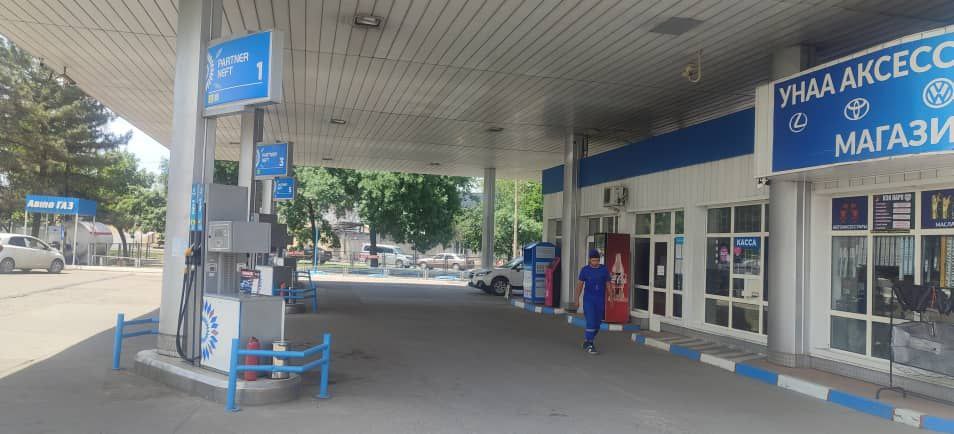
Gasoline prices in Kyrgyzstan have continued to rise in recent months, despite official assurances that fuel reserves remain sufficient. The Kyrgyz Ministry of Energy reports that domestic supplies and ongoing fuel imports from Russia are currently adequate to meet national demand. According to the ministry, Kyrgyzstan consumes approximately 1.6 million tons of fuel annually, with over 90 percent of its gasoline imported from Russia. Each year, export volumes are negotiated between Moscow and Kyrgyz oil traders. When those volumes are exhausted, prices typically begin to increase. “The agreed volumes for 2025 have not yet been fully met, but oil products are being supplied as usual and without interruption. At the same time, work is underway to agree on new volumes for 2026,” the ministry stated. Officials attribute the recent price hikes to global market trends and disruptions in Russian refinery operations. Several refineries have undergone scheduled maintenance, while others were forced to halt operations following drone attacks linked to the conflict in Ukraine. Despite a recently announced gasoline export ban by Russian authorities, the restriction does not apply to countries within the Eurasian Economic Union (EAEU), including Kyrgyzstan. Industry Concerns About Future Supply Kanat Eshatov, head of the Kyrgyz Oil Traders Association, told The Times of Central Asia that local traders remain cautious, anticipating further price increases by the end of September. “The first half of the year was fairly calm on the fuel market, with only a slight increase in prices. But in June and July, prices rose sharply due to scheduled repairs at refineries in Russia. A total of 20 plants were shut down for repairs. Five of them underwent unscheduled repairs due to attacks by Ukrainian drones. Some Russian regions are experiencing a shortage of fuel. The Russian government is now redistributing its reserves,” Eshatov said. The association is concerned about Kyrgyzstan’s limited fuel buffer. Major oil companies in the country reportedly hold only two months’ worth of gasoline reserves. Any significant supply interruption from Russia could quickly lead to a national shortage. Comparative Prices in the Region Eshatov noted that, due to Kyrgyzstan’s exemption from export duties on Russian gasoline, fuel prices remain lower than in neighboring countries. For example, in Tajikistan, gasoline prices have increased by $0.27 per liter this year, and diesel by $0.22. In Uzbekistan, gasoline is up by $0.26 per liter and diesel by $0.11. To ensure continued supply stability, Kyrgyz oil traders are also exploring alternative import routes and are currently in negotiations with Kazakhstan and Azerbaijan.

9 months ago

Indian Gold Miners Enter Kyrgyz Market for the First Time

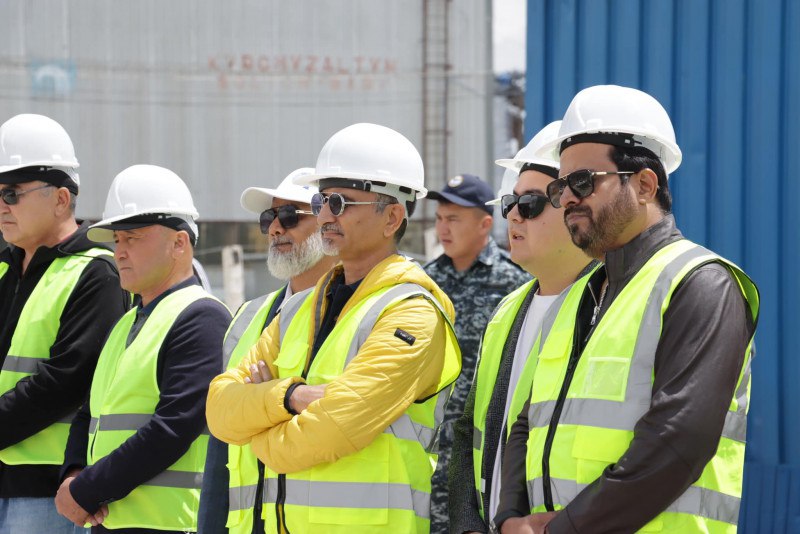
Indian mining firm Deccan Gold Mines has launched operations at the Altyn Tor gold deposit in Kyrgyzstan’s Naryn region, marking the first overseas venture by an Indian gold mining company, according to Indian media reports. The project is being developed through Deccan's local subsidiary, Avelum Partners LLC, which holds a 60% stake in the mine. Production of doré bars is scheduled to begin in October 2025. Geological assessments estimate the Altyn Tor deposit contains approximately 4.6 million tons of gold-bearing ore with an average grade of 1.2 grams per ton, translating to roughly 60 tons of total gold reserves. Hanuma Prasad Modali, CEO of Deccan Gold Mines, said preparations are progressing on schedule. “Eleven conveyor systems have been installed at the site, and the crushing complex has been tested. In early September, the ball mill, one of the key components of the processing plant, will go online, enabling us to reach design capacity as planned,” Modali stated. The company has positioned the project as a model of responsible mining, aiming to strengthen bilateral ties between India and Kyrgyzstan. Despite challenging climatic conditions at the site’s 3,300-meter elevation, year-round production is planned. Altyn Tor forms part of the larger Solton-Sary gold deposit, originally discovered by Soviet geologists in the 1940s. Mining activity at the site was active through the 1990s and early 2000s but later ceased due to insufficient investment. Deccan Gold Mines is also evaluating the potential for processing materials in the tailings pond, where residual gold remains. The company remains the only publicly listed gold mining firm on the Indian stock exchange. News of its overseas expansion triggered a surge in share prices. Earlier, Kyrgyzaltyn, the state-owned holding company, confirmed that production at the site was expected to commence in the second half of 2024.

9 months ago

Kyrgyz Parliament Resumes Work After Summer Recess

Members of Kyrgyzstan's parliament, the Jogorku Kenesh, have returned to work following a two-month summer recess, during which they engaged with constituents across the country. The new session began in the recently renovated parliament building, which reopened after three years of reconstruction. “I am confident that this chamber will make the right and fair decisions that our country needs,” said Speaker of Parliament Nurlanbek Turgunbek uulu. On the first day of the session, deputies approved the appointment of a new Minister of Labor, Social Security, and Migration. Lawmakers also proposed the establishment of a separate agency focused on migrant affairs, discussed a housing renovation initiative, and allocated additional funds for the CASA-1000 energy infrastructure project. Additionally, amendments to the Criminal Procedure Code were passed to strengthen protections for citizens during investigative procedures. However, some public expectations remain unmet, particularly concerning the discussion of pressing regional issues. Speculation about the early dissolution of parliament continues to circulate, though deputies have dismissed these claims. “This will only happen if parliament itself decides so,” said Deputy Mirlan Samykozho. Kyrgyzstan is scheduled to hold its next parliamentary elections next year.

9 months ago

Kyrgyzstan Independence Day Marked by Celebrations

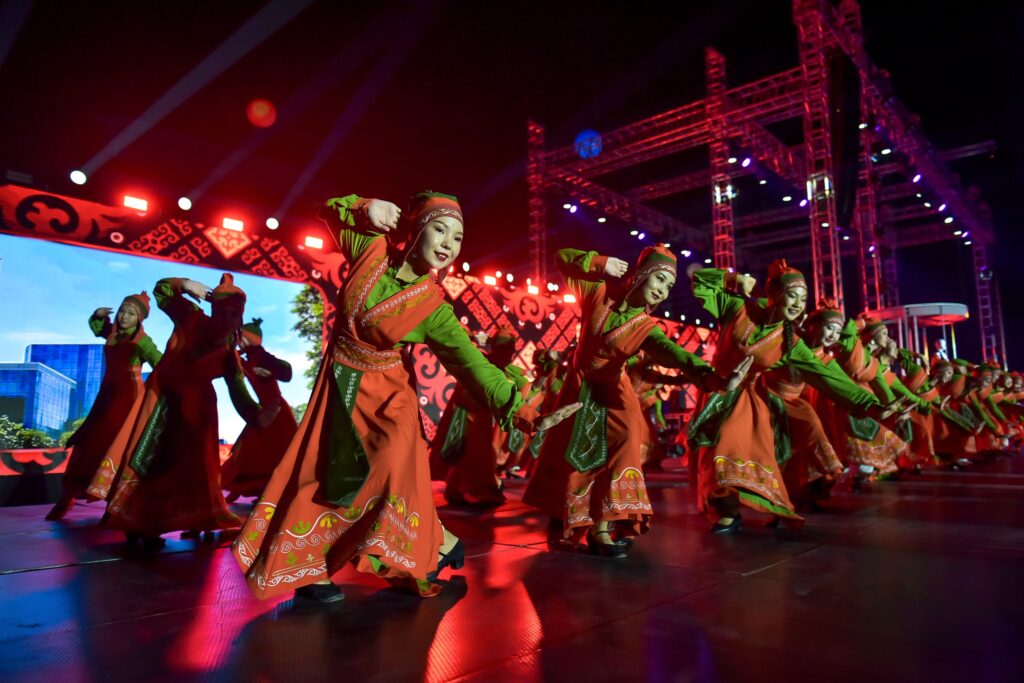
Kyrgyzstan marked the 34th anniversary of its independence on August 31 with large-scale celebrations across the country. For the first time, the central venue for the national festivities was the southern city of Jalal-Abad, the country’s third largest urban center.  The official program featured cultural, social, and sporting events, including a large-scale choreographic performance titled Future Kyrgyzstan, involving 600 dancers in the city’s main square. [caption id="attachment_35595" align="aligncenter" width="2560"] @president.kg[/caption] [caption id="attachment_35596" align="aligncenter" width="2560"] @president.kg[/caption] Celebrations Nationwide Events were held across all regions. In Bishkek, several thousand people gathered in Ala-Too Square for a garrison parade by the Internal Affairs Directorate. In the Issyk-Kul region, festivities included traditional equestrian competitions and other national games. Development and Investment During the festivities, President Sadyr Japarov inaugurated 100 new social facilities and more than 60 industrial facilities via online launch. He also encouraged domestic and foreign investors to take advantage of the country’s ready-made industrial zones: “We invite all business structures, from small to large enterprises. We have ready-made industrial zones, we can provide land, help with infrastructure and documentation,” he said. [caption id="attachment_35597" align="aligncenter" width="2560"] @president.kg[/caption] In Jalal-Abad, Japarov also opened a new art school and a 450-unit social housing complex. Concluding his address, Japarov offered a metaphor for the country's trajectory: “Kyrgyzstan is like a galloping horse,” he said. “Thirty-four years of independence is only the beginning of our long journey.”

9 months ago

Underground Gold Mining Officially Launched at Kumtor

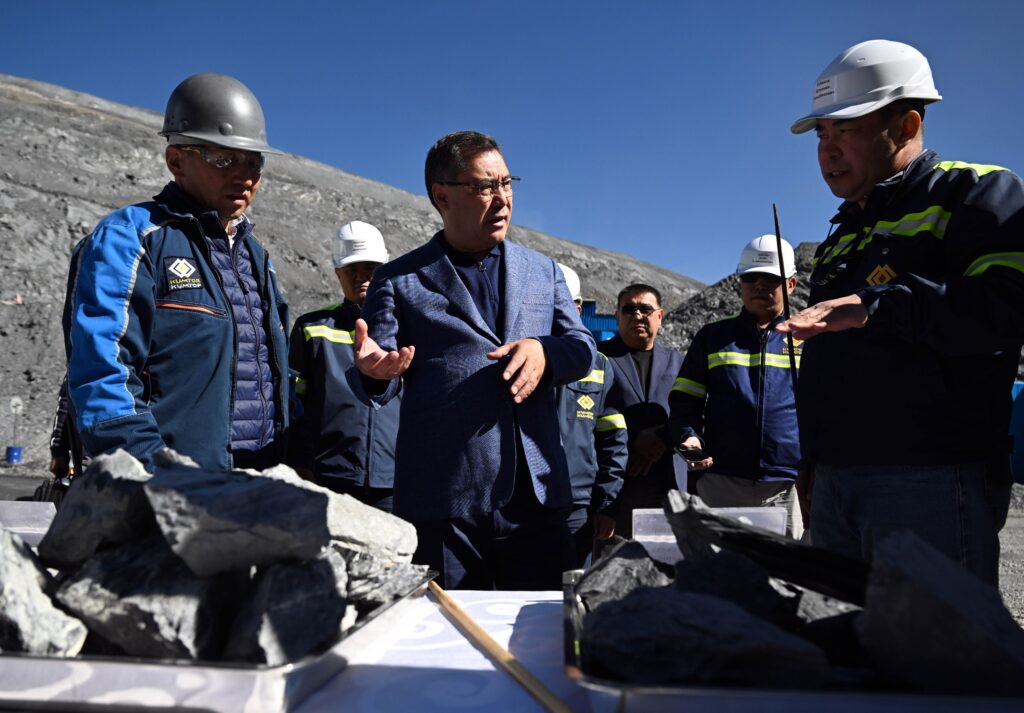
Kyrgyz President Sadyr Japarov has inaugurated underground mining operations at the high-altitude Kumtor gold mine during a working visit to the Issyk-Kul region. According to Japarov, underground development at Kumtor should have started two decades ago. However, the mine’s former operator, Canadian company Centerra Gold, opted instead for open-pit mining, which was less costly but had serious environmental consequences. He said the dumping of waste rock onto the Davydov and Lysyi glaciers resulted in their degradation. “The launch of underground gold mining at Kumtor is a crucial step toward environmental protection and glacier preservation,” Japarov stated. He reported that approximately 1,600 meters of tunnels have already been excavated, and ore with a gold content exceeding five grams per ton is ready for extraction. The underground operation is projected to continue for 17 years, with proven reserves estimated at 147 tons of gold. While Centerra Gold had previously explored underground mining, low global gold prices over a decade ago rendered the project financially unviable. The open-pit method yielded between five and seven grams of gold per ton of ore, then considered the threshold for profitability. As gold content declined over time, the possibility of mine closure loomed. That outlook changed with rising gold prices. Following the nationalization of Kumtor in 2021, the mine’s profitability increased substantially. According to Japarov, since May 2021 the mine has produced 54 tons of gold, generating $3.5 billion in revenue. Of that, $891 million was paid into the state budget through taxes and other contributions. By contrast, the president noted, Kyrgyzstan received just $100 million during the 28 years the mine was under foreign ownership. Speaking to The Times of Central Asia, veteran Kyrgyz geologist Rozalia Djenchuraeva suggested Kumtor’s reserves may be even larger. “Even on Soviet maps, one can see that there is a lot of gold in this area. Gold-bearing veins run under the glaciers from the Kyrgyz-Chinese border through Kumtor and extend westward for many kilometers,” she said. Djenchuraeva added that with modern technologies, especially underground extraction, it is possible to mine gold efficiently while adhering to environmental standards.

9 months ago

Kyrgyz Schools Face Persistent Shortages of Teachers and Textbooks

Kyrgyzstan continues to face serious shortages of qualified teachers and school textbooks, according to Deputy Minister of Education Nadira Jusupbekova, who addressed the issue during a recent press conference in Bishkek. Teacher Deficit in Key Subjects As of the end of the last academic year, schools across the country were short 947 teachers, Jusupbekova reported. The most acute gaps are in mathematics, Russian language, and history, though a shortage of history teachers is a more recent development. “The lack of mathematics teachers is particularly severe, especially in Bishkek,” she said. “Russian language comes next. We currently have teachers from Russia assisting us, and we’ve requested universities to increase training for mathematics and Russian language specialists.” Ongoing Textbook Shortage In addition to staffing challenges, many schools still lack adequate textbook supplies. Last year, the Ministry of Education admitted that general education schools were only 50% stocked with textbooks, forcing many students to rent materials. This year, 744 million KGS (approximately $8.5 million) was allocated from the national budget for textbook production. These funds have been used to publish new English language textbooks for grades 3-9, with a total print run exceeding 1.9 million copies. Among them are 158,700 textbooks for grade 4, printed with support from the British Embassy. Mathematics and science textbooks for grades 1-2 (over 1.2 million copies) have already been printed, with additional sets for grades 5 and 7 scheduled for release soon. Textbooks for Russian language and literature, adapted by a working group in Kyrgyzstan, will be printed in Russia. They are expected to be delivered by October 2025. Digital Platform Offers Interim Relief To address the immediate textbook shortage, the Ministry has launched the Okuu Kitebi online platform, which provides access to all school textbooks in digital format. Future updates will integrate the platform with other educational systems, enabling students and teachers to download and use materials offline. According to Okuu Kitebi Publishing House, the goal is to meet 110% of textbook demand in schools by 2030, with funding to continue coming from the national budget.

9 months ago

Kyrgyz State Mining Company Kyrgyzaltyn Doubles Authorized Capital Through Dividend Recapitalization

The Kyrgyz state mining company Kyrgyzaltyn, which holds most of the country’s mineral deposits, has doubled its authorized capital by converting owed dividends into equity. According to local media reports citing the Kyrgyz Stock Exchange, Kyrgyzaltyn increased its authorized capital by 5.2 billion soms ($59.6 million) through dividends that were due to the State Agency for State Property Management and the Ministry of Finance. As a result, the company's authorized capital now stands at 9.5 billion soms ($109 million). The company has issued 52,000 shares with a nominal value of 100 soms ($1.2) each, to be allocated among employees of the Ministry of Finance and the State Property Fund. “The shares will be issued in book-entry form and will be paid for from dividends payable on the state-owned stake, as well as the balance from previous issues,” Kyrgyzaltyn said in a statement. The deadline for placing the shares is December 31, 2025. This marks Kyrgyzaltyn’s second capital increase this year. In April 2025, the company issued 768,000 ordinary shares, raising its authorized capital by 77 million soms ($883,000) through a full primary market placement. Kyrgyzaltyn also reported record-breaking profits in the first half of 2025. The company posted a net profit of 17 billion soms ($195 million), five times higher than during the same period last year. “Today, the Kyrgyz Cabinet is the main investor in state-owned companies. The state is constantly recapitalizing these firms to increase their market value and efficiency,” said Medet Nazaraliev, former director of the Kyrgyz Stock Exchange, in an interview with The Times of Central Asia. According to Nazaraliev, recapitalization enhances operational efficiency, facilitates the adoption of new technologies, and supports the launch of new business processes. “The company’s share capital increases, and the state's investment sends a positive signal to other investors,” he said. “Investors observe improving financial stability and growing capital bases. This, combined with visible state support, makes the company an attractive investment,” Nazaraliev added. He noted that recapitalization could signal the company’s intent to expand or initiate major new projects. Earlier this year, Kyrgyzaltyn launched pilot production of titanomagnetite near Balykchy in the Issyk-Kul region. The deposit holds an estimated 20 million tons of reserves, with experts valuing the total mineral content at approximately $1 billion.

10 months ago