• KGS/USD = 0.01144 0%
  • KZT/USD = 0.00208 0%
  • TJS/USD = 0.10443 0.19%
  • UZS/USD = 0.00008 0%
  • TMT/USD = 0.28490 0%
  • KGS/USD = 0.01144 0%
  • KZT/USD = 0.00208 0%
  • TJS/USD = 0.10443 0.19%
  • UZS/USD = 0.00008 0%
  • TMT/USD = 0.28490 0%
  • KGS/USD = 0.01144 0%
  • KZT/USD = 0.00208 0%
  • TJS/USD = 0.10443 0.19%
  • UZS/USD = 0.00008 0%
  • TMT/USD = 0.28490 0%
  • KGS/USD = 0.01144 0%
  • KZT/USD = 0.00208 0%
  • TJS/USD = 0.10443 0.19%
  • UZS/USD = 0.00008 0%
  • TMT/USD = 0.28490 0%
  • KGS/USD = 0.01144 0%
  • KZT/USD = 0.00208 0%
  • TJS/USD = 0.10443 0.19%
  • UZS/USD = 0.00008 0%
  • TMT/USD = 0.28490 0%
  • KGS/USD = 0.01144 0%
  • KZT/USD = 0.00208 0%
  • TJS/USD = 0.10443 0.19%
  • UZS/USD = 0.00008 0%
  • TMT/USD = 0.28490 0%
  • KGS/USD = 0.01144 0%
  • KZT/USD = 0.00208 0%
  • TJS/USD = 0.10443 0.19%
  • UZS/USD = 0.00008 0%
  • TMT/USD = 0.28490 0%
  • KGS/USD = 0.01144 0%
  • KZT/USD = 0.00208 0%
  • TJS/USD = 0.10443 0.19%
  • UZS/USD = 0.00008 0%
  • TMT/USD = 0.28490 0%

Our People > Bruce Pannier

Bruce Pannier's Avatar

Bruce Pannier

Bruce Pannier is a Central Asia Fellow in the Eurasia Program at the Foreign Policy Research Institute, the advisory board at the Caspian Policy Center, and a longtime journalist and correspondent covering Central Asia. For a decade, he appeared regularly on the Majlis podcast for RFE/RL, and now broadcasts his Spotlight on Central Asia podcast in partnership with The Times of Central Asia.

Articles

Rails Through the Mountains: Kyrgyzstan Expanding Network in All Directions

On August 25, in the remote village of Kosh-Dobo in central Kyrgyzstan, construction finally started on Kyrgyzstan’s section of a railway that will connect the country to China and Uzbekistan. It is one of the most important projects in Kyrgyzstan’s 34 years of independence. And it is not the only railway project in Kyrgyzstan, as the country is at last moving to better connect by rail, both internally and with its neighbors. Three Dormant Decades For the first 30 years of independence, no new railway tracks were laid in Kyrgyzstan, but that is now changing. Kyrgyzstan is about 90% mountainous. When Kyrgyzstan became independent in late 1991 after the collapse of the Soviet Union, there were two railways leading into Kyrgyzstan. Both came from Uzbekistan to the west. A northern line connected Uzbekistan’s capital, Tashkent, through southern Kazakhstan to Kyrgyzstan’s capital, Bishkek, and from there continued eastward to Issyk-Kul, a large lake and tourist area in the northeastern corner of the country. The other railway extended only a few dozen kilometers from the Uzbek border to Osh in southern Kyrgyzstan. The length of the two railways combined amounted to some 320 kilometers. Work started on the 186-kilometer Balykchy-Kochkor-Kara-Keche railway at the end of March 2022. Balykchy is located at the western tip of Issyk-Kul. Since Soviet times, it has been the last stop on the train that originates in Uzbekistan and travels through Bishkek. Kochkor is a village in Naryn Province, about 63 kilometers southwest of Balykchy. Some 120 kilometers further to the southwest is Kara-Keche, one of Kyrgyzstan’s primary coal-mining sites and the source of much of the coal used in the thermal power plant that supplies heat and electricity to Bishkek. Chairman of Kyrgyzstan’s Cabinet of Ministers Adylbek Ksaymaliyev said in May 2025 that there are already plans to connect this railway line to the China-Kyrgyzstan-China line being built through southern Naryn Province. The Eurasian Development Bank recently agreed to fund a feasibility study for extending the railway from Balykchy to the town of Cholpon-Ata, the main tourist town on the north shore of Issyk-Kul, with a stop at the Issyk-Kul airport at Tamchy. As it stands now, people headed to Cholpon-Ata by rail must switch from the train to car or bus at Balykchy to travel the remaining 80 kilometers to Cholpon-Ata. In May 2024, President Sadyr Japarov called for that railway line to eventually reach the town of Karakol, at the eastern end of Issyk-Kul, some 140 kilometers from Cholpon-Ata. Naryn is the biggest province in Kyrgyzstan in terms of territory, but its connections to the rest of the country are tenuous, particularly in the northeastern part of the province where Kochkor and Kara-Keche are located. Kosh-Dobo is in the southern part of Naryn Province, near the borders of the Jalal-Abad and Osh provinces. The village is located on the route of the long-awaited China-Kyrgyzstan-Uzbekistan (CKU) railway that will run from Kashgar in China’s Xinjiang region to Andijan, Uzbekistan. The project was first proposed some 30...

7 months ago

Melon Pyramids and Empty Pantries: Tajik and Turkmen Feasts Amid Everyday Shortages

Pyramids of various kinds of melons, fruits laid across the ground to form intricate, traditional patterns, as well as an abundance of fruit, dried fruit, nuts, and bread overflowing from tables, and even fountains, surrounding the edible ground arrangement, and grapes hanging from poles. As an advertisement for national products, a background for international events, or a gift for an ally, Tajikistan is gaining fame for elaborate displays of fruit. It is an amazing sight, with fruits and nuts arranged in patterns that cover large areas of the pavilions and gardens where foreign guests are being entertained. However, as good as these lavish presentations look and taste, these cornucopias are being exhibited in some of Central Asia’s poorest countries, and, unsurprisingly, there has been some discontent and some scandals. For Sale On August 16-17, there was an exhibition of Tajikistan’s products and crafts in the Kazakh capital, Astana, with melon pyramids taking center stage in an exhibition that also featured “over a thousand tons of products: fresh fruits and vegetables, nuts, [and] dried fruits.“It was a return performance for the Tajik “masters” who arrange the exhibitions. Astana hosted a fair of Tajik products in August 2023 that drew a big crowd, some of whom were overly anxious to get their hands on the goods. Dozens of people started taking melons and grapes from the pyramids, breaking shelves and decorations in the process. [caption id="attachment_35359" align="aligncenter" width="1597"] Tajik fair in Astana, 2023; image: public domain[/caption] Impress the Guests One of the most memorable grand displays of fruit occurred when Tajikistan hosted the summit of leaders from the Commonwealth of Independent States (CIS) on September 27, 2018. On the eve of the summit, Tajik President Emomali Rahmon walked his guests through a garden flanked by enough food to feed a small town for a month. It was the first time such a spread had been laid out for guests at an international gathering, with Rahmon seeming to appreciate having an agricultural background when hosting a diplomatic event. In July 2019, Rahmon met with then-Kyrgyz President Sooronbai Jeenbekov in the northern Tajik town of Isfara. Conflicts along the Kyrgyz-Tajik border were becoming increasingly deadly, and the two presidents met to discuss ways to ease tensions and resolve the festering problems along the frontier. While the two presidents talked, Rahmon guided Jeenbekov through “6 pyramids… of watermelons and melons, as well as almost 20 types of national breads.“ [caption id="attachment_35360" align="aligncenter" width="960"] Sooronbay Jeenbekov and Emomali Rahmon in Isfara; image: press service of the President of the Republic of Tajikistan[/caption] When Dushanbe hosted the Shanghai Cooperation Organization (SCO) summit in September 2021, the feast on the eve of the summit was every bit the equal of the CIS summit in 2018 and featured “huge pyramids of fragrant melons and watermelons, carpets of fresh fruit, grapes cascading like a waterfall, and even fountains of melons.” Rahmon brought his fruit feast to St. Petersburg in October 2022 when CIS leaders gathered for an informal CIS summit...

7 months ago

From Boom to Bust: Kyrgyzstan Grapples with Falling Birth Rate

The population of Central Asia when the Soviet Union collapsed in late 1991 and the five Central Asian republics became independent countries was some 50 million people. Thirty-four years later, the population of the region is about 80 million. However, in Kyrgyzstan, the birth rate has been declining in recent years, and it has officials confused and alarmed. The Data Kyrgyz parliamentary deputy Dastan Bekeshev raised the matter on August 7, noting the country has seen a steady fall in the number of babies born from 2019, when it reached a record of some 173,000, to about 140,000 in 2024. Bekeshev was responding to recently released figures from Kyrgyzstan’s National Statistics Committee that showed the birth rate for 2020 was 156,112, for 2021 it was 150,164, climbing a bit to 150,225 in 2022, then dropping to 145,977 in 2023, and 140,419 in 2024. According to the Health Ministry’s chief specialist on demography, Raisa Asylbasheva, there are currently some 1.8 million women in Kyrgyzstan considered to be of childbearing age. Asylbasheva said it could be cyclical and “in five years, possibly, there will be an increase.” Bekeshev, however, has pointed out that if the trend continues, “In 15-20 years, there will be fewer young people in the country who can work, pay taxes, and provide for pensioners.” The Reasons Among the statistics cited on birth rate, one catches the eye immediately: the average age of a mother giving birth in Kyrgyzstan in 2024 was 28.4 years old. Traditionally, people marry young in Central Asia, and new mothers are often in their late teens or early 20s. It is not uncommon, especially in rural areas, to encounter grandmothers who are not even 40 years old. Many factors potentially play into the reasons for this decline in birth rate, but the general consensus is that socio-economic conditions are the primary cause. Asylbasheva said young people are concentrating on their careers and choosing to marry later than was previously the case. “The literacy rate of the population is growing; young people are already planning a family, trying to create conditions for a child,” Asylbasheva explained. Asylbasheva also mentioned that difficulties in obtaining a family-sized flat or house are causing some young couples to wait before having children. Baktygul Bozgorpoyeva, director of the Alliance for Family Planning, said state support for young families is sorely lacking and there needs to be government programs to help mothers and fathers raise their children “from adolescence to adulthood.” According to Kyrgyzstan’s National Statistics Committee, the average monthly wage in Kyrgyzstan in 2025 is a little more than 40,000 som (about $458), though many people receive considerably less than that amount. Kyrgyzstan’s authorities do offer some financial help. Under the “Balaga Suyunchu” (Happy for a child) scheme established in 2018, the state provides a one-time payment to parents of 4,000 som (about $46) after the birth of each child. In the event of triplets or more babies, the state gives a one-time payment of 50,000 som (about $572) for...

7 months ago

Potential Mass Expulsion of Migrants Looms in Russia

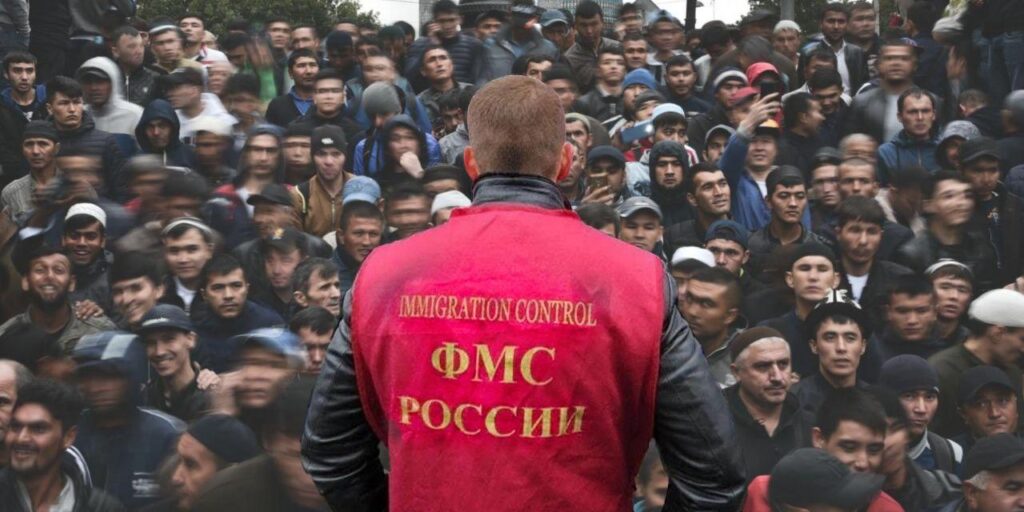
Russia introduced new regulations for foreign citizens in the country on February 5, and started keeping a list at the Interior Ministry of foreigners who are living or staying in Russia without proper documentation, the “controlled persons registry.” The rules are aimed at migrant laborers working in Russia, many of whom come from Central Asian countries. Russia has set a September 10 deadline for foreigners in the country to clear up all their paperwork with the authorities or face expulsion with a ban on re-entry. Judging by recent comments from Kyrgyzstan’s ambassador to Russia, Kubanychbek Bokontayev, many might not make that September 10 deadline. Needed but Not Desired Over the course of the last two decades, millions of citizens from Central Asian countries have worked in Russia. Most are from Kyrgyzstan, Tajikistan, and Uzbekistan. The remittances they send home have grown to the point where this money now accounts for nearly 40% of the GDP in Tajikistan, 24% in Kyrgyzstan, and 14% in Uzbekistan. Most of these remittances come from Russia. Russia badly needs the extra workers, and, until recently, the arrangement seemed to suit all parties. But the March 2024 terrorist attack on Moscow’s Crocus City Hall changed the situation. The Russian authorities detained and charged a group of Tajik nationals for the attack, and the always simmering xenophobia in Russia, particularly toward Central Asians, boiled over. New rules and restrictions have been imposed on migrant workers. Those that came into force in February this year were only the latest in a series of changes that already included mandatory fingerprinting and photographs upon entry to Russia, a reduction in the term of stay from 180 to 90 days, and an increasing list of infractions that provide grounds for deportation. In 2024, Russia expelled some 157,000 migrants who were in the country illegally, which, according to Russian Interior Minister Vladimir Kolokoltsev, was an increase of some 50% over 2023. The Clock Is Ticking At the start of February, just before the latest regulations came into effect, Russia’s Deputy Interior Minister Aleksandr Gorovoi said there were some 670,000 foreigners living illegally in Russia. Gorovoi added that more than half were women and children, “those who entered, but we do not see that they received a patent registered with the migration service… [or] that an employment agreement was concluded with them.” On July 24, Kyrgyz media outlet AKIpress published an interview with the Kyrgyz Ambassador to Russia, Bokontayev, in which he said that at the start of July, there were some 113,000 Kyrgyz citizens on the controlled persons registry, which he referred to as the “gray list.” He also said there were some 80,000 Kyrgyz citizens on the “black list” of people barred from entering Russia. In a separate interview with Radio Free Europe/Radio Liberty’s Kyrgyz Service published on July 25, Kyrgyzstan’s General Consul in Russia, Bakyt Asanaliyev, said that about 30% of the Kyrgyz citizens on the gray list are children. Ambassador Bokontayev said Kyrgyzstan’s embassy is working to make sure...

8 months ago

Tajikistan Escalates Deportations of Afghan Refugees Amid Growing Concerns

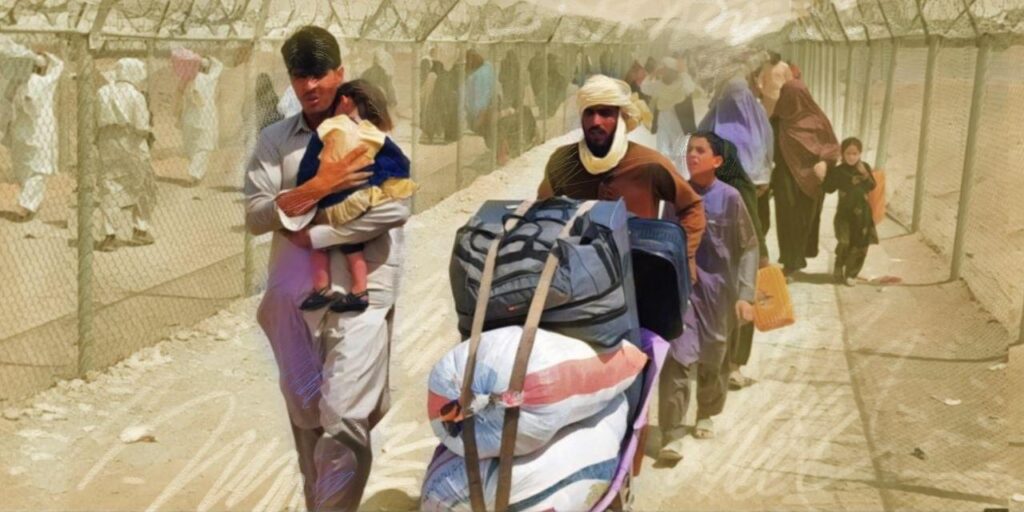
Afghans who fled to Tajikistan are keeping a low profile lately. Tajik authorities have started the latest wave of deportations, and this one looks to be bigger than the previous sweeps. “You Have 15 Days” At the beginning of July, Afghan refugees and asylum-seekers in Tajikistan received an SMS warning them to leave the country within 15 days or else they would be forcibly deported. Tajikistan’s government has not commented on these messages, but the detention of Afghans started not long after the messages were sent. So far, the only two places mentioned where Afghans were being apprehended were the Rudaki district outside of Dushanbe and the town of Vahdat, 26 kilometers from Dushanbe. Hundreds of Afghan refugees are known to be living in these two areas. Radio Free Europe/Radio Liberty’s Tajik Service, known locally as Ozodi, reported that journalists who went to the houses of Afghan refugees in Vahdat were stopped and turned away by men in military uniforms outside the homes. Some Afghan refugees in Vahdat spoke with Ozodi under the condition of anonymity and said that on July 15, several vans arrived and took away “dozens” of Afghan men, women, and children. One said Afghan refugees are staying inside their homes, fearing that if they go out, they will be detained and deported. Police “take the documents from Afghans and set a date for them to leave the country,” the refugee said, “For more than 20 days we have practically not stepped outside at all.” Local Tajiks confirmed that Afghans were being taken away and that many of those who remained were searching for new places to live to avoid being apprehended. The Tajik authorities did not say anything about the deportations until July 19, when the state news agency Khovar posted a text from the Press Center of the Border Troops of the State Committee for National Security. The statement said some “foreign citizens” had entered Tajikistan illegally, and a “certain number” of them engaged in illegal activities such as “narcotics trafficking, [spreading] the ideas of extremist movements,” or providing false information or documents to acquire refugee status. The office of the UN High Commissioner for Refugees (UNHCR) said that as of the end of 2024, there were 9,902 Afghan refugees registered in Tajikistan. However, Afghans have been fleeing their homeland and coming to Tajikistan for many years, and some estimates for the number of Afghans in Tajikistan run as high as 13,000. Something else which remains unclear about the Afghan refugees in Tajikistan is how many are ethnic Tajiks. Ostensibly, most of them could be since the ethnic Tajik population of Afghanistan is mainly found in areas adjacent to Tajikistan. Many who came to Tajikistan 10 or 15 years ago have assimilated and are likely not refugees or asylum seekers, but may not have obtained Tajik citizenship. It is unclear how many Afghan citizens have been detained and deported since the start of July, but they are just the latest to be sent back to...

8 months ago