• KGS/USD = 0.01144 0%
  • KZT/USD = 0.00208 0%
  • TJS/USD = 0.10439 0%
  • UZS/USD = 0.00008 0%
  • TMT/USD = 0.28571 0%
  • KGS/USD = 0.01144 0%
  • KZT/USD = 0.00208 0%
  • TJS/USD = 0.10439 0%
  • UZS/USD = 0.00008 0%
  • TMT/USD = 0.28571 0%
  • KGS/USD = 0.01144 0%
  • KZT/USD = 0.00208 0%
  • TJS/USD = 0.10439 0%
  • UZS/USD = 0.00008 0%
  • TMT/USD = 0.28571 0%
  • KGS/USD = 0.01144 0%
  • KZT/USD = 0.00208 0%
  • TJS/USD = 0.10439 0%
  • UZS/USD = 0.00008 0%
  • TMT/USD = 0.28571 0%
  • KGS/USD = 0.01144 0%
  • KZT/USD = 0.00208 0%
  • TJS/USD = 0.10439 0%
  • UZS/USD = 0.00008 0%
  • TMT/USD = 0.28571 0%
  • KGS/USD = 0.01144 0%
  • KZT/USD = 0.00208 0%
  • TJS/USD = 0.10439 0%
  • UZS/USD = 0.00008 0%
  • TMT/USD = 0.28571 0%
  • KGS/USD = 0.01144 0%
  • KZT/USD = 0.00208 0%
  • TJS/USD = 0.10439 0%
  • UZS/USD = 0.00008 0%
  • TMT/USD = 0.28571 0%
  • KGS/USD = 0.01144 0%
  • KZT/USD = 0.00208 0%
  • TJS/USD = 0.10439 0%
  • UZS/USD = 0.00008 0%
  • TMT/USD = 0.28571 0%

Our People > Joe Luc Barnes

Joe Luc Barnes's Avatar

Joe Luc Barnes

Journalist

Joe Luc Barnes is a British journalist and author who focuses on the countries of the former Soviet Union. He has a Master’s degree in Russian and East European Politics from the University of Oxford. His book, “Farewell to Russia: A Journey Through The Former USSR”, will be published by Elliott and Thompson in Spring 2026.

Articles

Rail, Water, and Helicopters – Uzbekistan’s “Limited Recognition” of the Taliban

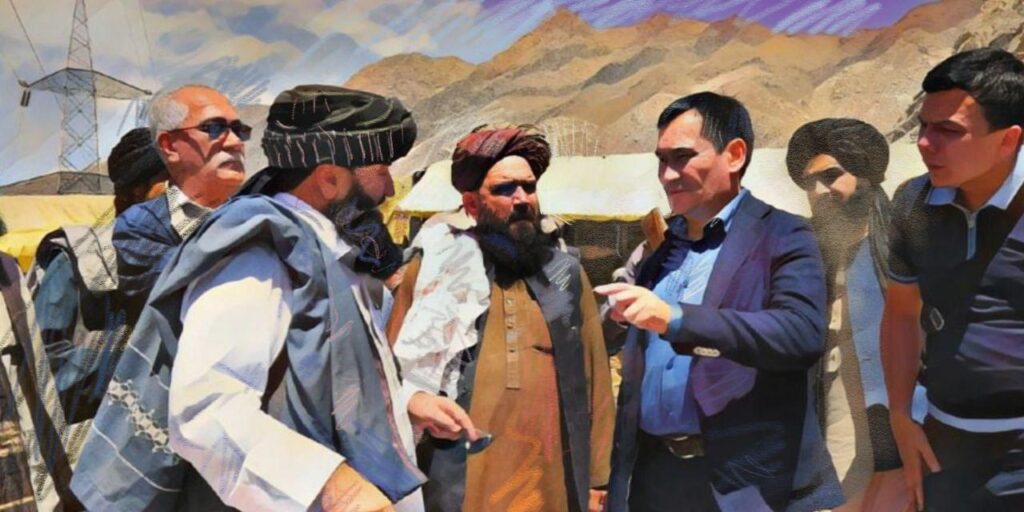
Uzbekistan has spent the middle of September embroiled in an increasingly tetchy press battle over an unusual topic: helicopters. The Taliban, who run the de facto government in Kabul, have long claimed that several dozen military aircraft and helicopters currently residing in Uzbekistan are rightfully theirs. On September 11, a Taliban official announced publicly that Uzbekistan had agreed to hand them back. This was reported widely in the regional media, with the Uzbek foreign ministry slow off the mark in denying these claims. The dispute goes back to the fall of Kabul in August 2021, when a total of 57 aircraft were flown from Afghanistan to Uzbekistan and Tajikistan as Ashraf Ghani’s government collapsed. “The helicopters came from the Afghan territory to Uzbek territory illegally, so actually we had the right to confiscate them,” Islomkhon Gafarov, an Afghanistan expert at the Center for Progressive Reform, a Tashkent think tank, told the Times of Central Asia. However, Gafarov adds that the aircraft were the property of the U.S. military loaned to the previous government of Afghanistan, and therefore, Washington will have a say in their return. This has not stopped the Taliban from continuing to demand the helicopters back for use in “humanitarian operations,” in the words of Foreign Minister Amir Khan Muttaqi. Such wrangling is part of the daily diplomatic in-tray for Tashkent when dealing with a neighbor whose government has not been recognized by almost the entire world. “Afghanistan is our neighbor,” said Gafarov. “According to the geopolitical situation, we have to conduct a dialogue with this government. It’s true, Uzbekistan hasn’t recognized the Taliban government, but de facto, we work with them; we’ve had diplomatic relations with them since 2018.” Tashkent certainly has reasons to work with the Taliban. Helicopters are a mere sideshow compared to two far larger issues that will define their relations for years to come: rail and water. Railway On the positive side of the ledger, the Taliban have brought to Afghanistan a reasonable degree of stability - enough to start contemplating large-scale infrastructure projects. In July, an agreement was struck between Pakistan, Afghanistan, and Uzbekistan to conduct a feasibility study for a trans-Afghanistan railway, with 647 kilometers of new track being laid to link Uzbekistan with Pakistan’s Indian Ocean ports. This railway could bring significant benefits to Uzbekistan, one of only two double-landlocked countries in the world. Currently, sea-bound exports must travel via Turkmenistan to Iran. Other routes almost all rely on going via Kazakhstan. The China-Kyrgyzstan-Uzbekistan railway, currently being constructed, should remove some of the need for sea-bound routes, but the Pakistan route would be faster. “The trans-Afghan route is the shortest way to the seaports of Karachi and Gwadar,” Gafarov told TCA. With a line from Termez, Uzbekistan, to Mazar-i-Sharif in Northern Afghanistan already operational, this only leaves two sections unbuilt - from Mazar to Kabul, and then from Kabul to Peshawar in Pakistan. The teams are still only at the feasibility stage right now, and have, with some chutzpah, predicted...

6 months ago

Has Kyrgyzstan Benefited From Its Membership of the EAEU?

On the sunlit shores of Lake Issyk-Kul this August, Kyrgyzstan played host to leaders from across the Eurasian Economic Union (EAEU). On August 14-15, officials from Armenia, Belarus, Kazakhstan, and Russia descended on the resort town of Cholpon-Ata for a meeting of the Eurasian Intergovernmental Council, accompanied by ceremonies to mark a decade since Kyrgyzstan joined the Moscow-led economic bloc. The Kyrgyz government issued a commemorative stamp to celebrate the anniversary, while the guest of honor, Russian Prime Minister Mikhail Mishustin, arrived with pledges of deeper integration. Rosatom, Moscow’s nuclear agency, signed agreements to build Kyrgyzstan’s first wind farm near Issyk-Kul, while the union’s five governments also agreed to recognize each other’s digital documents, and talks continued on a long-awaited gas union. Mishustin also caused a stir on social media by addressing the Kyrgyz honor guard in their own language. The words “Salam Asker” (hello, soldiers) were enough to draw appreciation from a Kyrgyz society unused to hearing Russian politicians use any language but Russian in its former colonies. The flattery was all part of the choreography: in return, Kyrgyz government officials and state media fell in line to proclaim the benefits of EAEU membership. But have these benefits been worth it? Or has the EAEU merely tethered Bishkek to a partner whose grip is more suffocating than supportive? [caption id="attachment_35121" align="aligncenter" width="1600"] The Conference Hall at Cholpon-Ata, where the council meeting took place; image: Joe Luc Barnes[/caption] The Case for the Union Kyrgyz officials are keen to emphasize the upsides. In an interview with state mouthpiece Slovo.kg, former economic minister Arzybek Kozhoshev said that joining the bloc had eased conditions for Kyrgyz migrant laborers in Russia and Kazakhstan. “With the accession of the Kyrgyz Republic to the EAEU, the conditions of stay and work of citizens of the Kyrgyz Republic in other EAEU countries have changed significantly,” Kozhoshev said, highlighting simplified entry, no requirement to take a Russian language exam, equal access to health insurance, and even the right to draw pensions on par with local workers. For a country where remittances have accounted for around 25% GDP over the past decade, these measures are not insignificant. Kyrgyz drivers, once barred from operating commercial vehicles in Russia, now enjoy full rights. Digital labor platforms like Work Without Borders make it easier to find jobs, and migrant workers in Russia pay the same flat 13% tax as local workers. In short, for the hundreds of thousands of Kyrgyz toiling in Moscow, Novosibirsk, and Almaty, the EAEU has meant fewer hurdles and more predictability. It’s worth bearing in mind that other potential labor destinations, such as Korea, the United States, or the European Union, are not handing out hundreds of thousands of visas to Kyrgyz citizens every year. Kremlin officials have also stressed that Kyrgyzstan pays lower tariffs on Russian gas – only $150 per 1,000 cubic meters, due to its EAEU membership. That said, given Russia’s current oversupply of gas with the closure of the European market, this is not...

7 months ago

How Could the Armenia-Azerbaijan Peace Accord Benefit Central Asia?

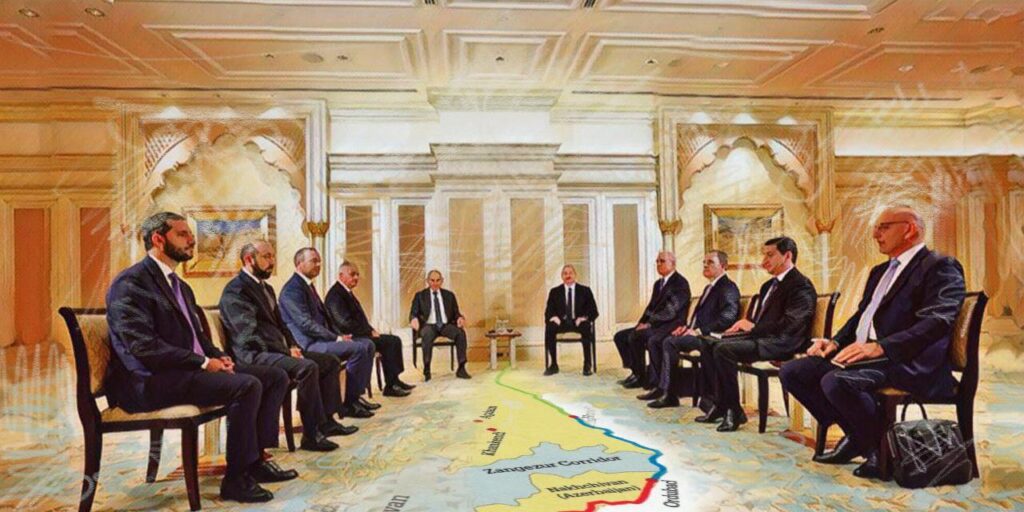
On August 8, Armenia and Azerbaijan signed a peace accord in Washington and committed to the construction of the Trump Route for Peace and Prosperity, a trade route that bisects Armenia, connecting the two parts of Azerbaijan. The deal may have far-reaching repercussions on the other side of the Caspian, potentially diversifying the Trans-Caspian Middle Corridor by allowing travel from Azerbaijan, through Armenia, and onwards to Turkey. The upbeat mood music may be premature, however. There remain numerous political hurdles to be jumped before any construction can commence, and the entry of the United States into a region where Russia, Iran, and Turkey all have interests could have unintended consequences. “It’s certainly an opportunity, but there are risks,” said Azerbaijani political analyst and non-resident fellow at the China-Global South Project, Yunis Sharifli. “The United States can be a stabilizing force, but it could go in the opposite direction. It can also create a spoiler.” The Problem Armenia and Azerbaijan have maintained ice-cold relations for almost their entire existence as independent states. For over three decades, they tussled over the status of Nagorno-Karabakh, a land which lies in the internationally recognized territory of Azerbaijan, but was, upon independence, populated mainly by Armenians. As well as costing thousands of lives and leading to hundreds of thousands of displaced persons, the enmity has also led to shuttered frontiers, which have choked trade across the South Caucasus. Armenia’s borders with both Azerbaijan and Turkey have been closed since 1993. While Armenia has been cut off from two of its four neighbors, Azerbaijan has also been severed in two, with the exclave of Nakhchivan, which borders Turkey, separated from the rest of the country by a sliver of Armenian territory, just 20 miles wide at its narrowest point. Conflicts in 2016, 2020, and 2023 saw Azerbaijan push Armenian troops from the region, with hundreds of thousands of Armenians fleeing Nagorno-Karabakh in fear of Azerbaijani reprisals. Since then, Baku has used its vast military superiority and geopolitical advantage to try to strongarm Armenia into accepting the construction of a corridor across its territory, threatening to use force on numerous occasions if Yerevan did not agree to its demands. The Solution Starting early this year, the United States began facilitating secretive negotiations between the pair, stepping into the vacuum left by Russia. The Kremlin has been sidelined from the process amid its deteriorating relations with both sides – many Armenians view Moscow as having betrayed them in the conflicts of 2020 and 2023, while Azeri-Russian relations have frayed significantly since the shooting down of Azerbaijan Airways Flight 8243 to Grozny earlier this year. The timing of the signing ceremony, on the anniversary of the Russian invasion of Georgia in 2008, was perhaps designed to reflect this shift in geopolitical alignment in the South Caucasus. Baku and Yerevan have signed up to a project which will see the construction of the corridor run by a U.S. private company, but under the laws of the Republic of Armenia. The...

7 months ago

Halyk Bank Buys 49% Stake in Uzbekistan’s Click in Landmark Fintech Deal

Almaty - Kazakhstan’s Halyk Bank has announced it will acquire a 49% stake in Uzbek digital payments company Click for $176.4 million, marking one of the largest cross-border banking investments in Central Asia to date. The deal values Click at approximately $360 million, highlighting the growing importance of digital finance in the region’s rapidly evolving financial landscape. With over 20 million customers, Click is one of Uzbekistan’s most widely used payment providers. As part of the agreement, Click will also take a 49% stake in Tenge Bank, Halyk’s Uzbek subsidiary, for $60.76 million. The reciprocal structure of the deal is designed to foster tighter operational integration and shared technological infrastructure between the two institutions – a significant step toward regional financial harmonization. “This is a historic moment for Click. Partnering with Halyk Bank and expanding our capabilities through Tenge Bank represents a major step forward in delivering world-class digital financial services to millions of users,” said Ulugbek Rustamov, CEO of Click. “At the same time, the structure of the deal ensures Click retains its independence, continues to shape its strategic vision, and remains a proud national brand.” Strategic Push Toward Integration The announcement comes as both Kazakhstan and Uzbekistan continue efforts to modernize their financial systems and ease cross-border payments. Regional trade between the two nations has grown steadily in recent years, with bilateral trade turnover reaching $4.22 billion in 2024, up from $2.9 billion in 2020. Halyk Bank, already Kazakhstan’s dominant financial institution with a 29% market share and more than 10.9 million active retail clients, views the investment as a strategic step towards capturing Uzbekistan’s booming digital economy. Click, meanwhile, gains regulatory grounding via Tenge Bank and access to Halyk’s technology and ability to raise capital from its public listing on the London Stock Exchange. Uzbekistan, whose GDP grew by 7.2% in the first half of 2025, continues to open its financial sector to foreign capital – a key pillar of President Shavkat Mirziyoyev’s economic reform program. Competing Power Structures? This fintech alliance also throws an intriguing light on Central Asia’s most influential business families. Halyk Bank is majority-owned by Timur Kulibayev and his wife Dinara, the daughter of former Kazakh president Nursultan Nazarbayev, widely viewed as Kazakhstan’s most powerful couple. Their expanding presence in Uzbekistan via Click and Tenge Bank may once have had the potential to ruffle feathers amongst Uzbekistan’s elite. The fact that the deal has been allowed to proceed this far is in itself an acknowledgement of the shared interests of regional powerbrokers. A Shift in Regional Strategy The deal represents a strategic reversal for Halyk Bank. In recent years, the bank has divested from its Kyrgyz and Tajik operations, selling 100% of its Kyrgyz subsidiary to oligarch Aidan Karibzhanov in 2024 and liquidating its Tajik entity in 2022. The Click acquisition signals a renewed focus on Uzbekistan, with the potential to make the country Halyk’s primary external growth market. This renewed push comes as Halyk cements its dominance in Kazakhstan, where it controls...

8 months ago

Steppe Diplomacy: Mongolia Deepens Central Asia Ties

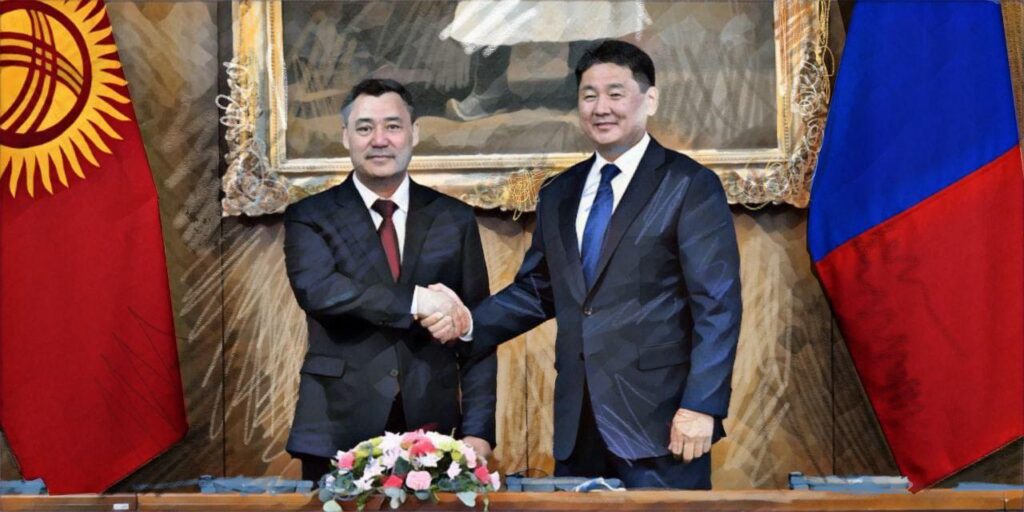
Late on July 20th, the President of Mongolia, Ukhnaagiin Khürelsükh, touched down in Bishkek as part of a two-day state visit to Kyrgyzstan. It forms part of Khürelsükh’s wider Central Asian tour, with the President set to fly to Dushanbe following his sojourn in the Kyrgyz capital. The trip builds on Kyrgyz President Sadyr Japarov’s 2023 visit to Ulaanbaatar, where he oversaw the opening of Kyrgyzstan’s first embassy in Mongolia and toured the Genghis Khan Museum in the capital. A warm greeting Khürelsükh was welcomed by Japarov on the red carpet at Manas International Airport, where traditional dances, music, and even a ceremonial eagle were laid on. The pair greeted each other like old friends before the motorcade swept along the empty roads towards the city. Like Japarov, Khürelsükh has been president since 2021, although, unlike his Kyrgyz counterpart, his role is largely ceremonial. Indeed, current Mongolian politics offers a hint of nostalgia to those in Kyrgyzstan with fond memories of the pre-Japarov era. In June, the Mongolian Prime Minister was forced to resign after losing a vote of confidence in the country’s parliament. This followed months of protests after press reports covering his son’s extravagant spending. The second day of the visit afforded Japarov the chance to play to statesman-like host and welcome a new visitor to the Presidential Palace – the Yntymak Ordo – which is still less than a year old. With temperatures hitting 37°C (98° Fahrenheit) in the Kyrgyz capital, the Mongolian leader arrived at the palace in a blacked-out Mercedes, flanked by a horse-mounted honor guard. The besuited leaders then stood in the baking sunshine to receive a military salute from Kyrgyzstan’s army. A burgeoning friendship Perhaps the scale of the pomp masks the limits of what can be achieved bilaterally. Iskander Sharsheyev, an independent Kyrgyz economist, was keen to stress to The Times of Central Asia that the leaders did achieve some breakthroughs in terms of agriculture: “Veterinary certificates were signed... This provides a new market for Kyrgyz producers. Kyrgyzstan and Mongolia signed a memorandum of cooperation in the field of wool processing, including cashmere. Mongolia is one of the world leaders in cashmere production, and the transfer of technology and training of specialists can dramatically improve the Kyrgyz textile sector.” However, real announcements were thin on the ground and the language of diplomacy was heavy with blandishments: “We strive to develop mutually beneficial cooperation in all areas, especially in the trade and economic sphere,” said Khürelsükh, while Japarov noted that “comprehensive cooperation with Mongolia is one of the priority areas of the development of Kyrgyzstan's foreign policy.” The question is whether there is any substance behind this. Economically, the numbers are hardly going to move the dial. In the first five months of this year, Kyrgyzstan exported $3.1 million worth of goods to Mongolia, much of it confectioneries. Mongolian exports in the other direction are even lower. While officials are trumpeting the rate of growth, which tripled in 2024, it’s worth having a...

8 months ago