• KGS/USD = 0.01144 0%
  • KZT/USD = 0.00212 0%
  • TJS/USD = 0.10549 -0.28%
  • UZS/USD = 0.00008 0%
  • TMT/USD = 0.28530 0%
  • KGS/USD = 0.01144 0%
  • KZT/USD = 0.00212 0%
  • TJS/USD = 0.10549 -0.28%
  • UZS/USD = 0.00008 0%
  • TMT/USD = 0.28530 0%
  • KGS/USD = 0.01144 0%
  • KZT/USD = 0.00212 0%
  • TJS/USD = 0.10549 -0.28%
  • UZS/USD = 0.00008 0%
  • TMT/USD = 0.28530 0%
  • KGS/USD = 0.01144 0%
  • KZT/USD = 0.00212 0%
  • TJS/USD = 0.10549 -0.28%
  • UZS/USD = 0.00008 0%
  • TMT/USD = 0.28530 0%
  • KGS/USD = 0.01144 0%
  • KZT/USD = 0.00212 0%
  • TJS/USD = 0.10549 -0.28%
  • UZS/USD = 0.00008 0%
  • TMT/USD = 0.28530 0%
  • KGS/USD = 0.01144 0%
  • KZT/USD = 0.00212 0%
  • TJS/USD = 0.10549 -0.28%
  • UZS/USD = 0.00008 0%
  • TMT/USD = 0.28530 0%
  • KGS/USD = 0.01144 0%
  • KZT/USD = 0.00212 0%
  • TJS/USD = 0.10549 -0.28%
  • UZS/USD = 0.00008 0%
  • TMT/USD = 0.28530 0%
  • KGS/USD = 0.01144 0%
  • KZT/USD = 0.00212 0%
  • TJS/USD = 0.10549 -0.28%
  • UZS/USD = 0.00008 0%
  • TMT/USD = 0.28530 0%

Our People > Sadokat Jalolova

Sadokat Jalolova's Avatar

Sadokat Jalolova

Journalist

Jalolova has worked as a reporter for some time in local newspapers and websites in Uzbekistan, and has enriched her knowledge in the field of journalism through courses at the University of Michigan, Johns Hopkins University, and the University of Amsterdam on the Coursera platform.

Articles

Central Asia to Develop a Unified Platform for Electricity Trade

Uzbekistan's Deputy Minister for Energy Umid Mamadaminov announced at the European Economic Days in Tashkent on November 6 that a unified platform for electricity trade is being developed in Central Asia. Mamadaminov said that Uzbekistan is developing this platform with the support of the World Bank and other partners. “Infrastructure is very important for integrating renewable energy sources such as wind and solar, and many countries face this problem. We need at least 5,000 km of power lines, including 500 kV and 200 kV high-voltage lines and substations,” Mamadaminov said. At least 2,000 km of power lines should be built in the next two years. “We have already signed contracts to install more than 2,000 MW of energy storage systems with a total capacity of more than 400 MW, as each is a two-cycle network. We will have at least 4,000 MW of basic capacity in the next two years. This helps to respond to fluctuations in solar energy production quickly,” the deputy minister said. According to Mamadaminov, automation is the main problem in integrating renewable energy sources into the electric grid because the system cannot be controlled without it. In addition, this year, reforms to modernize and regulate energy consumption, including a new plan developed by the Cabinet of Ministers, were implemented in Uzbekistan. Uzbekistan’s energy system, especially electricity generation, relies heavily on fossil fuels. However, the country aims to produce 25% of its electricity from renewable sources by 2030. Uzbekistan plans to focus on solar energy while using wind, biomass, and hydro sources to achieve this goal. The government is working to attract investors to build 8 GW of solar and wind power and increase hydroelectric capacity to 1.935 GW by 2030. Biogas production from biomass and organic waste will also be developed.

1 year ago

Uzbekistan Aims to Develop Agriculture with Smarter Water and Energy Use

Uzbekistan's President Shavkat Mirziyoyev recently held a meeting on the efficient use of water and energy in agriculture. More than 1,600 pumping stations currently use 6.8 billion kilowatts of electricity to irrigate 2.5 million hectares. Through the partnership, electricity consumption can be reduced by 20% by upgrading pumps and solar panels. For example, 92 farmers installed modern pumps in the Khorezm region, saving 20% of electricity. Some sold excess solar energy to the state and received an additional monthly income of 7-8 million UZS ($548-626). Water-saving technologies have helped Uzbekistan save 2 billion cubic meters of water in an area of more than 2 million hectares, and more than 50 local companies are producing these devices. However, some drip irrigation systems are still not working, and the 10 billion UZS ($780,000) subsidy allocated for laser leveling in Karakalpakstan hasn’t been used. Khorezm was also instructed to extend the subsidy for laser leveling to 1 million UZS ($78.00) per hectare and improve control over these technologies. Next year, 700 billion UZS ($54 million) in subsidies and 2.5 trillion UZS ($195 million) in credit will be used for water-saving technology. Additionally, flood reservoirs will be built in 13 districts, improving the water supply for 50,000 hectares. Mirziyoyev emphasized that real change requires digitization. About 1,700 online monitoring devices and 12,000 smart water devices are already in place, but Uzbekistan needs a system to collect and analyze this data. To address this, a Water Management Digitization Center will be set up to manage a new unified system for tracking water use.

1 year ago

Mirziyoyev Calls for Independent Palestinian State with East Jerusalem as Capital

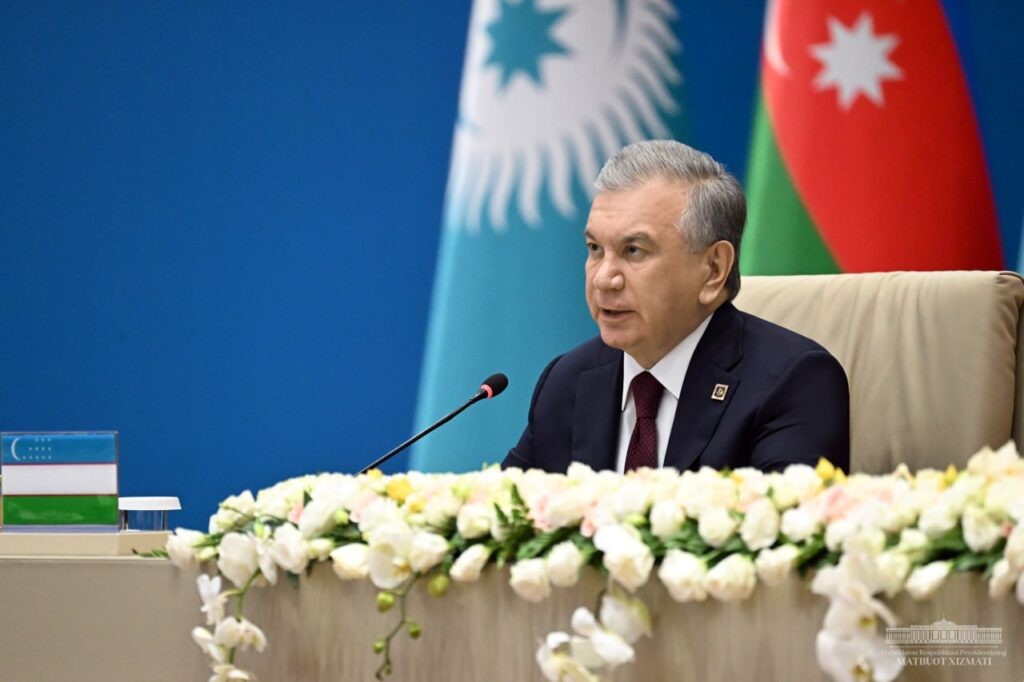
Speaking at this week's summit of the Organization of Turkic States in Bishkek, Uzbekistan's president Shavkat Mirziyoyev has once again discussed the situation in the Middle East. Mirziyoyev noted that global geopolitical processes have become increasingly complex since the start of the war in the region. The atmosphere of competition and mistrust between countries is intensifying, the hotbeds of conflict and war are increasing, and various dangers are growing. "These problems are a severe obstacle to our joint plans and big projects in trade, investment, transport, energy, agriculture, and other fields; this is the truth," Mirziyoyev said. “It is, first and foremost, about the ongoing war in the Middle East and the double standards that we see. Nothing can justify the unprecedented humanitarian tragedy in Gaza and Lebanon, the devastating attacks against civilians, especially the death of innocent children, the elderly, and women. We strongly condemn the actions aimed at restricting the activities of the United Nations Relief and Works Agency for Palestine Refugees. The only solution to this long-standing conflict is the establishment of an independent State of Palestine with East Jerusalem as its capital, based on the 1967 borders, by international regulations and resolutions,” noted Mirziyoyev. He hoped the Arab-Islamic Summit in Riyadh next week would find a clear political solution to this problem. He also highlighted the importance of Afghanistan’s stability: “When it comes to security, we believe Afghanistan should always be at the focus of our Organization. In this regard, it is crucial to establish a regular dialogue mechanism at the ministerial and expert levels. We believe that the issues of providing support to de facto authorities in addressing acute problems in Afghanistan, integrating this country into regional economic processes, and implementing social and infrastructure projects should be considered.”

1 year ago

Von der Leyen Affirms EU’s Commitment to Uzbekistan

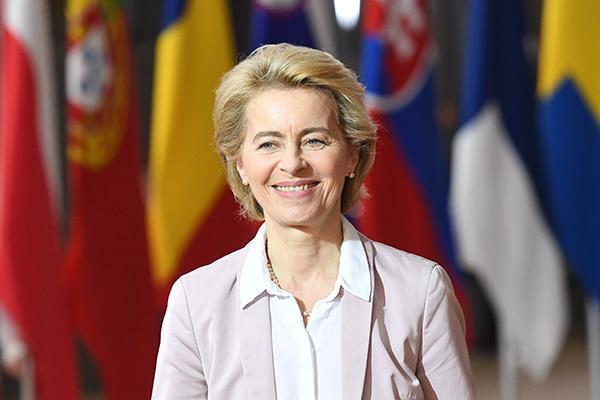
On November 6, the European-Uzbekistan Economic Cooperation Association opened the European Economic Days 2024 in Tashkent. At the ceremony, the President of the European Commission, Ursula von der Leyen, sent a video message to the event participants expressing her support for Uzbekistan’s efforts to restore its central position on Asian and world trade routes. More than 300 representatives from Uzbek and European governments and business sectors participated. Von der Leyen highlighted three main areas of cooperation between the European Union and Uzbekistan, which have grown significantly in recent years. She began by emphasizing Uzbekistan’s historical role as a “beating heart” of global trade. “For centuries, European merchants traveled to Samarkand, Bukhara, and Khiva for clothing and ceramics,” she said, recalling the stories these merchants would bring back of Uzbekistan’s palaces, landscapes, and vibrant culture. She noted that Uzbekistan seeks to open to the world once again. Her first example of collaboration focused on trade: “Since 2021, we opened the European market to Uzbek goods, and exports, especially in textiles and metallurgy, have rapidly increased,” she said, adding that there is still vast growth potential. Von der Leyen then turned to investment, mentioning the EU’s Global Gateway program, which supports Uzbekistan’s goal of global connectivity. She highlighted the EU’s investment of up to 10 billion euros, alongside international partners, in the Trans-Caspian Corridor—the shortest, safest route from Europe to East Asia, connecting Central Asia and Europe in less than 15 days. Additionally, she noted efforts to connect Uzbekistan to the EU satellite network to bring advanced digital communications to even the country’s most remote areas. Her final example centered on expanding EU cooperation in Uzbekistan’s strategic sectors. She referenced an agreement signed in April 2024 to bolster supply chains for critical minerals, a project that aims to create jobs and add value locally. “While some global investors focus solely on raw material extraction, that’s not us,” she emphasized, reaffirming Europe’s commitment to supporting domestic industry, job creation, and value-added production in line with high standards. Concluding her speech, Von der Leyen expressed hope that the forum would establish effective cooperation, new business opportunities, and strong relations between Europe and Uzbekistan. She also announced plans for the first-ever “Central Asia—EU” summit in Samarkand next year, marking another step in the region’s evolving relationship with the EU.

1 year ago

New Guzor to Beinau Highway Brings Uzbekistan Closer to Europe

Uzbekistan has completed a new 240-kilometer section of the A380 highway connecting the cities of Guzor, Bukhara, Nukus, and Beineu, passing through the Kungirot district of Karakalpakstan. The road, built with a cement-concrete coating, is a strategic road connecting Uzbekistan with Europe. The Asian Development Bank allocated $274.9 million to the construction, while Uzbekistan contributed $108.5 million. Turkish and Azerbaijani companies managed the first 120 kilometers of the road, with Chinese companies managing the rest. The highway aims to boost the capacity and quality of international and national highways, cutting road maintenance costs by 2.5 times. This new road will reduce travel time by 2.2 times, double transit traffic, cut fatal accidents by half, and contribute to regional GDP growth. It will also reduce Uzbekistan's international transport distance to 1,000 kilometers, lowering shipping costs by 25%. New trade and service centers are planned alongside the highway, initially creating 2,000 jobs and an additional 5,000 expected. This development is projected to boost Karakalpakstan’s annual transit and service revenue by $200 million and exports by at least $300 million.

1 year ago