
• KGS/USD = 0.01144 0%
  • KZT/USD = 0.00207 0%
  • TJS/USD = 0.10415 -0.19%
  • UZS/USD = 0.00008 0%
  • TMT/USD = 0.28571 0%
  • KGS/USD = 0.01144 0%
  • KZT/USD = 0.00207 0%
  • TJS/USD = 0.10415 -0.19%
  • UZS/USD = 0.00008 0%
  • TMT/USD = 0.28571 0%
  • KGS/USD = 0.01144 0%
  • KZT/USD = 0.00207 0%
  • TJS/USD = 0.10415 -0.19%
  • UZS/USD = 0.00008 0%
  • TMT/USD = 0.28571 0%
  • KGS/USD = 0.01144 0%
  • KZT/USD = 0.00207 0%
  • TJS/USD = 0.10415 -0.19%
  • UZS/USD = 0.00008 0%
  • TMT/USD = 0.28571 0%
  • KGS/USD = 0.01144 0%
  • KZT/USD = 0.00207 0%
  • TJS/USD = 0.10415 -0.19%
  • UZS/USD = 0.00008 0%
  • TMT/USD = 0.28571 0%
  • KGS/USD = 0.01144 0%
  • KZT/USD = 0.00207 0%
  • TJS/USD = 0.10415 -0.19%
  • UZS/USD = 0.00008 0%
  • TMT/USD = 0.28571 0%
  • KGS/USD = 0.01144 0%
  • KZT/USD = 0.00207 0%
  • TJS/USD = 0.10415 -0.19%
  • UZS/USD = 0.00008 0%
  • TMT/USD = 0.28571 0%
  • KGS/USD = 0.01144 0%
  • KZT/USD = 0.00207 0%
  • TJS/USD = 0.10415 -0.19%
  • UZS/USD = 0.00008 0%
  • TMT/USD = 0.28571 0%

Our People > Sadokat Jalolova

Sadokat Jalolova's Avatar

Sadokat Jalolova

Journalist

Jalolova has worked as a reporter for some time in local newspapers and websites in Uzbekistan, and has enriched her knowledge in the field of journalism through courses at the University of Michigan, Johns Hopkins University, and the University of Amsterdam on the Coursera platform.

Articles

Uzbek FLEX Finalist Returns Home After Alleged Harassment by Host Father in Indiana

An Uzbek high school student selected for the prestigious FLEX exchange program has returned home after her family alleged she was subjected to sexual harassment by her host father in the United States. The claims were made public by her father, Dr. Aziz Boltayev, in a detailed Facebook post. Uzbek officials have confirmed that they requested explanations from program representatives, while the U.S. side has not issued a public statement. Dr. Boltayev’s daughter was one of nearly 60 finalists from Uzbekistan selected in 2025 for the Future Leaders Exchange Program (FLEX), had traveled to the United States to complete her final year of high school. The fully funded initiative, supported by the U.S. Department of State, enables students from participating countries to study at American high schools and live with volunteer host families for one academic year. According to Boltayev’s account, his daughter was placed in a small town in Indiana with a childless couple, both music teachers, who had previously hosted exchange students. Initial video calls reportedly reassured the family prior to her departure. “After graduating from medical school, I received a U.S. Department of State grant and spent time in the United States for professional development,” Boltayev wrote. “I returned to Uzbekistan with a deep sense of gratitude and a positive impression of American values. Naturally, when my eldest daughter won the FLEX grant in 2025, I was proud and supportive.” He said the situation changed approximately a month after her arrival. According to his post, the host father allegedly began making inappropriate remarks and advances when his wife was not present. “He told my daughter that it was ‘necessary to gain sexual experience’ before marriage,” Boltayev wrote. “To her credit, [his daughter] firmly resisted and immediately informed her assigned FLEX coordinator.” According to Boltayev, the local coordinator relocated his daughter shortly after the complaint was filed. However, he criticized the way communication with the family in Uzbekistan was handled. “The coordinator moved [his daughter] out of the house immediately, but in doing so, they completely bypassed us, her parents,” he wrote. Due to the time difference, he said he was informed the following day by the FLEX office in Tashkent. Boltayev further alleged that during this period his daughter’s phone was switched off and her parents’ messages went unanswered. He claimed that the coordinator had instructed her to turn off her phone for “security reasons,” which he described as isolating a minor from her parents. He also asserted that neither the temporary host family nor U.S.-based program representatives agreed to speak directly with him. According to Boltayev, his daughter was told that program officials were not obligated to provide information to her parents. Seeking reassurance, Boltayev contacted a friend, a faculty member at the University of Michigan, who lives several hours from his daughter’s location, and asked him to check on her in person. “Even then, FLEX representatives tried to block him, telling my daughter: ‘He needs our permission to see you, and for now, permission is...

2 weeks ago
Uzbekistan Urges Restraint as Afghanistan-Pakistan Border Clashes Escalate

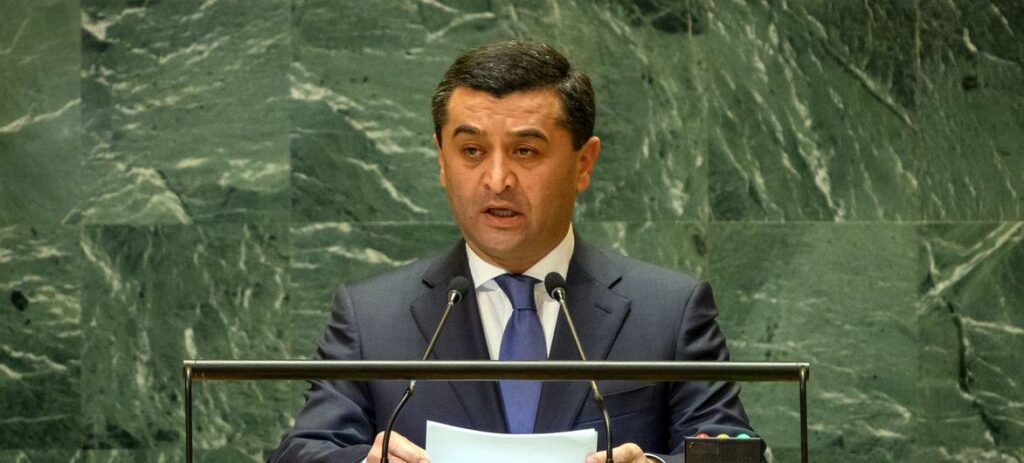
Armed clashes along the Afghanistan-Pakistan border have intensified, prompting Uzbekistan to call for restraint and a diplomatic resolution. Active hostilities reportedly began after Afghan forces opened fire on Pakistani military posts in mountainous areas along the Durand Line in northwestern Pakistan, according to media reports on February 27. Officials in Uzbekistan view stability along the Afghanistan-Pakistan border as directly linked to Central Asian security. Potential regional risks include the proliferation of illegal weapons, drug trafficking, militant activity, refugee flows, and possible disruptions to trade and transit corridors. Uzbekistan has expanded economic and infrastructure cooperation with Afghanistan in recent years, making border stability a strategic priority for both the country and the wider region. Exchanges of fire lasted more than two hours. Clashes were reported in the Afghan provinces of Khost, Paktia, and Nuristan, as well as near the Torkham border crossing, one of the region’s key transit routes. According to reports from Afghan sources, Afghan forces captured 19 Pakistani checkpoints during a large-scale operation and claimed that approximately 55 Pakistani soldiers were killed. Afghan authorities described the operation as a response to recent Pakistani airstrikes on Afghan territory. Kabul reported its own casualties at eight soldiers killed and 11 wounded. Within hours, Pakistan launched a counteroffensive across multiple sections of the border under an operation referred to as “Fury of Truth.” The escalation followed earlier Pakistani airstrikes in Nangarhar and Paktika provinces, which Islamabad said targeted fighters linked to Tehreek-e-Taliban Pakistan (TTP) and Islamic State-Khorasan. Pakistani officials stated that at least 70 militants were killed, while Taliban authorities asserted that civilian areas had been struck. The United Nations reported at least 13 civilian deaths and seven injuries in Nangarhar and confirmed no civilian casualties in Paktika. As tensions rose, Pakistan’s Special Representative for Afghanistan, Mohammad Sadiq, said he discussed regional security concerns with Uzbekistan’s Special Representative for Afghanistan, Ismatilla Irgashev. In a statement posted on X, Sadiq referred to reports alleging that more than 2,500 Uzbek militants are currently based in Afghanistan, describing them as one of the largest foreign militant groups operating in the country after TTP. United Nations Security Council reports have previously confirmed the presence of several armed groups in Afghanistan, including the Islamic Movement of Uzbekistan. However, independent verification of the current figures cited by Pakistani officials has not been publicly confirmed. Uzbekistan responded through diplomatic channels. Foreign Minister Bakhtiyor Saidov held separate phone conversations with Afghanistan’s Foreign Minister Mawlawi Amir Khan Muttaqi and Pakistan’s Deputy Prime Minister and Foreign Minister Muhammad Ishaq Dar. The discussions focused on preventing further escalation and preserving stability along the border. Saidov emphasized the importance of restraint and dialogue, stating that diplomatic engagement must remain the primary mechanism for addressing emerging challenges. Uzbekistan’s Ministry of Foreign Affairs later issued a formal statement expressing deep concern over the deterioration of the situation and calling for an immediate ceasefire, maximum restraint, and the resolution of disagreements through peaceful political and diplomatic means based on respect for sovereignty and territorial integrity.

2 weeks ago

EBRD Provides €20 Million Loan to Expand Uzbekistan’s Pharmaceutical Production

Uzbekistan is taking further steps to strengthen its pharmaceutical industry and healthcare system through new investment and sector reforms aimed at reducing reliance on imported medical products. The European Bank for Reconstruction and Development (EBRD) has announced a loan of up to €20 million to its long-term client Samarkand England Eco-Medical (SEEM) and its sister company, Bayan Medical. Both companies produce intravenous solutions, including sodium chloride, glucose, and amino acid infusions, as well as generic and specialized medicines in tablet and capsule form. The financing will support the installation of new production lines at SEEM, enabling the company to expand manufacturing of in-glass intravenous solutions, antibiotics, syrups and suspensions, medical-grade water, nasal sprays, suppositories, and ointments. Part of the funds will also be allocated to modernizing Bayan Medical’s facilities, including energy-efficiency upgrades and the installation of a blow-fill-seal ampoule production line and other specialized equipment. The companies are also expected to restructure their balance sheets as part of the project. The investment comes at a time when approximately 75% of medical goods used in Uzbekistan are imported. Expanding domestic production capacity is intended to promote localization, strengthen supply security, and align manufacturing standards with international requirements. The project also includes social and workforce components. Bayan Medical plans to introduce internship opportunities for university graduates, expand professional training programs for employees, and create new jobs, including positions accessible to people with disabilities. To date, the EBRD has invested nearly $6.9 billion (€5.8 billion) in Uzbekistan across 205 projects, the majority of which have supported private sector development. Uzbekistan has been the largest recipient of EBRD funding in Central Asia for six consecutive years, reflecting sustained economic reforms and investor engagement. Healthcare indicators point to broader structural progress. According to the 2024 Health Care Index published by CEOWORLD magazine, Uzbekistan ranks first in Central Asia and 64th globally, with a score of 36.26. Kazakhstan ranks 78th, and Turkmenistan 95th. Data from the World Health Organization and the World Bank indicate that Uzbekistan’s Universal Health Coverage service index rose from the mid-50s in 2000 to the mid-70s by 2021, suggesting expanded access to essential medical services. Authorities aim to further increase coverage by 2027 while reducing out-of-pocket healthcare spending through strengthened primary care systems and clearer guarantees of publicly funded services.

2 weeks ago

Central Asia’s Population Could Reach 96 Million by 2040, Raising Infrastructure Pressures

Central Asia’s population could grow to 96 million by 2040, a trend expected to stimulate economic expansion while placing significant strain on infrastructure, energy systems, and water resources across the region, according to Russia’s state news agency TASS. In an interview with TASS, Nikolai Podguzov, Chairman of the Management Board of the Eurasian Development Bank (EDB), said demographic growth would be one of the defining factors shaping Central Asia’s long-term development. “By 2040, according to our estimates, the population of Central Asia may reach 96 million. This should become a driver of economic growth, but at the same time such numbers will create enormous pressure on infrastructure,” he said. As previously reported by The Times of Central Asia, Central Asia’s population exceeded 84 million in 2025, continuing a rapid upward trend after surpassing 80 million in 2024. Projections indicate that the population could exceed 100 million by 2050, underscoring the scale of demographic and economic transformation facing the region in the coming decades. Podguzov added that the region would require significant progress in energy efficiency, modern transport systems, and water management to ensure sustainable development. He described Central Asia as one of the regions of the world most vulnerable to climate change. According to EDB forecasts, water shortages are expected to intensify, with an annual deficit potentially reaching between 5 and 12 cubic kilometers by 2028. A substantial portion of water resources is already lost due to outdated irrigation and distribution systems. Podguzov said the bank is financing projects to modernize irrigation networks, introduce water-saving technologies, and implement digital water accounting mechanisms across the region. To address these challenges, the EDB has proposed a Eurasian Transport Framework, a network of transport corridors aimed at lowering logistics costs and accelerating trade flows. While existing routes predominantly run east to west, Podguzov emphasized the growing importance of north-south connections, including the potential Trans-Afghan corridor, which could provide access to markets in South Asia and the Persian Gulf. The bank projects that the combined economies of Central Asia’s five countries will reach approximately $600 billion in 2026, positioning the region among the fastest-growing globally. However, Podguzov stressed that demographic expansion, transport development, and water security are closely interconnected challenges that require coordinated policy responses.  

2 weeks ago

Delhi Police Arrest Man After Large Theft Targeting Uzbek Visitor

Police in New Delhi have arrested a man accused of using his two minor children to carry out thefts near the busy Jama Masjid market, following an investigation into the theft of over $6,500 from a citizen of Uzbekistan visiting India for his daughter’s medical treatment, The Times of India reported. According to police, the case began after the Uzbek national filed a complaint at the Jama Masjid police station on January 15. The victim told authorities he had traveled to India for his youngest daughter’s cancer surgery in Gurgaon and was carrying foreign currency in a sling bag while sightseeing and shopping with his family in the historic market area. He later discovered that the cash and his debit card had been stolen. Deputy Commissioner of Police (Central) Anant Mittal said investigators relied on technical surveillance, CCTV footage from cameras installed around the market, and field intelligence to identify two siblings, aged 15 and 13, from the town of New Seelampur as suspects. “Through sustained technical surveillance and analysis of CCTV footage, the movements of the juveniles were tracked and verified, revealing their involvement,” Mittal said. Police conducted raids in New Seelampur and detained the children along with their father. During questioning, the man allegedly admitted that he had previously used his children to commit thefts in order to avoid direct suspicion, later keeping the stolen items himself. Authorities said the suspect had previously been linked to a robbery case registered at the Pandav Nagar police station. The minors were also reportedly connected to earlier incidents, including motor vehicle theft cases investigated by Jama Masjid police. During the operation, officers recovered $6,500 in cash, the victim’s debit card, 4,700 Indian rupees (about $57), and a mobile phone worth 48,000 rupees (approximately $580), which police believe was purchased with stolen funds. The investigation is ongoing.

2 weeks ago