• KGS/USD = 0.01144 0%
  • KZT/USD = 0.00205 0%
  • TJS/USD = 0.10685 0%
  • UZS/USD = 0.00008 0%
  • TMT/USD = 0.28490 0%
  • KGS/USD = 0.01144 0%
  • KZT/USD = 0.00205 0%
  • TJS/USD = 0.10685 0%
  • UZS/USD = 0.00008 0%
  • TMT/USD = 0.28490 0%
  • KGS/USD = 0.01144 0%
  • KZT/USD = 0.00205 0%
  • TJS/USD = 0.10685 0%
  • UZS/USD = 0.00008 0%
  • TMT/USD = 0.28490 0%
  • KGS/USD = 0.01144 0%
  • KZT/USD = 0.00205 0%
  • TJS/USD = 0.10685 0%
  • UZS/USD = 0.00008 0%
  • TMT/USD = 0.28490 0%
  • KGS/USD = 0.01144 0%
  • KZT/USD = 0.00205 0%
  • TJS/USD = 0.10685 0%
  • UZS/USD = 0.00008 0%
  • TMT/USD = 0.28490 0%
  • KGS/USD = 0.01144 0%
  • KZT/USD = 0.00205 0%
  • TJS/USD = 0.10685 0%
  • UZS/USD = 0.00008 0%
  • TMT/USD = 0.28490 0%
  • KGS/USD = 0.01144 0%
  • KZT/USD = 0.00205 0%
  • TJS/USD = 0.10685 0%
  • UZS/USD = 0.00008 0%
  • TMT/USD = 0.28490 0%
  • KGS/USD = 0.01144 0%
  • KZT/USD = 0.00205 0%
  • TJS/USD = 0.10685 0%
  • UZS/USD = 0.00008 0%
  • TMT/USD = 0.28490 0%

Our People > Sadokat Jalolova

Sadokat Jalolova's Avatar

Sadokat Jalolova

Journalist

Jalolova has worked as a reporter for some time in local newspapers and websites in Uzbekistan, and has enriched her knowledge in the field of journalism through courses at the University of Michigan, Johns Hopkins University, and the University of Amsterdam on the Coursera platform.

Articles

Syrian Security Forces Detain Uzbek Fighters During Operation in Idlib

Syrian security forces have detained a group of Uzbek fighters during a security operation in the country’s northwest, according to two Syrian security officials cited by Reuters. The arrests followed unrest in Idlib province after the authorities attempted to detain an Uzbek militant accused of opening fire in Idlib city. According to Reuters, the incident escalated when armed Uzbek fighters gathered outside a government security facility demanding the release of the suspect. The protests later triggered a broader security sweep in several parts of the countryside, including the towns of Kafriya and al-Foua. Locals and Syrian officials said security forces deployed military convoys and reinforcements to the area, where sporadic gunfire was heard during the operation. It remains unclear how many Uzbek fighters were detained. The Syrian Interior Ministry did not immediately comment on the reports. The latest incident highlights ongoing tensions between Syria’s Islamist-led authorities and foreign militants who traveled to the country during the civil war that began in 2011. Many foreign fighters, including Uzbeks, fought alongside factions linked to current Syrian President Ahmed al-Sharaa before he formally severed ties with al-Qaeda in 2016. Reuters previously reported, citing a Syrian security source, that around 1,500 Uzbek fighters were believed to be living in Syria, some accompanied by their families. The Syrian government has attempted to integrate thousands of foreign fighters into the country’s newly reorganized military structures following the December 2024 ouster of former President Bashar al-Assad. Some foreign militants have assumed senior state roles, including a Jordanian commander of the Republican Guard and an Australian head of a newly established sovereign fund. Others, however, have resisted joining state institutions, creating continuing security concerns for Damascus. The recent operation marks the second major confrontation in Idlib involving foreign militants in recent months. Last year, Syrian government raids targeting foreign fighters near the Turkish border drew in Uzbek militants after clashes erupted around a compound linked to French jihadist Omar Diaby, also known as Omar Omsen. At the time, the U.S.-based Institute for the Study of War said Syrian transitional authorities were conducting “a low-level effort to target foreign fighters in Syria who have not integrated into the Ministry of Defense.” The institute reported that Uzbek militants had deployed to reinforce foreign fighters during clashes in Harem, a city near the Turkish border. The same report stated that Syrian authorities had arrested two prominent Uzbek foreign fighters in August 2025, contributing to growing dissatisfaction among Central Asian militant groups operating in Syria.

1 month ago

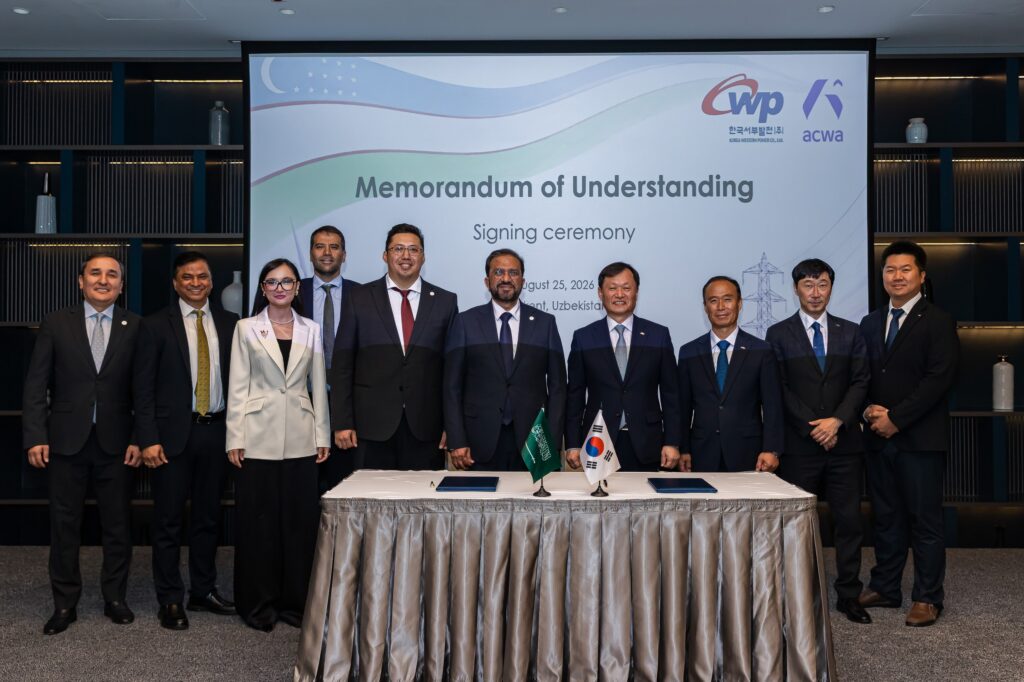
AIIB Backs New Wind Power Project in Uzbekistan with $107 Million Loan

The Asian Infrastructure Investment Bank (AIIB) has signed a $107 million loan agreement with Saudi-based company ACWA Power to support the construction of the Bash 2 wind power plant in Uzbekistan. The project will be located in the Gijduvan district of the Bukhara region and is expected to have a capacity of 300 megawatts. Once completed, the facility will generate around 943 gigawatt-hours of electricity annually, enough to supply more than 336,000 households. It is also projected to reduce carbon dioxide emissions by approximately 475,000 tons per year. The Bash 2 project builds on the earlier Bash 1 wind development and forms part of a broader renewable energy cluster in the region. It aligns with Uzbekistan’s strategy to expand clean energy production and diversify its energy mix, with a national target of increasing the share of renewables to 40% by 2030. “AIIB’s investment in the Bash 2 wind power plant reflects our commitment to supporting Uzbekistan’s transition toward a more sustainable and diversified energy system,” said Konstantin Limitovskiy, Chief Investment Officer at AIIB. He noted that cooperation with private developers such as ACWA Power helps mobilize capital and strengthen energy security while delivering long-term environmental benefits. ACWA Power also emphasized the significance of the project within its growing partnership with Uzbekistan. “Bash 2 represents a meaningful step forward in ACWA’s expanding partnership with Uzbekistan and the delivery of its energy transition ambitions,” said Abdulhameed AlMuhaidib, the company’s Chief Financial Officer. He added that the project demonstrates the effectiveness of public-private partnerships in delivering large-scale clean energy solutions. The investment is supported by a long-term power purchase agreement with the National Electric Grid of Uzbekistan and is co-financed by the Asian Development Bank and Standard Chartered Bank. This financing structure highlights continued investor confidence in Uzbekistan’s renewable energy sector. Since 2019, AIIB and ACWA Power have jointly invested approximately $440 million in Uzbekistan’s energy sector, covering both renewable and conventional power generation projects. The latest agreement comes amid broader efforts by Uzbekistan to strengthen energy cooperation with international partners. As previously reported by The Times of Central Asia, the government has expanded collaboration with Saudi companies, including ACWA Power, through a series of joint projects. During a high-level meeting with Saudi investors, four wind power plants with a combined capacity of 752 megawatts were connected to the national grid, while construction began on additional projects totaling 2.3 gigawatts. At the same time, infrastructure development has continued, including work on a 1,790-kilometer high-voltage transmission line designed to improve electricity distribution across several regions of the country.

1 month ago

Uzbek Agency Finds Systemic Failures in Dok-1 Max Case

Uzbekistan’s Anti-Corruption Agency has identified serious systemic shortcomings in the pharmaceutical sector following an analysis of court materials related to the Dok-1 Max case, according to a report reviewed by Gazeta.uz. The agency’s findings point to weaknesses in the processes for registering, certifying, and licensing medicines, where insufficient transparency and limited digitalization allowed a high degree of human discretion. This, in turn, created conditions for corruption risks to emerge. The case has already led to criminal convictions. On February 26, 2024, a Tashkent court sentenced several individuals to prison terms ranging from three to 20 years. Court documents indicate that during the registration of Dok-1 Max, a number of procedural violations occurred, including decisions that failed to meet established requirements. According to the agency, one of the key institutional problems lies in the structure and operation of the expert council under the Center for the Safety of Pharmaceutical Products, which operates within the Ministry of Health. The procedure for selecting council members and forming its composition was not defined in any legal document. Although the council consists of 17 members with independent voting rights, some simultaneously held senior positions within the same institution, creating a conflict of interest. The report cites the example of a department head who participated in the registration process for Dok-1 Max while also voting as a council member. Such overlap, the agency noted, undermined the independence of decision-making. Transparency issues were also highlighted. The council did not publish quarterly or annual reports, lists of members, or the outcomes of drug registration decisions on its official website. In addition, procedures for conducting inspections of pharmaceutical enterprises and disclosing their results were not clearly regulated, further contributing to corruption risks. The agency also found that inspection mechanisms were not aligned with international standards. A 2021 government resolution designated a single state enterprise as the sole body responsible for inspections, a structure the agency said contradicts recommendations by the World Health Organization and European regulatory bodies. Under international practice, such oversight is generally carried out directly by the Ministry of Health. In response to these findings, authorities have taken steps to reform the system. All processes related to the registration, certification, and licensing of pharmaceutical products have now been fully digitalized. In addition, registration certificates for at least 92 types of medicines have been revoked, and their production, import, and sale have been banned following re-evaluation. The agency recommended further measures, including transitioning all drug registration procedures to a fully online system, ensuring open access to information, increasing transparency in the expert council’s activities, and aligning inspection practices with international standards. The Dok-1 Max case has drawn international attention since late 2022, when reports emerged that children in Uzbekistan had died after consuming the cough syrup produced by India-based Marion Biotech. Initial reports cited 18 deaths in December 2022, followed by dozens more cases revealed in 2023. During the trial, prosecutors alleged that officials had accepted a $33,000 bribe to bypass proper testing procedures. The fallout has extended...

1 month ago

Uzbekistan Showcases $147 Billion Economy at 59th ADB Meeting in Samarkand

The 59th Annual Meeting of the Board of Governors of the Asian Development Bank officially opened on May 4 in Samarkand, bringing together more than 4,000 participants from over 100 countries. Held under the theme “Crossroads of Progress: Advancing the Region’s Connected Future,” the forum has given Uzbekistan a high-profile platform to promote its reforms, regional connectivity plans, and ambitions in green energy and artificial intelligence. The agenda covers digital and green transformation, climate resilience, supply chain development, and food security. The meeting also gives Central Asia a chance to present itself as a more active player in regional infrastructure, energy, and trade planning. President Shavkat Mirziyoyev addressed the forum, highlighting Uzbekistan’s recent economic reforms and development trajectory. He said the country has attracted $150 billion in foreign investment in recent years, while exports of goods and services have tripled and the economy has expanded from $50 billion to $147 billion. “Most importantly, our reforms have focused primarily on improving the daily lives of every single family and individual,” Mirziyoyev said, noting that poverty levels have declined significantly, from nearly 35% to 5.8%. He added that Uzbekistan’s economy grew by 8.7% in the first quarter despite global economic challenges. The president also emphasized the role of international financial institutions, noting that Uzbekistan’s joint project portfolio with the ADB has reached nearly $16 billion. He expressed appreciation for cooperation with organizations, including the World Bank, the International Monetary Fund, and the European Bank for Reconstruction and Development. Particular attention was given to digital transformation and artificial intelligence. Uzbekistan has launched initiatives, including the creation of an AI Hub, the expansion of data centers, and training programs aimed at developing technological expertise. “The use of open AI models is also required in areas that are most essential to the population’s primary needs,” Mirziyoyev said. Green energy and transport connectivity were also central topics. Uzbekistan has already commissioned 5,600 megawatts of renewable energy capacity and aims to increase the share of renewables to 54% by 2030. The president also highlighted major infrastructure projects, including the China-Kyrgyzstan-Uzbekistan railway, which is expected to reduce cargo delivery times and strengthen regional transit links. In addition, proposals were put forward to develop a regional “Digital Customs and Logistics Alliance,” expand cooperation in critical minerals, and launch initiatives such as the “Green Belt of Central Asia” and a “Central Asia Tourist Ring.”

1 month ago

Campaign Targets New York Concert by Uzbekistan’s Yulduz Usmonova

A campaign has been launched in the United States against a planned concert by singer Yulduz Usmonova from Uzbekistan, according to a report by Brighton Beach News. The controversy is unfolding in Brooklyn, where Usmonova is scheduled to perform on May 9 at the Oceana Theater in the Brighton Beach area. Local politicians have voiced strong criticism and announced plans to hold a press conference calling for the event to be canceled. Among those involved are New York State Assembly members Michael Novakhov and Alec Brook-Krasny, as well as Nassau County Executive Bruce Blakeman. According to statements cited in the report, the officials accuse the singer of having made remarks in the past that they consider offensive toward the Jewish community. The issue has drawn particular attention due to the location and timing of the concert. Brighton Beach is known as a major center for Russian-speaking and Jewish communities in New York, and May 9 is widely observed as a day marking the victory over Nazi Germany in World War II. Organizers of the campaign say they have called on the singer to publicly reject and apologize for the alleged statements but claim that she has declined to do so. They have also reportedly submitted a request to U.S. Secretary of State Marco Rubio asking for the revocation of her visa. This is not the first time a concert by Usmonova in New York has come under pressure. In 2024, another planned performance in the city was canceled after protests over remarks attributed to the singer that critics described as antisemitic.

1 month ago

Austria to Use Uzbekistan as Transit Route for Afghan Deportations Under New Agreement

Austria’s Foreign Minister Beate Meinl-Reisinger and Interior Minister Gerhard Karner are expected to visit Uzbekistan on May 7 to sign a mobility agreement aimed at strengthening cooperation on migration, according to Die Presse. The agreement is intended to improve coordination between the two countries, particularly on deportations and the return of migrants. Austrian officials say it will create a more structured framework for handling individuals required to leave the country. A key provision involves the use of Uzbekistan as a transit route for deportations to Afghanistan. Afghan nationals facing removal from Austria could be escorted through Uzbekistan to Kabul. Until now, deportations to Afghanistan have largely taken place via Istanbul, meaning the new arrangement would open what officials describe as a “second route.” Karner said the deal would establish “the conditions for the consistent implementation of deportations as part of a firm and fair asylum policy.” The agreement also covers the readmission of nationals, third-country citizens, and stateless individuals who entered the European Union through Uzbekistan. In return, the document includes provisions to support legal migration from Uzbekistan to Austria. Despite its growing economy, Uzbekistan is heavily reliant on remittances from abroad, with Uzbek migrants sending home $4.8 billion in Q2 of 2025. Over the past few years, Tashkent has been seeking out alternative destinations than traditional routes dominated by Russia. To that effect, both Uzbekistan and Austria have committed to promoting “safe, orderly, and regular mobility of qualified workers” in line with national legislation. Austrian authorities note that Uzbek professionals already have multiple pathways to access the country’s labor market. The agreement does not provide for the establishment of return centers for rejected asylum seekers, an idea Austria has been pursuing with several EU partners, including Germany, Greece, the Netherlands, and Denmark. The visit to Uzbekistan is part of a broader regional trip that will also include Kazakhstan, which Austrian officials consider an important partner, particularly in the energy sector. The planned agreement comes amid continued migration pressures linked to Afghanistan’s humanitarian situation. According to the United Nations Development Programme, in 2024 around 85% of Afghanistan’s population was living on less than $1 a day. In June 2025, the World Food Programme reported that approximately 15 million people in the country were facing severe hunger. At the same time, large-scale deportations from neighboring countries have added to the strain. In July last year, Tajikistan launched a campaign to detain and deport Afghan refugees, giving them 15 days to leave the country.

1 month ago

Epstein “Mosque” on Private Island Linked to Tiles from Uzbekistan

A report by The New York Times has revealed new details about how financier Jeffrey Epstein sourced materials from several countries, including Uzbekistan, for a controversial building he described as a “mosque” on his private Caribbean island. According to the newspaper, Epstein pursued Islamic architectural elements for years for a personal project on Little Saint James. Among the materials he sought were tiles from Uzbekistan, which he intended to use in the structure’s interior. In a 2011 email cited in the report, Epstein contacted an associate in Uzbekistan requesting “authentic tiles,” noting that “it will be for the inside walls, like a mosque.” The request was one of several attempts to obtain architectural and decorative elements associated with Islamic heritage. The building itself, described as a blue-and-white structure topped with a golden dome, has long drawn speculation about its purpose. Documents reviewed by the newspaper, including correspondence and design references, indicate that Epstein repeatedly referred to it as a “mosque,” although it remains unclear whether it was ever intended for religious use. The report says Epstein drew on design influences from across the Islamic world. In addition to tiles from Uzbekistan, he obtained tapestries connected to the Kaaba in Mecca and commissioned architectural elements modeled on historic sites in Syria. An artist involved in the project, Ion Nicola, told the newspaper that Epstein consistently described the structure in religious terms. However, some design instructions departed from traditional norms. In one instance, Epstein suggested replacing Arabic religious inscriptions with his own initials. The materials from Uzbekistan were part of an effort to create what the report describes as an “island shrine,” combining elements from different regions. The sourcing of the tiles points to the geographic reach of Epstein’s network and his attempts to obtain culturally specific materials for the project. The documents cited by the newspaper were released by the U.S. Department of Justice earlier this year and shed new light on Epstein’s activities and connections before his death in 2019.

1 month ago

INMerge Tashkent Showcases Rise of Uzbekistan as Regional Innovation Hub

On April 30, investors, founders and corporate leaders gathered in Uzbekistan’s capital, Tashkent, for the latest incarnation of the INMerge Innovation Summit. The traveling series followed an earlier session in Istanbul and will lead into the main summit scheduled for October 8-9 in Baku. In Tashkent, discussions centered on a question that continues to define Uzbekistan’s digital trajectory: how to turn rapid growth into a sustainable, interconnected ecosystem capable of competing beyond national borders. Two core discussions framed the agenda. The first focused on how companies are building digital ecosystems around everyday user needs. The second addressed a more structural issue: whether capital alone is enough to build what some participants called a “Digital Silk Road,” or whether deeper foundations are required. A Rising Regional Star The series of summits has been organized by PASHA Holding, an Azerbaijani conglomerate owned by the ruling Aliyev and Pashayev families. For Tughra Musayeva, Head of Innovations at PASHA Financial Holding and Managing Partner at INMerge Ventures, Uzbekistan stands out as a "rising star of the region". “It’s rich in human talent and capital, and increased political support for innovation and tech infrastructure is already showing results," she told The Times of Central Asia on the sidelines of the event. "In the coming years, we’re going to see many interesting startups and projects emerging from Uzbekistan.” Musayeva challenged a common assumption about emerging tech markets – that they remain dependent on foreign expertise. In her view, Tashkent already has most of the elements needed to sustain growth internally. “What we see right now is a very self-sufficient platform. There is infrastructure and the right actors are in place. The next step is about scaling, especially across borders,” she said, pointing to her ambition to increase cross-border collaboration between Central Asia and the Caucasus. A similar emphasis on connectivity came from her colleague Ulviyya Mehraliyeva, innovation events manager at PASHA Financial Holding and a member of the INMerge team. For her, the Tashkent gathering was part of a broader effort to link ecosystems that often develop in isolation. “What differentiates us is our focus on connecting ideas, people, ecosystems, and talent with opportunities," she told TCA. “We believe Tashkent has huge potential. There has been significant investment and development in the startup ecosystem.” To her, the city is already emerging as a regional hub, but she cautioned that Uzbekistan still has a lot to learn from outside. “It’s both building your own ecosystem while also learning from others. This is a stage of development. Every region goes through it,” she said. “We believe that collaboration between countries like Azerbaijan and Uzbekistan will only strengthen that.” [caption id="attachment_48170" align="aligncenter" width="2560"] Image: TCA[/caption] The View from the Ground Practitioners working within Uzbekistan’s tech sector were more circumspect. Dalerkhon Nodirov, CEO of IT Park Ventures, offered a more measured view of the country’s technological independence, particularly in the field of artificial intelligence. “We don’t yet have our own AI models,” he said. “At this stage, we still depend...

1 month ago

Uzbekistan Plans $5.8 Billion Expansion of Hydropower Sector

Uzbekistan is planning a major expansion of its hydropower sector, with 73 new projects worth $5.8 billion scheduled for implementation between 2026 and 2032, officials said during a presentation to Shavkat Mirziyoyev. According to the briefing, the country aims to add 3.6 gigawatts of new generating capacity as part of efforts to diversify its energy mix. Currently, most of Uzbekistan’s electricity is produced from natural gas and coal, while hydropower accounts for only about 10-12%. Officials emphasized that Uzbekistan’s extensive water network, more than 150,000 kilometers of rivers, canals, and streams, represents a largely untapped energy resource. Expanding hydropower is seen as key to improving energy stability, reducing dependence on fossil fuels, and making more efficient use of water. The sector has already seen significant growth in recent years. The number of hydroelectric power plants has increased from 36 in 2017 to 100 in 2025, while installed capacity has risen from 1.6 gigawatts to 2.4 gigawatts. Among the projects discussed, the Upper Pskem hydropower plant in the Bostanlyk district stands out. With an investment of $365 million, it is expected to generate 160 megawatts of electricity and supply power to around 161,000 households. In the Fergana region, a 15-megawatt plant is planned in the Sokh district, which is expected to cover 71% of local electricity demand. Authorities also reviewed the potential for constructing 42 small hydropower plants in the Upper Tupalang area, which could add 541 megawatts of capacity and generate up to 1.9 billion kilowatt-hours annually. In addition, nearly 3,000 small and micro hydropower plants are planned, with a combined capacity of 164 megawatts. This year alone, 13 hydropower plants and one wind power facility are expected to come online, with a total capacity of 114 megawatts and annual generation of 537 million kilowatt-hours. A 20-megawatt wind project is also under construction in Bostanlyk with $28 million in grant funding. Officials said Uzbekistan is also considering the construction of three pumped-storage hydropower plants with a combined capacity of 1.4 gigawatts, which would help balance electricity supply and demand. The presentation highlighted ongoing efforts to modernize the sector through digital technologies. More than 3,500 monitoring devices have already been installed to track water levels, weather conditions, and infrastructure performance in real time. The plans build on earlier developments in the sector. Last year, Uzbekistan launched the first stage of the Naryn hydropower cascade, a project valued at over $428 million. The initial plant, built using domestic materials and equipment, produces 171 million kilowatt-hours annually and supplies electricity to around 430,000 households.

1 month ago

Uzbekistan and Afghanistan Plan Joint Hospital Project in Mazar-i-Sharif

Uzbekistan and Afghanistan have agreed to build a hospital in the Afghan city of Mazar-i-Sharif under a public-private partnership, Uzbekistan’s Ministry of Health said. The agreement was reached during a visit by an Uzbek delegation led by Health Minister Asilbek Khudayarov to Afghanistan, where talks were held with Afghan Health Minister Mawlawi Noor Jalal, Balkh regional governor Mohammad Yusuf Wafa, and other officials. According to the ministry, the Afghan side highlighted the need to expand cooperation in healthcare, noting that many districts in the country still lack hospitals. Officials also pointed to a rise in cancer cases in recent years and requested Uzbekistan’s support in building a medical facility in Mazar-i-Sharif, training specialists, and simplifying procedures for Afghan patients seeking treatment in Uzbekistan. Wafa expressed appreciation for Uzbekistan’s continued support, particularly during difficult periods such as natural disasters, and emphasized the importance of strengthening humanitarian ties between the two countries. During the visit, the Uzbek delegation also toured healthcare facilities in Balkh province, including a district clinic in Dehdadi and the Abu Ali Ibn Sina Central Hospital in Mazar-i-Sharif, where they met with medical staff and reviewed current conditions. As a result of the talks, the parties agreed to establish a joint working group to develop proposals for supporting Afghanistan’s public healthcare system. Plans were also outlined to organize reciprocal visits by Afghan medical delegations to Uzbekistan. The sides discussed launching training programs that would allow up to 100 Afghan specialists each year to improve their qualifications at Uzbekistan’s specialized medical centers. In addition, the possibility of allocating annual scholarships for up to 50 Afghan students to study at Uzbek medical universities was considered. The Uzbek side also agreed to explore simplifying the issuance of medical visas for Afghan patients and easing procedures for the supply and registration of pharmaceuticals produced in Uzbekistan, which Afghan officials said are in strong demand in the local market. A key outcome of the visit was the agreement to construct a hospital in Mazar-i-Sharif in cooperation with Arman Group. Under the arrangement, the Afghan side will invest in the project, adapt an existing building for medical use, and procure modern equipment, while Uzbekistan will provide qualified medical personnel. The Times of Central Asia previously reported that in March, Uzbekistan and Afghanistan established a joint Business Council aimed at strengthening trade and economic ties, bringing together representatives from both countries’ business communities and institutions. The new healthcare agreement reflects a broader trend toward expanding cooperation between the two neighbors.

1 month ago