• KGS/USD = 0.01143 0%
  • KZT/USD = 0.00205 0%
  • TJS/USD = 0.10724 0.09%
  • UZS/USD = 0.00008 0%
  • TMT/USD = 0.28571 0%
  • KGS/USD = 0.01143 0%
  • KZT/USD = 0.00205 0%
  • TJS/USD = 0.10724 0.09%
  • UZS/USD = 0.00008 0%
  • TMT/USD = 0.28571 0%
  • KGS/USD = 0.01143 0%
  • KZT/USD = 0.00205 0%
  • TJS/USD = 0.10724 0.09%
  • UZS/USD = 0.00008 0%
  • TMT/USD = 0.28571 0%
  • KGS/USD = 0.01143 0%
  • KZT/USD = 0.00205 0%
  • TJS/USD = 0.10724 0.09%
  • UZS/USD = 0.00008 0%
  • TMT/USD = 0.28571 0%
  • KGS/USD = 0.01143 0%
  • KZT/USD = 0.00205 0%
  • TJS/USD = 0.10724 0.09%
  • UZS/USD = 0.00008 0%
  • TMT/USD = 0.28571 0%
  • KGS/USD = 0.01143 0%
  • KZT/USD = 0.00205 0%
  • TJS/USD = 0.10724 0.09%
  • UZS/USD = 0.00008 0%
  • TMT/USD = 0.28571 0%
  • KGS/USD = 0.01143 0%
  • KZT/USD = 0.00205 0%
  • TJS/USD = 0.10724 0.09%
  • UZS/USD = 0.00008 0%
  • TMT/USD = 0.28571 0%
  • KGS/USD = 0.01143 0%
  • KZT/USD = 0.00205 0%
  • TJS/USD = 0.10724 0.09%
  • UZS/USD = 0.00008 0%
  • TMT/USD = 0.28571 0%

Our People > Sergey Kwan

Sergey Kwan's Avatar

Sergey Kwan

Journalist

Sergey Kwan has worked for The Times of Central Asia as a journalist, translator and editor since its foundation in March 1999. Prior to this, from 1996-1997, he worked as a translator at The Kyrgyzstan Chronicle, and from 1997-1999, as a translator at The Central Asian Post.
divider
Kwan studied at the Bishkek Polytechnic Institute from 1990-1994, before completing his training in print journalism in Denmark.

Articles

Central Asian Countries to Jointly Address Cryosphere Threats

As part of the Regional Ecological Summit (RES 2026) in Astana, the UNESCO Regional Office in Almaty organised a session titled “The Cryosphere of Central Asia: From Scientific Assessment to Joint Climate Adaptation Action,” in cooperation with Kazakhstan’s Ministry of Ecology and Natural Resources and Ministry of Science and Higher Education. The event was held under the GEF-UNDP-UNESCO Cryosphere project and in collaboration with Central Asian countries. The session focused on discussing the Joint Subregional Action Programme (JSAP) on the cryosphere, a framework document developed by Central Asian countries with UNESCO’s support. The programme is aimed at strengthening regional cooperation in monitoring and research on glaciers, snow cover, and permafrost, as well as aligning approaches to climate change adaptation, according to Kazakhstan’s Ministry of Ecology and Natural Resources. Central Asia is experiencing accelerated glacier melt. Under a high-emissions scenario, the region could lose up to 85% of its glacier volume by 2100 compared to 2020 levels. This would increase pressure on water resources, infrastructure, and communities, while also heightening the risk of natural hazards, including glacial lake outburst floods. As these processes are regional in nature, they require coordinated responses across Central Asian countries. “UNESCO has been actively supporting Central Asian countries in strengthening the scientific basis and advancing regional cooperation on the cryosphere. Today, the key priority is to move from scientific assessment to concrete action. The Joint Subregional Action Programme provides a practical framework for this transition and enhances coordination of adaptation efforts across the region,” said Amir Piric, Director of the UNESCO Regional Office in Almaty. As a key outcome of the session, heads of relevant government authorities from Kazakhstan, Tajikistan, Turkmenistan, and Uzbekistan responsible for environmental protection issued a joint statement supporting JSAP implementation, reaffirming their commitment to strengthened regional cooperation. “Today it is clear that no country can effectively address climate change challenges alone. Regional cooperation is therefore essential. The Joint Statement reflects the readiness of Central Asian countries to join efforts and develop coordinated approaches to climate change adaptation,” said Nurlan Kurmalayev, Deputy Minister of Ecology and Natural Resources of Kazakhstan. The JSAP provides a foundation for coordinated action among countries and partners, defines cooperation priorities, and supports the advancement of climate adaptation measures in the region. The joint statement also opens opportunities to mobilise funding from various sources, including donors, international financial institutions, and the private sector.

2 months ago

Kazakhstan Launches QaJET Investment Platform for Just Energy Transition

Kazakhstan has announced the launch of the QaJET (Just Energy Transition) investment platform, supported by the European Bank for Reconstruction and Development (EBRD), to attract international financing and accelerate the decarbonization of its economy. A corresponding memorandum was signed on April 23 during the Regional Environmental Summit in Astana. Signatories included Energy Minister Yerlan Akkenzhenov, Minister of Ecology and Natural Resources Yerlan Nysanbayev, and EBRD Managing Director for Central Asia and Mongolia Hüseyin Özhan. The QaJET platform reflects Kazakhstan’s ambition to accelerate the transition to clean energy through a large-scale expansion of renewable energy capacity. According to current plans, the country aims to commission 10 GW of new green capacity by 2035. According to EBRD estimates, achieving these targets will require approximately $20 billion in investment from both public and private sources. This is expected to reduce greenhouse gas emissions by more than 20 million tonnes annually, equivalent to roughly 7% of the country’s energy-related emissions. The creation of the platform is of strategic importance for Kazakhstan, whose economy remains highly carbon-intensive and heavily dependent on coal-fired power generation. At the request of the Kazakh government, the EBRD participated in developing the QaJET concept and will continue to coordinate its implementation with national and international partners. The platform is also intended to support Kazakhstan’s international climate commitments, including achieving carbon neutrality by 2060 and reducing greenhouse gas emissions by up to 25% by 2030 compared to 1990 levels. QaJET is expected not only to reduce emissions but also to strengthen energy security, enhance economic competitiveness, and promote the development of local high-tech manufacturing in the renewable energy sector. Key areas of cooperation within the platform include expanding renewable energy capacity, modernizing power grids and energy storage systems, electrifying businesses and households, and supporting a just transition, technology transfer, and the development of research and innovation capacity. Authorities expect QaJET to become the central mechanism for coordinating climate finance, bringing together international financial institutions, donors, private investors, and the government to accelerate Kazakhstan’s energy transition.

2 months ago

Kazakhstan Expands Accessible Transportation for People with Disabilities

Kazakhstan is expanding efforts to improve accessible transportation for people with disabilities. At a government meeting on April 21, Transport Minister Nurlan Sauranbaev reported on progress in implementing an inclusive policy in the transport sector. He said that, as part of the Inclusive Policy Concept for 2025-2030, Kazakhstan is taking measures to ensure accessibility across three key areas: infrastructure, transport, and services. In the rail sector, approximately 90% of trains have been equipped with lifts and compartments adapted for passengers with disabilities. By 2030, every train is expected to include at least one specialized carriage. Railway stations are being modernized to include essential accessibility features such as ramps and lifting devices. Ticket offices and restrooms are also being upgraded. Passengers with disabilities receive a 50% discount on train tickets, and online booking for specialized compartments is available. In 2025, around 580,000 passengers with disabilities traveled by rail in Kazakhstan. In aviation, accessibility is also improving. Ten airports, including those in Astana and Almaty, now operate 13 lifts for passengers with disabilities. A further five airports are expected to be equipped by the end of the year. In 2025, more than 9,000 passengers with disabilities traveled by air. In the road transport sector, 80% of bus stations and 79% of city buses now meet accessibility requirements. Kazakhstan is also continuing to develop the Invataxi project, which provides specially adapted minivans for passengers with limited mobility. The fleet has expanded by 30%, reaching 1,426 vehicles. Cities across the country are working to improve accessibility more broadly. Infrastructure is being adapted to meet modern standards, while businesses and public institutions are increasingly responding to the needs of people with disabilities by improving access to buildings and interior spaces. According to the Ministry of Labor and Social Protection, more than 29,500 social infrastructure facilities -- 68% of the total -- are now accessible to people with disabilities across Kazakhstan. By the end of 2026, this figure is expected to rise to over 34,000.

2 months ago

Kyrgyzstan to Build Modern Landfill Using Japanese Waste Disposal Technology

A pilot project to construct a modern landfill based on the Fukuoka Method is planned for the city of Kara-Balta in Kyrgyzstan’s northern Chui region, about 60 km west of Bishkek. The project aims to reduce environmental impacts and support the transition to modern waste management standards. The Fukuoka Method is a semi-aerobic landfill waste disposal technology developed jointly by Fukuoka University and the city of Fukuoka in the 1970s. It has since become a standard approach for local governments in Japan. By maximizing the aeration of waste, the method accelerates biodegradation and can reduce greenhouse gas emissions by an estimated 20-50%. The method uses natural ventilation through pipes and leachate collection systems to promote aerobic decomposition of waste. This accelerates stabilization, reduces methane emissions, and improves odor control. It is considered a relatively low-cost solution and is often cited as suitable for developing countries. On April 21, Kyrgyzstan’s Ministry of Natural Resources, Ecology, and Technical Supervision discussed implementation of the project with representatives of the Asian Development Bank and the Japan Foundation, including grant financing, technical support, and the use of the Fukuoka Method. The project is expected to reduce soil and groundwater pollution in the area, improve sanitary conditions for local residents, and provide a basis for wider use of the technology across the country. The transition to modern environmental technologies is seen as important for protecting public health and supporting the country’s sustainable development. Kyrgyzstan has also introduced Chinese technology for municipal solid waste disposal that generates electricity through incineration. In December 2025, Bishkek officially inaugurated Central Asia’s first waste-to-energy plant, located at the city’s primary landfill and constructed by Hunan Junxin Environmental Protection Co. Ltd.

2 months ago

Kyrgyzstan Expands Small Hydropower to Tackle Rising Energy Deficit

Kyrgyzstan is accelerating its development of small hydropower plants as it seeks to close a widening electricity gap driven by surging demand and limited domestic generation capacity. On April 20, two new small hydroelectric power plants (HPPs) were commissioned in the country's northern Chui region. The Sokuluk-3 HPP has a capacity of 9.5 MW, while the Tuyuk HPP has a capacity of 5.9 MW. Combined, they are expected to generate between 60 million and 70 million kWh of electricity annually. Speaking at the launch ceremony, President Sadyr Japarov underscored the strategic importance of small-scale hydropower. “Such projects increase the resilience of the energy system and facilitate the gradual reduction of the energy deficit. Today, 48 small hydroelectric power plants with a total capacity of 180 MW are operating in Kyrgyzstan. They play a significant role in strengthening energy independence and reducing dependence on imports,” he said. The government is scaling up efforts in the sector, with 50 small HPPs currently under construction across the country. Of these, 13 are scheduled to be commissioned in 2026. Electricity demand in Kyrgyzstan continues to rise rapidly. In 2025, total consumption reached 19.3 billion kWh, up by 900 million kWh compared to the previous year. Domestic generation accounted for 15.4 billion kWh, while the remaining 3.9 billion kWh was covered through imports from Turkmenistan, Uzbekistan, Kazakhstan, and Russia. According to Minister of Water Resources, Agriculture, and Processing Industry, Bakyt Torobayev, electricity consumption has grown by more than 25% over the past five years, rising from 15.4 billion kWh in 2020. “If current electricity consumption rates continue, it could reach 25 billion kWh by 2030,” Torobayev said. The surge in demand has been driven by rapid housing construction and the launch of new industrial facilities. With Kyrgyzstan’s population now exceeding 7.4 million, the number of electricity consumers is expanding steadily. Over the past three years alone, 4,192 industrial facilities and 96,975 households have been connected to the national grid, according to the Energy Ministry. Despite the expansion of generation capacity, supply continues to lag behind demand, prompting authorities to prioritize small hydropower as a flexible and scalable solution to improve energy security and reduce reliance on imports.

2 months ago

Turkmenistan Advances Galkynysh Gas Field Development to Increase Exports to China

Chinese Vice Premier Ding Xuexiang and Gurbanguly Berdymuhamedov, Tukmenistan's former President and the current Chairman of its highest representative body, the Halk Maslahaty, have launched the fourth phase of industrial development of the Galkynysh gas field in Mary region. Located about 400 km southeast of Ashgabat, the Galkynysh field has been producing natural gas since 2013 and is considered one of the world’s largest in terms of reserves. The British consulting firm GaffneyCline estimates the reserves of Galkynysh, together with the neighboring fields Garakol and Yashlar, at 27.4 trillion cubic meters of natural gas. On April 16, the State Concern Turkmengas and China’s CNPC Amudarya Petroleum Company Ltd. signed a contract for the turnkey construction of the fourth phase of the field’s development. The project includes the drilling of production wells and the construction of a gas processing facility with a capacity of 10 billion cubic meters of commercial gas per year. According to industry publication Nebit-Gaz, the Galkynysh field is being developed in phases. The first phase, which included the construction of three gas processing plants with a total capacity of 30 billion cubic meters per year, is currently operational. The second, third, and fourth phases are planned for the near future. Upon full development, the field’s gross annual production could reach nearly 200 billion cubic meters of natural gas. The Galkynysh field serves as the main resource base for Turkmen gas exports to China. China remains the largest buyer of Turkmen natural gas. Three lines (A, B, and C) of the Turkmenistan-China gas pipeline system currently deliver approximately 40 billion cubic meters of gas annually. With the planned commissioning of a fourth line (Line D), export volumes are expected to increase to around 65 billion cubic meters per year. The resource base of Galkynysh is a key factor in the planned construction of Line D, which is expected to significantly increase gas supplies to China. According to Guvanch Agajanov, Vice-Chairman of Turkmenistan's Cabinet of Ministers, total Turkmen gas exports to China have exceeded 462 billion cubic meters over the past 20 years. The Galkynysh field has also been designated as the resource base for the Turkmenistan-Afghanistan-Pakistan-India (TAPI) gas pipeline, which is under construction and is expected to have a capacity of 33 billion cubic meters per year.

2 months ago

Kyrgyzstan to Construct Solar Power Plant with IFC Support

Kyrgyzstan is launching a pilot project to construct a solar power plant through a public-private partnership (PPP). The project is supported by the International Finance Corporation (IFC), which has prepared technical, legal, financial, and environmental assessments. The project’s implementation was discussed during a meeting in Washington, DC between Kyrgyz Energy Minister Taalaibek Ibrayev and John Gandolfo, Vice President and Chief Financial Officer at the IFC. A key feature of the project is the selection of an investor through an open tender based on the lowest electricity tariff bid. Kyrgyzstan has agreed to a tariff proposed by China Power of 4.1 cents per kWh. The power plant will be built in the Naryn region. Construction is scheduled to begin in 2026, with electricity generation expected to start in 2027. Ibrayev noted that the project introduces new standards to Kyrgyzstan’s energy sector and will serve as an example of attracting investment through transparent and competitive mechanisms. Gandolfo expressed the World Bank’s support for Kyrgyzstan’s energy sector reforms. The meeting also addressed the second phase of the project, which envisages the construction of additional solar power plants in the Talas and Batken regions. As part of efforts to reduce chronic power shortages, Kyrgyzstan has accelerated the development of renewable energy. In December 2025, the country inaugurated its first solar power plant in the Chui region, approximately 100 kilometers east of Bishkek. The 100-megawatt facility was constructed with $56 million in Chinese investment and is expected to generate around 210 million kWh of clean electricity annually.

2 months ago

Kazakhstan Boosts Container Train Traffic Along Middle Corridor

In the first quarter of 2026 Kazakhstan recorded a significant increase in container train traffic along the Trans-Caspian International Transport Route (TITR), also known as the Middle Corridor, underscoring the country’s growing role in Eurasian logistics. One hundred and twenty-five container trains transited through Kazakhstan via the TITR, marking a 34.4% increase compared to the same period in 2025. The growth was largely driven by a new logistics approach introduced by national railway operator Kazakhstan Temir Zholy (KTZ) aimed at accelerating container transportation. Since January 2026, KTZ has implemented a synchronized model for forming container trains that aligns rail and maritime transport schedules. This system enables container trains to be assembled directly for shiploads, eliminating the need for additional cargo accumulation and significantly reducing handling times. The new model has already been applied to 28 container trains bound for key logistics hubs, including: Absheron, Azerbaijan; Poti and Tbilisi, Georgia; and Mersin and Izmit, Turkey. The TITR is a multimodal corridor linking China and Europe through Central Asia and the South Caucasus, providing an alternative to routes that pass through Russia. The geography of cargo origins has also broadened. While the Chinese city of Xi’an accounted for roughly 50% of all shipments in 2025, additional industrial centers have now joined the route, including Zhengzhou, Yiwu, Hefei, Wuhan, Tianjin, Shenzhen, and Guangzhou. This diversification is expected to further strengthen the corridor’s resilience and capacity. KTZ plans to scale up the synchronized transportation model throughout 2026, enhancing the efficiency and competitiveness of the TITR. As previously reported by The Times of Central Asia, freight volumes transported along the Middle Corridor through Kazakhstan have grown more than fivefold over the past seven years, increasing from 0.8 million tons to 4.5 million tons annually. Container transportation has emerged as one of the fastest-growing segments of the route. In 2025, approximately 77,000 TEUs were transported along the TITR, and Kazakhstan aims to increase this figure to 300,000 TEUs by 2029, reflecting its ambition to position the corridor as a key artery for Eurasian trade.

2 months ago

Rosatom to Neutralize Hazardous Chemical Waste at Plant in Kyrgyzstan

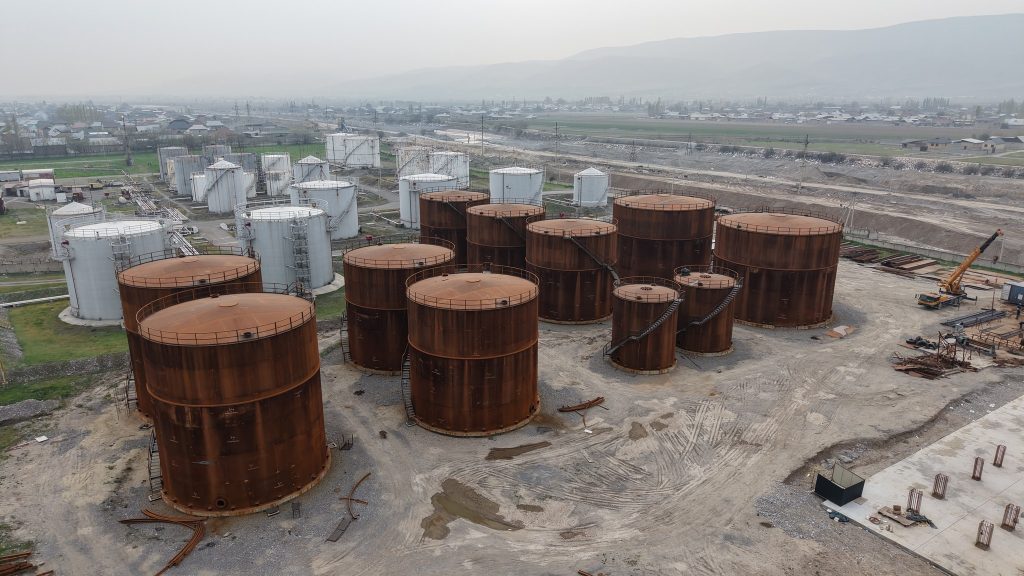
Rosatom is set to begin work to eliminate hazardous chemicals stockpiled at the Kristall plant in Tash-Kumyr, in Kyrgyzstan’s Jalal-Abad region. The Kristall plant, built in 1989 as a key facility of the Soviet electronics industry to produce polycrystalline silicon, has since become a high-risk environmental site. Hazardous chemical waste accumulated on its premises poses a threat to both the environment and public health. The plant has been bankrupt since 2010. The site contains 49 tanks holding a total of 155 tons of hazardous chemical residues, including trichlorosilane and silicon tetrachloride. In October 2024, Rosatom conducted a technical audit of the facility, revealing the deteriorated condition of the storage tanks. Prolonged inactivity has left the aging infrastructure in poor shape, increasing the risk of structural failure and depressurization. On April 14, in Bishkek, Rosatom and the Kyrgyz Ministry of Emergency Situations discussed technological solutions for neutralizing the chemicals. According to Rosatom, the first phase of the cleanup is scheduled for completion by the end of 2026. This stage will focus on bringing the chemical storage tanks to a safe condition. It also involves the installation of a dual emergency protection system and the introduction of independent environmental monitoring. The proposed neutralization methods have been approved by the Kyrgyz Ministry of Natural Resources, Ecology, and Technical Supervision. By the end of 2026, Rosatom aims to eliminate the risk of leaks and uncontrolled emissions by stabilizing the tanks and ensuring safe conditions for further handling of the hazardous substances. In 2027, the project will enter its second phase, focusing on the on-site neutralization of the chemicals as the preferred solution. Kyrgyz Emergency Situations Minister Kanatbek Chynybayev said the situation at the Kristall plant remains environmentally challenging and requires a comprehensive response. “Our primary objective is to eliminate potential health risks to residents of Tash-Kumyr and lift the state of emergency in the area. Rosatom’s expertise has been engaged to address this issue. As part of this collaboration, a technological strategy has been developed that will allow the threats to be neutralized within the specified timeframe and return the site to a safe condition,” he said.

2 months ago

Kazakhstan Begins First Public-Private Partnership Sports Facility Project

Construction has begun in the Atyrau region on Kazakhstan’s first sports boarding school for athletically gifted children, to be implemented under a public-private partnership (PPP) model. According to the Ministry of Tourism and Sports, the private partner will be responsible for the full project cycle from design and construction to technical maintenance of the facility for five years after its completion, which is scheduled for May 2027. The new school will feature modern academic buildings and residential facilities. The 3.2-hectare site will include an academic block for 400 students, a 300-bed dormitory, 13 gyms, a swimming pool, a cafeteria, a library, a stadium, running tracks, and basketball and volleyball courts. The project in Atyrau is intended as a pilot, with plans to replicate similar facilities in other regions of the country. The school is expected to train 400 young athletes across 13 Olympic sports. Officials say the project will create improved conditions for developing the country’s sports reserve by integrating academic education with professional training. In recent years, the development of sports in Kazakhstan has received increased state support, contributing to stronger performances by Kazakh athletes in international competitions. In the first quarter of 2026, Kazakhstani athletes won 200 medals at international events: 79 gold, 57 silver, and 64 bronze. At the 2026 Winter Olympic Games in Milan, Italy, in February, Kazakhstan won one gold medal and finished 19th in the overall medal standings. This marks the country’s best result since 1994, when it placed 12th at the Lillehammer Olympics, where skier Vladimir Smirnov won gold. In 2026, Kazakhstan’s only medal was secured by figure skater Mikhail Shaidorov, who became the country’s first Olympic champion in figure skating. At the Paralympic Games in Italy in March 2026, Kazakhstan placed 18th out of 55 countries in the medal standings. Yerbol Khamitov won two medals, gold in the biathlon pursuit and bronze in cross-country sprint, becoming the first Kazakhstani athlete to win two medals at a Winter Paralympics.

2 months ago