• KGS/USD = 0.01143 0%
  • KZT/USD = 0.00205 0%
  • TJS/USD = 0.10724 0.09%
  • UZS/USD = 0.00008 0%
  • TMT/USD = 0.28571 0%
  • KGS/USD = 0.01143 0%
  • KZT/USD = 0.00205 0%
  • TJS/USD = 0.10724 0.09%
  • UZS/USD = 0.00008 0%
  • TMT/USD = 0.28571 0%
  • KGS/USD = 0.01143 0%
  • KZT/USD = 0.00205 0%
  • TJS/USD = 0.10724 0.09%
  • UZS/USD = 0.00008 0%
  • TMT/USD = 0.28571 0%
  • KGS/USD = 0.01143 0%
  • KZT/USD = 0.00205 0%
  • TJS/USD = 0.10724 0.09%
  • UZS/USD = 0.00008 0%
  • TMT/USD = 0.28571 0%
  • KGS/USD = 0.01143 0%
  • KZT/USD = 0.00205 0%
  • TJS/USD = 0.10724 0.09%
  • UZS/USD = 0.00008 0%
  • TMT/USD = 0.28571 0%
  • KGS/USD = 0.01143 0%
  • KZT/USD = 0.00205 0%
  • TJS/USD = 0.10724 0.09%
  • UZS/USD = 0.00008 0%
  • TMT/USD = 0.28571 0%
  • KGS/USD = 0.01143 0%
  • KZT/USD = 0.00205 0%
  • TJS/USD = 0.10724 0.09%
  • UZS/USD = 0.00008 0%
  • TMT/USD = 0.28571 0%
  • KGS/USD = 0.01143 0%
  • KZT/USD = 0.00205 0%
  • TJS/USD = 0.10724 0.09%
  • UZS/USD = 0.00008 0%
  • TMT/USD = 0.28571 0%

Our People > Sergey Kwan

Sergey Kwan's Avatar

Sergey Kwan

Journalist

Sergey Kwan has worked for The Times of Central Asia as a journalist, translator and editor since its foundation in March 1999. Prior to this, from 1996-1997, he worked as a translator at The Kyrgyzstan Chronicle, and from 1997-1999, as a translator at The Central Asian Post.
divider
Kwan studied at the Bishkek Polytechnic Institute from 1990-1994, before completing his training in print journalism in Denmark.

Articles

IMF Warns of Risks for Rapidly Growing Kyrgyz Economy

Kyrgyzstan continues to record strong economic growth and rising per capita income. At the same time, elevated inflation above the National Bank’s 5%-7% target range, rapid credit expansion, strong wage growth, and high liquidity point to signs of economic overheating, requiring timely macroeconomic policy adjustments. These are the key points of an International Monetary Fund (IMF) statement following consultations with Kyrgyz authorities in Bishkek between March 18 and April 1. The IMF noted that after recording fiscal surpluses between 2023 and 2025, the overall fiscal balance is projected to shift into deficit in 2026, reflecting higher public-sector wages and increased capital spending. The mission also emphasized that monetary policy should remain focused on bringing inflation back within the National Bank’s target range. Strengthening the central bank’s independence and governance remains critical to safeguarding price stability. Repeated transfers of National Bank profits to the state budget, while capital remains below statutory thresholds, risk undermining institutional credibility and the effectiveness of monetary policy. The IMF urged the authorities to uphold the provisions of the constitutional law governing the National Bank and to suspend regular profit transfers until capital is adequately restored. According to the IMF, Kyrgyzstan’s banking sector is stable, well capitalized, and liquid. However, nonperforming loans remain elevated, and rapid credit growth could increase vulnerabilities if macroeconomic conditions deteriorate. The mission stressed that structural reforms remain essential to support sustainable and inclusive growth. These should focus on strengthening governance, reducing the state’s role in the economy, and fostering private-sector-led development. Key priorities include reforming state-owned enterprises, improving the business environment and competition, strengthening the rule of law and anti-corruption efforts, and addressing informality and labor market rigidities. According to the National Statistical Committee, Kyrgyzstan’s gross domestic product (GDP) grew by 11.1% in 2025, while inflation reached 9.4%. The government aims to sustain economic growth under the National Development Program through 2030, targeting average annual GDP growth of 8%, total GDP of at least $30 billion, and GDP per capita of $4,500. The Asian Development Bank (ADB) also forecasts continued strong growth, projecting GDP expansion of 8.9% in 2026 and 8.4% in 2027, following 11.1% growth in 2025. Growth is expected to moderate as construction and trade normalize, although domestic demand will remain the main driver, supported by resilient remittance inflows and sustained investment under the National Development Program. ADB projects inflation to rise to 10.3% in 2026 before easing to 8.5% in 2027, driven by strong domestic demand and planned increases in electricity and heating tariffs. Concerns about overheating are not new. A July 2025 meeting at the Kyrgyz Ministry of Economy and Commerce highlighted structural imbalances, including a widening gap between income growth and labor productivity, rising inflation, labor shortages, increased public spending, and rapid growth in consumer lending. Economist Azamat Akeneev told 24.kg that sustainable growth is not possible without improvements in labor productivity and exports. “If the economy grows through consumption and government spending rather than competitiveness and expansion into foreign markets, sooner or later an adjustment phase...

2 months ago

Kazakhstan and China Launch Hydrogen Energy Technology Innovation Center

Kazakhstan and China have expanded cooperation in clean energy with the launch of the China-Kazakhstan Hydrogen Energy Technology Innovation Center at Al-Farabi Kazakh National University in Almaty on April 9. The center is part of Kazakhstan’s strategy to build a modern technological base linking science, education, and industry in support of the country’s transition to low-carbon energy. Speaking at the opening ceremony, Energy Minister Yerlan Akkenzhenov highlighted the importance of international partnerships in the development of the energy sector. “Hydrogen energy is one of the strategic priorities for the development of the energy sector. The Concept adopted in 2024 laid the legal and economic foundation for the creation of a new industry aimed at decarbonizing the economy. The new center should become a key platform for training next-generation engineers, conducting applied research, and rapidly introducing innovations into production,” Akkenzhenov said. As part of the ceremony, Al-Farabi Kazakh National University, Shanghai Jiao Tong University, and Energy China International Corporation signed a trilateral memorandum of understanding outlining the center’s operational framework. The agreement includes expanding scientific and technical cooperation, facilitating technology transfer, and promoting academic exchange. The partners also plan to conduct joint research, test hydrogen technologies, and launch pilot projects, with a particular focus on the commercialization of innovations and their integration into Kazakhstan’s industrial sector. The development of hydrogen energy is a key element of the global transition to cleaner energy systems. According to Kazakhstan’s Ministry of Energy, the country has significant potential in this field due to its natural resource base and growing renewable energy capacity. Cooperation with Chinese technology partners is expected to strengthen Kazakhstan’s position in emerging energy markets and support industrial modernization. During the ceremony, Zhanseit Tuimebayev, chairman of the board and rector of Al-Farabi Kazakh National University, highlighted the evolving role of universities as drivers of economic and technological development. “Universities today are not only centers for training specialists but also key drivers of economic growth, technological development, and national competitiveness. Al-Farabi National University has consistently pursued this mission, transforming itself into a new type of university, one that not only educates, but also develops technologies, shapes markets, and acts as a full-fledged partner to the state and industry,” Tuimebayev said.

2 months ago

Kyrgyzstan Seeks to Increase Automobile Imports from China

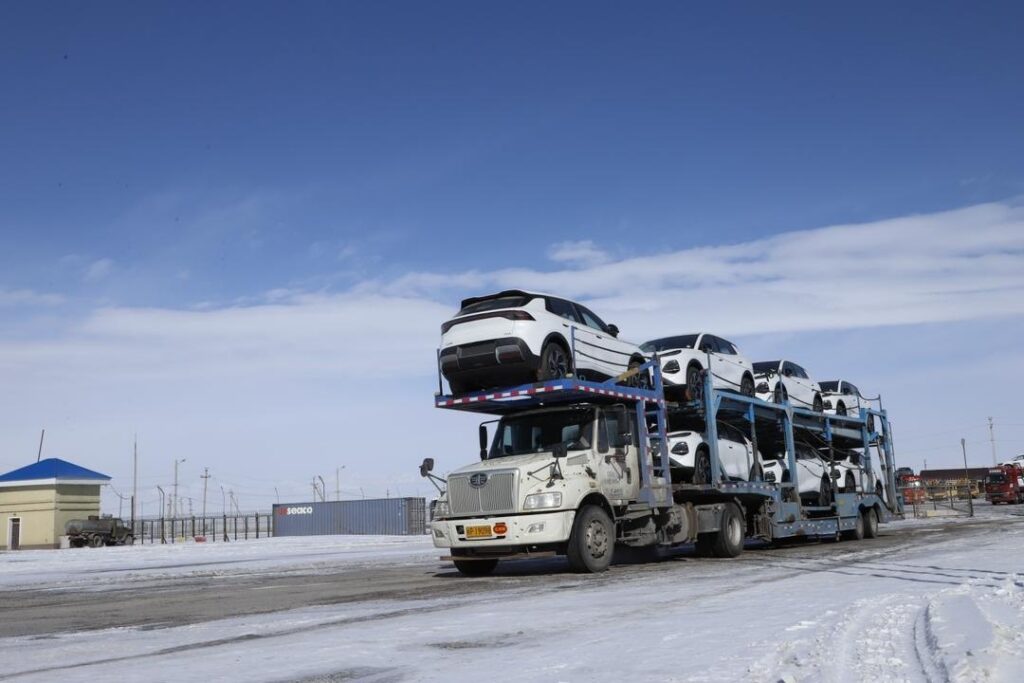
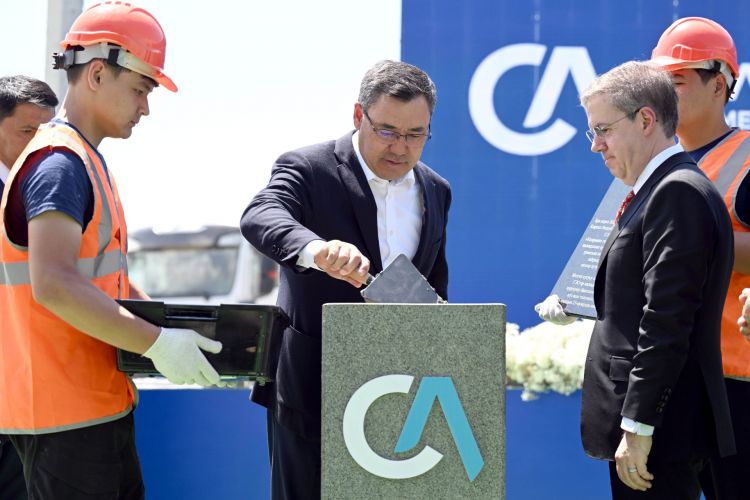
On April 8, the National Investment Agency of Kyrgyzstan and A-CAR (Chuan Yi LLC) signed a memorandum on investment cooperation in the automotive industry, including the supply and sale of new Chinese cars in Kyrgyzstan and the development of service infrastructure. The Chinese company plans to establish a dealer network and open an official representative office for Central Asia. A-CAR supplies vehicles from leading Chinese and international brands and provides a full range of services, including technical maintenance, vehicle registration, and insurance. A significant portion of vehicles imported from China to Kyrgyzstan are re-exported to Russia rather than remaining in the local market. The duty-free regime for electric vehicles in Kyrgyzstan has significantly boosted imports of Chinese electric cars. As a member of the Eurasian Economic Union (EAEU), Kyrgyzstan benefits from an annual quota allowing the duty-free import of up to 15,000 electric vehicles. Sergey Tselikov, director of Russian automotive analytics agency Autostat, wrote on his Telegram channel that Kyrgyzstan remains the second-largest import channel for new passenger cars into Russia after China. He said 84% of the new passenger cars imported through Kyrgyzstan were manufactured in China, including Chinese, European, and Japanese brands. According to Autostat, Kyrgyzstan is the largest supplier of new passenger cars to Russia among EAEU member countries. In 2025, 53,600 new passenger cars were imported to Russia from Kyrgyzstan, followed by 17,100 cars from Belarus, 11,000 from Kazakhstan, and 344 from Armenia. Kyrgyzstan is also seeking to collaborate with Chinese companies to develop electric vehicle (EV) charging infrastructure. In late March, Energy Minister Taalaibek Ibrayev visited China, where he held a series of meetings with energy and technology companies involved in EV infrastructure development. Negotiations focused on cooperation in energy infrastructure, including the development of EV charging stations and energy storage systems in Kyrgyzstan. These initiatives align with government efforts to promote environmentally friendly transport and reduce air pollution in Bishkek and other major cities. The number of EVs in Kyrgyzstan has been rising steadily, with more than 200 electric vehicles imported into the country daily under a value-added tax (VAT) exemption scheme, according to official figures. Despite this growth, EVs still account for a small share of the country’s total vehicle fleet, about 0.8%, or approximately 15,200 vehicles, according to the Ministry of Natural Resources, Ecology, and Technical Supervision.

2 months ago

Kyrgyzstan Tests Alternative Transport Route to Russia That Bypasses Kazakhstan

Kyrgyzstan and Russia are advancing plans for an alternative transport route that would bypass Kazakhstan. The proposed Southern Transport Corridor would connect the Russian port of Astrakhan across the Caspian Sea to the Turkmenbashi port in Turkmenistan and then continue overland through Turkmenistan and Uzbekistan to Kyrgyzstan. The first test cargo shipments along this corridor have already been completed, according to Russian media reports citing Kyrgyzstan’s First Deputy Prime Minister Daniyar Amangeldiyev. Amangeldiyev said Kyrgyzstan views the development of this southern route via the Caspian Sea as a promising alternative for trade between the two countries. “We’re working in this direction. We have a strategic partnership in this area and a shared vision. We are currently in negotiations,” he told Russia’s TASS news agency on April 3 on the sidelines of the CIS International Economic Forum in Moscow. Discussions on establishing the new transport corridor date back to October 2024, during the visit of then–prime minister of Kyrgyzstan Akylbek Japarov to Moscow. For Kyrgyzstan, the Southern Transport Corridor offers a way to reduce dependence on transit through Kazakhstan. At present, most cargo traffic between Russia and Kyrgyzstan passes through the territory of Kazakhstan. Trucks from Kyrgyzstan often face delays of several days at the border, creating significant obstacles for cargo transport, particularly for perishable agricultural goods. The new corridor is expected to help alleviate these bottlenecks and provide an alternative route linking Kyrgyzstan with the European part of Russia. Kazakhstan would continue to serve as the primary transit route for trade with Russia’s Siberian, Ural, and Far Eastern regions.

2 months ago

Saryagash Bypass Road to Improve Kazakhstan–Uzbekistan Transport Links

Kazakhstan has begun construction of a new highway bypassing the city of Saryagash in the Turkistan region. The project is expected to improve transport links in southern Kazakhstan and support transit along international routes. Saryagash is located in southern Kazakhstan near the Kazakh-Uzbek border, approximately 20 km from Tashkent, the capital of Uzbekistan. The Saryagash Bypass Road is designed to redirect transit traffic away from urban areas, reduce congestion within the city, shorten travel times, and facilitate faster passenger and cargo movement toward Uzbekistan. The project involves the construction of a 102.6 km modern four-lane highway, aimed at supporting cross-border trade and reinforcing the Turkistan region’s role as a key transport hub on international corridors. In September 2025, the Asian Development Bank (ADB) approved a sovereign-guaranteed loan of $400 million to KazAvtoZhol National Company for the construction of the bypass road. “The Saryagash Bypass Road will strengthen Kazakhstan’s trade and transport links within the region and with external markets in East Asia and Western Europe, helping unlock the country’s potential as a key transit hub,” said Utsav Kumar, ADB Country Director for Kazakhstan. “The project will contribute to the economic development of the Turkistan region by improving access to larger markets, reducing congestion, creating jobs, and promoting tourism.” The highway will improve links between Central Asia Regional Economic Cooperation (CAREC) Corridors 3 and 6, key trade routes connecting Kazakhstan with neighboring countries. The CAREC Program, supported by the Asian Development Bank, brings together regional countries and development partners to promote economic growth and sustainable development. In addition to the bypass project, road network modernization is ongoing in the Turkistan region, according to the Ministry of Transport. Five road repair projects with a combined length of 99.2 km are currently underway, including the reconstruction of interchanges and bridges on key routes connecting Kazakhstan with neighboring states. These initiatives are expected to increase transit capacity and improve cross-border transport flows.

2 months ago

Kyrgyzstan Plans Central Asia’s First Live-Line Energy Training Center

Kyrgyzstan plans to establish a competence center for live-line working technologies, with the aim of developing it into a regional hub for training highly qualified specialists from Kazakhstan, Uzbekistan, and Tajikistan. The center will focus on maintaining power grids and electrical equipment without de-energizing high-voltage lines. The National Electric Network of Kyrgyzstan has signed a cooperation agreement with Grid Company of Tatarstan (Russia) to develop and introduce live-line working technologies, including the creation of a specialized training center. The agreement was signed during the Energoprom-2026 international electric power forum in Kazan and was attended by Kyrgyz Energy Minister Taalaibek Ibrayev and Russian Energy Minister Sergey Tsivilyov. The initiative aims to enable maintenance of electrical grids without disconnecting consumers. This is expected to reduce the frequency and duration of power outages, lower technical losses, and improve the reliability and quality of electricity supply for households and businesses. The project is particularly relevant for Kyrgyzstan, where electricity supply is frequently interrupted due to the maintenance needs of aging infrastructure. Authorities say the initiative could help modernize the country’s energy sector and strengthen its role in regional cooperation. The partnership with Russia also provides for the supply of electrical equipment and the localization of production in Kyrgyzstan, including cables, switchgear, and metering devices. The project is also expected to position Kyrgyzstan as a regional training and competence hub for the electric power industry.

2 months ago

Digital Gold Trading Launches on Kyrgyz Stock Exchange

On April 3, the Kyrgyz Stock Exchange, Kyrgyzaltyn, and Central Depository CJSC signed an agreement enabling the purchase and sale of precious metals, particularly gold. The initiative aims to provide equal access to exchange-based gold trading for all categories of investors. The exchange will ensure automated and transparent transactions, with prices formed in real time based on supply and demand. Participants in the trading include commercial banks, jewelry and brokerage firms, and other entities registered with the Department of Precious Metals under the Ministry of Finance. “Using exchange infrastructure automates processes and guarantees equal access to the asset for all categories of investors,” said Aida Chodulova, CEO of the Kyrgyz Stock Exchange. She added that gold will function as both a digital and physical asset, with transactions recorded in the exchange’s automated system. Officials say the platform will allow investors to trade gold without the need for physical transportation, while also offering a tool for long-term capital preservation. Gold remains Kyrgyzstan’s main export commodity. In 2025, the country exported 6.2 tons of gold worth $682.8 million, according to preliminary data cited by local media. According to the Ministry of Economy, gold accounted for nearly 24% of total exports. The country’s largest deposit, Kumtor, is located in the Issyk-Kul Region at an altitude of about 4,000 meters. It is one of the world’s largest gold deposits and was nationalized in 2021 after previously being owned by Centerra Gold. The mine is operated by Kumtor Gold Company, which is fully owned by Kyrgyzaltyn. In 2025, the company produced 12,081 kg of gold, generated $1.434 billion in revenue, and reported net profit of more than $706 million, while paying $246.5 million in taxes and other payments.

2 months ago

Kyrgyzstan to Install 300,000 Smart Electricity Meters Purchased from China

Kyrgyzstan’s Ministry of Energy has signed a contract with Shenzhen Kaifa Technology for the purchase of 300,000 smart electricity meters for the National Electric Network in 2026, according to the ministry. Negotiations are also underway for an additional 90,000 units. The National Electric Network of Kyrgyzstan has introduced an automated electricity control and metering system that has helped strengthen financial discipline in the energy sector. As of the end of 2025, 500,100 smart meters had been installed across the country, bringing the total number of installed meters to more than 923,000. This has improved metering accuracy and reduced electricity losses from 11.7% to 10.6%. Smart meters offer several advantages. They enable automatic data transmission, with readings sent to a central server in real time, eliminating the need for manual inspections. They also allow for remote control: electricity supply can be automatically suspended in cases of non-payment and restored once payment is made. In addition, smart meters help protect against overloads, support voltage stability in the grid, and reduce human error by minimising manual data entry. This also contributes to lowering electricity theft. The rollout is part of the Kyrgyz Energy Modernization and Sustainability Project, supported by the World Bank. The project aims to modernise the energy sector, improve the accuracy of electricity metering, and reduce power losses. Smart metering is particularly important for Kyrgyzstan, which continues to face electricity shortages and relies on imports to meet growing demand from industry and households.

2 months ago

Air Quality Report Shows Central Asia’s Air Getting Rapidly Worse

Tajikistan ranked as the world’s third most polluted country in 2025, according to the latest World Air Quality Report by IQAir. The report analyzed PM2.5 concentrations across 9,446 cities in 143 countries and territories. PM2.5, fine particulate matter measured in micrograms per cubic meter, is widely used as a key indicator of air pollution. The five most polluted countries in 2025 were Pakistan (67.3 µg/m³), Bangladesh (66.1 µg/m³), Tajikistan (57.3 µg/m³), Chad (53.6 µg/m³), and the Democratic Republic of the Congo (50.2 µg/m³). Only 13 countries and territories met the World Health Organization annual PM2.5 guideline of 5 µg/m³, including Australia, Iceland, and Estonia. Overall, 130 out of 143 countries exceeded the guideline. Kazakhstan records the cleanest air in Central Asia, but still had the 29th worst air globally in 2025, a very significant decline from 71st in 2024. Uzbekistan has the region's dirtiest air, and the 10th worst worldwide, while Kyrgyzstan is only slightly better, in 19th. Like Kazakhstan, both countries have fallen down the rankings since they were last put together in 2024. Kyrgyzstan had been in 41st place, while Uzbekistan has fallen from 19th. Turkmenistan, which was also among the 30 most polluted countries in 2024, was not included in the 2025 report due to a lack of available data. Karaganda in Kazakhstan is Central Asia's most polluted city, ranking 26th globally in 2025. The city recorded an annual PM2.5 level of 72.6 µg/m³, more than ten times the WHO guideline. Other heavily polluted cities in the region included Fergana (30th, 68.8 µg/m³), Dushanbe (51st, 57.3 µg/m³), Guliston (100th), and Tashkent (225th, 39 µg/m³). The report also noted that the world’s 25 most polluted cities in 2025 were all located in India, Pakistan, and China, with India accounting for three of the top four.

2 months ago

Snow Leopard Designated as Official Mascot of World Nomad Games in Kyrgyzstan

The snow leopard has been designated as the official mascot of the sixth World Nomad Games, which Kyrgyzstan will host from August 31 to September 6, it has been announced. “The snow leopard is more than a symbol of strength. It reflects inner resolve, dignity, and clarity of purpose. It carries the spirit of Kyrgyzstan, the character of nomadic culture, and the energy of forward movement,” the Games' Secretariat said. In October 2025, Kyrgyzstan’s Cabinet of Ministers officially designated the snow leopard as the country’s national symbol and approved a corresponding logo. Snow leopards are considered a key indicator of ecological health in mountainous regions across 12 Asian countries, including Kyrgyzstan. The country has played a prominent role in global conservation efforts, most notably by spearheading a United Nations General Assembly initiative that led to the establishment of October 23 as International Snow Leopard Day. Launched by Kyrgyzstan in 2012, the World Nomad Games aim to revive and preserve the cultural heritage of nomadic civilizations. The inaugural Games were held in September 2014 in the resort town of Cholpon-Ata on the shores of Lake Issyk-Kul. Kyrgyzstan also hosted the second and third editions in 2016 and 2018. The 2022 Games were held in Turkey, and the 2024 edition took place in Kazakhstan. Over the years, the Games have evolved into a major international festival showcasing Central Asia’s cultural traditions through events featuring birds of prey, equestrian sports, traditional wrestling, archery, and displays of physical skill and endurance. In February 2026, the Director-General of UNESCO, Khaled El-Enany, announced the decision to grant the organization’s patronage to the 6th World Nomad Games following an official request from the Kyrgyz government. The granting of UNESCO’s patronage underscores international recognition of the 2026 Games as an important global initiative for preserving and promoting traditional sports and games, which form part of humanity’s intangible cultural heritage. It is also expected to support broader international participation and raise the global profile of Kyrgyzstan’s cultural heritage. The opening of the 6th World Nomad Games will take place alongside a summit of the Shanghai Cooperation Organization (SCO), which Kyrgyzstan will host.

2 months ago