• KGS/USD = 0.01143 0%
  • KZT/USD = 0.00205 0%
  • TJS/USD = 0.10724 0.09%
  • UZS/USD = 0.00008 0%
  • TMT/USD = 0.28571 0%
  • KGS/USD = 0.01143 0%
  • KZT/USD = 0.00205 0%
  • TJS/USD = 0.10724 0.09%
  • UZS/USD = 0.00008 0%
  • TMT/USD = 0.28571 0%
  • KGS/USD = 0.01143 0%
  • KZT/USD = 0.00205 0%
  • TJS/USD = 0.10724 0.09%
  • UZS/USD = 0.00008 0%
  • TMT/USD = 0.28571 0%
  • KGS/USD = 0.01143 0%
  • KZT/USD = 0.00205 0%
  • TJS/USD = 0.10724 0.09%
  • UZS/USD = 0.00008 0%
  • TMT/USD = 0.28571 0%
  • KGS/USD = 0.01143 0%
  • KZT/USD = 0.00205 0%
  • TJS/USD = 0.10724 0.09%
  • UZS/USD = 0.00008 0%
  • TMT/USD = 0.28571 0%
  • KGS/USD = 0.01143 0%
  • KZT/USD = 0.00205 0%
  • TJS/USD = 0.10724 0.09%
  • UZS/USD = 0.00008 0%
  • TMT/USD = 0.28571 0%
  • KGS/USD = 0.01143 0%
  • KZT/USD = 0.00205 0%
  • TJS/USD = 0.10724 0.09%
  • UZS/USD = 0.00008 0%
  • TMT/USD = 0.28571 0%
  • KGS/USD = 0.01143 0%
  • KZT/USD = 0.00205 0%
  • TJS/USD = 0.10724 0.09%
  • UZS/USD = 0.00008 0%
  • TMT/USD = 0.28571 0%

Our People > Sergey Kwan

Sergey Kwan's Avatar

Sergey Kwan

Journalist

Sergey Kwan has worked for The Times of Central Asia as a journalist, translator and editor since its foundation in March 1999. Prior to this, from 1996-1997, he worked as a translator at The Kyrgyzstan Chronicle, and from 1997-1999, as a translator at The Central Asian Post.
divider
Kwan studied at the Bishkek Polytechnic Institute from 1990-1994, before completing his training in print journalism in Denmark.

Articles

Kyrgyzstan Seeks Foreign Teachers to Ease Education Staff Shortage

A group of deputies in Kyrgyzstan’s Jogorku Kenesh, the national parliament, has drafted legislative amendments aimed at attracting foreign teachers and modernizing the country’s educational infrastructure through new legal and economic incentives. The proposed amendments were submitted for parliamentary consideration. Under the draft legislation, foreign teachers working in Kyrgyzstan would be exempt from income tax and mandatory social security payments. The bill would also grant foreign educators the right to obtain temporary residence permits. Additional measures include tax incentives for educational institutions and exemptions from value-added tax (VAT) on imported educational equipment. The authors of the amendments argue that modernizing Kyrgyzstan’s education system will require the introduction of international teaching standards, digital technologies, and updated educational programs. They say the process will also require the involvement of highly qualified specialists, including foreign teachers with international experience. According to the lawmakers, the proposed legislation is intended to help implement advanced teaching methods and global educational practices, improve student training, create a more competitive academic environment, and strengthen the intellectual potential of younger generations without requiring students to study abroad. The bill’s explanatory note states that a shortage of qualified teachers in schools and universities remains one of the key challenges facing Kyrgyzstan’s education system. The shortage comes as the country experiences a steady increase in student numbers and mounting pressure on educational infrastructure. According to official figures cited in the draft legislation, Kyrgyzstan had 2,175 public schools and 219 private schools in 2025, serving a total of 1,526,800 students with 108,006 teaching staff. The country also has 32 public universities and 41 private universities.

1 month ago

Kazakhstan Sets Irrigation Limits for Southern Regions and Reduces Water-Intensive Crops

Kazakhstan has introduced limits on irrigation water use in its southern regions and is reducing the cultivation of water-intensive crops as authorities seek to prevent shortages during the 2026 growing season. At a government meeting on May 12, Minister of Water Resources and Irrigation Nurzhan Nurzhigitov said reservoirs in the country’s southern regions had accumulated 26.2 billion cubic meters of water, 500 million cubic meters more than during the same period last year. Agriculture in Kazakhstan’s arid southern regions depends heavily on water collected during the spring snowmelt period, as well as water flowing from upstream Kyrgyzstan. To avoid irrigation shortages, the government established water-consumption limits for the main agricultural regions. The Turkestan region received a limit of 3.8 billion cubic meters, followed by the Kyzylorda region with 3.2 billion cubic meters, the Almaty region with 2.1 billion cubic meters, the Zhetisu region with 1.8 billion cubic meters, and the Zhambyl region with 900 million cubic meters. Authorities said all preparatory work for the irrigation season has been completed. This included mechanized cleaning of 1,840 kilometers of irrigation canals, reconstruction of 680 kilometers of irrigation networks, and repairs to 375 hydraulic facilities. To ensure stable water supplies through the canal system, 181 pumping units have been prepared, while an additional 92 pumps are expected to be purchased. Since the beginning of the year, Kazakhstan has also shifted the process of concluding water-supply contracts with farmers to an electronic format. The new digital system covers the entire water-supply cycle, including applications, contract execution, monitoring of actual water consumption, and payment processing. To date, more than 25,000 electronic contracts have been signed with farmers. “To increase transparency and strengthen operational control over water-resource management, satellite monitoring based on Earth remote sensing is being introduced across all five southern regions of the country. Since the beginning of the year, satellite monitoring has identified 39 cases of water withdrawal without contracts in the Turkestan region, where farmers illegally used approximately 790,000 cubic meters of water,” Nurzhigitov said. At the same government meeting, Deputy Agriculture Minister Azat Sultanov said Kazakhstan plans to sow crops on a total area of 23.8 million hectares this year, 180,000 hectares more than in 2025. Priority is being given to more profitable crops. The area under oilseed cultivation will exceed 4 million hectares, while forage crops will cover 3.3 million hectares. Kazakhstan is also continuing efforts to diversify agricultural production. The area planted with grain crops will be reduced by 127,000 hectares. As part of water-saving measures, the government is cutting back on water-intensive crops such as rice and cotton. Rice cultivation areas have been reduced by 20,200 hectares. At the same time, the area under drip-irrigated cotton has increased by 29,800 hectares, while cotton grown using traditional irrigation methods has been reduced by 12,000 hectares.

1 month ago

Kazakhstan Ready to Become Key Food Hub in Eurasia

Tajikistan is hosting the 35th Session of the FAO Regional Conference for Europe from May 11 to 15, bringing together members of the Food and Agriculture Organization (FAO) of the United Nations from Europe and Central Asia for discussions on regional food security and agricultural development priorities. The conference has gathered agriculture ministers from Azerbaijan, Kazakhstan, Kyrgyzstan, Tajikistan, Turkmenistan, and Uzbekistan to address the most pressing challenges facing the sector, review FAO activities in Europe and Central Asia in 2024-2025, and outline priorities for 2026-2027. Speaking at the conference, Kazakhstan’s Minister of Agriculture Aidarbek Saparov said the country occupies a strategically important position in the global food security system and remains among the world’s leading grain producers. According to Saparov, Kazakhstan harvested around 27 million tons of grain for the second consecutive year in 2025, along with nearly 5 million tons of oilseeds and approximately 1 million tons of legumes. During the latest agricultural season, the country exported 15.3 million tons of grain. Kazakhstan currently ranks 10th globally in grain exports, second in flour exports, and eighth in sunflower oil exports, supplying agricultural products to around 50 countries. “Against the backdrop of population growth, climate change, and instability in global markets, food security is becoming a key factor in the sustainable development of states. Under these conditions, Kazakhstan is capable of occupying a strategic niche as a regional center for the production, storage, processing, and supply of grain products,” Saparov said. The minister added that Kazakhstan is implementing a comprehensive livestock development plan for 2026-2030 aimed at increasing livestock numbers and expanding the sector’s export potential. Saparov said Kazakhstan possesses the resources necessary to strengthen its position as one of Eurasia’s key food hubs and is prepared to ensure stable, rapid, and cost-effective supplies of grain and processed grain products to Central Asia, the Middle East, Europe, and other regions.

1 month ago

Kazakhstan Plans New Measures to Attract Highly Skilled Foreign Workers

Kazakhstan is preparing to introduce new mechanisms to attract highly qualified foreign specialists as part of a broader effort to increase the country’s openness to talent, investors, and entrepreneurs. The Ministry of Labor and Social Protection has drafted amendments to the country’s migration legislation following a presidential decree aimed at modernizing migration policy and addressing labor shortages. The proposed legislation introduces a targeted recruitment system for in-demand foreign specialists based on the current needs of the domestic labor market. A key element of the reform is the creation of a government-approved list of priority professions. The list is expected to include specialists in information technology, healthcare, education, and culture, sectors currently experiencing some of the most acute labor shortages. The draft law also establishes clearer and more transparent procedures for hiring foreign professionals at the request of employers. Authorities are placing particular emphasis on improving conditions for foreign specialists working and living in Kazakhstan, including through an expansion of the Altyn (Golden) Visa program. Under the proposed changes, foreign specialists would be eligible to apply for resident status after a specified period of employment in Kazakhstan. The status would provide access to tax incentives, financial services, healthcare and education opportunities, as well as the right to work outside the country’s foreign labor quota system. Officials say the reforms are intended not only to address labor shortages, but also to facilitate the transfer of skills and expertise to local workers and accelerate technological modernization. In the longer term, the government hopes the measures will help position Kazakhstan as a regional hub for skilled professionals and advanced technologies. The Labor Ministry is also working to significantly expand the list of in-demand professions from 51 to 174 specialisms. The expanded list would include occupations in the nuclear industry, energy, biotechnology, genomic medicine, water management, irrigation, and healthcare. Authorities say the initiative is designed to strengthen Kazakhstan’s competitiveness in the global race for talent and support the development of strategically important sectors of the economy. The Times of Central Asia previously reported that Kazakhstan had approved its 2026 quota for foreign labor at 0.25% of the country’s total workforce. The quota includes permits for 726 senior executives and deputies, 3,402 heads of structural divisions, 5,893 specialists, and 3,131 skilled workers. An additional 4,994 permits were allocated for seasonal labor.

1 month ago

Kazakhstan, Kyrgyzstan, Uzbekistan Agree on Toktogul Water Releases

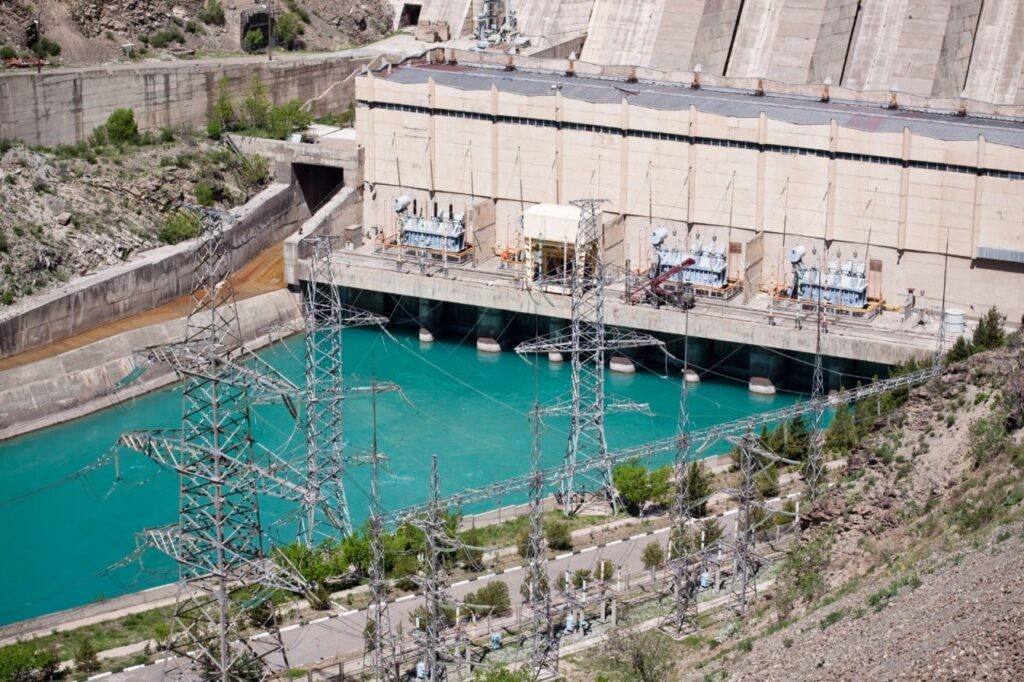
Energy and water ministers from Kazakhstan, Kyrgyzstan, and Uzbekistan signed a trilateral protocol in Tashkent on May 7 establishing agreed water release volumes and schedules from the Toktogul Reservoir for the next two months. The Toktogul Reservoir plays a central role in maintaining water and energy stability across Central Asia. The Toktogul Hydropower Plant, located on the Naryn River, the main tributary of the Syr Darya, is Kyrgyzstan’s largest power station and supplies around 40% of the country’s electricity. The reservoir serves a dual purpose: generating electricity for Kyrgyzstan while regulating water flows essential for downstream agriculture in Kazakhstan and Uzbekistan. During winter, Kyrgyzstan typically increases electricity generation to meet heating demand, often lowering reservoir levels and reducing the amount of water available for irrigation during the following spring and summer. According to Kazakhstan’s Energy Ministry, the newly signed protocol removes uncertainty for farmers in southern Kazakhstan at the start of the agricultural season and allows both Kazakh and Uzbek farmers to begin irrigation activities on schedule. To ensure stable water supplies throughout the remainder of the growing season, the three countries agreed to continue coordination in stages. The next ministerial meeting is scheduled for mid-June in Bishkek, where officials plan to finalize water release schedules for the critical summer months of July, August, and September. The agreement highlights the continued functioning of the region’s interstate water-energy exchange mechanism. Coordination over summer irrigation flows was preceded by extensive cooperation during the winter season. From September 2025 to April 2026, Kazakhstan supplied more than 1.5 billion kilowatt-hours of electricity to Kyrgyzstan, helping the upstream country reduce winter water releases for heating and preserve additional reserves in the Toktogul Reservoir for summer irrigation needs in Kazakhstan and Uzbekistan. According to Kyrgyzstan’s Deputy Energy Minister Altynbek Rysbekov, the Toktogul Reservoir held 7 billion cubic meters of water on April 1, 2026, down from 9.14 billion cubic meters on January 1 after the winter heating season. The reservoir’s so-called “dead water level,” the threshold below which turbines can no longer operate, stands at 6.5 billion cubic meters.

1 month ago

Kazakhstan’s Kapchagay Reservoir Reaches 98% Capacity

Kazakhstan’s Kapchagay Reservoir in the Almaty Region is now 98% full, holding 18.04 billion cubic meters of water, according to the Ministry of Water Resources and Irrigation. The reservoir collects water from the transboundary Ili River, which originates in China, and regulates water flow into Lake Balkhash, Kazakhstan’s largest lake. During the most recent non-growing season, approximately 4 billion cubic meters of water were released from the reservoir into Lake Balkhash. Officials say the near-full capacity of the reservoir will ensure sufficient irrigation supplies for agricultural land in the Akdala and Shengeldy rural districts of the Almaty Region. “We maintain constant communication with our Chinese colleagues on transboundary river issues, including the Ili River. Thanks to the coordinated efforts of the two countries, farmers in the Almaty Region have been provided with a stable supply of irrigation water for the third consecutive year,” said Seilbek Nurymbetov, chairman of the ministry’s Committee for Regulation, Protection, and Use of Water Resources. The Times of Central Asia previously reported that the Kapchagay Reservoir reached full capacity in August 2024 for the first time in a decade. Created in 1970 as an artificial lake stretching roughly 100 kilometers in length and up to 25 kilometers wide in some areas, the reservoir has a total capacity of more than 18 billion cubic meters of water. The reservoir was originally designed to regulate the flow of the Ili River before it reaches Lake Balkhash. Today, it also serves irrigation, fish farming, and recreational purposes. Located about an hour’s drive from Almaty, its beaches are a popular destination for tourists and local residents. Three of Kazakhstan’s major rivers, the Irtysh, Ili, and Emel, originate in China. The Ili River alone provides about 70% of the water flowing into Lake Balkhash. Located approximately 280 kilometers northwest of Almaty, Lake Balkhash is the world’s fifteenth-largest lake.

1 month ago

Trade and Economic Park Planned at Border of Kyrgyzstan, Tajikistan, and Uzbekistan

On May 6, Kyrgyz President Sadyr Japarov visited the Dostuk Stele (Friendship) in the country’s southwestern Batken region, erected at the junction point of the state borders of Kyrgyzstan, Tajikistan, and Uzbekistan, where he reviewed the concept and master plan for the proposed Dostuk International Trade and Economic Park. During a summit in the northern Tajik city of Khujand on March 31, 2025, Presidents Sadyr Japarov of Kyrgyzstan, Emomali Rahmon of Tajikistan, and Shavkat Mirziyoyev of Uzbekistan signed a historic agreement on the junction point of the three countries’ state borders. The leaders also took part in a remote inauguration ceremony for the Friendship Stele, which marks the exact location where the borders of the three countries meet and symbolizes friendship among the three nations, the resolution of long-standing border issues, and a new stage of regional cooperation. The planned Dostuk International Trade and Economic Park would span 100 hectares and include administrative, tourism, logistics, production, commercial, and recreational zones. The project aims to strengthen trade and logistics links, attract investment, and create new economic opportunities. If implemented, the project is expected to create more than 5,000 jobs and increase cross-border trade. The concept also includes the development of tourism infrastructure and the organization of international cultural events, ethnic festivals, and exhibitions, contributing to stronger cultural and humanitarian ties while promoting the historical heritage of the Silk Road. Japarov said good-neighborly relations among Kyrgyzstan, Tajikistan, and Uzbekistan remain important, citing the role of joint infrastructure and economic initiatives in regional stability and sustainable development. He also expressed confidence that, with mutual support from the three neighboring countries, the project could become a major platform for trade and investment, as well as a symbol of peace, trust, and unity among the peoples of Central Asia.

1 month ago

Remains of Buddhist Temple Unearthed in Ancient Silk Road City in Kyrgyzstan

The remains of what is believed to be a Buddhist temple dating to the 7th and 8th centuries have been discovered at the medieval Ak-Beshim archaeological site, the ruins of the ancient Silk Road city of Suyab in northern Kyrgyzstan, according to the Ministry of Culture, Information, Sports and Youth Policy of the Kyrgyz Republic. Located seven kilometers southwest of Tokmok, Suyab was a major Silk Road city between the 5th and 8th centuries. It was the capital of the Western Turkic Khaganate and an important center for Sogdian merchants on the Chang’an-Tian Shan route, now part of a UNESCO World Heritage corridor. Chinese historical sources suggest that the celebrated poet Li Bai, born in 701 and believed to have died in 762 or 763, may have been born in Suyab. Suyab declined in the 11th century with the rise of Balasagun, another historic city in the Chui Valley located near the famed Burana Tower. The discovery was made by a Kyrgyz-Japanese archaeological expedition during excavations conducted since early May. Researchers uncovered a platform, ramp, and staircase constructed of baked brick. Experts believe these architectural elements are characteristic of temple architecture from China’s Tang Dynasty. The discovery also supports a hypothesis put forward by renowned Soviet archaeologist Alexander Bernshtam, who in the late 1940s suggested the existence of a Buddhist religious structure in the area. Archaeological work carried out in 2025-2026 has opened new chapters in the history of Buddhism in Suyab. Joint Kyrgyz-Japanese research at the site has been underway since 2012. Efforts are currently underway to reclassify the land where excavations are taking place as protected historical and cultural territory. If approved, authorities plan to establish an open-air museum at the site. It was previously reported that archaeologists had also uncovered what is believed to be the oldest Christian structure found in Kyrgyzstan, a Nestorian church dating to the 7th or 8th century. The Times of Central Asia previously reported that the Ministry of Culture, Information and Youth Policy of Kyrgyzstan and the Dunhuang Research Academy established a joint laboratory for cultural heritage preservation that will oversee conservation work at the Ak-Beshim archaeological site.

1 month ago

Kazakhstan and Uzbekistan Continue to Popularize Rail Tourism

Kazakhstan’s national railway company, Kazakhstan Temir Zholy (KTZ), and Oʻzbekiston temir yoʻllari, also known as Uzbekistan Railways, organized this year’s second Keruen Express train tour from May 1 to 6. More than 130 passengers traveled along the Almaty-Turkestan-Samarkand-Tashkent-Almaty route. Over five days, participants visited major architectural and historical sites in both countries, including the Khoja Ahmed Yasawi Mausoleum in Turkestan, the Gur-e-Amir mausoleum and the Registan in Samarkand, and the Hazrati Imam Complex in Tashkent. The Keruen Express promotes rail tourism and the region’s historical heritage while strengthening cultural ties between Kazakhstan and Uzbekistan. Rail tourism is gaining traction in Central Asia. As previously reported by The Times of Central Asia, KTZ expanded its popular Jibek Joly (Silk Road) tourist train route to include Tajikistan. The updated route now reaches the Tajik capital, Dushanbe, extending the tour beyond Kazakhstan and Uzbekistan. The train-tour projects are part of a regional push to promote Central Asia as a unified tourist destination. Regional leaders have advocated for a shared visa-free regime for foreign visitors, similar to Europe’s Schengen Area, to encourage cross-border travel and boost international tourism. Speaking at the 59th Annual Meeting of the Board of Governors of the Asian Development Bank in Samarkand on May 4, Uzbekistan President Shavkat Mirziyoyev proposed creating a Central Asia Tourism Ring as a unified tourism space connecting the countries of the region. Mirziyoyev called on neighboring countries, the ADB, and other partners to form a portfolio of tourism development projects and jointly finance them. Mirziyoyev also highlighted Central Asia’s tourism potential, noting that amid global instability, millions of tourists are seeking safe destinations, and the region has significant opportunities in pilgrimage, cultural, gastronomic, ethnographic, extreme, and medical tourism.

1 month ago

Academy of Digital Technologies & Artificial Intelligence Inaugurated in Kazakhstan

The Academy of Digital Technologies & Artificial Intelligence (ADT&AI) has opened at Satbayev University in Almaty. The new institution will focus on developing digital solutions and artificial intelligence technologies for training next-generation specialists, as well as creating solutions for the corporate sector. The opening ceremony on May 5 was attended by Presidential Aide Kuanyshbek Yessekeyev, Deputy Minister of Science and Higher Education Dinara Shcheglova, and Vice President of the National Academy of Sciences Askar Dzhumadildayev. According to the Ministry of Science and Higher Education, the new academy will offer online courses, making technical education accessible regardless of students’ location. The academy has also launched professional development programs for employees of Kazakhstani enterprises and supports businesses in implementing digital transformation tools in their operations. Through its own data center, the academy will develop digital services and artificial intelligence-based solutions. The AI Lab will play a central role in the academy’s work by integrating AI algorithms into educational and corporate products. “We are creating not just an educational platform, but a fully-fledged technological environment where education, infrastructure, and artificial intelligence work together. Our goal is to provide students and partners with real tools for working and developing in the digital economy,” said Natalia Kudryavtseva, project manager and business analyst at the AI Lab. ADT&AI was created as part of the AI-Sana national program for the development of artificial intelligence in Kazakhstan. The large-scale government initiative aims to develop AI competencies among students, support startups, and create a next-generation technological environment. The program is being implemented with the support of the Ministry of Science and Higher Education and leading universities, including Satbayev University.

1 month ago