• KGS/USD = 0.01144 0%
  • KZT/USD = 0.00215 0%
  • TJS/USD = 0.10637 0.19%
  • UZS/USD = 0.00008 0%
  • TMT/USD = 0.28530 0%
  • KGS/USD = 0.01144 0%
  • KZT/USD = 0.00215 0%
  • TJS/USD = 0.10637 0.19%
  • UZS/USD = 0.00008 0%
  • TMT/USD = 0.28530 0%
  • KGS/USD = 0.01144 0%
  • KZT/USD = 0.00215 0%
  • TJS/USD = 0.10637 0.19%
  • UZS/USD = 0.00008 0%
  • TMT/USD = 0.28530 0%
  • KGS/USD = 0.01144 0%
  • KZT/USD = 0.00215 0%
  • TJS/USD = 0.10637 0.19%
  • UZS/USD = 0.00008 0%
  • TMT/USD = 0.28530 0%
  • KGS/USD = 0.01144 0%
  • KZT/USD = 0.00215 0%
  • TJS/USD = 0.10637 0.19%
  • UZS/USD = 0.00008 0%
  • TMT/USD = 0.28530 0%
  • KGS/USD = 0.01144 0%
  • KZT/USD = 0.00215 0%
  • TJS/USD = 0.10637 0.19%
  • UZS/USD = 0.00008 0%
  • TMT/USD = 0.28530 0%
  • KGS/USD = 0.01144 0%
  • KZT/USD = 0.00215 0%
  • TJS/USD = 0.10637 0.19%
  • UZS/USD = 0.00008 0%
  • TMT/USD = 0.28530 0%
  • KGS/USD = 0.01144 0%
  • KZT/USD = 0.00215 0%
  • TJS/USD = 0.10637 0.19%
  • UZS/USD = 0.00008 0%
  • TMT/USD = 0.28530 0%

Our People > Stephen M. Bland

Stephen M. Bland's Avatar

Stephen M. Bland

Managing Editor and Head of Investigations

Stephen M. Bland is a journalist, author, editor, commentator, and researcher specializing in Central Asia and the Caucasus. Prior to joining The Times of Central Asia, he worked for NGOs, think tanks, as the Central Asia expert on a forthcoming documentary series, for the BBC, The Diplomat, EurasiaNet, and numerous other publications.

His award-winning book on Central Asia was published in 2016, and he is currently putting the finishing touches to a book about the Caucasus.

Articles

Uzbekistan Announces New Electricity Rationing Amid Power Shortages

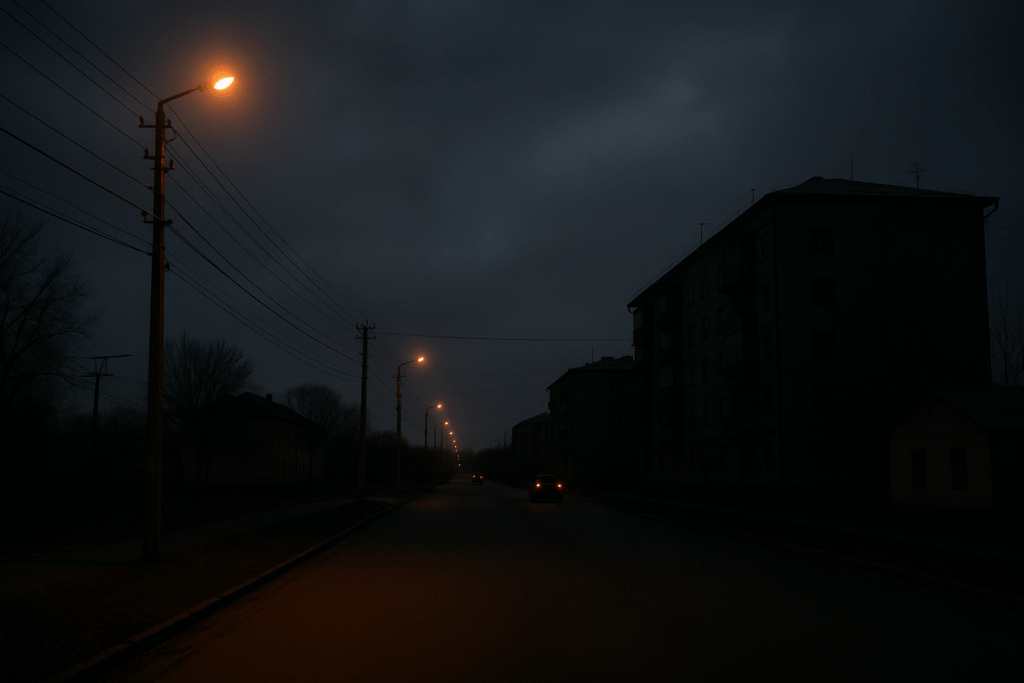
Uzbekistan has announced a new electricity rationing schedule as power shortages strain the national grid. The Ministry of Energy said temporary evening outages would help stabilize supply while repairs and emergency measures continue. The outages, which began this week, are concentrated during peak hours between 5:00 p.m. and 9:00 p.m. and are expected to last until mid-January. Causes of the Shortfall The crisis stems from a major failure at the Syrdarya thermal power plant, one of the country’s largest. A newly installed Mitsubishi gas turbine suffered a mechanical fault in late November, forcing the station to shut down part of its capacity. A replacement 114-ton rotor was delivered by air on December 8, and engineers expect to finish installation and testing in four weeks. Seasonal factors have also reduced the available power supply. With winter’s shorter daylight hours, output from solar stations has dropped significantly, increasing the load on the grid. An unexpected gas supply disruption has further strained generation: Energy Minister Jurabek Mirzamakhmudov revealed that an accident in a neighboring country’s network cut Uzbekistan’s gas intake by about 6 million cubic meters per day. Natural gas fuels a large share of the country’s power plants, so this drop in fuel supply, combined with cloudy weather, has constrained electricity production. “Because of rain, there was neither wind nor sun,” Mirzamakhmudov said. These factors combined have left the grid struggling to meet peak demand in early December. Peak-Hour Outages to Balance Demand Officials have emphasized that rolling blackouts will be kept brief and targeted; each outage is not expected to last more than about two hours, and consumers will be notified in advance whenever possible. By shedding some load at peak times, the grid can avoid more dangerous unplanned breakdowns and ensure critical facilities remain powered. Residents have also been urged to use electricity sparingly and to monitor official announcements, rather than panic if an interruption occurs. The Energy Ministry has stressed that rumors of any nationwide “blackout” are unfounded, and any power cuts will be localized and limited in scope, not a return to the wide-ranging outages seen in the past. Citizens have been cautioned against spreading unverified information on social media and encouraged to rely on updates from authorities. Winter Energy Challenges and Reforms Winter months have historically tested Uzbekistan’s energy infrastructure. In previous years, electricity deficits forced scheduled outages – commonly known as rolling blackouts – across the country. However, officials note that the situation has improved markedly due to new power projects and efficiency measures. According to Energy Ministry data, the volume of electricity consumption that had to be curtailed through such restrictions fell from about 4 billion kWh in 2013 to just 357 million kWh in 2024. Even during the Central Asian energy crisis of winter 2022, Uzbekistan’s forced power cuts totaled around 2 billion kWh, a figure that has since sharply declined as new capacity comes online. Uzbekistan has been racing to expand its electricity generation to meet growing demand and reduce chronic winter shortages....

4 months ago
Kyrgyzstan UN Security Council Bid Gains Backing from Central Asian Neighbors

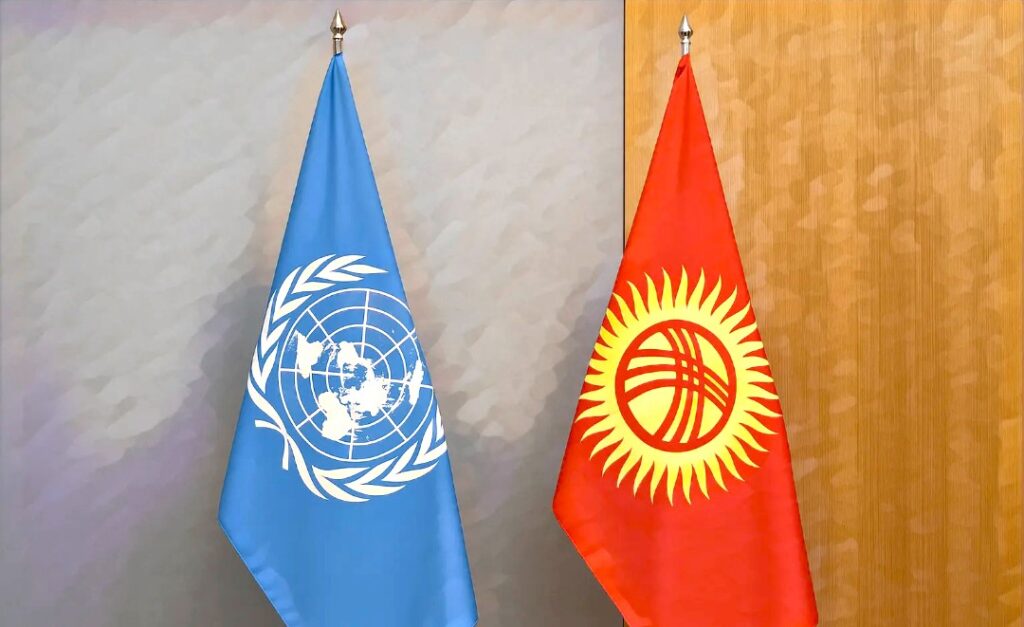
In a show of regional unity, the presidents of all of the Central Asian countries have endorsed Kyrgyzstan’s candidacy for a non-permanent seat on the United Nations Security Council for the 2027–2028 term. The joint appeal was announced on December 4 at a UN press briefing in New York by Uzbekistan’s Permanent Representative, Ulugbek Lapasov, who called on UN member states to support the bid. According to Lapasov, the endorsement reflects the region’s intent to strengthen its voice in international peace and security efforts. Kyrgyzstan’s Permanent Representative to the UN, Aida Kasymalieva, welcomed the unified support from neighboring states. Kasymalieva said the move reflects “a shared commitment to peace, dialogue, and a constructive multilateral approach,” and emphasized that her country, if elected, would serve as “a responsible and principled” Council member that amplifies the voices of smaller and developing nations. A Regional Campaign with Global Aspirations Kyrgyzstan first announced its intention to seek a Security Council seat in 2017. The campaign gathered momentum in 2024, when President Sadyr Japarov told the UN General Assembly that it was time to correct the “historical injustice” of dozens of UN member states - Kyrgyzstan among them - never having served on the Council. Japarov also called for broader representation, especially for African countries, and pledged that Kyrgyzstan would work to make the Council more effective, transparent, and inclusive. In April 2025, Kyrgyzstan officially launched its campaign with a reception at UN Headquarters in New York. Foreign Minister Jeenbek Kulubaev outlined Bishkek’s core priorities: conflict prevention, sustainable development for landlocked and mountainous nations, nuclear disarmament, and support for UN reform. The event drew diplomats from over 150 UN member states. The bid has become a central part of Bishkek’s foreign policy agenda, with senior officials describing it as a long-term investment in the country’s diplomatic standing. The vote for the 2027–2028 non-permanent seats will take place during the UN General Assembly session in June 2026, as scheduled under UN election procedures. Local media have reported that Kyrgyzstan’s main competitor for the Asia-Pacific seat is the Philippines, which has also announced its candidacy. This would not be the first time a Central Asian state has held a seat on the Council. Kazakhstan was elected for the 2017–2018 term, becoming the first country from the region to do so. Its campaign emphasized nuclear disarmament, regional security, and representing the interests of landlocked developing countries. Kyrgyzstan has framed its candidacy similarly, not just as a national endeavor, but as a platform for regional engagement on a global stage. Domestic Challenges, Global Aspirations While Kyrgyzstan pushes for a seat at the UN’s most powerful decision-making body, concerns persist over the country’s democratic trajectory. Once considered the most open society in Central Asia, Kyrgyzstan has seen a decline in civil liberties in recent years, with growing restrictions on independent media, increased pressure on NGOs, and a pattern of centralized political control under President Japarov. In 2021, Kyrgyzstan adopted a new constitution that expanded presidential powers and weakened checks and...

5 months ago

Critical Baikonur Launch Pad Hit by Damage After Soyuz MS-28 Liftoff

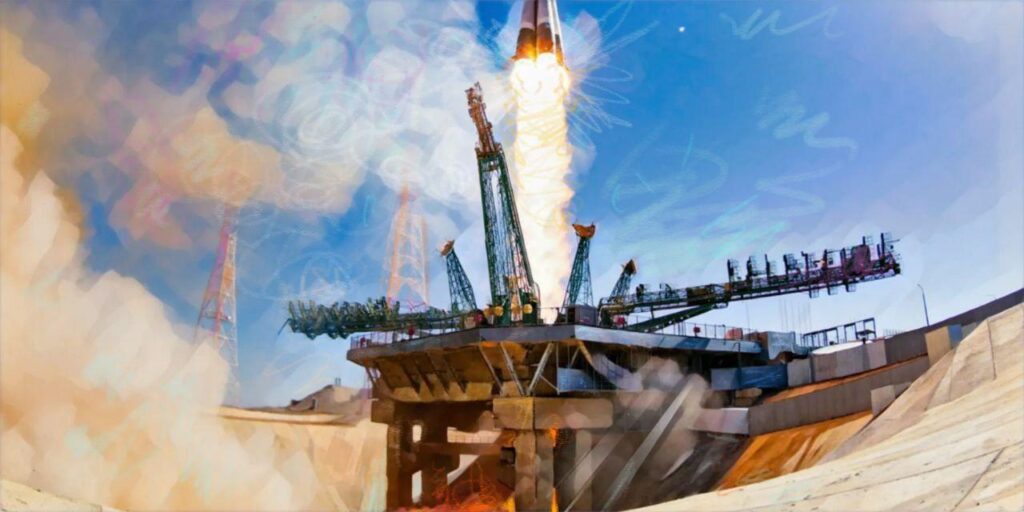
Russia’s space agency has confirmed that a launch pad at the Baikonur Cosmodrome in Kazakhstan was damaged during the liftoff of a Soyuz spacecraft that carried three crew to the International Space Station, raising questions about the near-term launch schedule at the site that Russia has relied on for more than six decades. Roscosmos reported that the Soyuz MS-28 mission lifted off from Baikonur on November 26 and reached orbit without problems. The spacecraft carried Russian cosmonauts Sergey Kud-Sverchkov and Sergey Mikayev, and NASA astronaut Christopher Williams. The crew docked with the station about three hours later. Roscosmos said in a statement on its official Telegram channel that the crew was healthy and the spacecraft worked as planned. Soon after the launch, engineers inspected Launch Pad 31/6, which served as the departure point for the flight. The agency said the inspection found damage to several structural elements on the pad and that repair work would start soon. Roscosmos said all required parts were on hand and the pad would be restored in the near future. Both The Moscow Times and Russian state media, including RIA Novosti, reported that the pad sustained damage but did not identify specific components. Roscosmos confirmed that “damage to several elements of the launch pad was detected.” Independent analysts have stated the damage might be more serious than Roscosmos has suggested, with Anatoly Zak, who publishes technical assessments of Russian space activity at RussiaSpaceWeb, reporting that a mobile service platform may have collapsed into the flame trench below the pad during or shortly after liftoff. Zak noted that the available launch pad for Russian crew missions might be unusable until engineers confirm the structure’s stability, and that it was unclear how soon crews or cargo could fly from Baikonur if the pad requires major work. Roscosmos has not confirmed a collapse of the platform, and it has not provided further details about the condition of the pad. The agency said the accident did not affect the MS-28 mission itself, which it described as nominal. But any impact on the pad is notable because Russia depends on Baikonur for its Soyuz crew launches. Russia leases the site from Kazakhstan through 2050 and continues to use its Soviet-era pads because Vostochny Cosmodrome in Russia’s Far East is not yet certified for crew flights. Russian outlets noted that future launches could face adjustments, but none reported a confirmed delay of a Progress mission. Roscosmos has neither confirmed the schedule nor said whether that mission will move to a later date. NASA has not issued a public statement about the status of joint operations after the incident. Russia and the United States continue to exchange seats on Soyuz and SpaceX vehicles under a 2022 agreement that allows both sides to maintain a sustained presence on the International Space Station. NASA has said the arrangement reduces risk because each side can reach the station even if one spacecraft type is grounded for technical reasons. The new damage at Baikonur highlights the...

5 months ago

Turkmenistan Included as Trump Tightens U.S. Immigration Ban After D.C. Shooting

President Donald Trump has announced a sweeping crackdown on immigration following a deadly shooting near the White House this week, placing new scrutiny on immigrants from certain countries – including Turkmenistan. Trump vowed to “permanently pause migration” from what he called “Third World” countries after two National Guard members were shot in Washington, D.C., one of them fatally. In response, U.S. immigration authorities are re-examining green cards and visa approvals for people from 19 countries deemed “countries of concern,” a list that features Turkmenistan alongside nations in Asia, Africa, and the Middle East. New Immigration Review Follows D.C. Attack The policy shift comes in the wake of an ambush-style attack on Wednesday in which an Afghan national allegedly opened fire on U.S. service members outside the White House. Army Specialist Sarah Beckstrom, 20, died from her injuries, and another Guardsman was critically wounded. Authorities arrested Rahmanullah Lakanwal, a 29-year-old Afghan man who arrived in the U.S. in 2021, as the suspect. Trump condemned the shooting as “an act of terror” and highlighted that the suspect entered under a Biden-era Afghan resettlement program. By Thursday, Trump directed U.S. Citizenship and Immigration Services (USCIS) to conduct a “full-scale, rigorous reexamination” of all current green card holders from every “country of concern.” USCIS Director Joseph Edlow said the review was ordered “at the direction of the President” and stressed that “American lives come first.” When pressed on which nations fall under the “countries of concern,” USCIS officials pointed to Trump’s June 4, 2025, presidential proclamation on foreign entry restrictions, which identified 19 countries with deficient security vetting or high visa overstay rates. It imposed a full travel ban on 12 nations and partial visa bans on 7 others. Turkmenistan’s Status in Trump’s Travel Ban Turkmenistan is one of seven countries under partial U.S. travel restrictions, meaning certain visa categories for Turkmen nationals have currently been suspended or tightened. According to the Trump administration, Turkmenistan was flagged due to security screening gaps and a high rate of U.S. visa overstays by its citizens. U.S. officials noted that about 15.35% of Turkmen visitors on tourist visas overstayed their permitted time in recent years. Turkmenistan has also been cited for limited cooperation on repatriating its citizens who are deported from the U.S. Under the June proclamation, Turkmen nationals were barred from obtaining immigrant visas or tourist and student visas for the U.S., though other travel may be allowed on a case-by-case basis. By invoking what he called a “permanent pause” on migration, Trump signaled that even more sweeping immigration restrictions could be ahead. He wrote on social media that anyone who is “not a net asset to the United States, or is incapable of loving our Country” will be removed. For Turkmenistan, inclusion in the U.S. ban list marks a rare spotlight on the country in American immigration policy. Turkmenistan, where emigration is tightly controlled, sees low numbers of its citizens entering the U.S. Department of Homeland Security data for Fiscal Year 2023 indicates that the...

5 months ago

CSTO Signs New Security Roadmap in Bishkek Amid Armenia Boycott and Putin Ukraine Remarks

The Collective Security Treaty Organization (CSTO) reaffirmed its commitment to regional security and political coordination during its annual summit in Bishkek, Kyrgyzstan, on November 27. Leaders from five of the bloc’s six members - Russia, Belarus, Kazakhstan, Kyrgyzstan, and Tajikistan - attended the event and signed off on a series of military, security, and strategic cooperation agreements. Armenia, the sixth CSTO member, boycotted the summit for the second year running, continuing its protest against the alliance’s refusal to intervene during Armenia’s conflict with Azerbaijan, and marking another low in Armenia’s engagement with the CSTO after months of public grievances against the bloc. Despite Yerevan’s absence, the other members adopted a wide-ranging joint declaration reaffirming the alliance’s collective defense commitments and outlining new initiatives to modernize its security framework. Notably, Armenia did not oppose the adoption of the summit documents in its absence. The CSTO, founded in 2002 and led by Russia, has a charter that guarantees mutual defense among members, though the bloc has often struggled to act decisively during regional crises. Still, it remains the only formal security alliance connecting Russia with post-Soviet Central Asian republics. Kyrgyz President Sadyr Japarov hosted the summit, marking the end of his country’s chairmanship. Japarov handed over the role to Russian President Vladimir Putin, who announced that Russia will lead the CSTO in 2026 under the motto “Collective Security in a Multipolar World: Common Goal—Shared Responsibility.” The bloc also appointed Kyrgyzstan’s Taalatbek Masadykov as the next Secretary General. The former deputy head of Kyrgyzstan’s Security Council will begin his three-year term on January 1, 2026. In remarks during the summit, Putin also addressed global concerns about the war in Ukraine, stating that a 28-point peace plan proposed by former U.S. President Donald Trump could serve as a “basis for future agreements.” He added that Russia has no intention of attacking Europe, seeking to dispel fears of escalation while reaffirming Moscow’s security agenda. The summit ended with the adoption of a large number of documents. Among them were a strategy to combat drug trafficking and plans to improve border security, peacekeeping readiness, and anti-terrorism efforts. Russia used the summit to offer CSTO members a rearmament initiative. Putin proposed supplying allies with modern Russian-made weapons that had “proven their effectiveness” in recent conflicts. The offer included expanded cooperation in joint production and training. Military exercises will continue under the newly adopted five-year cooperation plan. In 2025, the CSTO held drills in Kyrgyzstan, Belarus, and Tajikistan under the banner “Indestructible Brotherhood.” The plan outlines regular future training, integration of air defense units, and enhancements to peacekeeping logistics. The alliance also adopted an Anti-Drug Strategy for 2026–2030 and signed a joint resolution to intensify Operation “Kanal,” which targets drug routes through Central Asia. The CSTO committed to upgrading its counterterrorism strategy and enhancing cyber defense capabilities, with Russia proposing broader coordination on information security and biosecurity. Tajik President Emomali Rahmon, meanwhile, used the summit to urge partners to accelerate border security aid along Tajikistan’s porous southern frontier...

5 months ago