
• KGS/USD = 0.01144 0%
  • KZT/USD = 0.00213 0%
  • TJS/USD = 0.10607 0.57%
  • UZS/USD = 0.00008 0%
  • TMT/USD = 0.28530 0%
  • KGS/USD = 0.01144 0%
  • KZT/USD = 0.00213 0%
  • TJS/USD = 0.10607 0.57%
  • UZS/USD = 0.00008 0%
  • TMT/USD = 0.28530 0%
  • KGS/USD = 0.01144 0%
  • KZT/USD = 0.00213 0%
  • TJS/USD = 0.10607 0.57%
  • UZS/USD = 0.00008 0%
  • TMT/USD = 0.28530 0%
  • KGS/USD = 0.01144 0%
  • KZT/USD = 0.00213 0%
  • TJS/USD = 0.10607 0.57%
  • UZS/USD = 0.00008 0%
  • TMT/USD = 0.28530 0%
  • KGS/USD = 0.01144 0%
  • KZT/USD = 0.00213 0%
  • TJS/USD = 0.10607 0.57%
  • UZS/USD = 0.00008 0%
  • TMT/USD = 0.28530 0%
  • KGS/USD = 0.01144 0%
  • KZT/USD = 0.00213 0%
  • TJS/USD = 0.10607 0.57%
  • UZS/USD = 0.00008 0%
  • TMT/USD = 0.28530 0%
  • KGS/USD = 0.01144 0%
  • KZT/USD = 0.00213 0%
  • TJS/USD = 0.10607 0.57%
  • UZS/USD = 0.00008 0%
  • TMT/USD = 0.28530 0%
  • KGS/USD = 0.01144 0%
  • KZT/USD = 0.00213 0%
  • TJS/USD = 0.10607 0.57%
  • UZS/USD = 0.00008 0%
  • TMT/USD = 0.28530 0%

Our People > Stephen M. Bland

Stephen M. Bland's Avatar

Stephen M. Bland

Managing Editor and Head of Investigations

Stephen M. Bland is a journalist, author, editor, commentator, and researcher specializing in Central Asia and the Caucasus. Prior to joining The Times of Central Asia, he worked for NGOs, think tanks, as the Central Asia expert on a forthcoming documentary series, for the BBC, The Diplomat, EurasiaNet, and numerous other publications.

His award-winning book on Central Asia was published in 2016, and he is currently putting the finishing touches to a book about the Caucasus.

Articles

Kyrgyzstan and Tajikistan Brace for Winter Power Shortages

As winter approaches, Kyrgyzstan is warning of potential electricity shortfalls due to critically low water levels in its hydro-reservoirs, and authorities are rolling out emergency measures. These include urging electricity conservation, shutting down all cryptocurrency mining farms to relieve grid pressure, increasing electricity imports, and accelerating repairs and upgrades to aging power-generation infrastructure. Officials with the Ministry of Energy and Industry of the Kyrgyz Republic say the reserves in key hydropower reservoirs are at their lowest level in more than a decade. At the same time, demand for electricity in homes and businesses is forecast to increase significantly this winter because of colder temperatures. The gap between supply and demand has forced the government to ask households to reduce electricity use during peak hours. Historically, Kyrgyzstan has relied heavily on hydropower. The country’s flagship facility, the Toktogul Hydroelectric Power Station, supplies roughly 40% of the nation's electricity. But its reservoirs are fed primarily by spring and summer snowmelt. In recent years, melting snow has arrived earlier and run-off has fallen, shrinking water levels. According to the International Renewable Energy Agency (IRENA), Kyrgyzstan’s hydroelectric system faces serious seasonal variability in its generational capacity. This winter’s challenge is compounded by weak output from thermal plants and delayed maintenance. The government reports that the ageing coal-fired and gas-fired plants in the north and south of the country require urgent repairs, with rehabilitating the plant in Bishkek alone set to cost around $150 million. With limited funds, several units will remain offline during the cold months. The immediate consequences for households are already appearing. Residents in Bishkek and surrounding regions have reported recurrent evening outages sometimes lasting a few hours. Landlord-run apartment blocks plan to brief residents about schedules for rotating cuts. In smaller towns and villages, citizens fear longer blackouts if the cold deepens. Businesses are also feeling the shock. Small-scale manufacturers report that they have had to halt production during scheduled cuts, eroding profits and increasing costs. Schools and hospitals say they are depending on standby generators. Energy stability plays a central role in Kyrgyzstan’s economy and social well-being. Without reliable power, business productivity falls, heating systems malfunction, and social discontent can spike. In recent years, protests over energy prices and outages have forced the government to scramble for solutions. The current measures are aimed not only at keeping the lights on but maintaining public confidence ahead of looming parliamentary elections. Regionally, Kyrgyzstan’s electricity system interacts with its neighbors. The country imports power from Kazakhstan and exchanges electricity with Uzbekistan, with cross-border feeds from Kazakhstan helping to cover shortages. This winter, Kazakhstan’s own constraints may limit exports, leaving Kyrgyzstan more exposed. Meanwhile, China has offered investment in hydropower expansion as part of regional cooperation. That deal may eventually increase supply, but it will not help in the short term. Meanwhile, neighboring Tajikistan is grappling with comparable winter electricity pressures. The country sources about 95% of its electricity from hydropower and enters the cold season with low reservoir and river flows that sharply...

5 months ago

Kazakhstan, Russia Sign Comprehensive Strategic Partnership Declaration

Kazakh President Kassym-Jomart Tokayev and Russian President Vladimir Putin signed a declaration in Moscow on November 12, 2025, elevating their countries’ relationship to what they have dubbed a “Comprehensive Strategic Partnership and Alliance.” The document was signed at the Kremlin during Tokayev’s working visit to Russia at Putin’s invitation. Ahead of the trip, Tokayev wrote in Rossiyskaya Gazeta that the new declaration “will open a new era in bilateral relations, confirming an unprecedented level of mutual trust and joint readiness for closer work in all areas.” Putin described Kazakhstan as one of Russia’s closest allies and said the agreement “outlines measures to enhance regional partnerships and border cooperation.” Expanding Economic Cooperation During the Moscow visit, both leaders highlighted growing economic links and gas supplies. Tokayev told Russian media that bilateral trade had reached almost $30 billion in 2024 and continued to rise through 2025. Putin noted that Russia remained Kazakhstan’s largest trading and investment partner, while Tokayev said he wanted to increase joint projects in energy, manufacturing, and transport. Energy cooperation featured prominently. The two presidents discussed boosting Russian gas supplies to Kazakhstan’s northern and eastern regions and reaffirmed plans to build Kazakhstan’s first nuclear power plant in cooperation with Russia’s state company Rosatom. They also pledged to coordinate policies in the oil and electricity sectors and maintain stable operations of the Caspian Pipeline Consortium, which carries Kazakh crude to the Black Sea via Russia. Education and technology links were also addressed; Tokayev pointed to new Russian university branches opening in Kazakhstan as evidence that bilateral cooperation extends beyond energy and trade into culture and science. A Long Tradition of Partnership Kazakhstan and Russia share a 7,600-kilometer border and economic and security ties through the Eurasian Economic Union and the Collective Security Treaty Organization. Their cooperation spans space exploration at the Baikonur Cosmodrome, industrial projects, and joint infrastructure development across Central Asia. Tokayev’s government has framed the alliance as a natural evolution of their longstanding partnership. “Despite the complex international situation, interaction and cooperation are actively developing for the benefit of our people,” Tokayev stated. Balancing Major Powers While reinforcing ties with Moscow, Tokayev has also been extremely active in his diplomatic outreach with other world powers. Just days before his Russia trip, Tokayev and his Central Asian counterparts met U.S. President Donald Trump at the White House in a C5+1 summit marking ten years of U.S.-Central Asia cooperation. At that meeting, he welcomed what he called a new stage of engagement between Central Asia and the United States and oversaw new investment deals. Earlier in 2025, Tokayev met Chinese President Xi Jinping in Astana during a China-Central Asia summit, where both sides praised record trade volumes and agreed to deepen collaboration in energy, logistics, and technology. Kazakhstan’s leadership views these parallel partnerships as part of its long-standing multi-vector foreign policy - a strategy designed to maintain balanced relations with Russia, China, the U.S., and Europe - diversifying alliances and avoiding dependence on any single power. Cautious Neutrality on Global...

5 months ago

Deals, Not Declarations: U.S.–Central Asia Cooperation at Summit Crossroads

A landmark summit between the United States and the five Central Asian republics is scheduled for November 6 in Washington, D.C., bringing together the presidents of Kazakhstan, Kyrgyzstan, Tajikistan, Turkmenistan, and Uzbekistan. It will be the second leaders-level C5+1 meeting with a U.S. president—the first took place on the sidelines of the UN General Assembly in 2023—and the first time the format is hosted in the U.S. capital. The gathering also marks the 10th anniversary of the C5+1 diplomatic platform that connects Central Asia with Washington. The summit comes at a pivotal moment geopolitically; Russia remains consumed by its war in Ukraine, whilst China continues to expand its Belt and Road footprint across Eurasia. As the region’s strategic importance grows, both the United States and the Central Asian states see an opportunity to recalibrate their relationships, each approaching the meeting with distinct priorities and expectations. Washington’s Agenda: Critical Minerals and Connectivity For the United States, this summit is about converting diplomatic engagement into tangible deliverables. Officials want to see results in three main areas: critical minerals, regional connectivity, and security coordination. Congress and the administration view the region’s reserves of antimony, tungsten, uranium, and rare earth elements as essential to securing U.S. supply chains. During his October 2025 visit to Kazakhstan and Uzbekistan, Deputy Secretary of State Christopher Landau emphasized expanding cooperation on critical minerals and trade diversification. The Trump administration has prioritized these resources as part of a broader effort to reduce dependence on China. Trade routes are also in focus. The U.S. supports the Middle Corridor, a trans-Caspian route that links Central Asia with the South Caucasus and Europe. Infrastructure investments that bypass Russia are strategically important, and Washington wants to help harmonize customs and logistics to make that corridor more viable. These priorities form part of a wider push to anchor the region in transparent, market-based supply chains that connect Central Asia more directly with Western markets. Kazakhstan: Trade Normalization and Resource Investment Central Asia’s largest economy, Kazakhstan is expected to push for permanent normal trade relations with the U.S. The country still faces Cold War-era restrictions under the Jackson-Vanik amendment – as do Tajikistan, Turkmenistan, and Uzbekistan - with Astana long having viewed its repeal as a key milestone. That push has taken on new importance after Washington imposed a 25% tariff on Kazakh imports in mid-2025 - though Kazakh exports were exempted shortly thereafter - a move viewed by officials in Astana as inconsistent with efforts to expand economic cooperation. Kazakhstan is also looking to the U.S. for support in developing its mineral wealth. President Kassym-Jomart Tokayev’s government is actively mapping new rare earth deposits, and Washington has recently backed a private American bid to reopen Kazakhstan’s long-idle tungsten mine at Upper Kairakty, underscoring growing U.S. interest in Central Asia’s critical minerals sector. The two sides are also expanding industrial ties: in September 2025, Astana signed a $4.2 billion deal with U.S. rail manufacturer Wabtec to modernize Kazakhstan’s locomotive fleet and develop regional transport corridors...

5 months ago

Tajikistan Upgrades Nurek Dam to Boost Power Supply Ahead of Winter Crunch

Tajikistan’s massive Nurek hydroelectric dam – the world’s second-tallest – is undergoing a sweeping modernization to shore up the nation’s electricity supply ahead of the demanding winter season. The 300-meter-high dam, completed in 1980 on the Vakhsh River near the Afghan border, has long been a strategic asset, supplying approximately 70% of Tajikistan’s power. As winter approaches and energy demand peaks, crews at the 3,015 MW hydropower plant are racing to upgrade aging turbines and infrastructure to ensure reliable electricity across the country. The overhaul, which began several years ago, promises not only to keep the lights on through harsh weather but also to boost Nurek’s capacity and extend the life of a facility that has defined Tajikistan’s energy landscape for five decades. A Soviet-Era Marvel at the Heart of Tajikistan’s Power Grid When it was completed in 1980, Nurek was the tallest dam in the world, a record it held for years as a feat of Soviet engineering, with the earth-fill embankment forming a vast reservoir of 98 km² that stores some 10.5 billion cubic meters of water. Between 1972 and 1979, nine giant hydro turbines were installed, giving Nurek an original design capacity of approximately 2,700 MW. Over time, improvements brought its output to just over 3,000 MW. In addition to producing power, the reservoir also supports major irrigation across the Amu Darya basin with one scheme alone - via the Dangara tunnel - irrigating roughly 70,000 hectares, underscoring its dual importance for energy and agriculture. For Tajikistan, a mountainous country of roughly 10.8 million people, Nurek has been nothing short of an economic lifeline. Hydropower accounts for roughly 98% of Tajikistan’s electricity generation, one of the highest shares of renewable energy in the world. This green energy dominance is largely thanks to Nurek and a network of smaller dams. However, the infrastructure is aging, and after 50 years of service, Nurek’s machinery had begun to falter. By the mid-2010s, winter electricity shortages had become common. During the cold months from late September to April, the hydrological cycle leaves Tajikistan with reduced river flow, just as heating needs spike. In those winters, rural areas often faced power rationing and outages, while the capital Dushanbe and other major cities narrowly avoided blackouts. Modernizing Nurek became essential to prevent a return to the severe energy crises of the past and to meet the country’s development goals. Upgrading and Expanding a Giant A comprehensive rehabilitation of Nurek began in earnest in recent years, backed by international financing, including the World Bank. The overhaul is split into phases: Phase I of the modernization — covering four of Nurek’s nine generating units along with major dam-safety works — is scheduled for completion by the end of 2026. Phase II will then refurbish the remaining six units. The upgrades are substantial - new high-efficiency Francis turbines will raise each unit’s capacity from 335 MW to 375 MW. In October 2022, the first upgraded unit came online, producing about 10% more power than before. By August...

6 months ago

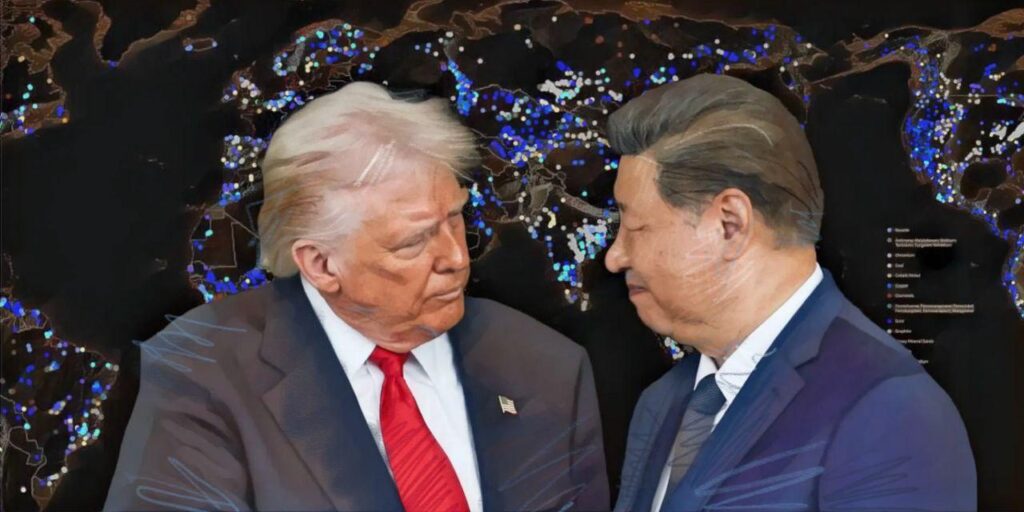
Trump–Xi Meeting Reshapes Stakes Ahead of C5+1 Summit

The October 30, 2025, meeting between U.S. President Donald Trump and Chinese President Xi Jinping in Busan, South Korea, marked their first in-person contact since 2019. While framed as a limited reset or tactical pause, the talks carry deeper strategic implications. They occurred just days before the forthcoming C5+1 Leaders’ Summit in Washington on November 6, a gathering with direct consequences for Central Asia’s role in the future of critical mineral supply chains. South Korea Talks: Reset or Recalibration? At the meeting in Busan, Trump and Xi discussed supply chains, tariffs, rare earth trade, and broader trade issues. The U.S. announced that China had agreed to pause certain rare-earth export curbs for a year, with Trump describing the talks as “amazing.” China currently processes roughly 90% of the world’s rare-earth elements and mines around 70%, which are indispensable in the production of electric vehicles, wind turbines, defense technologies, and high-tech manufacturing. Analysts characterized the Busan accord not as a strategic realignment but as a “tactical pause” or a “temporary lull to escalation” between the U.S. and China. For emerging potential U.S. partners in Central Asia, however, the optics matter, as any perceived U.S.–China trade thaw could diminish the urgency behind diversifying rare earth supply chains. Central Asia’s Rare Earth Opportunity As previously reported by The Times of Central Asia, the upcoming C5+1 summit is likely to focus on critical minerals, energy logistics, and investment infrastructure as the U.S. seeks to reduce its reliance on China. Kazakhstan has emerged as a major player in rare earths, with geological surveys in 2024 and 2025 identifying 38 promising solid mineral deposits, including the Kuyrektykol site in the Karaganda region, which contains substantial reserves. Uzbekistan, meanwhile, signed a memorandum of understanding with the U.S. on critical minerals cooperation in September 2024, which represented a major step toward deepening bilateral cooperation on this front. The U.S. International Development Finance Corporation (DFC) has signaled its interest in co-financing midstream mining and processing infrastructure in Central Asia, though projects remain at formative stages. Logistics routes such as the Middle Corridor via Central Asia and the Caspian remain strategically attractive to Western-aligned supply chains seeking to bypass Russia. Trump–Xi Reset Could Blur U.S. Commitments, But the Case for Diversification Remains Strong Should the Trump-Xi meeting diminish the immediate urgency of supply chain diversification, this will be of concern to countries looking to balance their economies with geopolitical neutrality. Kazakhstan has long positioned itself as a multi-vector neutral broker between major powers, meaning fluctuating U.S. policy signals could cause complications. Despite the reset, however, most analysts contend that little has fundamentally changed, with the Busan meeting seen as a temporary rather than a genuine strategic pivot. While structural competition between Washington and Beijing endures, diversification of critical mineral supply chains remains as essential as ever. For Central Asia, this dynamic reinforces the need to continue developing regional value chains and its mid-stream processing capacity. What to Expect in Washington The November 6 C5+1 Leaders’ Summit in Washington will test whether the...

6 months ago