• KGS/USD = 0.01144 0%
  • KZT/USD = 0.00208 0%
  • TJS/USD = 0.10458 -0.1%
  • UZS/USD = 0.00008 0%
  • TMT/USD = 0.28490 0%
  • KGS/USD = 0.01144 0%
  • KZT/USD = 0.00208 0%
  • TJS/USD = 0.10458 -0.1%
  • UZS/USD = 0.00008 0%
  • TMT/USD = 0.28490 0%
  • KGS/USD = 0.01144 0%
  • KZT/USD = 0.00208 0%
  • TJS/USD = 0.10458 -0.1%
  • UZS/USD = 0.00008 0%
  • TMT/USD = 0.28490 0%
  • KGS/USD = 0.01144 0%
  • KZT/USD = 0.00208 0%
  • TJS/USD = 0.10458 -0.1%
  • UZS/USD = 0.00008 0%
  • TMT/USD = 0.28490 0%
  • KGS/USD = 0.01144 0%
  • KZT/USD = 0.00208 0%
  • TJS/USD = 0.10458 -0.1%
  • UZS/USD = 0.00008 0%
  • TMT/USD = 0.28490 0%
  • KGS/USD = 0.01144 0%
  • KZT/USD = 0.00208 0%
  • TJS/USD = 0.10458 -0.1%
  • UZS/USD = 0.00008 0%
  • TMT/USD = 0.28490 0%
  • KGS/USD = 0.01144 0%
  • KZT/USD = 0.00208 0%
  • TJS/USD = 0.10458 -0.1%
  • UZS/USD = 0.00008 0%
  • TMT/USD = 0.28490 0%
  • KGS/USD = 0.01144 0%
  • KZT/USD = 0.00208 0%
  • TJS/USD = 0.10458 -0.1%
  • UZS/USD = 0.00008 0%
  • TMT/USD = 0.28490 0%

Our People > Stephen M. Bland

Stephen M. Bland's Avatar

Stephen M. Bland

Managing Editor and Head of Investigations

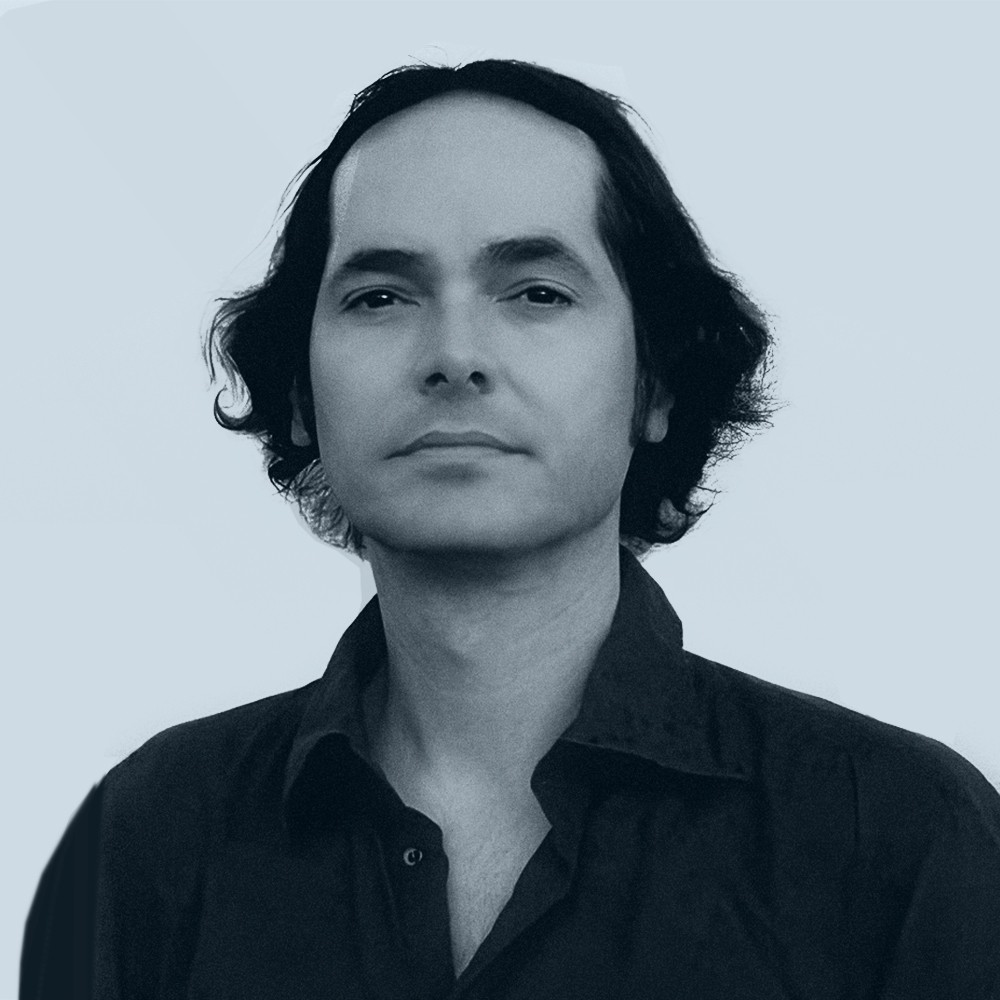
Stephen M. Bland is a journalist, author, editor, commentator, and researcher specializing in Central Asia and the Caucasus. Prior to joining The Times of Central Asia, he worked for NGOs, think tanks, as the Central Asia expert on a forthcoming documentary series, for the BBC, The Diplomat, EurasiaNet, and numerous other publications.

His award-winning book on Central Asia was published in 2016, and he is currently putting the finishing touches to a book about the Caucasus.

Articles

Tokayev Floats Vice President Post at National Kurultai as Kazakhstan Weighs Political Overhaul

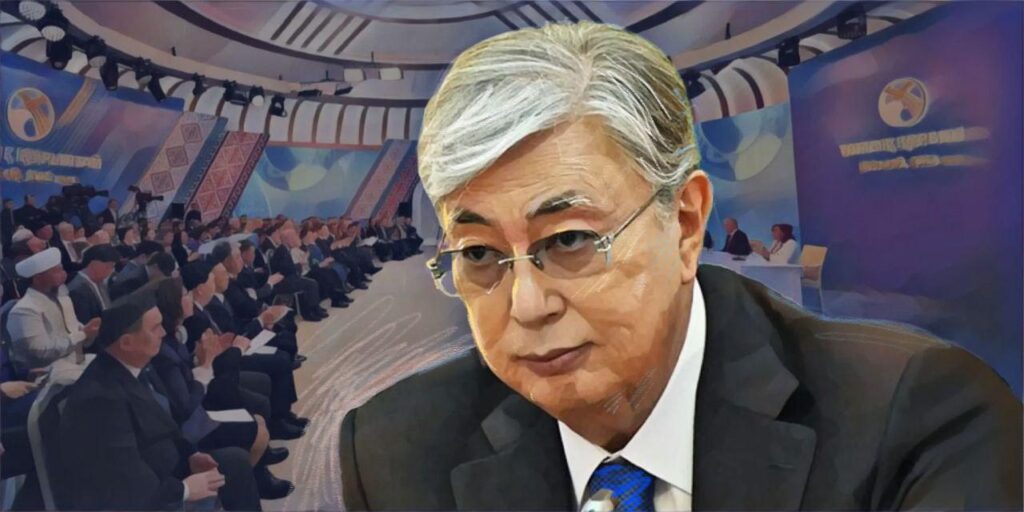
President Kassym-Jomart Tokayev used the fifth session of Kazakhstan’s National Kurultai on January 20 to propose creating a vice president’s post and embedding the new institution in the constitution, as part of a broader package of political reforms aimed at reshaping the country’s system of governance. Under the proposal, the vice president would be appointed by the president and confirmed by parliament by a simple majority vote. The president would define the vice president’s authority, which could include representing Kazakhstan at international forums and negotiations, representing the head of state in parliament, and engaging with domestic and international organizations in political, scientific, cultural, and educational fields. “The establishment of this position will stabilize the process of state governance, and will also bring final clarity regarding the hierarchy of power,” Tokayev said at the Kurultai. Kazakhstan does not currently have a vice president. Executive authority is vested in the presidency, while the government is led by a prime minister, with succession procedures defined by the constitution. Tokayev said the key provisions governing the new post, including its functions, should be enshrined directly in the constitution. The vice presidency was presented as part of a wider administrative restructuring. Tokayev said several administrative structures that support the current parliament would be abolished, along with the position of state counselor. He added that the functions, structure, and management system of the Presidential Administration would be reformed in line with practical needs. The Kurultai session in Kyzylorda took place as the administration advances a more far-reaching overhaul of the legislature. Tokayev has promoted a transition from Kazakhstan’s bicameral parliament, composed of the Senate and the Mazhilis, to a unicameral system, arguing that the change would simplify governance and shorten decision-making chains. [caption id="attachment_42476" align="aligncenter" width="1280"] President Tokayev at the National Kurultai; image: Akorda.kz[/caption] He outlined parameters for a future unicameral parliament, saying it could consist of around 145 deputies, be led by three vice-chairs, and operate with no more than eight standing committees. He also proposed renaming the legislature the “Kurultai,” saying the term reflects historical traditions of popular representation. The parliamentary reform agenda is being developed by a working group that began reviewing constitutional options in late 2025. The idea of moving to a unicameral system was first raised in Tokayev’s national address on September 8, 2025. On January 19, Tokayev held a meeting with the working group on parliamentary reform in Astana, where aides reported that the group had reviewed constitutional approaches to reshaping the legislature and discussed key approaches to constitutional reform based on proposals from citizens, experts, and civil organizations. Tokayev has tied the parliamentary overhaul to a nationwide vote. He reaffirmed that citizens would make the final decision through a referendum and said Kazakhstan is targeting 2027 for a public vote on abolishing the Senate and moving to a unicameral legislature. The latest reform proposals build on constitutional changes adopted after the unrest of January 2022. In June 2022, Kazakhstan held a nationwide referendum on proposed constitutional amendments, with more...

2 months ago
Tokayev Aligns Kazakhstan With Trump’s Board of Peace Initiative

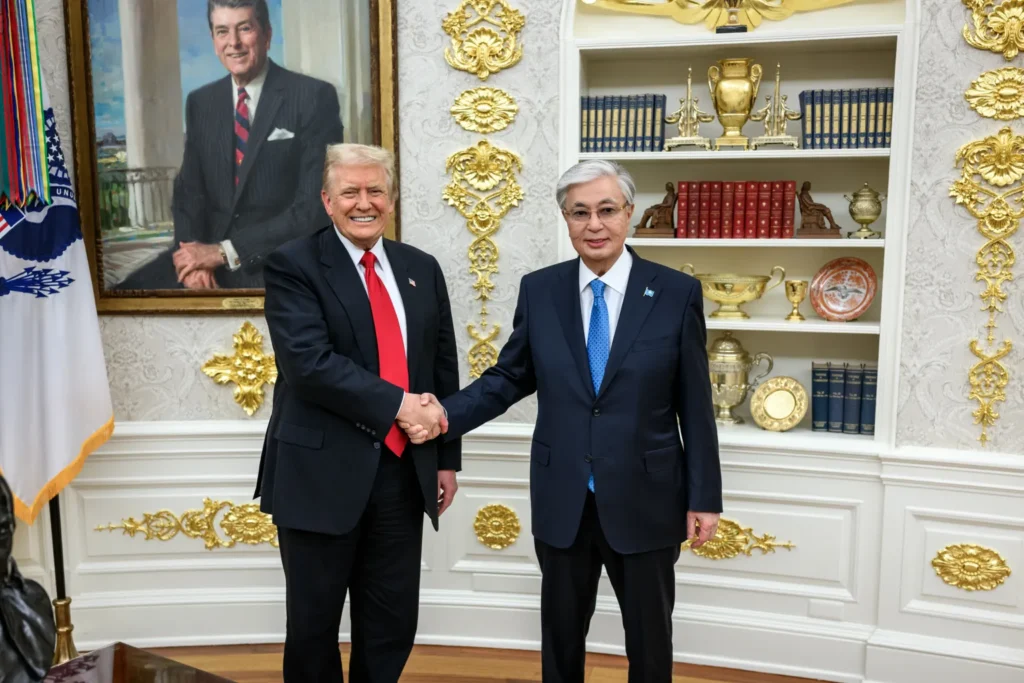
Kazakh President Kassym-Jomart Tokayev has agreed to join a new international body initiated by U.S. President Donald Trump that is intended to address post-war governance and reconstruction in Gaza, with the possibility of later expanding its remit to other global conflicts. Tokayev’s press secretary, Ruslan Zheldibay, said President Tokayev has accepted Trump’s invitation and sent a letter expressing his readiness to participate. The “Board of Peace” is a structure initiated by Trump as part of his broader Middle East agenda. Draft documents outline a body that would coordinate political oversight, reconstruction funding, and security arrangements in Gaza following the current conflict. They describe Trump as chair of the board on a permanent basis and outline different membership terms for participating states. Kazakhstan was invited as an early participant and is expected to be among the first countries to formally join. The decision aligns with Kazakhstan’s long-standing foreign policy approach, which emphasizes engagement with major powers and participation in multilateral diplomatic initiatives. Astana has previously hosted negotiations on regional security issues and has sought a visible role in international conflict mediation. The Board of Peace emerged from a U.S.-backed plan announced in late 2025 to stabilize Gaza following months of war. The plan was presented as a mechanism to oversee reconstruction and governance while preventing renewed conflict. Invitations to join the board were sent to roughly 60 countries, spanning Europe, Asia, the Middle East, and Africa. A draft charter reviewed by several governments sets out a tiered membership structure. Countries may serve on the board for an initial three-year term without a financial contribution. Longer participation is tied to a $1 billion payment to a central fund within the first year of the charter’s entry into force. The funding clause links longer participation to large upfront contributions, although U.S. officials have disputed that the payment would be mandatory in practice. The board’s initial focus is Gaza, but the charter allows for expansion to other conflicts if members agree. The documents describe responsibilities that include oversight of reconstruction projects, coordination with regional actors, and engagement with international financial institutions. The charter does not grant the board enforcement powers, leaving its authority dependent on political support from participating states. Kazakhstan’s participation follows earlier expressions of support for Trump’s Gaza initiative. In October 2025, Tokayev welcomed the U.S. peace plan as a potential step toward restoring stability and rebuilding trust among states involved in the conflict. The move places Kazakhstan alongside a diverse group of invited countries. Russia has confirmed receipt of an invitation for President Vladimir Putin to join the board, and Moscow has said it is examining the proposal and seeking clarification through diplomatic channels. Several other governments have acknowledged invitations, while responses have varied. Some countries have indicated interest in participation, while others have expressed reservations about the board’s structure and its relationship to existing international institutions. Concerns have focused on governance, accountability, and the potential overlap with United Nations-led mechanisms for peacekeeping and reconstruction. The United Nations remains central to...

2 months ago

Security Risks Around Kazakhstan’s Oil Exports Ripple Through European Markets

Europe’s oil market is becoming increasingly exposed to disruption as security risks rise along export routes used by Kazakhstan, which the European Union has long viewed as a reliable alternative to Russian supply. The risks extend far beyond Ukraine itself. “Russia continues escalating its attacks and targeting civilians and civilian infrastructures,” an EU spokesperson told The Times of Central Asia. “Russia’s brutal and unacceptable attacks have left people without hot water, heating and electricity in the current weather conditions. Russia’s war of aggression has also severely impacted Black Sea maritime security, including through its use of shadow fleet vessels to circumvent international sanctions, and the persistent attacks on civilian and port infrastructure in Ukraine. On the other hand, Ukraine has accepted an unconditional ceasefire in March 2025. It shows that Russia does not want peace. The EU and the entire international community need to put pressure on Russia to stop its war. “Kazakhstan plays a crucial role for Europe’s energy security and has been for years a reliable partner in diversifying energy sources and ensuring a stable supply for European markets. More than 12% of all the oil imported by the EU comes from Kazakhstan, contributing to the diversification of energy sources and reducing dependency on a limited number of suppliers. The continuous and safe functioning of the supply chain is hence key also for Europe. “Maritime safety and security in the Black Sea is a fundamental component of the new EU strategic approach to the region, adopted in May 2025. The Black Sea is a critical connector between Europe, the Southern Caucasus, Central Asia and the Eastern Mediterranean. Ensuring maritime security and safety in this region is vital not only for the littoral States but also for broader European interests and for many partner countries, as it supports trade flows, sustainable supply chains and enhanced connectivity.” Kazakhstan produced roughly 1.8 million barrels per day in 2024 and exported the bulk of that volume. More than 80% of its crude exports move through the Caspian Pipeline Consortium, or CPC, which links oil fields in western Kazakhstan to Russia’s Black Sea port of Novorossiysk. From there, tankers ship the oil mainly to European refiners. Under normal conditions, the pipeline carries roughly 1.3 million barrels per day, making it one of the most important single supply routes for non-Russian crude entering Europe. Recent events have shown how sensitive European markets are to any disruption along that corridor. On January 14, Bloomberg reported that oil prices in Europe strengthened after shipments of CPC Blend fell short of expectations. Traders cited reduced availability of the light, low-sulfur crude, which is favored by European refiners, forcing buyers to seek alternative grades at higher prices. Despite the recent tightening, traders say the market has so far absorbed disruptions without severe shortages, reflecting high inventories and flexible refinery operations, though that buffer could narrow if attacks persist. That supply pressure followed a series of security incidents in the Black Sea, where commercial shipping and port infrastructure have...

2 months ago

Russia Says TV Host’s Remarks on Central Asia Do Not Reflect State Policy

Russia’s Foreign Ministry moved on January 16 to distance the Kremlin from comments by television host Vladimir Solovyov after his remarks about potential military action in Central Asia provoked backlash across the region. Foreign Ministry spokesperson Maria Zakharova stated that comments by television presenters do not represent the official position of the Russian government and that Russia’s foreign policy is articulated only through authorized state channels, with relations with Central Asian countries described as based on partnership and respect for sovereignty. The clarification followed criticism in Uzbekistan, Kyrgyzstan, and Kazakhstan after Solovyov suggested that Moscow could extend its “special military operation” framework beyond Ukraine and into Central Asia. In Kyrgyzstan, public calls emerged to restrict Solovyov’s entry into the country, while officials indicated that the government would respond differently if similar claims were made by Russian state officials rather than a media figure. In Kazakhstan, political commentators warned that rhetoric questioning sovereignty risked damaging relations with Russia, even in the absence of a formal diplomatic protest. Solovyov made the remarks during a January 10 broadcast of his program “Solovyov Live.” During the segment, he described Central Asia as part of Russia’s sphere of influence and argued that international law should not constrain Moscow’s actions in territories it considers strategically important. He drew parallels with Russia’s military campaign in Ukraine and implied that states within Russia’s perceived geopolitical space could be treated differently from countries outside it. The language resonated strongly in Uzbekistan, where academics, analysts, and commentators criticized the implication that sovereignty could be conditional. Public discussion focused on the suggestion that Central Asian states might face pressure based on historical ties rather than be treated as independent actors. Critics described the framing as inconsistent with the principles of statehood established after the collapse of the Soviet Union in 1991. An Uzbek academic later issued a rebuttal rejecting the idea that Central Asia could be treated as a single external “zone” governed by different rules. The response emphasized that regional states have distinct political systems, alliances, and security priorities, and that none had delegated authority over those choices to outside powers. The episode highlighted the influence of Russian political talk shows during wartime. Figures like Solovyov command large domestic audiences and operate in an environment where commentary often overlaps with geopolitical messaging. In Central Asia, such remarks attract close scrutiny regardless of whether they carry formal policy status, particularly when they echo language used by Russian officials in other conflicts. Economic and social ties heighten that sensitivity. Millions of Central Asian citizens work in Russia, and remittances remain a significant factor in several regional economies. Russia also plays a role in regional security arrangements and energy transit routes. Statements implying that sovereignty could be overridden therefore carry weight far beyond television studios. No Central Asian government has announced formal diplomatic measures in response to Solovyov’s remarks, and Moscow’s intervention appears to have contained the immediate fallout. The episode nonetheless shows how rhetoric shaped by the war in Ukraine readily carries...

2 months ago

U.S. Expands Visa Bond Policy for Kyrgyzstan, Tajikistan and Turkmenistan

The United States has expanded a visa bond policy that increases the upfront cost of short-term travel for citizens of Kyrgyzstan, Tajikistan, Turkmenistan, and dozens of other countries. Under the policy, applicants for B-1 and B-2 business and tourism visas may be required to post bonds of $5,000, $10,000, or $15,000. The State Department set out the latest rules and the country list on its visa bond policy page. The program now covers nationals from 38 countries. In Central Asia, it was applied to Turkmenistan on January 1, and is scheduled to extend to Kyrgyzstan and Tajikistan starting from January 21. The bond is refundable when travelers follow visa terms and leave on time, but it can tie up large sums for the duration of a trip and may put U.S. travel beyond reach for many applicants. Turkmenistan, where emigration is tightly controlled, sees low numbers of its citizens entering the United States. Department of Homeland Security data for Fiscal Year 2024 indicates that the total number of Turkmen nationals issued B-1/B-2 visas to the U.S. was 1,759. Tajikistan, meanwhile, saw 1,772 visas granted, and Kyrgyzstan 9,625. By way of comparison, Saudi Arabia saw over 54,000 visas granted. The expansion has already triggered public pushback in Kyrgyzstan. In a post on X on Thursday, Edil Baisalov, the deputy chairman of Kyrgyzstan’s Cabinet of Ministers and a prominent ally of President Sadyr Japarov, urged the Kyrgyz authorities to review visa-free access for U.S. citizens. Kyrgyzstan currently allows U.S. travelers to enter without a visa for stays of up to 30 days. “I believe that we should initiate a review of our visa-free regime for U.S. citizens following the new visa requirements announced yesterday by the State Department, under which Kyrgyz citizens are required to pay a visa deposit of up to $15,000 when submitting visa applications,” Baisalov wrote. “Visa policy is a matter of parity and mutual respect. If such high barriers are introduced for our citizens, we cannot pretend that nothing has happened.” Baisalov did not specify precisely what changes Kyrgyzstan might pursue, and any escalation risks provoking a dispute with a far stronger partner. The remarks also come as Kyrgyzstan and other Central Asian governments seek closer engagement with President Donald Trump’s administration while managing competing pressures from Russia and China. The measure is a setback for Kyrgyz efforts to ease travel barriers with the United States. Kyrgyz Foreign Minister Zheenbek Kulubaev raised visa issues with U.S. Deputy Secretary of State Christopher Landau during a meeting on the sidelines of the U.N. General Assembly in New York in September. So far, Tajikistan has not matched Kyrgyzstan’s public stance, with no prominent statement appearing on Tajik government channels addressing the bond requirement or signaling reciprocity. Discussion has instead focused on what the new U.S. rules mean for applicants, the implementation timeline, and the bond amounts that may be set at the interview stage. For Turkmenistan, the requirement adds another hurdle to an already narrow path to U.S. travel. The country’s...

2 months ago

Blast off to Baikonur: A Space Tourist’s Odyssey

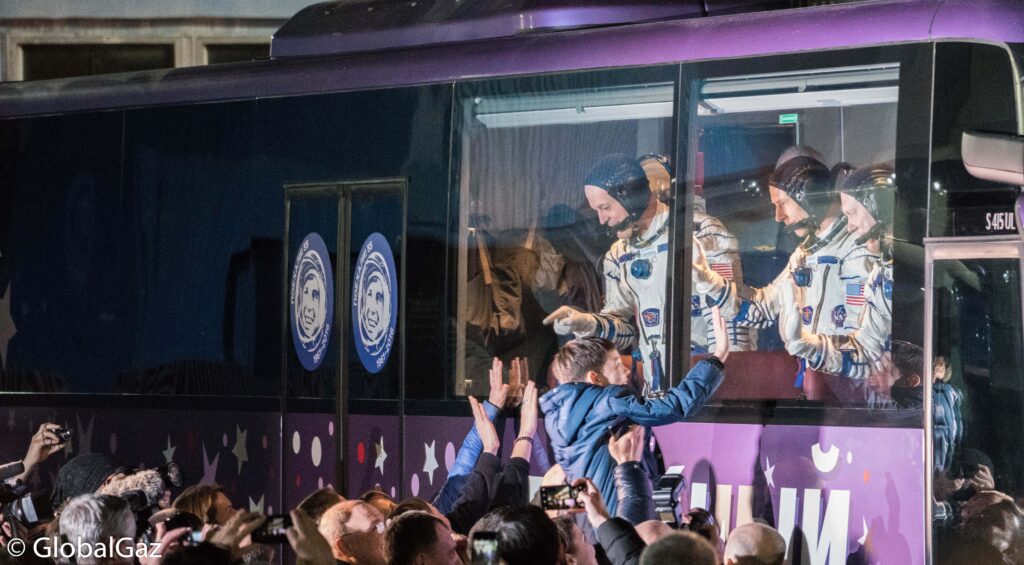
Space tourism is a growing industry, with visitors to Baikonur attending launches, especially missions to the International Space Station. The town is a leased Russian enclave ensconced within Kazakhstan, including the cosmodrome which is controlled by Roscosmos, the Russian space agency. After NASA ended its Space Shuttle program in 2011, Baikonur became the only launch site to the International Space Station (ISS) until 2020. Now, 60 years after space travel began, it still remains an important gateway to the stars. As described by Megan Eaves, “Baikonur is in many ways a perfect relic of the Soviet 1960s. Stoic mosaics depicting muscular comrades heralding a new era of space still decorate entrance gates and the walls of the town's functional, Brutalist apartment blocks, which once housed construction workers, aerospace engineers and space families. Inside the cosmodrome, crumbling hangars stand side-by-side next to the original, minimalist cottages where Yuri Gagarin and the early cosmonauts slept.” [caption id="attachment_21654" align="aligncenter" width="800"] Statue of Yuri Gagarin in the town of Baikonur, Kazakhstan; image: Ric Gazarian[/caption]   Near a hotel where visitors stay is Cosmonaut’s Alley, a path in a wooded area surrounded by trees planted by all those who launched into space from Baikonur. The first tree that greets visitors is Yuri Gagarin’s from 1961. Continuing our coverage of Baikonur, TCA spoke to renowned travel blogger, Ric Gazarian, who in 2018 witnessed the MS-08 launch which sent three men on the 55th expedition to the ISS. TCA: Your blogs about your experience at Baikonur contain a lot of history on the Russian space program; where and when did you find out about Baikonur and the space program? Was there anything in particular that piqued your interest? Gazarian: There wasn’t a specific moment, but I’ve been intrigued by space travel since I was a kid. NASA is exceedingly cool and fascinating, and so is Roscosmos, but with the addition of the exoticness from a Western perspective. The history and rivalry between the U.S. and the Soviet Union’s space program is so rich. So, when I found out about the opportunity to visit Baikonur and witness a space launch, it was immediately added to my bucketlist. It was this unique opportunity to witness firsthand Soviet/Russian space traditions. The added bonus is so few people make the effort to visit. [caption id="attachment_21619" align="aligncenter" width="2560"] Museum in the Chelomey International Space School, Baikonur, Kazakhstan; image: Ric Gazarian[/caption]   TCA: You stated that “This was not your typical tourist trip to Paris…This was a group of space geeks and Soviet fan boys.” Which one are you? Gazarian: A little bit of both. One experience we had was watching the cosmonauts leave their quarantine hotel and board the bus to take them for their final preparations before the launch. A crowd of a couple of hundred people had circled their bus; it was a rock star moment. To know these guys were soon to be launched into space touches you emotionally. And yes, this is a dream come true for Soviet...

2 years ago