• KGS/USD = 0.01144 0%
  • KZT/USD = 0.00205 0%
  • TJS/USD = 0.10722 0%
  • UZS/USD = 0.00008 0%
  • TMT/USD = 0.28490 0%
  • KGS/USD = 0.01144 0%
  • KZT/USD = 0.00205 0%
  • TJS/USD = 0.10722 0%
  • UZS/USD = 0.00008 0%
  • TMT/USD = 0.28490 0%
  • KGS/USD = 0.01144 0%
  • KZT/USD = 0.00205 0%
  • TJS/USD = 0.10722 0%
  • UZS/USD = 0.00008 0%
  • TMT/USD = 0.28490 0%
  • KGS/USD = 0.01144 0%
  • KZT/USD = 0.00205 0%
  • TJS/USD = 0.10722 0%
  • UZS/USD = 0.00008 0%
  • TMT/USD = 0.28490 0%
  • KGS/USD = 0.01144 0%
  • KZT/USD = 0.00205 0%
  • TJS/USD = 0.10722 0%
  • UZS/USD = 0.00008 0%
  • TMT/USD = 0.28490 0%
  • KGS/USD = 0.01144 0%
  • KZT/USD = 0.00205 0%
  • TJS/USD = 0.10722 0%
  • UZS/USD = 0.00008 0%
  • TMT/USD = 0.28490 0%
  • KGS/USD = 0.01144 0%
  • KZT/USD = 0.00205 0%
  • TJS/USD = 0.10722 0%
  • UZS/USD = 0.00008 0%
  • TMT/USD = 0.28490 0%
  • KGS/USD = 0.01144 0%
  • KZT/USD = 0.00205 0%
  • TJS/USD = 0.10722 0%
  • UZS/USD = 0.00008 0%
  • TMT/USD = 0.28490 0%

Our People > Stephen M. Bland

Stephen M. Bland's Avatar

Stephen M. Bland

Managing Editor and Head of Investigations

Stephen M. Bland is a journalist, author, editor, commentator, and researcher specializing in Central Asia and the Caucasus. Prior to joining The Times of Central Asia, he worked for NGOs, think tanks, as the Central Asia expert on a forthcoming documentary series, for the BBC, The Diplomat, EurasiaNet, and numerous other publications.

His award-winning book on Central Asia was published in 2016, and he is currently putting the finishing touches to a book about the Caucasus.

Articles

Daines Retirement Leaves Uncertainty for Senate Central Asia Caucus

Senator Steve Daines has announced that he will not seek re-election in 2026, a decision that could have implications for congressional initiatives focused specifically on Central Asia. Daines has been among the most active advocates in Congress for strengthening U.S. engagement with the region, particularly on trade policy and economic cooperation with Kazakhstan, Kyrgyzstan, Tajikistan, Turkmenistan, and Uzbekistan. In 2024, Daines partnered with Democratic Senator Gary Peters to launch the U.S. Senate Central Asia Caucus, a bipartisan forum intended to raise the region’s profile in Washington and encourage cooperation on trade, investment, and security. The initiative reflected growing interest in Congress as Central Asia has gained strategic importance amid shifting global supply chains and efforts by governments in the region to diversify partnerships beyond Russia and China. One of the caucus’s key policy priorities has been the repeal of the Cold War-era Jackson–Vanik Amendment, which still applies to multiple former Soviet states. Its continued presence in U.S. law is widely viewed as an outdated barrier to deeper economic engagement. Momentum for its repeal has grown as policymakers seek to expand trade with Central Asia and modernize the legal framework governing U.S. economic relations with the region. Supporters argue that removing the amendment would encourage American investment in sectors such as energy, infrastructure, and critical minerals while aligning U.S. trade policy with Washington’s broader strategic outreach to Central Asia. Debate in Washington over normalizing trade relations has increasingly been framed as part of a wider push to strengthen economic ties with the region. With both Daines and Peters expected to leave the Senate by 2027, the caucus’s founding leadership will soon depart Capitol Hill, potentially narrowing the window for congressional action on the issue.

3 months ago

Iran War Highlights Central Asia’s Vulnerable Southern Trade Corridors

The widening war centered on Iran is reverberating far beyond the Middle East, exposing a structural vulnerability in Central Asia’s economic geography: the region’s reliance on transport corridors that pass through or near Iran and the Persian Gulf. As fighting escalates and shipping risks spread across the region, insurers, shipping companies, and logistics firms are reassessing operations across the Gulf. War-risk insurance premiums have surged while some commercial carriers have scaled back bookings to parts of the region amid growing security concerns. Tensions around the Strait of Hormuz have already pushed shipping costs higher as governments and logistics firms weigh the risks of operating in one of the world’s most important maritime chokepoints. For Central Asia’s landlocked economies, the crisis highlights how much regional connectivity strategies still depend on southern access routes linking the region to global markets. The conflict has also edged closer to the transport routes linking Central Asia with Europe after what were alleged to be Iranian drone strikes on Azerbaijan’s Nakhchivan region, damaging facilities at the exclave’s airport and prompting diplomatic protests from Baku. While the strike did not directly disrupt trade corridors, it underscored how quickly the conflict could spill over into the South Caucasus, a key segment of the Middle Corridor. Nakhchivan is a landlocked Azerbaijani exclave bordering Iran and Turkey, separated from mainland Azerbaijan by Armenia, and lies at the frontier where Iranian territory meets the transport networks of the South Caucasus. The South Caucasus also hosts energy infrastructure with wider geopolitical significance. The Baku–Tbilisi–Ceyhan (BTC) pipeline transports mostly Azerbaijani crude through Georgia to the Turkish Mediterranean port of Ceyhan, from where it is shipped to global markets. In 2025, Azerbaijani oil accounted for 46.4% of Israel’s crude imports, most of it moving through this supply chain before being shipped onward by tanker. The pipeline also carries limited volumes of Kazakh crude - 2-3% of Kazakhstan’s overall exports - making it far more significant for Israel’s energy supply than for Kazakhstan’s export system. Iran’s armed forces have denied responsibility for the drone incident, instead accusing Israel of attempting to provoke tensions and disrupt relations between Muslim countries. The Geography of Connectivity Since independence, Central Asian governments have sought to overcome the constraints of geography. Landlocked and long dependent on Soviet-era transport networks running north through Russia, the region has spent three decades developing alternative corridors in multiple directions. Routes leading south have held particular appeal, offering the shortest overland access to ports on the Persian Gulf and the Indian Ocean. Iran sits at the heart of several connectivity initiatives designed to connect Central Asian rail networks to ports on the Persian Gulf and the Indian Ocean. The Ashgabat Agreement — a multimodal transport framework linking Iran, Oman, Turkmenistan, and Uzbekistan and designed to connect Central Asia with ports on the Persian Gulf and the Gulf of Oman — was created specifically to facilitate international trade and transit between Central Asia and global shipping routes. For countries such as Turkmenistan and Uzbekistan, rail routes...

3 months ago

Turkmenistan Opens Additional Crossings as Uzbekistan Evacuates Citizens from Iran

Turkmenistan has opened several additional checkpoints on its border with Iran to allow foreign citizens to leave the country as fighting in the Middle East continues. The Russian Embassy in Ashgabat said the Turkmen authorities have opened four additional crossings along the Turkmen-Iranian frontier: Artyk–Lutfabad, Gaudan–Bajgiran, Akyayla–Incheburun, and Altyn Asyr–Incheburun. These operate alongside the Sarakhs crossing, which had already been used for evacuation transit. The move expands an overland route through Central Asia for foreigners seeking to leave Iran while air travel across parts of the Middle East remains disrupted. Uzbekistan has begun using this corridor to assist its citizens. The country’s Ministry of Foreign Affairs said diplomatic staff and official vehicles have been deployed to the Sarakhs crossing to receive Uzbek nationals arriving from Iran and organize their onward transport across Turkmenistan toward Uzbekistan. Uzbek outlet Daryo reported on March 4 that Uzbekistan had already repatriated 13 citizens from Iran via Turkmenistan. Russia has also pointed citizens toward the Turkmen route. The Russian Embassy in Ashgabat said its citizens unable to leave Iran by air could exit through Turkmenistan and should register with the Russian Embassy in Tehran, which is coordinating assistance for citizens inside Iran. The embassy noted that Turkmenistan maintains strict entry rules and normally requires special permits for foreign visitors. Despite those restrictions, the country has previously allowed evacuation transit from Iran during earlier regional crises. The additional crossings create another evacuation corridor alongside the route from Iran into Azerbaijan through the Astara border crossing on the Caspian coast. Foreign nationals have already used that crossing to leave Iran in recent days, including citizens from Central Asia. The Turkmenistan route provides a more direct path back into the region for evacuees traveling toward Uzbekistan and other Central Asian countries. Turkmenistan shares a 1,148-kilometer border with Iran. Ashgabat, the Turkmen capital, sits only about 25 kilometers north of the frontier, and several transport links connect the two countries. Sarakhs functions as an established rail and road gateway used for trade and freight movement between the two countries. In recent years, Turkmenistan and Iran have also discussed expanding rail and freight transit through the Sarakhs crossing as part of broader regional transport corridors linking Central Asia to southern markets. Turkmenistan also exports natural gas to northern Iran under swap arrangements in which Tehran delivers equivalent volumes to Azerbaijan, which could disrupt regional logistics and energy flows. The expansion of border crossings increases the capacity for organized departures from Iran and provides foreign governments with an additional land route when other exit corridors become congested. For Central Asian governments, the immediate priority remains the safe movement of their nationals out of the conflict zone. The opening of additional Turkmen checkpoints provides another corridor linking Iran to Central Asia and may ease pressure on evacuation routes through the South Caucasus.

3 months ago

Iran War Tests Emerging C5–Azerbaijan Solidarity

In an effort to coordinate responses to the Mideast conflict, the foreign ministers of the five Central Asian countries, as well as Azerbaijan, have spoken together by telephone about the widening crisis. The call marked one of the clearest signs yet that the Central Asian “C5” format is evolving beyond economic coordination into an operational diplomatic mechanism during external crises. While the group has met frequently in recent years with major partners, direct coordination over a fast-moving conflict on its periphery reflects a shift toward more structured regional crisis management. The consultation also builds on the expansion last year of the Central Asian consultative format to include Azerbaijan, sometimes referred to as the “C6,” a shift that has increasingly aligned Caspian corridor strategy with regional diplomatic coordination. “During the conversation, the ministers exchanged detailed views on the evolving military and political situation in the Middle East, noting the importance of maintaining close coordination and prompt interaction amid the crisis,” Kazakhstan’s Ministry of Foreign Affairs said on Monday. Foreign Minister Yermek Kosherbayev of Kazakhstan thanked his counterparts from Azerbaijan and Turkmenistan, which border Iran, for their help in the evacuations of people fleeing Iranian territory. U.S. and Israeli air strikes have hit targets across Iran, whose military has fired retaliatory waves of missiles and drones at Israel as well as U.S. military facilities and civilian areas in Gulf countries. Azerbaijan’s participation underscores its growing integration into Central Asia’s diplomatic orbit. As a Caspian state bordering Iran and a critical link in the Trans-Caspian International Transport Route, Baku has become an indispensable partner in both evacuation logistics and broader corridor security. The call reflects growing cohesion among Kazakhstan, Kyrgyzstan, Tajikistan, Turkmenistan, Uzbekistan, and Azerbaijan. The region is seeking more robust trade routes linking Asia and Europe, while maintaining solidarity and balancing relationships with larger powers, including China, Russia, and the United States. In addition to Kosherbayev, the foreign ministers on the call were Jeyhun Bayramov of Azerbaijan, Jeenbek Kulubaev of Kyrgyzstan, Sirojiddin Muhriddin of Tajikistan, Rashid Meredov of Turkmenistan, and Bakhtiyor Saidov of Uzbekistan. The ministers said they were committed to political and diplomatic means as a way to solve conflicts. “At the conclusion of the call, the parties expressed their readiness to continue providing the necessary support in organizing the possible evacuation of citizens, as well as to maintain close working contacts through the foreign ministries,” the statement from Kazakhstan stated. Notably, the ministers’ language avoided assigning blame or aligning with any side in the conflict, instead emphasizing diplomacy and stability. That careful wording reflects the region’s longstanding strategy of balancing relations with Washington, Moscow, Beijing, and regional powers without being drawn into geopolitical confrontation.

3 months ago

Central Asia Confronts Iran War Fallout as Trade Routes and Citizens Come Under Pressure

Central Asian governments are racing to protect citizens and keep trade moving as the U.S.–Israel war with Iran widens across the Middle East, disrupting airspace and driving up shipping and energy costs. The effects of the conflict are reaching a region that has spent the past four years trying to diversify trade routes and reduce dependence on maritime chokepoints, now disrupted by rising risk and transport volatility. The threat to its citizens has become immediate for Central Asian governments. On March 1, Kazakhstan’s Foreign Ministry said that it was working on evacuation measures for its nationals in escalation zones and urged citizens to follow official updates from diplomatic missions. It also advised Kazakh citizens in Iran to explore overland exits, including via Azerbaijan, Armenia, Türkiye, and Turkmenistan, given airspace closures and flight suspensions. Uzbekistan’s Foreign Ministry issued safety guidance for citizens in the United Arab Emirates, urging them to avoid crowded areas and adhere to official security directives as tensions in the region escalated. Tajik nationals have already been among those leaving Iran through Azerbaijan’s Astara crossing, with The Times of Central Asia reporting yesterday that five civilians from Tajikistan are among foreigners from numerous countries who have crossed from Iran into Azerbaijan. For Central Asia, the crisis is hitting both its people and its trade routes. The same border crossings used for evacuations sit on corridors that carry freight and connect the region to southern markets. Azerbaijan’s role as a transit hub has grown sharply over the past decade, but in this crisis, it is also a pressure valve for land exits from Iran. As of March 2, more than 300 people have been evacuated from Iran via Azerbaijan. Any tightening at borders or disruptions to rail and road links around the Caspian immediately affect how Central Asian states move both people and cargo. Oil and shipping costs are rising sharply. On March 1, oil prices jumped by around 10%, with analysts warning prices could move toward $100 a barrel if disruption in the Strait of Hormuz worsens. The impact across Central Asia has been uneven. Kazakhstan may see stronger export revenues in the short term due to higher crude prices, but that gain comes with volatility and increased import costs across the region. ING stated that stronger commodity prices could improve the external balance of fuel exporters such as Kazakhstan, while increasing inflation risks for importers. Shipping poses a deeper structural risk. Tanker owners and traders have slowed or suspended transits through the Strait of Hormuz because of security fears and insurance constraints, even without a formal blockade. Higher risk premiums feed directly into freight rates on the routes Central Asian exporters use to reach Europe, the Gulf, and South Asia. When insurers reprice war risk, smaller shippers and landlocked economies absorb the cost first. Iran is central to Central Asia’s trade geography. It serves as a transit state for the southern corridor linking Central Asian rail and port networks to Türkiye, Europe, and the Gulf. Central Asian...

3 months ago

Kazakhstan Suspends Extradition of Navalny Associate as Courts Weigh Asylum Claim

Kazakhstan has suspended the extradition of Yulia Yemelyanova, a former staff member of Alexei Navalny’s St. Petersburg office, to Russia. Yemelyanova was detained in Almaty in August 2025 after the Russian authorities requested her transfer. The Prosecutor General’s Office halted the extradition after her lawyers filed appeals linked to her asylum claim. Earlier this month, authorities approved Russia’s request despite her pending asylum application. Her lawyer subsequently stated that he would challenge that approval before the Supreme Court. Russian investigators have accused Yemelyanova of theft linked to a 2021 case. Her defense rejects the charge and argues that the prosecution is politically motivated. Yemelyanova’s case fits into a broader pattern of extradition proceedings involving Russian nationals who relocated to Kazakhstan after Russia launched its full-scale invasion of Ukraine in February 2022. In late September 2022, Kazakhstan’s Interior Ministry stated that nearly 100,000 Russians had entered the country following Moscow’s announcement of partial mobilization on September 21. “Most of them have to leave because of the hopeless situation. We have to take care of them and secure their safety,” Kazakh President Kassym-Jomart Tokayev said at the time. Many have remained. Kazakhstan’s Interior Ministry reported that more than 80,000 Russian citizens received work-related residence permits between January 2023 and September 2024. Opinion in Kazakhstan on Navalny spans a wide and often divergent spectrum. When news of his death in a Russian penal colony broke in February 2024, responses across Central Asia ranged from sympathy to indifference. In Kazakhstan, some civic activists expressed concern over political repression in Russia, while others recalled Navalny’s past nationalist rhetoric and critical comments about migration from Central Asia. Those divergent views form the domestic context for cases involving former members of Navalny’s political network. Extradition proceedings unfold within a society that interprets Russian opposition politics through its own historical experience and social priorities. The relocation wave reshaped rental markets in Almaty and Astana in late 2022, as IT firms, logistics companies, and service businesses absorbed skilled migrants. At the same time, authorities tightened migration rules and reduced the duration of visa-free stays, signaling that temporary entry did not guarantee long-term residence. In 2024 and 2025, Russian extradition requests began to draw greater public attention, with several defendants seeking asylum while contesting their transfer. One prominent case involved Mansur Movlayev, a Chechen activist critical of Ramzan Kadyrov. In January 2026, Kazakhstan approved Russia’s extradition request after denying him refugee status. The UN Human Rights Committee registered a complaint in Movlayev’s case and requested that Kazakhstan refrain from extraditing him while the review proceeded. Kazakhstan’s Supreme Court subsequently suspended the extradition decision pending review connected to his asylum appeal. Kazakhstan’s Criminal Procedure Code governs extradition decisions and provides appeal mechanisms, with the Law on Refugees establishing procedures for reviewing asylum claims and defining protections from removal. International law reinforces these safeguards; the principle of non-refoulement prohibits returning a person to a country where they face serious threats to their life or freedom. Kazakhstan’s extradition decisions are unfolding within a...

3 months ago

Vučić in Astana: Trade, Defense, and Technology Drive Kazakhstan–Serbia Talks

Serbian President Aleksandar Vučić arrived in Astana on February 26 for a two-day official visit. Prime Minister Olzhas Bektenov and Astana Mayor Jenis Qasymbek received him at the airport. Vučić is scheduled to hold talks with President Kassym-Jomart Tokayev on February 26–27. The agenda includes political dialogue, trade, digital transformation, healthcare, science, culture, and judicial cooperation. The two presidents are expected to adopt a joint statement and oversee the signing of ten memorandums. Kazakhstan also plans to award Vučić the Order of the Golden Eagle, the country’s highest state honor. The Serbian delegation includes Minister of Internal and External Trade Jagoda Lazarević, Minister without Portfolio Nenad Popović, and Mihailo Jovanović, director of Serbia’s Office for eGovernment and IT. Economic ties form a central pillar of the visit. Kazakhstan’s government stated that bilateral trade grew by 7.6% in 2025. At the first meeting of the Kazakhstan–Serbia Business Council and Business Forum in Astana, Nenad Popović said trade turnover reached about $117 million in 2025, an increase of roughly 7%. “The free-trade agreement between our countries ensures a strong institutional basis. It is now important to further strengthen this foundation with concrete projects and targeted mechanisms to support entrepreneurship in Kazakhstan and Serbia, as well as their business communities,” he stated. Defense cooperation has also emerged as a significant outcome of the business meetings. Kazakhstan’s LLP SP Kaztechnology and Serbia’s Yugoimport SDPR agreed to cooperate on the repair and modernization of 122mm and 152mm self-propelled artillery systems from the Nora and Soko/Soho families. LLP Great Sky and Yugoimport SDPR also signed a framework agreement on technology transfer and the organization of high-energy materials production. The visit extends beyond defense. Astana Hub signed memorandums with Serbia’s Digital Transformation Center, SEE UP Accelerator, and Science Technology Park Belgrade. Kazakhstan’s National Biotechnology Center also signed a memorandum with Serbia’s Bio4 Campus. Diplomatic relations between Kazakhstan and Serbia were established in December 1996. As previously reported by The Times of Central Asia, momentum in bilateral ties increased in late 2024 when Tokayev visited Serbia, and the sides signed multiple cooperation agreements in trade, investment, and industry. The Astana meetings signal a practical expansion of relations between Central Asia and the Balkans. Trade remains modest in absolute terms, but the new agreements in defense, digital technology, and biotechnology point to the growth of a broader industrial partnership.

3 months ago

Kyrgyzstan’s Revolutions Since Independence: Three Uprisings That Remade the State

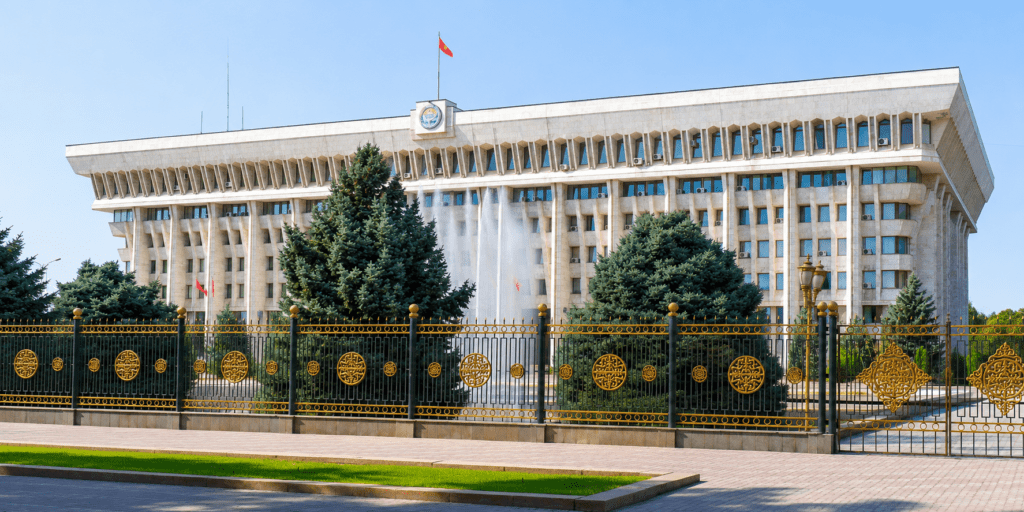
Since gaining independence in 1991, Kyrgyzstan has experienced three major uprisings that removed presidents and reset the political system. The events in 2005, 2010, and 2020 did not follow one script, but shared familiar triggers: disputed elections, corruption, rising living costs, and a belief that the state had been captured by a narrow circle. Kyrgyzstan began its post-Soviet life with a reputation for relative openness. Askar Akayev initially presented himself as a reform-minded leader, but by the early 2000s, public frustration had grown over perceived corruption and patronage. Political competition increasingly revolved around money, influence networks, and regional loyalties. Weak institutions made leadership transitions risky, and street politics became a recurring instrument of change. The 2005 Tulip Revolution: The Akayev Era Ends The first upheaval occurred in spring 2005, following parliamentary elections widely criticized by international observers. The OSCE/ODIHR final report on the February–March 2005 parliamentary elections documented serious irregularities that undermined confidence in the vote: Protests began in the south and spread to Bishkek. On March 24, 2005, Akayev fled the country as demonstrators seized key government buildings. His resignation was later formalized from abroad. Radio Free Europe/Radio Liberty reported on April 4, 2005, that Akayev had signed a resignation agreement intended to stabilize the situation and pave the way for new elections. Kurmanbek Bakiyev emerged as interim leader and later won the July 2005 presidential election. The OSCE/ODIHR assessment of that vote noted improvements compared with the parliamentary elections but highlighted continuing structural weaknesses. The 2010 April Revolution: Bakiyev Overthrown By 2010, public anger was focused on rising utility prices and the concentration of power around Bakiyev’s family. The International Crisis Group’s report Kyrgyzstan: A Hollow Regime Collapses detailed how economic grievances and corruption helped spark a violent uprising. On April 7, 2010, clashes between protesters and security forces in Bishkek left dozens dead and injured, with the official death toll later revised to 99. Bakiyev fled the country, and a referendum later that year shifted Kyrgyzstan toward a parliamentary system designed to reduce presidential dominance. The transition produced a more plural political environment, though corruption and instability persisted. In June 2010, interethnic violence in southern Kyrgyzstan, particularly around Osh, caused significant loss of life and displacement, deepening divisions and reshaping the political climate. The 2020 Upheaval: Election Protests and Rapid Power Shift Kyrgyzstan’s third major uprising followed disputed parliamentary elections on October 4, 2020, when allegations of vote buying triggered mass protests. The Central Election Commission annulled the results, plunging the country into a political crisis. President Sooronbay Jeenbekov resigned on October 15, 2020, with Reuters reporting that “newly sprung from jail,” Sadyr Japarov had consolidated power amid the turmoil. The OSCE/ODIHR assessment of the January 2021 presidential election and constitutional referendum noted that the vote occurred against the backdrop of political upheaval following the annulled parliamentary elections. Japarov won the presidency in January 2021, and a new constitution entered into force in May 2021, strengthening presidential powers and reshaping the political system. Why Revolutions Keep Happening...

4 months ago

B5+1 Forum Opens as U.S. Companies Expand Economic Footprint in Central Asia

Business leaders and government officials from Central Asia and the United States gathered in Kyrgyzstan’s capital on February 4 for the start of the second B5+1 Business Forum. Co-organized by the Kyrgyz government and the Center for International Private Enterprise (CIPE), the event is intended to bring together private companies, business associations, officials, and experts interested in expanding U.S.–Central Asia commercial ties. More than 50 U.S. companies are participating in the event. The B5+1 is the business-track counterpart to the C5+1 diplomatic format that links the United States with Kazakhstan, Kyrgyzstan, Tajikistan, Turkmenistan, and Uzbekistan. The B5+1 brings companies and policymakers together to identify barriers to investment and propose cross-border regulatory changes. This week’s meeting in Bishkek follows the inaugural B5+1 forum held in Almaty on March 14–15, 2024, which drew more than 250 stakeholders from across Central Asia and the United States. It produced 21 private-sector recommendations aimed at easing trade, improving regulations, and building regional economic integration. The Bishkek agenda is built around reviewing progress on those recommendations and setting priorities for the next phase of work. Central Asian officials have used the event to signal interest in region-wide coordination rather than country-by-country deals. In comments made in Bishkek, Kazakhstan’s Minister of Industry and Construction, Ersaiyn Nagaspaev, emphasized that foreign investors increasingly assess Central Asia as a single market, reflecting a push to align regulations and investment conditions across borders. Nagaspaev noted that more than 600 U.S. companies currently operate in Kazakhstan. Kyrgyzstan, meanwhile, used the forum to highlight domestic economic performance within that regional context. In a speech at the forum, Kyrgyzstan’s First Deputy Chairman of the Cabinet of Ministers, Daniyar Amangeldiev, said Kyrgyzstan’s economy grew by 11.1% in 2025, which he described as one of the highest growth rates in the region. Addressing the forum, U.S. Special Envoy for South and Central Asia Sergio Gor stated that the United States intends to expand its economic engagement with Central Asia. “The private sector, not intergovernmental agreements, will become the key instrument of interaction," he told those in attendance, identifying electronic commerce, artificial intelligence, critical minerals, agriculture, and transport infrastructure as priority areas. Gor noted that the American companies present at the forum represent the largest and most comprehensive U.S. commercial delegation ever to visit Central Asia. The U.S. recognizes the importance of Central Asia in global trade and connectivity, he stated. "The United States is open for business. We're open for peace. We're opening to strengthen our ties around the world. So that’s why it's fitting that the first C5 event in 2026 is this B5 + 1 forum,” Gor said, linking the Bishkek discussions to economic commitments made at the C5+1 summit in Washington in November 2025. “The Transport Corridor for Peace and Prosperity will provide reliable connectivity from Central Asia through the South Caucasus to global markets,” Gor said. “This is a historic opportunity to strengthen economic integration and long-term prosperity across the region.” During his visit to Bishkek, Gor also met with Kyrgyz President...

4 months ago

Astana–Israel Talks Span Technology, Trade, and Holocaust Remembrance

Kazakh President Kassym-Jomart Tokayev met Israeli Foreign Minister Gideon Sa’ar in Astana on January 27, marking the first official visit by an Israeli foreign minister to Kazakhstan in almost 16 years, and underscoring Astana’s stated interest in deepening economic and technological cooperation with Israel as it continues to recalibrate its foreign policy. According to the Kazakh presidential administration, the talks focused on expanding bilateral relations across trade, investment, science, and technology, with both sides emphasizing practical areas of cooperation. The visit came as Kazakhstan seeks to diversify its economy beyond hydrocarbons and strengthen partnerships with countries at the forefront of applied innovation. Tokayev said the visit demonstrated Israel’s commitment to strengthening comprehensive cooperation with Kazakhstan, while discussions highlighted concrete sectors for collaboration, including artificial intelligence, agrotechnology, water resource management, and digital governance. These areas align closely with Kazakhstan’s national development priorities, particularly its focus on digital transformation, public-sector reform, and productivity-driven growth. Economic cooperation featured prominently throughout the visit. A Kazakh-Israeli business forum was held alongside the high-level talks, aimed at translating diplomatic engagement into commercial outcomes. Kazakhstan’s Foreign Ministry said the forum is expected to support new investment partnerships and initiate joint projects in high-value sectors, with a focus on technology transfer and localized projects. Kazakh officials said bilateral trade reached $162.4 million between January and November 2025, with exports totaling $92.1 million and imports $70.3 million. While modest in absolute terms, the figures were cited as evidence of untapped potential, particularly in non-resource sectors where Israeli companies have global expertise. As part of the discussions, Kazakhstan invited Israeli firms to participate in national digital transformation initiatives, including projects related to e-government, data-driven public services, and digital infrastructure. Officials cited Kazakhstan’s recent progress in digital governance and public-sector innovation as a foundation for expanded cooperation. Kazakhstan and Israel established diplomatic relations in 1992, shortly after Kazakhstan gained independence. Israel opened its embassy in Almaty in 1996, while Kazakhstan inaugurated its embassy in Tel Aviv in 2000, laying the groundwork for steady but largely low-profile bilateral ties. Political relations have traditionally been pragmatic, with cooperation focused on trade, agriculture, healthcare, and education rather than formal alliances. Bilateral trade has remained modest, reflecting limited commercial engagement beyond specific sectors such as agrotechnology, pharmaceuticals, and water management. In recent years, Astana has shown growing interest in Israel’s applied innovation ecosystem, particularly in areas aligned with Kazakhstan’s domestic reform agenda, including digital governance, artificial intelligence, and public-sector modernization. Israeli firms have previously participated in pilot projects and advisory initiatives in Kazakhstan, though large-scale joint ventures have been limited. Kazakhstan has also positioned itself as a neutral diplomatic actor in the Middle East, maintaining relations with Israel while emphasizing interfaith dialogue and mediation. Beyond economic ties, the talks also addressed regional and international issues, including developments in the Middle East and Kazakhstan’s diplomatic positioning in support of the objectives underpinning the Abraham Accords framework. Sa’ar welcomed Kazakhstan’s engagement, describing it as a constructive contribution to dialogue and cooperation between Israel and Muslim-majority countries. Sa’ar...

4 months ago