
• KGS/USD = 0.01144 0%
  • KZT/USD = 0.00205 0%
  • TJS/USD = 0.10782 0%
  • UZS/USD = 0.00008 0%
  • TMT/USD = 0.28490 0%
  • KGS/USD = 0.01144 0%
  • KZT/USD = 0.00205 0%
  • TJS/USD = 0.10782 0%
  • UZS/USD = 0.00008 0%
  • TMT/USD = 0.28490 0%
  • KGS/USD = 0.01144 0%
  • KZT/USD = 0.00205 0%
  • TJS/USD = 0.10782 0%
  • UZS/USD = 0.00008 0%
  • TMT/USD = 0.28490 0%
  • KGS/USD = 0.01144 0%
  • KZT/USD = 0.00205 0%
  • TJS/USD = 0.10782 0%
  • UZS/USD = 0.00008 0%
  • TMT/USD = 0.28490 0%
  • KGS/USD = 0.01144 0%
  • KZT/USD = 0.00205 0%
  • TJS/USD = 0.10782 0%
  • UZS/USD = 0.00008 0%
  • TMT/USD = 0.28490 0%
  • KGS/USD = 0.01144 0%
  • KZT/USD = 0.00205 0%
  • TJS/USD = 0.10782 0%
  • UZS/USD = 0.00008 0%
  • TMT/USD = 0.28490 0%
  • KGS/USD = 0.01144 0%
  • KZT/USD = 0.00205 0%
  • TJS/USD = 0.10782 0%
  • UZS/USD = 0.00008 0%
  • TMT/USD = 0.28490 0%
  • KGS/USD = 0.01144 0%
  • KZT/USD = 0.00205 0%
  • TJS/USD = 0.10782 0%
  • UZS/USD = 0.00008 0%
  • TMT/USD = 0.28490 0%

Our People > Vagit Ismailov

Vagit Ismailov's Avatar

Vagit Ismailov

Journalist

Vagit Ismailov is a Kazakhstani journalist. He has worked in leading regional and national publications.

Articles

ILO Urges Turkmenistan to Abolish Cotton Quota System

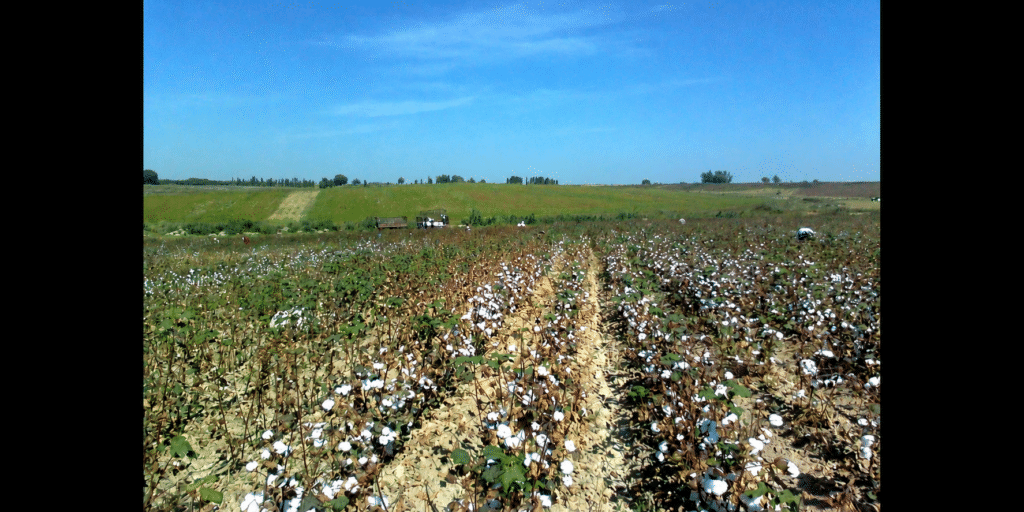
The International Labour Organization (ILO) has again criticized Turkmenistan over the continued use of forced labor in its cotton sector, calling on the country to dismantle its state-imposed cotton quota system and submit a detailed progress report by September 1. The call followed discussions at the annual International Labour Conference in Geneva, where the ILO’s Committee on the Application of Standards reviewed Turkmenistan’s compliance with Convention No. 105 on the Abolition of Forced Labour. This was the fifth time Turkmenistan’s implementation of the convention had been examined by the committee. The country ratified the convention in 1997, but concerns persist over the mobilization of public-sector employees for the annual cotton harvest. Turkmenistan’s delegation was led by Khalbibi Tachjanova, deputy minister of Labour and Social Protection of Population, who reaffirmed the country’s commitment to the convention and outlined reforms introduced in recent years. Tachjanova cited amendments to the Labor Code imposing a full ban on child and forced labor, as well as a draft presidential decree intended to explicitly prohibit any form of coercion during the cotton harvest. According to Tachjanova, labor inspectors carried out 3,867 inspections in 2025, identifying violations in 2,352 cases and imposing 3,040 administrative sanctions. She also said wages in the sector had doubled between 2023 and 2024 as part of the reforms. Yusup Gylychdurdiyev, a senior official from the Union of Industrialists and Entrepreneurs of Turkmenistan, spoke for employers. He said the country’s 340 dehkan farmer associations were gradually moving into private management structures and argued that private businesses lacked the administrative tools to coerce workers. Mekan Ovezov of the National Trade Union Center spoke for workers and cited cooperation between trade unions, government agencies, employers, and the ILO, as well as training and labor rights programs. However, labor and employer representatives on the ILO committee gave a far more critical assessment. Canadian labor lawyer Jackie VanDerMeulen, speaking for employer members, noted that the ILO had already issued observations on Turkmenistan’s cotton sector nine times. She said that despite some positive changes, the 2025 monitoring results showed serious violations remain. Stephen Russell, representing the United Kingdom’s Trades Union Congress, said labor rights abuses persist and pointed to the lack of independent public monitoring mechanisms and the absence of independent trade unions in the country. The findings show that Turkmenistan remains under international scrutiny over one of its most important export industries. Observers continue to call for changes in a sector long associated with state-driven labor mobilization.

19 hours ago

Kazakhstan’s Ancient Karakabak Reveals New Silk Road Links

Archaeologists studying the ancient settlement of Karakabak in Kazakhstan’s Mangistau Region say new findings show the site was part of ancient trade routes linking East and West. The archaeological site is located in Tupkaragan District on the Caspian Sea coast and dates to the 1st to 6th centuries AD. It was first discovered in 2006 during the compilation of Mangistau’s official register of historical monuments by the Mangistau State Historical and Cultural Reserve. Since 2022, excavations and research at Karakabak have been carried out by the Margulan Institute of Archaeology. Researchers have published 24 academic works based on materials from the site, including three monographs and nine articles indexed in the Scopus database. The site was recently visited by scientists and archaeologists working on projects to develop Mangistau’s tourism potential. During the field visit, participants reviewed excavation results and discussed additional research, as well as possible inclusion of Karakabak in regional tourism routes. According to researchers, Karakabak served for several centuries as a center of craft production and trade. Finds point to metallurgy, jewelry-making, glassmaking, and ceramic production. Archaeologists have uncovered locally produced goods as well as imported materials from across Eurasia. [caption id="attachment_50477" align="aligncenter" width="1087"] @gov.kz[/caption] “Of particular scientific interest is a collection of more than 150 coins dating from the 1st century to the first half of the 6th century AD,” archaeologist Andrey Astafyev said. “Among them are issues from Parthia, Ancient Khorezm, Bukhara Sogd, Sasanian Iran, the Kushano-Sasanian state, the Byzantine Empire and China. These finds confirm Karakabak’s active participation in the international trade and economic networks of its time.” Scholars now regard Karakabak as a major ancient trade and transport hub. Researchers believe one branch of the Silk Road may have passed through Mangistau, connecting Central Asia, the Caspian region, and Eastern Europe. Researchers are also studying a possible Azov-Caspian trade corridor that was previously unknown. Based on the findings, Karakabak may have been one of the centers in this network. Evidence points to contacts with the North Caucasus, the Azov region, the Lower and Middle Volga, the Southern Urals, as well as states in Central Asia and the Middle East. “Karakabak allows us to look at the history of Mangistau and Kazakhstan’s place in ancient international communications from a new perspective,” Astafyev said. “The archaeological evidence confirms that this region served for centuries as an important link in trade routes connecting East and West.” The recent discovery of an ancient jug, preliminarily dated to the 6th century AD, has drawn additional attention to the site. Specialists hope its study will provide new insights into the daily life and craft traditions of the settlement’s inhabitants. Researchers are also exploring a possible connection between Karakabak and the ancient city of Aspabota, which was marked on the maps of Greek geographer Claudius Ptolemy as a settlement on the eastern Caspian coast. [caption id="attachment_50478" align="aligncenter" width="720"] @gov.kz[/caption] Scholars say discoveries in recent years have expanded understanding of Mangistau’s historical importance. They confirm that the region was part of trade...

21 hours ago

Tokayev and U.S. DFC Chief Discuss Critical Minerals, AI, and Possible Kazakhstan Office

Kazakh President Kassym-Jomart Tokayev met on June 15 with Ben Black, chief executive officer of the U.S. International Development Finance Corporation (DFC), as Astana seeks to expand economic cooperation with Washington and attract more strategic investment. The DFC, the U.S. government's international investment arm, mobilizes private capital in support of foreign-policy and economic-development priorities. A permanent DFC presence in Kazakhstan would give U.S. investors and Kazakh authorities a more direct channel for structuring and financing projects in priority sectors. Welcoming Black, Tokayev described the visit as a continuation of agreements reached during talks in Washington in November 2025, and an important step toward deepening Kazakhstan's multifaceted partnership with the United States. Tokayev said relations between Astana and Washington had intensified since President Donald Trump returned to office. "We fully support the bold vision and pragmatic diplomatic approach of the U.S. President. Kazakhstan plays an active role in advancing key American initiatives, including the Abraham Accords, the Board of Peace, the TRIPP initiative, and other projects. Together, these efforts have given new momentum to our enhanced strategic partnership, which is stronger today than ever before," Tokayev said. The Trump Route for International Peace and Prosperity (TRIPP) has become important to Kazakhstan's transport agenda because a southern Caucasus route could broaden options for the Middle Corridor rather than replace existing Azerbaijan-Georgia links. Tokayev added that Kazakhstan's political and economic reforms are aimed at shifting the country from a resource-dependent model to a diversified, knowledge-based economy, and noted that the DFC's investment priorities align closely with Kazakhstan's development agenda. Black thanked Tokayev for the reception and described his meetings with Kazakhstan's business community in Almaty as productive and substantive. Tokayev emphasized the importance of translating political agreements into practical results and reaffirmed Kazakhstan's readiness to implement joint investment projects. The two sides discussed prospects for cooperation in critical minerals, transport connectivity, agriculture, digitalization, and artificial intelligence. They also reviewed the possibility of opening a permanent DFC office in Kazakhstan. The meeting followed several days of U.S.-Kazakhstan critical minerals diplomacy in Astana. The Times of Central Asia reported that the United States convened a C5+1 Critical Minerals Dialogue on June 10, where U.S. Special Envoy Sergio Gor said Washington saw Central Asia as a partner in diversifying access to strategic materials and highlighted the DFC's potential role in critical minerals, telecommunications, and Trans-Caspian infrastructure. David Fogel, Assistant Secretary of Commerce and Director General of the United States and Foreign Commercial Service, told delegates at the Astana Mining & Metallurgy Congress on June 11-12 that Washington was moving "from dialogue to strategic execution" in the region's critical minerals industry. Fogel noted that the United States had brought an unusually large delegation to Kazakhstan, including representatives of more than 20 U.S. companies and senior officials, underscoring growing American interest in the country's mining, metallurgy, and industrial sectors. Those discussions fit Kazakhstan's attempt to move beyond extraction. Astana is seeking to position its mining sector around processing, technology transfer, and higher-value manufacturing, while linking critical minerals to...

22 hours ago

Tajikistan and ADB Discuss Modernization of Tajik Sea Reservoir

Tajikistan is planning a major modernization of the Tajik Sea reservoir, known until 2016 as the Kayrakkum Reservoir. The project is a strategic water initiative for the country and the wider Central Asian region. Prospects for the project were discussed during a meeting between Tajikistan’s officials and representatives of the Asian Development Bank (ADB) in Ulaanbaatar, according to the Tajik state news agency Khovar. According to Tajikistan’s Ministry of Energy and Water Resources, the talks involved Presidential Economic Adviser Ne’matullo Hikmatullozoda, Energy and Water Resources Minister Daler Juma, ADB Director General for Central and West Asia Leah Gutierrez, and Regional Head of Regional Cooperation and Integration Asad Aleem. The meeting focused on the “Efficient Management of Water Resources of the Bahri Tojik Reservoir” project. Hikmatullozoda described the initiative as one of Tajikistan’s key infrastructure priorities, aimed at adapting to climate change and addressing transboundary water challenges. The work would reinforce the reservoir’s protective dams to reduce flood risks and modernize its pumping stations. It also covers upgrades to irrigation, drainage, and collector systems, along with a digital monitoring system used to control and track water infrastructure. Officials said the project is expected to improve water resource management under changing climate conditions. It is also intended to make irrigation supplies more reliable and expand hydropower generation capacity. A preliminary feasibility study has already been prepared with ADB support. The Tajik Sea is located in Tajikistan’s Sughd Region on the Syr Darya River. The reservoir was created following the construction of a dam and hydropower station to regulate the river’s flow, with filling beginning in the 1950s. Today, the Tajik Sea remains one of the country’s largest reservoirs and an important site for energy production and irrigation. The adjacent Kayrakkum Hydropower Plant generates electricity, while the reservoir supplies water for agriculture across the region.

2 days ago

Turkmenistan’s President Serdar Berdimuhamedov Awarded Academic Titles

Turkmenistan’s President Serdar Berdimuhamedov has been awarded the title of professor in economic and political sciences and elected as an academician of the Academy of Sciences of Turkmenistan. The announcement was made by the state-run Golden Age. The award ceremony took place at the Academy of Sciences on the eve of Science Day, observed annually in Turkmenistan on June 12. According to the official statement, Berdimuhamedov received the professorship for his “outstanding contributions to scientific-production, innovation-industrial, socio-economic, and scientific-technical transformations,” as well as for promoting modern science and expanding international cooperation. The academy also said his election as an academician reflected his role in socio-economic development, the modernization of healthcare, support for science and education, the introduction of new technologies into the economy, and raising Turkmenistan’s international standing. The 44-year-old president has now followed a path similar to that of his father, Gurbanguly Berdimuhamedov, the country’s former president, who is widely known by the title Arkadag, or “Protector.” Gurbanguly Berdimuhamedov holds titles including Doctor of Medical Sciences, Doctor of Economics, professor, and academician of the Academy of Sciences. The elder Berdimuhamedov has authored more than 60 books covering topics ranging from medicine and philosophy to culture, spirituality, Akhal-Teke horses, Alabai dogs, and sports. Serdar Berdimuhamedov has so far published four books. President Berdimuhamedov graduated in 2001 from the Turkmen Agricultural University named after Saparmurat Niyazov, Turkmenistan’s first president, with a degree in engineering technology. Between 2008 and 2011, he served as counselor-envoy at Turkmenistan’s embassy in Russia while studying international relations at the Diplomatic Academy of Russia’s Foreign Ministry. In August 2014, he defended his PhD-equivalent dissertation at the Academy of Sciences of Turkmenistan, and in July 2015 received a Doctor of Technical Sciences degree.

2 days ago

EBRD Names Tajikistan One of Central Asia’s Fastest-Growing Economies

Tajikistan continues to record one of the strongest economic growth rates in Central Asia, according to the European Bank for Reconstruction and Development (EBRD) in its June 2026 Regional Economic Prospects report. The EBRD estimates that Tajikistan’s economy grew by 8% year-on-year in the first quarter of 2026, supported by growth in trade, transport and communications, along with strong manufacturing growth and higher electricity generation. Fixed capital investment rose by 34.2% in the first quarter compared with the same period last year, one of the strongest performances in the region. For comparison, fixed capital investment in neighboring Kyrgyzstan rose by 25.5% during the same period, while Kazakhstan recorded growth of 6.4%. The bank attributed Tajikistan’s strong investment activity partly to public spending commitments, including the Rogun hydropower project, one of the country’s flagship infrastructure developments. Once completed, Rogun is expected to become a key part of Tajikistan’s power system and a major source of electricity exports to neighboring countries. The EBRD also noted strong growth in manufacturing, which increased by 29.6% year-on-year in January-March 2026. Electricity generation rose by 7.5%, while mining output contracted by 9.8%. Officials at Tajikistan’s State Committee on Investment and State Property Management said the figures reflect sustained interest in the country’s economy and create additional opportunities to attract domestic and foreign investors into priority sectors. Tajikistan has increasingly positioned itself as a regional energy hub, particularly through hydropower. As previously reported by The Times of Central Asia, the country has the largest hydropower potential in Central Asia. Tajikistan’s annual hydropower potential is estimated at 527 billion kilowatt-hours, while the country accounts for a large share of Central Asia’s water resources. Despite that, much of its hydropower capacity remains untapped. International industry estimates suggest that only around 4% of Tajikistan’s hydropower potential has been developed, leaving significant room for future investment and expansion.

5 days ago

Tajikistan and UK Discuss Banking Regulation and Sanctions Compliance

Representatives of Tajikistan’s government and banking sector met with Douglas Clark, the United Kingdom’s regional sanctions attaché, in Dushanbe to discuss banking regulation, risk management, and the development of bilateral cooperation in the financial sector. According to the National Bank of Tajikistan, the meeting was attended by First Deputy Prime Minister Hokim Kholikzoda, senior National Bank officials, and representatives of the Ministry of Foreign Affairs and the Ministry of Finance. During the talks, participants reviewed the current state of cooperation and discussed coordination in the financial sector. The agenda included Tajikistan’s banking system, compliance with international standards, supervisory mechanisms, and risk management. Kholikzoda said Tajikistan is interested in expanding mutually beneficial cooperation with international partners. He said the government is taking measures to improve the transparency and resilience of the country’s financial system and align the sector with international standards. Firdavs Tolibzoda, chairman of the National Bank of Tajikistan, briefed participants on efforts to support the stability of the banking system. These include compliance with international supervision and risk-management requirements, along with tighter compliance controls in credit and financial institutions. Clark praised Tajikistan’s engagement with international partners and its work on coordination mechanisms in financial-sector cooperation. At the conclusion of the meeting, both sides reaffirmed their readiness to continue cooperation in areas of mutual interest. As previously reported by The Times of Central Asia, the European Union removed three Tajik banks from its sanctions list in April.

6 days ago

Kazakhstan Stakes Claim as Critical Minerals Processing Hub at AMM 2026

ASTANA — Kazakhstan used the opening of the Astana Mining & Metallurgy Congress 2026 to place its mining and metals sector at the center of a new industrial strategy built around critical minerals, processing, technology, and long-term foreign investment. Addressing more than 1,500 participants from 16 countries, Prime Minister Olzhas Bektenov said Kazakhstan’s economy grew by 6.5% in 2025, while gross domestic product exceeded $300 billion for the first time. He tied that performance to President Kassym-Jomart Tokayev’s course toward a modern economy based on technology, investment, industrial development, and human capital. For international investors, the speech presented Kazakhstan as a resource economy entering its next stage, not as a new market waiting to be discovered. Bektenov emphasized that major projects in subsoil use, metallurgy, and downstream processing require large capital commitments, long investment cycles, strong institutions, predictable regulation, and business confidence. “The world is entering a new industrial era in which the development of energy systems, digital economy, AI, electric vehicles, microelectronics, and aerospace industry depends directly on reliable access to metals and mineral resources,” Bektenov said. He described critical minerals as “the defining resources of the new industrial era,” placing Kazakhstan’s mineral base within the wider competition for inputs used in batteries, semiconductors, energy systems, electric vehicles, microelectronics, aerospace, AI, and the digital economy. Bektenov said Kazakhstan possesses substantial mineral resource potential and ranks among global leaders in reserves of a wide range of minerals. Products from the country’s mining and metals sector, he said, are already in demand across major world markets. He argued that Kazakhstan is not starting from scratch. It has resources, operating mines, metallurgical capacity, export experience, and a government policy aimed at moving more of the value chain inside the country. The most commercially significant announcement concerned exploration. Bektenov said Kazakhstan is implementing a large-scale geological exploration program, with detailed geological mapping expected to exceed two million square kilometers. At Tokayev’s instruction, the state alone plans to invest approximately $470 million in geological exploration between 2026 and 2028, an amount Bektenov described as comparable to total public spending on exploration over the previous two decades. That spending is designed to strengthen the project pipeline and reduce early-stage uncertainty for investors. For mining companies, drilling firms, geological service providers, laboratory operators, equipment suppliers, and data companies, the expansion of geological coverage could create new entry points into Kazakhstan’s mineral sector. Bektenov also pointed to digitalization as part of the government’s effort to modernize the sector. Kazakhstan has established a Unified Subsoil Use Platform that provides 22 public services, supports the issuance of licenses, and monitors the obligations of subsoil users. More than 4.6 million units of primary geological data have been digitized, including materials previously stored on paper, magnetic tapes, and photographic records. The next step, he said, is the integration of artificial intelligence into geological exploration, data analysis, and production management. Bektenov framed this as a shift in the operating model of Kazakhstan’s mining industry, rather than a simple increase in extraction volumes....

6 days ago

Tajikistan Uses Only 5% of Its Hydropower Potential

Tajikistan is using only a fraction of its vast hydropower resources despite possessing the largest hydropower potential in Central Asia, according to the State Committee on Investment and State Property Management. The committee said Tajikistan remains the regional leader in hydropower resources and ranks among the world’s leading countries in terms of renewable water-energy potential. Although most of Tajikistan’s hydropower potential remains undeveloped, hydropower already dominates the country’s electricity mix. Tajikistan currently generates around 98% of its electricity from renewable sources, primarily hydropower. The figures underscore both the scale of Tajikistan’s renewable energy resources and the challenges the country faces in attracting the investment needed to fully develop them. Significant untapped potential also exists in other renewable energy sectors. The country’s economically viable solar energy capacity is estimated at 369,600 megawatts, although development of solar generation remains limited. Wind power resources are estimated at 4,485 megawatts, but the sector is still at an early stage of development. Despite the limited use of much of its renewable energy potential, Tajikistan already generates approximately 98% of its electricity from renewable sources, primarily hydropower. The government aims to increase that share further. Under the country’s national energy development strategy, Tajikistan plans to generate all of its electricity from renewable sources by 2032 and achieve the status of a fully “green” country by 2037. Officials also highlighted the sector’s considerable investment potential, citing opportunities in hydropower development, solar and wind generation, energy infrastructure modernization, energy storage systems, and the export of clean electricity to regional markets. Tajikistan has increasingly positioned renewable energy development as a cornerstone of its economic strategy, seeking to leverage its abundant natural resources to strengthen energy security, attract foreign investment, and expand regional electricity exports.

7 days ago

U.S. Convenes Critical Minerals Dialogue with Central Asian Officials in Kazakhstan

ASTANA — The United States opened a new round of high-level critical minerals talks with Central Asian governments in Astana on June 10, with U.S. Special Envoy for South and Central Asian Affairs Sergio Gor saying Washington is placing new emphasis on a region it sees as central to global commerce, connectivity, and secure supply chains. Speaking at the C5+1 Critical Minerals Dialogue, Gor said Central Asia “has not gotten the attention it deserves from the United States,” and that the Trump administration had decided to change that. “We care about this region, we want to be involved with this region, we want to identify win-win situations for the United States and your nations,” Gor said. The meeting, held at The Ritz-Carlton in Astana, brought together officials from Kazakhstan, Kyrgyzstan, Tajikistan, Turkmenistan, Uzbekistan, and the United States. The program included sessions on geological exploration, surveying and mapping, mining and processing, and global value and supply chains, followed by a government-business networking reception. Gor thanked Kazakhstan for hosting what he described as the first in-person C5+1 Critical Minerals Dialogue and said he had met with President Kassym-Jomart Tokayev shortly before the session. Kazakhstan’s Foreign Ministry said that ahead of the dialogue, Gor and Kazakh Foreign Minister Yermek Kosherbayev had discussed economic and investment partnerships, innovation, artificial intelligence, education, transport, logistics, and critical minerals. The ministry also said the sides discussed the implementation of agreements reached between Tokayev and U.S. President Donald Trump at the White House in November 2025. Gor framed the Astana meeting as part of a broader increase in U.S. engagement with Central Asia following the C5+1 leaders’ meeting in Washington last year. He said critical minerals are now a central part of that engagement because they are essential to infrastructure, advanced technologies, industry, and national defense. “Our economic security depends on our ability to diversify our access to critical minerals,” Gor said. “Ensuring reliable access to these materials requires not only expanding production, but also building resilient, transparent, and market-driven supply chains in close partnership with trusted partners.” He added that the Central Asian states represented at the table were exactly the partners Washington wants to work with. “There’s a reason we’re sitting at this table and not at another table around the world,” Gor said. “It’s because this is where we want to work. This is where we have identified trusted partners.” Gor highlighted the role of U.S. commercial and development-finance tools in supporting investment, saying Washington is prepared to back American companies working in the region. “The United States government stands behind American companies,” Gor said. “There is no such thing as a deal too small.” Gor also pointed to the U.S. International Development Finance Corporation, saying it was preparing to “invest and build” in the region and saw potential in critical minerals, telecommunications, and Trans-Caspian infrastructure. He said DFC saw “potential to transform the region’s rich deposits of critical minerals into the foundation of a new wave of industrialization.” “President Trump understands the importance of...

7 days ago