• KGS/USD = 0.01144 0%
  • KZT/USD = 0.00196 -0%
  • TJS/USD = 0.10899 -0%
  • UZS/USD = 0.00008 -0%
  • TMT/USD = 0.28490 0%
  • KGS/USD = 0.01144 0%
  • KZT/USD = 0.00196 -0%
  • TJS/USD = 0.10899 -0%
  • UZS/USD = 0.00008 -0%
  • TMT/USD = 0.28490 0%
  • KGS/USD = 0.01144 0%
  • KZT/USD = 0.00196 -0%
  • TJS/USD = 0.10899 -0%
  • UZS/USD = 0.00008 -0%
  • TMT/USD = 0.28490 0%
  • KGS/USD = 0.01144 0%
  • KZT/USD = 0.00196 -0%
  • TJS/USD = 0.10899 -0%
  • UZS/USD = 0.00008 -0%
  • TMT/USD = 0.28490 0%
  • KGS/USD = 0.01144 0%
  • KZT/USD = 0.00196 -0%
  • TJS/USD = 0.10899 -0%
  • UZS/USD = 0.00008 -0%
  • TMT/USD = 0.28490 0%
  • KGS/USD = 0.01144 0%
  • KZT/USD = 0.00196 -0%
  • TJS/USD = 0.10899 -0%
  • UZS/USD = 0.00008 -0%
  • TMT/USD = 0.28490 0%
  • KGS/USD = 0.01144 0%
  • KZT/USD = 0.00196 -0%
  • TJS/USD = 0.10899 -0%
  • UZS/USD = 0.00008 -0%
  • TMT/USD = 0.28490 0%
  • KGS/USD = 0.01144 0%
  • KZT/USD = 0.00196 -0%
  • TJS/USD = 0.10899 -0%
  • UZS/USD = 0.00008 -0%
  • TMT/USD = 0.28490 0%
08 December 2025

Qatari Holding Agrees to Buy Kazakh Mobile Brands

Qatar’s Power International Holding has signed an agreement to purchase the Kazakhstani cellular operator Mobile Telecom-Service, including the brands Tele2 and Altel, and intends to complete the acquisition by the end of the year. The Qatari purchase of Mobile Telecom-Service will be the first step towards the demonopolization of the mobile telecommunications market in Kazakhstan.

There are currently three cellular operators in Kazakhstan providing mobile communication services to the public. Notably, two of them — JSC Kcell and Mobile Telecom-Service — are subsidiaries of JSC Kazakhtelecom and include the Kcell, Aktiv, and Tele2/Altel (unified under Mobile Telecom-Service) brands. Their total domestic market share stands at 62%.

Another player in Kazakhstan’s mobile communications market is KaR-Tel, representing the Beeline brand and controlling the remaining 38 percent of the market. Currently its largest local shareholder is the Kazakh businessman Bulat Utemuratov, who controls 25% of shares. The remaining 75% belong to the Dutch company VEON Holdings B.V. — which is the current iteration of what was once Russia’s VimpelCom.

The current market dynamics have led to the rise of a mobile-carrier oligopoly, and is causing unjustified and unhindered increases in both prices and tariffs. In just the last year alone, cellular operators have repeatedly increased prices for their services, with some tariffs nearly tripling in price.

Perfectum, Nokia to Launch 5G Network in Uzbekistan

Last month a two-year deal to supply, install, and operate 5G standalone (SA) network equipment in Uzbekistan was agreed between Rubicon Wireless (a Perfectum trademark), Nokia and the Uzbek Ministry of Digital Development. The 100m ($110m) agreement was signed at the Mobile World Congress 2024 exposition in Barcelona, Spain.

Under this agreement, radio access network (RAN) subsystems and core 5G SA hardware will be delivered and installed at the same time.

In order to facilitate product management and billing for the 5G SA network, equipment from the Finnish provider Qvantel will be delivered, installed, and put into service concurrently with the delivery of Nokia equipment.

The joint effort by Perfectum and Nokia is being funded by Western banks, with additional support from Uzbek lender Sanoatkurilishbank.

China to Send Container Trains From Jiangsu Through Kazakhstan

According to an agreement between transportation companies KTZ Express and Jiangsu International Rail Freight Express, container transport trains will commence from the Chinese province of Jiangsu through Kazakhstan. The state railway company Kazakhstan Temir Zholy’s (KTZ) press services reports that the document was signed in the Chinese city of Nanjing between KTZ and Jiangsu province’s largest state-owned commercial group SOHO Holdings Group.

The agreement between KTZ Express and Jiangsu International Rail Freight Express focuses on strategic cooperation. The companies have agreed to jointly organize and dispatch container trains through Kazakhstan, specifically along the Trans-Caspian International Transport Route (TCITR). KTZ already agreed earlier in 2024 to organize and transit 3,500 container trains from Xi’an, Jiangsu, Beijing, Zhengzhou and Chongqing through Kazakhstan.

Earlier this year, Yuxinou and KTZ organized a joint TCITR service from Nanjing to Apsheron in Azerbaijan. The average transit time is no more than 18 days.

Jiangsu is home to 85 million people. The province ranks second in China in terms of economic development. Its 2023 gross domestic product (GDP) was $1.8 trillion, and province accounts for 15% of the country’s total industry.

Germany Asks Kazakhstan to Double Oil Supplies Via Pipeline

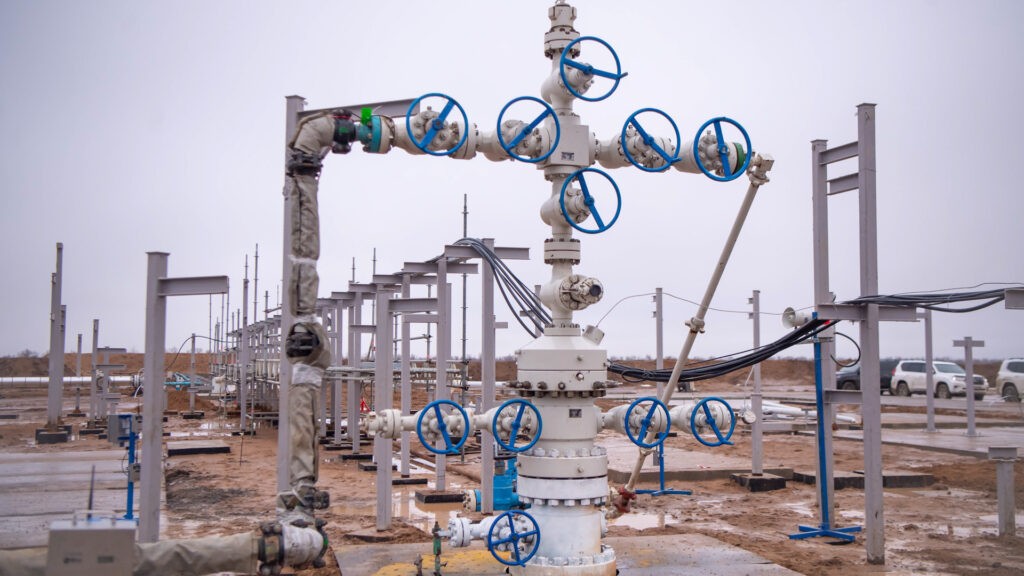
German companies want to receive more oil from Kazakhstan through the Druzhba (Friendship) pipeline. The discussion focuses on increasing supplies almost twofold, according to Kazakhstan’s Minister of Energy Almasadam Satkaliyev. According to him, Kazakhstan has already received a request from the German side to increase supplies to two million tons per year.

“We have already started preliminary consultations with our colleagues on the implementation of this transit this year,” said Satkaliyev.

Earlier, state pipeline operator KazTransOil reported that, according to last year’s results, 993,000 tons of crude were delivered through the Druzhba pipeline. This year, flow volumes are planned to increase to 1.2 million. At the same time, Germany is still asking for an increase in oil-product export volumes.

Until recently, the majority of oil exported from Kazakhstan to Germany was delivered by sea. Vessels were loaded with fuel at the Caspian Pipeline Consortium (CPC) terminal near Novorossiysk. The tankers were then sent to Trieste, Italy, where there is a terminal for receiving crude oil into the Transalpine (TAL) pipeline, from where the black gold is shipped to Germany. Every day, about 1.3-1.4 million barrels of oil per day flow through the CPC.

DE International Kasachstan reports that Kazakhstan supplied Germany with 10% more oil in 2022 year-on-year, supplying it with 8.3 million tons of crude. The European Union (EU) has not imposed restrictions on the supply of Russian oil through the Druzhba pipeline, but the German side itself refused to import fuel from Russia early last year. Currently, Russian oil received through the Druzhba pipeline is delivered only in the southern direction to Hungary, Slovakia, and the Czech Republic.

As the Times of Central Asia reported earlier this week, Kazakhstan has extended its voluntary reduction in overall oil production by 82,000 barrels per day until the end of June 2024.

Flower Importation Blooms in Kazakhstan

As reported by the Ministry of Trade and Integration, in 2023, Kazakhstan imported no fewer than 149.8 million flowers worth $61.1 million; 29% more than those valued at $47.3 million in 2022.

The country’s largest suppliers were Ecuador ($37.5 million); the Netherlands ($13.1 million); Kenya ($4.8 million), and Colombia ($3.4 million).

Significantly lower volumes of flower were imported from China ($592.3 thousand), Israel ($467.4 thousand), Uzbekistan ($393.2 thousand), and Russia ($356.7 thousand).

The greatest demand by far, was for roses, the most romantic of blooms, with the import of 112 million pieces worth $40.2 million. Chrysanthemums also proved popular with 15.8 million stems purchased for $7.6 million. Further down the line, were imports of around 3.3 million lilies for $1.5 million; 6 million carnations for $1.2 million, and 116.6 thousand orchids for $210.2 thousand.

Kazakhstan also exports flowers and in 2023, recorded a revenue of $2.7 million, comprising $2.5 million from Russia; $80.8 thousand from Kyrgyzstan; $55.5 thousand from Uzbekistan, and $3.3 thousand from China.

Kazakhstan Seeks to Increase Oil Transit Through Azerbaijan

With the production of crude oil set to rise in Kazakhstan, the country plans to increase shipments across the Caspian Sea and through Azerbaijan.

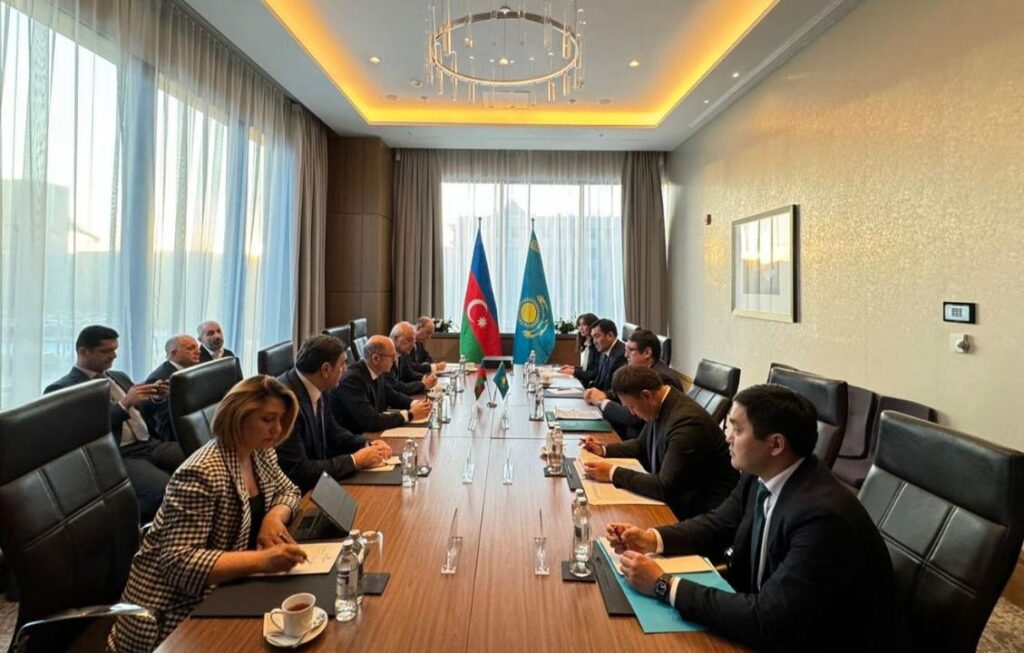
On March 6th, Kazakhstan’s Minister of Energy Almasadam Satkaliev met his Azerbaijan counterpart, Parviz Shahbazov, to discuss cooperation between their countries regarding the transit of Kazakh oil and the implementation of large-scale renewable energy projects.

Back in 2022, Kazakhstan’s President Kassym-Jomart Tokayev ordered an increase in the volume of oil transported across the Caspian Sea. In response, Kazakhstan’s national oil and gas company KazMunayGas and the state oil company of Azerbaijan, SOCAR, entered into an agreement to transport up to 1.5 million tons of oil per year from Kazakhstan’s Aktau port through the Baku-Tbilisi-Ceyhan oil pipeline.

In 2023 Kazakhstan’s shipment of crude oil from the Caspian port of Aktau grew to almost 1.4 million tons and this year, is expected to rise to 1.5 million tons.

Major expansion projects are currently underway at Kazakhstan’s Tengiz, Karachaganak, and Kashagan oil fields to increase the future output of crude oil.

Today, most of the country’s oil is exported via the pipeline managed by the Caspian Pipeline Consortium (CPC) which runs to the Russian Black Sea port of Novorossiysk. The throughput capacity of the Kazakh section of the Caspian Pipeline Consortium (CPC) pipeline has increased from 54 million to 72.5 million tons per year.

The Kazakh and Azeri energy ministers also discussed a forthcoming project to connect the Caucasus region and Central Asia’s energy systems through the installation of a deep-sea cable in the Caspian Sea.