• KGS/USD = 0.01144 0%
  • KZT/USD = 0.00193 -0%
  • TJS/USD = 0.10866 0.55%
  • UZS/USD = 0.00008 0%
  • TMT/USD = 0.28490 0%
  • KGS/USD = 0.01144 0%
  • KZT/USD = 0.00193 -0%
  • TJS/USD = 0.10866 0.55%
  • UZS/USD = 0.00008 0%
  • TMT/USD = 0.28490 0%
  • KGS/USD = 0.01144 0%
  • KZT/USD = 0.00193 -0%
  • TJS/USD = 0.10866 0.55%
  • UZS/USD = 0.00008 0%
  • TMT/USD = 0.28490 0%
  • KGS/USD = 0.01144 0%
  • KZT/USD = 0.00193 -0%
  • TJS/USD = 0.10866 0.55%
  • UZS/USD = 0.00008 0%
  • TMT/USD = 0.28490 0%
  • KGS/USD = 0.01144 0%
  • KZT/USD = 0.00193 -0%
  • TJS/USD = 0.10866 0.55%
  • UZS/USD = 0.00008 0%
  • TMT/USD = 0.28490 0%
  • KGS/USD = 0.01144 0%
  • KZT/USD = 0.00193 -0%
  • TJS/USD = 0.10866 0.55%
  • UZS/USD = 0.00008 0%
  • TMT/USD = 0.28490 0%
  • KGS/USD = 0.01144 0%
  • KZT/USD = 0.00193 -0%
  • TJS/USD = 0.10866 0.55%
  • UZS/USD = 0.00008 0%
  • TMT/USD = 0.28490 0%
  • KGS/USD = 0.01144 0%
  • KZT/USD = 0.00193 -0%
  • TJS/USD = 0.10866 0.55%
  • UZS/USD = 0.00008 0%
  • TMT/USD = 0.28490 0%
11 December 2025

Kazakhstan and Chinese Premiers Meet to Discuss the New Silk Road

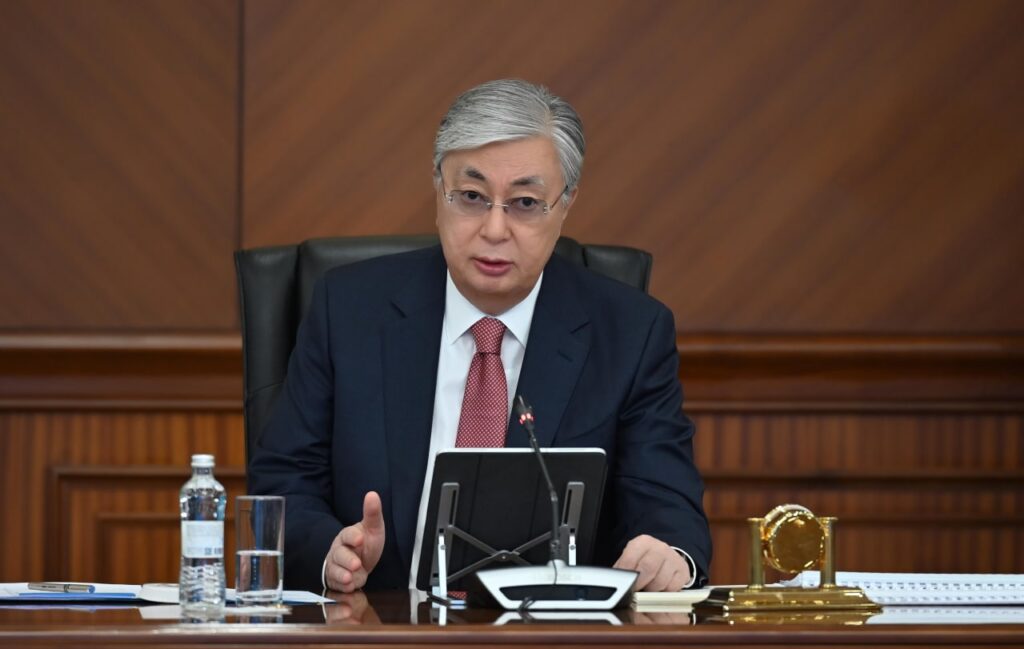
Kazakhstan’s President Kassym-Jomart Tokayev expressed his intention to strengthen bilateral ties and enhance co-operative endeavours with China during his May 2023 state visit, where he was received by China’s President Xi Jinping, who reciprocated the sentiment. This diplomatic exchange took place in the framework of the first-ever in-person summit of Central Asian leaders hosted on Chinese soil, in Xian, a political capital of several historic Chinese imperial dynasties, including the Tang.

This summit is a regional element of a wider Chinese initiative seeking to augment the country’s global standing and influence across the Asia, Africa and Europe by revitalizing ancient trade routes and pioneering new ones. With its multilateral framework, it was primarily aimed at fostering and enhancing the various transport corridors along the “New Silk Road”. As part of this ambitious vision, the assembled leaders also discussed the potential for intermodal transportation via the strategically located ports of Kazakhstan and Turkmenistan on the Caspian Sea.

Another agenda point was a prospective rail line extending through Kyrgyzstan and Uzbekistan that has been in the planning phase for numerous years. In one projected scenario, this rail line could eventually extend through northern Iran to Turkey, whence onward into Europe. However, that would also be a potential threat to the viability of the Trans-Caspian International Trade Corridor (TITR), in which Kazakhstan has been investing heavily in co-operation with Azerbaijan.

Many observers saw this event as a strategic manoeuvre by Beijing, calculated to establish and nurture ties in what is traditionally considered Russia’s sphere of influence. This Chinese shift in focus towards Central Asia is of particular significance since the nations there, including Kazakhstan, are seeking alternate sources of investment following the imposition of economic sanctions on Russia as well as Moscow’s diversion of resources to its war of aggression against Ukraine.

That is surely true, but the circumstances driving this strategic shift are multifaceted and cannot be attributed to a single cause. Indeed, it is notable that this summit occurred as a stand-alone event rather than as an informal sidebar to a larger event like a meeting of the Shanghai Co-operation Organisation, of which Russia is also a member. It was thus a clear signal that China views Central Asia as an important region for projecting its influence independently of Russian concerns. The shift in China’s foreign-policy focus towards Central Asia could potentially reconfigure the geopolitical balance in the region in the longer term, transforming the power dynamics in the region.

Yet Kazakhstan and President Tokayev surely do not wish to become as dependent on China as they were once dependent on Russia. The creation of the Organisation of Turkic States (OTS) in 2021 at Kazakhstan’s initiative, on the basis of the Turkic Council founded in 2009 likewise at Kazakhstan’s initiative, clearly signifies Kazakhstan’s wish to main the foundational “multi-vectorial” strategy that has characterized its foreign policy since independence in 1991.

It would perhaps be helpful to Kazakhstan, and the countries of Central Asia in general, if the EU and the United States accelerated their growing interest in promoting the Middle Corridor as segment (from Turkey and the South Caucasus across the Caspian Sea into Kazakhstan) of the Trans-Caspian International Trade Route (TITR). They have recognized its significance, particularly in the context of continuing sanctions against Russia, but they need to extend more assistance in the dynamic and practical way that they did in the 1990s and 2000s.

That is not to imply that there is any necessary conflict between the West and China in Central Asia. Indeed, during this visit, President Tokayev declared his intention to raise Kazakhstan’s trade with China to the level of $40 billion by 2030. This figure represents a projected growth of 29 percent from the 2022 figure, which stood at over $31 billion.

Kazakhstan’s trade with China in 2022 accounted for a substantial 42 percent of the record-breaking total trade turnover of over $70 billion between China and Central Asian nations (versus $49 billion between the EU and Central Asia) that year. Agricultural products in particular offer significant potential for export from Kazakhstan to the Chinese market, given China’s vast consumption needs and Kazakhstan’s agricultural capacities.

A hallmark of President Tokayev’s landmark visit was the signing of a total of 47 agreements with his Chinese counterparts. These accords, which spanned a broad spectrum of economic sectors, represented a total projected value of $22 billion, indicative of the enormous potential that lies in the strengthening of the China-Kazakhstan relationship. Symbolic of the growing ties between the two nations, twin-city relationships were also established between Shymkent in Kazakhstan and Xian in China, as well as between the North Kazakhstan region and Shaanxi province.
Kazakhstan’s Deft Diplomacy

All the headlines in Central Asia, and many outside of it, are highlighting the first-ever summit between China and the five Central Asian countries, which will be held in the northwest Chinese city of Xi’an from May 18 to May 19. The summit is scheduled to be attended by all presidents of the five Central Asian countries, including Kazakhstan’s Kassym-Jomart Tokayev. According to international observers, the event represents the potential for Chinese influence to further expand into what used to be the formerly Russian preserve of Central Asia.

President Tokayev has led the way for a liberation from all foreign interferences prioritizing Kazakhstan’s sovereignty and territorial integrity as well as reducing economic dependencies during the first 20 years of Kazakhstan’s independence. During this time, he held many key state posts, including foreign minister and prime minister. In those years, he implemented the so-called “multi-vector” diplomacy that has been copied by other Central Asian countries and aspiring middle powers around the world. Originally, this diplomacy covered five directions: the Commonwealth of Independent States, with a special mention of Russia; the Asia–Pacific region, especially China; Asia, especially Turkey; Europe, especially Germany, and the Americas, especially the United States.

Those initial country-specific orientations were based on hopes for foreign direct investment in the newly independent economy. This multi-vector approach, extended over the years with an emphasis on multilateralism, has also allowed Kazakhstan to play a significant role in global diplomacy. It has hosted numerous high-level peace negotiations, including the Syrian Peace Talks in Astana, asserting its position as a neutral broker and peacekeeper. Kazakhstan’s multi-vector diplomacy not only maintains a balance among global powers but also leverages these relationships in favor of its national development and regional stability.

China is a significant player in Kazakhstan’s economy, primarily through its Belt and Road Initiative (BRI), of which Kazakhstan has been called the “buckle”.  Astana has skillfully managed its ties with Beijing, making certain to avoid the debt trap that has ensnared other countries, such as Sri Lanka. Yet it is a measure of Kazakhstan’s economic and diplomatic maturity that the relationship has now gone far beyond the original starting points.

To avoid any sensitive overdependence on China, which would be as negative for Kazakhstan today as its overdependence on Russia was earlier, Kazakhstan’s diplomacy under Tokayev reaches out in new directions. Thus, during those same two days when Tokayev will be in China for the above-mentioned summit, Kazakhstan will also be hosting the second European Union–Central Asia Economic Forum. This Forum builds upon a first meeting that took place in Bishkek in 2021.

The EU side at the Forum will be chaired by Executive Vice President of the European Commission Valdis Dombrovskis, building on the renovated EU Strategy on Central Asia that was launched in December 2020. The event is scheduled to “take stock of progress made so far and discuss ways forward on policy, programs, and investment needed to develop a more integrated and interconnected regional market engagement”.

The main focus is on three principal issue-areas: facilitating a green and digital transition, improving the business environment, and enhancing trade and connectivity. Officials from the European Investment Bank and the European Bank for Reconstruction and Development will also participate in the forum, which is co-organized with the Organization for Economic Cooperation and Development.

By opting for a pragmatic and flexible approach, Kazakhstan has managed to “punch above its weight” and avoid the zero-sum game typically associated with geopolitics. Holding this Forum along with EU representatives in Kazakhstan during Tokayev’s participation in a summit in China shows both strategic agility on the part of both Kazakhstan and its leader, who has shown the ability to manage complex relationships and to pursue national interests within a cooperative framework. Hopefully, the Forum’s emphasis on trade and connectivity will lead its participants to also focus closely on the implementation Trans-Caspian International Trade Route (TCITR or “Middle Corridor”), which has only become more important amidst sanctions against Russia.

In the early post-Soviet years, two EU programs—Interstate Oil and Gas Transportation to Europe (INOGATE) and Transport Corridor Europe-Caucasus-Asia (TRACECA)—played a significant role in maintaining Caspian-region port facilities and other infrastructure, and in bringing them up to international standards. With international assistance, Kazakhstan is poised to lead a qualitative expansion of this critical infrastructure in Central Asia and the Caspian Sea region, which Europe so crucially needs today.

The Significance of Kazakhstan’s 2023 Legislative Elections

The recent parliamentary elections held on 19 March in Kazakhstan represent the fourth time that the country’s voters have gone to the polls in a little over two years, and the third time within the past nine months. While the treadmill of elections in 2022 manifested the country’s march towards democratic change, the expected headwinds of voter fatigue produced a turnout of 53 percent, a figure still on par with Canada, which averages 54 percent voter turnout.

Background: The President’s reform program

The outgoing parliament and its lower chamber – Mazhilis, had transformed the political environment ahead of the new elections when it passed legislation adopting the constitutional amendments approved by the voters in the 5 June 2022 referendum. These amendments included important reforms going far beyond the electoral rules and indeed restructured the entire political system. Specific to the elections, they introduced the possibility of self-nomination, easier party registration, and a lower electoral threshold for parties to enter parliament. The electoral reform was part of President Kassym-Jomart Tokayev’s strategy to mobilize disenfranchised sectors of the country’s electorate.

The composition of the new Mazhilis has been reshuffled and leaves Tokayev poised to make further progress and, by finally ridding the legislature of the holdover deadwood from the Nazarbayev era, to institutionalize the thoroughgoing political, economic and social reforms over the longer term.

Recent electoral reforms put to test in latest elections

The OSCE’s Office for Democratic Institutions and Human Rights (ODHIR) sent a team of more than 300 long-term and short-term observers who monitored the elections across the country. The team’s work was mostly unhindered in the performance of its duties. While expressing some reservations, the ODHIR team noted that the reforms had “increased choice for voters” and “brought elements of competitiveness into the political arena”, adding that contestants were able to campaign “actively and freely”. In a preliminary statement they also concluded that the parliamentary elections were held in a context of reforms “introduced to bring Kazakhstan closer to holding elections in line with international standards and OSCE commitments.” This evaluation augurs well for Kazakhstan’s international reputation under Tokayev.

The relatively low turnout level of the election at 54 per cent clearly indicates that Kazakhstan is moving away from the previous practice of mass mobilization to ensure survival of the authoritarian regime. But it also indicates some voter fatigue. As mentioned above, this is the third time in nine months that the electorate have gone to the booths, and the second time in a little over two years that they have elected a new Mazhilis. Overall, the results appear to be an endorsement of the creation of a broader political field with more horses in the race, which is in fact one of Tokayev’s intended reforms.

The ruling Amanat party won, but with some difficulty. Its majority is less than that which Nazarbayev’s Nur Otan party used to have, but also it was not labelled as the “president’s party”. As per recent constitutional amendments, the president is now above all parties and Tokayev, who relinquished the party chairmanship last year, did not campaign. According to local observers, Amanat had not only a new name but also a new leadership and “a strongly updated slate of candidates”.

It is noteworthy that there was no consolidation of opposition in the single-mandate districts. Protest movements that offered candidacies had the opportunity to demonstrate that they attract serious support amongst the country’s civil society; however, they failed to do so – they went unrecognized by general electorate. This suggests that, as a phenomenon, their popularity is exaggerated by their presence in social-media networks but failed in Kazakhstan’s Real Politics. The population at large did not offer them significant backing, not even at the masklikhat (regional legislative) level.

Results show steps towards representative democracy

Several parties other than the ruling Amanat party entered parliament following the 19 March elections. Second place went to the Auyl party, which is supported by local elites and internal migrants in the cities who harken back to their rural roots. The Respublika party sought to represent young businessmen but seems to have received votes due only to its novelty. The Ak Zhol party, which under the Nazarbayev regime represented a technocratic counter-elite dissatisfied with the then-ruling kleptocracy, still managed to hold its own.

Yet it seems that none of these parties, whether old or new, has really captured the electorate’s imagination. That may be because the population at large still sees most of them—even the new Baytak environmental party and the “social democrats” of the OSDP—as mouthpieces for different segments of the economic and political elite, rather than as real advocates for their own, everyday concerns. The new parties also had no track record and did not make an effort to build long-lasting relations with the voters using exhausting but effective tactic of “door-to-door” campaigning.

One notably silent party in these elections was the Democratic Choice of Kazakhstan party originally founded by the criminal fugitive Mukhtar Ablyazov in 2001 and re-established in 2017. Ablyazov’s political credibility diminished following the December 2022 decision by a US court for money-laundering on top of his 2012 conviction in UK courts where court records note his embezzling close to $5 billion from BTA Bank in Kazakhstan.

Conclusion

The repeated polls over the last two years, and particularly the referendum on constitutional reforms of June 5th 2022, as well as the presidential election of November 20th 2022, have shown that Tokayev recognizes the need for incontestable popular support for his reform agenda. He has grounded his presidency in economic and political restructuring – to build up the middle class as a long-term guarantor for Kazakhstan’s further sustainable development. Thus, since the January 2022 events, Tokayev has turned up anti-corruption measures which starved the country of funds and led to the decay of its infrastructure.

The composition of the new Mazhilis leaves President Tokayev poised to make further progress and, by finally ridding the legislature of some formerly entrenched officials, also to institutionalize the thoroughgoing political, economic and social reforms over the longer term.

New Parliamentary Elections Set in Kazakhstan

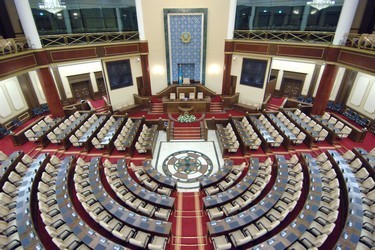
Kazakhstan’s President Kassym-Jomart Tokayev continues measures to implement his overarching program of political, economic and social reforms. His most recent step, dissolving the Mazhilis (national parliament) and announcing new elections to be held on 19 March, is expected accelerate their progress.

These elections will be the first to take place under the new provisions of the constitution, amended in accordance with a referendum on 5 June 2022 that  was backed by 75% of the public.

The new system is a qualitatively significant change from the past. It foresees 70 percent of the deputies of the Mazhilis being elected from party lists by proportional allocation, and 30 percent from single-mandate constituencies by majoritarian vote. Many Western countries use this type of “mixed” electoral system, which combines methods of majoritarian and proportional representation. In Kazakhstan, it will also be applied to voting for the maslikhats—representative bodies at the municipal and regional levels—in a 50/50 rather than 70/30 proportion. The reforms also reduce the size of the Mazhilis from 107 to 98 representatives.

The implementation of this electoral reform should make the legislative branch more representative on both central and local levels. As Tokayev has explained, it will further “create favourable conditions for the further development of civil society.” The elections “will become the embodiment of the changes taking place in society and will give a powerful impetus to the further modernisation of our political system.”

The last parliamentary elections on 13 January 2021 were based upon old rules and structures inherited from the stagnant regime of former president Nursultan Nazarbayev. The reforms will go well beyond the removal of the ex-president’s family from positions of influence and recapturing the state’s stolen wealth.


While anti-nepotism and a crackdown on corruption are priorities, Tokayev’s reforms go beyond it and open further vistas for the country’s democratisation. The details of the reforms, as well as the codification of their implementation, show minute attention to optimising the electoral mechanisms for popular participation and facilitating the entry of new actors into national and local politics.

Such democratisation can only be built with the recruitment of new elites and “sub-elites” at all levels from central to municipal government. The recruitment of new political actors from civil society will hopefully lead to their participative integration into the political system. This strategy targets the mobilisation of strata of society that have been excluded from the political and public sphere until now. Tokayev’s reforms are creating possibilities and opportunities for this inclusion to take place.

Seven parties have been registered under the new electoral rules and the Central Elections Commission expects another two to qualify before the deadline. They will be able to file candidacies if they succeed in holding an election congress and submitting the required package of documents for each candidate from the list.

It has been announced that, if necessary, filing deadlines will be extended until every constituency has at least two candidates on the ballot for every post. The ballots will also make it possible to vote “Against All” (i.e. “None of the Above”).

Many foreign observers fail to note all of these practical details, including the reduction of the minimum age required to stand for election. The minimum age to stand for election to the Mazhilis has been reduced to 25 years. The minimum age to stand for the maslikhats, the regional and municipal parliaments, has been lowered to 20 years.

Moreover, for the first time in many years, self-nominated candidates may stand if they meet the requirements for filing their candidacies. This means that “independent” candidates not affiliated with any party can stand for election at every level.

In addition, the reformed system allocates 30 percent of seats in the Mazhilis to women, youth and people with special needs, with similar provisions in place at lower levels of government and administration, automatically widening the constituencies represented and giving previously unrepresented segments of the population a legitimate voice.

The results of the elections will be testimony to how far Tokayev’s overall reform program has come, but it will also show how far it has still to go. The fact that what Tokayev envisions is a long-term – perhaps even a generational – project should not detract from the importance of his ongoing genuine efforts and the real progress they achieve.

Kazakhstan’s progression to a “listening state”

30 December 2022

Kazakhstan had a momentous year in 2022. It started with the January unrest, when thousands of citizens went into the streets in peaceful rallies against a sudden sharp increase in prices of the liquefied gas they used in their homes. These rallies turned into a mass protest against the legacy of the regime of Kazakhstan’s first president, Nursultan Nazarbayev, who had failed to give the people a voice and listen to their legitimate needs. What started out as a dangerous and tragic affair, however, soon turned into a real opportunity for the country’s democratic future.

The big shift from Nazarbayev to Tokayev

While the entrenched business elites around Nazarbayev ruled the country for over three decades, discontent grew among the broader population who perceived an economic class bias against them. Tokayev began weakening the power of Nazarbayev and his hangers-on after he became president in 2019; and in 2020, he began to dismantle the Nazarbayevite oligarchy.

After Tokayev removed Nazarbayev’s eldest daughter, Dariga, from her post as Speaker of the Senate and cancelled a state contract worth millions of dollars to another daughter, Dinara, the Nazarbayevite elites became alarmed and began to view Tokayev as an existential threat to their continued power.

Three days into the January events, security forces controlled by Nazarbayevite cliques, and led by National Security Committee head Karim Massimov, hijacked the protests. Using their own criminal provocateurs, they deliberately turned the peaceful protests violent and attempted to stage a coup d’état. They raided armouries and stormed government buildings in a co-ordinated effort to push Tokayev from power.

After order was restored, both Nazarbayev and Massimov were ousted from all their official duties, opening the way for an ambitious drive to transform the country’s social, economic and political system through a series of reforms.

What is a “listening state”?

The concept of the “listening state” goes beyond Gorbachev’s glasnost. In English, “glasnost” translates as “openness” or “transparency”, but in Russian, the meaning is more nuanced. The word comes from the noun golos and the suffix -nost. Golos means voice, and -nost means “the quality of”. So, glasnost is the quality of having a voice, as opposed to not having one. Hence, “glasnost” in Russian implies listening to the voice of the public.

Glasnost was the foundation of two other Gorbachev reforms: perestroika and democratization. Perestroika meant “restructuring” of the economy, while democratization meant political reforms. Under Gorbachev in the Soviet Union, glasnost, restructuring and democratization were supposed to reinforce one another. All three had to work together for any one of them to succeed completely.

The problems that Tokayev confronted when he became president in 2019 broadly resemble the problems that Gorbachev faced in 1985. The Brezhnev regime, which Gorbachev inherited, became referred to as a period of “stagnation”, thus the antithesis of glasnost. Like Brezhnev, Nazarbayev entrenched an elite political class, disconnected from the people, and unwilling to respond to their needs or institute significant reforms. Implementing a “listening state” is the most important and necessary of Tokayev’s reforms, intimately linking glasnost with democratization.

The outlook of Tokayev’s “listening state” bodes well for Kazakhstan

Tokayev’s “listening state” represents a transformational democratic shift in relations between the Kazakhstan state and its public. It goes further than glasnost by not only acknowledging and listening to the public’s voice but also providing legitimate channels for its amplification. Tokayev’s reforms for a “fair and just Kazakhstan” foresee that public policy will respond to public input and its implementation will likewise depend on public feedback. This is a fundamental change from the authoritarian suppression of such input and feedback under the Nazarbayev regime.

Tokayev’s moves against the oligarchs who have ruled Kazakhstan’s economy for the last 30 years aim to restructure the domestic economy, as did perestroika in Russia. In addition, he is diversifying the economy outside the energy sector. His program also reforms trade relations and foreign investment regulations to allow small and medium enterprises to become internationally more competitive.

Gorbachev’s glasnost, restructuring and democratization failed partly because domestic political opposition undercut them, and partly because the Soviet Union was too far gone by 1985 to be able to implement such wide-ranging and interactive fundamental reforms without falling into chaos. Kazakhstan in 2022 differs from the Soviet Union in 1985 in important ways. The Kazakhstani people have had 30 years to shake off the inherited Soviet political culture. They not only recognize the value of these reforms but also outright demand them.

Conclusion

Tokayev began promoting the “‘listening state’, which quickly and efficiently responds to all constructive citizens’ requests” in his address to the nation on September 2, 2019. He is more likely to succeed than Gorbachev not only because he has had a head-start but also because he is a more experienced leader and statesman. The events of January 2022 were tragic, but they opened real possibilities for the country’s democratic transformation and the success of the “listening state”.


“This isn’t Moscow” – Kazakh Oligarchs Scuppered in New York Court

In a tale which reaches from “fraud on an epic scale” in the UK to Donald Trump’s shady former business partners, a long-running case against fugitive banker and oligarch Mukhtar Ablyazov and his associates recorded another verdict in the New York Southern District court earlier this month. Yet despite having judgments against him totaling $4.9 billion in Britain alone, over a decade since he fled the UK on a fake passport to avoid three concurrent 22-month sentences for contempt of court, the former Minister for Energy, Industry and Trade in Kazakhstan – who has done business with multiple individuals sanctioned in the West – remains a free man, bemoaning his plight to be a case of “political persecution”.

In the early days of Wild West capitalism following the collapse of the USSR, Ablyazov abandoned a career as a nuclear physicist to register a company selling fax machines, photocopiers and computers. By 1998, together with a consortium of investors, Ablyazov acquired a loan to buy Bank Turan Alem – later to become known as BTA Bank – in a privatization auction for a cut-price fee of $72 million. In 2005, he became chairman of the bank following the death of his predecessor, Yerzhan Tatishev, whom Ablyazov has been sentenced in absentia to life in prison in his homeland for ordering the murder of.

In May 2019, the District Court of Fairfax, Virginia found Ablyazov’s sister, Gauhar Kusainova guilty of handling over $6 million of assets stolen by her brother from BTA. Already, in September 2018 a UK court had fined Ablyazov’s son-in-law, Ilyas Khrapunov, $500 million for helping him breach an asset freezing order. Ilyas is the son of the former Mayor of Almaty, Viktor Khrapunov, who is accused of embezzlement schemes amounting to at least $300 million and comingling funds with Ablyazov in Trump Organization projects.

Viktor and his TV anchorwoman wife fled to Switzerland in August 2008 – allegedly loading up a chartered plane with 18 tonnes of art and antiquities – to join Ilyas, who had established an entity called the Swiss Development Group (SDG) – company slogan: “It’s Good to be Swiss”. By 2014, the Kazakh authorities had identified 58 shell companies and subsidiaries said to be controlled by Ilyas, (that’s nothing compared to Ablyazov’s 1000+) one of which was Triadou SPV. In 2016, Nicolas Bourg, the former Director of Triadou testified the Khrapunovs’ had ordered him to move money out of the US after a California lawsuit was filed against them. “Triadou is a shell entity for SDG,” he said.

In the latest round of litigation, seeking to discredit the plaintiff’s witnesses, Mr. Roman for the defense spoke of the “lengths to which BTA Bank was prepared to go to find… Mr. Ablyazov’s allegedly stolen money,” and claimed BTA had paid witnesses, including Ilyas former business partners, Frank Monstrey ($25M) and Felix Sater ($2.7M). Roman argued that “Triadou didn’t even know about Ablyazov’s freezing orders in London” and Triadou’s rehabilitation of Flathotel, Cabrini, Syracuse and the Tri-County Mall were not the actions of a shell company. “Triadou doesn’t have BTA’s money”, he concluded; “Triadou never had BTA’s money”.

For the plaintiffs, John Zach characterized Ablyazov as a mob boss hiding behind facades who relied on family ties and nepotism. He pointed to cash movements from 2013 which showed Ilyas ran Triadou and emails from Ablyazov which said that Ilyas was “the one that I trust; just one person.” Ablyazov had previously admitted in regard to BTA that from 1998, “I was the key owner [but] no one can actually know who it belongs to… I was [Tatishev’s] boss in American terms.” The plaintiffs demonstrated how by way of a process known as ‘round-tripping’, as testified to by Sadykov, “they would obtain loans and use the funds to obtain other loans.” One such example was a $103 million loan made to Tradestock, an entity which offered “no services” and had “no employees”, for the purchase of goods such as soy flour, which never even materialized.

Zach detailed how in November 2012, Ilyas offshore financial planner, Eesh Aggarwal moved $10.5 million through eight shell companies in one day before it landed in the accounts of Triadou. By this time, the backdating of documents to before asset freezes began was already well underway. Loans made to Triadou by SDG subsidiary Telford international between November 2012 and May 2013 worth $71.7 million dollars were suspiciously never mentioned in SDG board minutes, and never repaid. If it sounds opaque, it’s because it’s supposed to be.

When Ablyazov was arrested in the summer of 2013, Triadou stopped receiving funds, and referring to Ilyas, in the words of Bourg, “the little one started to panic”. In his closing statement, Zach told the jury that this “isn’t Moscow [or] London, this is New York,” and asked them to make this “a case to send a message”. The jury duly returned a guilty verdict against Triadou on charges of conversion and undue enrichment, handing down a fine of $100.6 million with interest dating to 2013, resulting in an award of $218 million.

In total, Ablyazov stands accused of having embezzled up to $10 billion, whilst Ilyas – who hasn’t left Switzerland since 2013 for fear of arrest – is subject to freezing orders in the amount of approximately $424 million. Earlier this week, the National Court of Asylum in France (CBDA) dismissed Ablyazov’s request for refugee status, ruling that his criminal past did not allow him to obtain this protection.