Kazakhstan and Chinese Premiers Meet to Discuss the New Silk Road

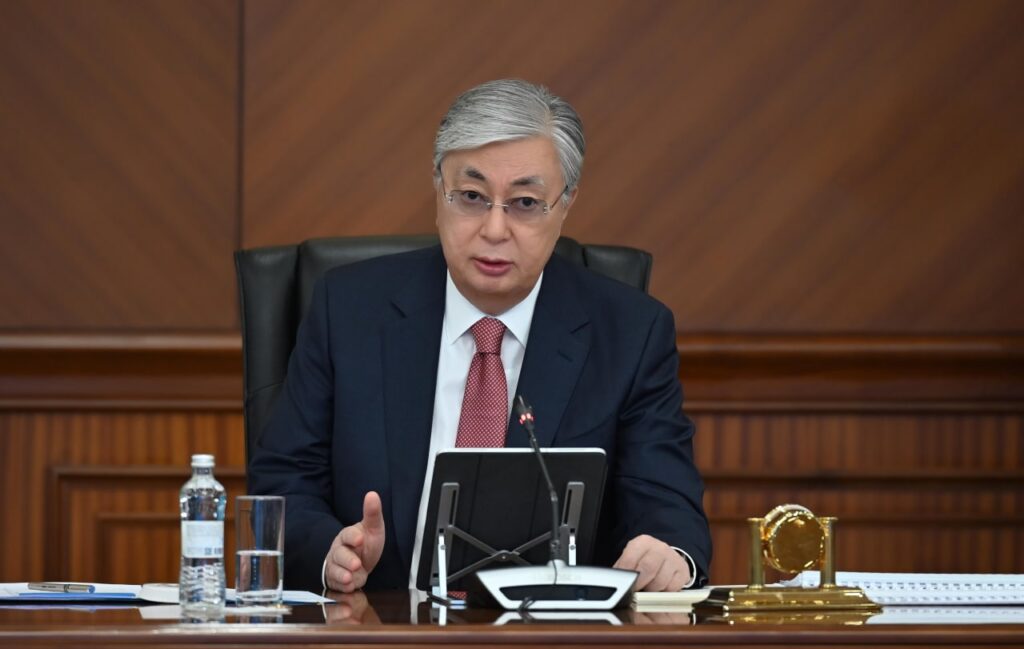
Kazakhstan’s President Kassym-Jomart Tokayev expressed his intention to strengthen bilateral ties and enhance co-operative endeavours with China during his May 2023 state visit, where he was received by China’s President Xi Jinping, who reciprocated the sentiment. This diplomatic exchange took place in the framework of the first-ever in-person summit of Central Asian leaders hosted on Chinese soil, in Xian, a political capital of several historic Chinese imperial dynasties, including the Tang.
This summit is a regional element of a wider Chinese initiative seeking to augment the country’s global standing and influence across the Asia, Africa and Europe by revitalizing ancient trade routes and pioneering new ones. With its multilateral framework, it was primarily aimed at fostering and enhancing the various transport corridors along the “New Silk Road”. As part of this ambitious vision, the assembled leaders also discussed the potential for intermodal transportation via the strategically located ports of Kazakhstan and Turkmenistan on the Caspian Sea.
Another agenda point was a prospective rail line extending through Kyrgyzstan and Uzbekistan that has been in the planning phase for numerous years. In one projected scenario, this rail line could eventually extend through northern Iran to Turkey, whence onward into Europe. However, that would also be a potential threat to the viability of the Trans-Caspian International Trade Corridor (TITR), in which Kazakhstan has been investing heavily in co-operation with Azerbaijan.
Many observers saw this event as a strategic manoeuvre by Beijing, calculated to establish and nurture ties in what is traditionally considered Russia’s sphere of influence. This Chinese shift in focus towards Central Asia is of particular significance since the nations there, including Kazakhstan, are seeking alternate sources of investment following the imposition of economic sanctions on Russia as well as Moscow’s diversion of resources to its war of aggression against Ukraine.
That is surely true, but the circumstances driving this strategic shift are multifaceted and cannot be attributed to a single cause. Indeed, it is notable that this summit occurred as a stand-alone event rather than as an informal sidebar to a larger event like a meeting of the Shanghai Co-operation Organisation, of which Russia is also a member. It was thus a clear signal that China views Central Asia as an important region for projecting its influence independently of Russian concerns. The shift in China’s foreign-policy focus towards Central Asia could potentially reconfigure the geopolitical balance in the region in the longer term, transforming the power dynamics in the region.
Yet Kazakhstan and President Tokayev surely do not wish to become as dependent on China as they were once dependent on Russia. The creation of the Organisation of Turkic States (OTS) in 2021 at Kazakhstan’s initiative, on the basis of the Turkic Council founded in 2009 likewise at Kazakhstan’s initiative, clearly signifies Kazakhstan’s wish to main the foundational “multi-vectorial” strategy that has characterized its foreign policy since independence in 1991.
It would perhaps be helpful to Kazakhstan, and the countries of Central Asia in general, if the EU and the United States accelerated their growing interest in promoting the Middle Corridor as segment (from Turkey and the South Caucasus across the Caspian Sea into Kazakhstan) of the Trans-Caspian International Trade Route (TITR). They have recognized its significance, particularly in the context of continuing sanctions against Russia, but they need to extend more assistance in the dynamic and practical way that they did in the 1990s and 2000s.
That is not to imply that there is any necessary conflict between the West and China in Central Asia. Indeed, during this visit, President Tokayev declared his intention to raise Kazakhstan’s trade with China to the level of $40 billion by 2030. This figure represents a projected growth of 29 percent from the 2022 figure, which stood at over $31 billion.
Kazakhstan’s trade with China in 2022 accounted for a substantial 42 percent of the record-breaking total trade turnover of over $70 billion between China and Central Asian nations (versus $49 billion between the EU and Central Asia) that year. Agricultural products in particular offer significant potential for export from Kazakhstan to the Chinese market, given China’s vast consumption needs and Kazakhstan’s agricultural capacities.
A hallmark of President Tokayev’s landmark visit was the signing of a total of 47 agreements with his Chinese counterparts. These accords, which spanned a broad spectrum of economic sectors, represented a total projected value of $22 billion, indicative of the enormous potential that lies in the strengthening of the China-Kazakhstan relationship. Symbolic of the growing ties between the two nations, twin-city relationships were also established between Shymkent in Kazakhstan and Xian in China, as well as between the North Kazakhstan region and Shaanxi province.