The landscape of global trade is quickly evolving as international supply chains reconfigure themselves following the retreat of globalisation, driven by the deepening bifurcation of the international arena between U.S.-led and China-led subsystems. Such a time of rapid change calls for future-oriented leadership informed by strategic foresight and diplomatic acumen. This is particularly true for countries that may find themselves in delicate geo-economic positions.
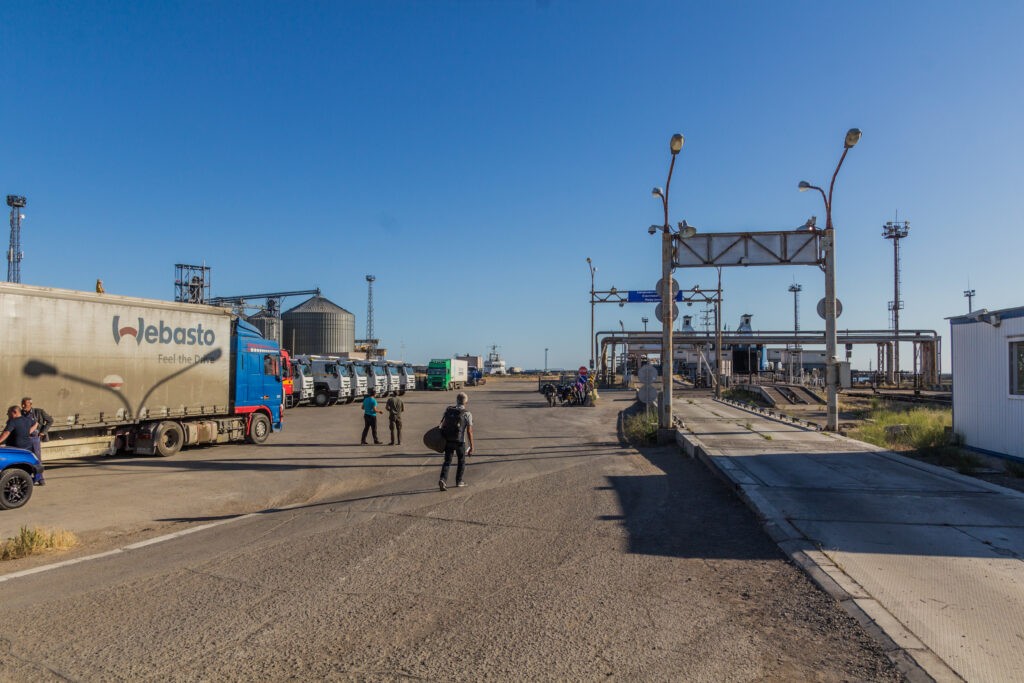
Responding to these challenges, Kazakhstan’s President Kassym-Jomart Tokayev has positioned his country as a pivotal player on the Trans-Caspian International Trade Route (TITR), a project reshaping trade dynamics between Asia and Europe through a network of railways and seaways in order to facilitate faster and more efficient trade.
Successful implementation of the TITR will bring significant economic benefits to Kazakhstan, boosting trade and attracting foreign investment. It will open new avenues for economic growth, create jobs, and foster innovation. The TITR will make Kazakhstan the most attractive destination for businesses seeking to install themselves in Central Asia so as to tap into the vast Asian markets.
The TITR also has strategic geopolitical significance. It is not a programmatic part of the China’s Belt and Road Initiative (BRI), which concentrates on a “northern” route through Russia and a “southern” maritime route. The new momentum behind the TITR comes at a time when the northern route suffers from the economic fallout of the Russia-Ukraine conflict.
Beyond economics, the TITR has already elevated Kazakhstan’s political stature. The European Union (EU) and European Bank for Reconstruction and Development (EBRD) have formally recognised this shift. At a recent joint conference in Almaty, with wide participation from many Central Asian players, these two entities selected what they call the “Central Trans-Caspian Network”, running through southern Kazakhstan, as the most sustainable of three container-transit options for linking Central Asia and Europe.
The EU and EBRD foresee a seven-fold increase in transit volumes from 18,000 “twenty-foot equivalent units” (TEUs, a standard industrial measure) to 130,000 TEUs by 2040. It is hardly a coincidence that this date coincides with the “Turkic World Vision” statement adopted by the Organisation of Turkic States at their 2019 summit in Baku. The EU and EBRD’s study is country-specific and proposes seven soft connectivity measures and 32 hard infrastructure investment needs across five Central Asian countries.
The study provides for such practical measures as digitalisation of transport documents, improvement of interoperability, enhancement of the public-private partnership (PPP) environment, facilitation of trade, liberalisation of markets, improvements to tariff-setting mechanisms and the increase of funding for asset maintenance. Country-specific priority investment needs for Kazakhstan include Almaty-Khorgos and Aktau-Beyneu railway double-tracking, expansion of several terminals and railway stations, and Aktau port capacity expansion, amongst other projects.
The involvement of the EBRD in this study also represents a “seal of approval” for international financial institutions to participate in building out the corridor. The detailed EU-EBRD work identifies specific projects in specific geographical regions and already represents a preliminary feasibility study for them. It outlines key actions for the development of the network and its integration with the EU’s Trans-European Transport Network (TEN-T), which covers all 27 EU member-states.
Playing a central role in a project of such scale and significance will enable Kazakhstan, under Tokayev’s leadership, to reinforce its position as a key player in regional affairs. The country has already demonstrated its ability to foster cooperation and manage complex projects, establishing its reputation as a reliable and influential partner in global trade initiatives.
Under Tokayev’s leadership, Kazakhstan has been strengthening its ties with neighbouring countries and major economies in Asia and Europe. The TITR’s implementation will further accelerate this trend. It is not just about facilitating trade, but about building long-term, mutually beneficial relationships. As a key link in the TITR, Tokayev’s Kazakhstan is becoming not only a participant in global trade, but also a significant influencer.
The TITR promises long-term benefits for Kazakhstan, including sustainable development and increased regional cooperation. By promoting trade, it encourages the efficient use of resources and the adoption of sustainable practices. The shared interests and mutual dependencies that the TITR has already fostered makes Kazakhstan as a leader in regional development and cooperation.
The TITR thus manifests President Tokayev’s strategic vision, boosting Kazakhstan’s economy and elevating its status not just on the regional but on the global stage. His commitment reflects this broader vision that has undergirded his foreign economic policy since becoming president in 2019. Kazakhstan possesses strategic advantages, and President Tokayev is leveraging them to maximise his country’s potential.