• KGS/USD = 0.01144 0%
  • KZT/USD = 0.00213 0%
  • TJS/USD = 0.10562 0%
  • UZS/USD = 0.00008 0%
  • TMT/USD = 0.28530 0%
  • KGS/USD = 0.01144 0%
  • KZT/USD = 0.00213 0%
  • TJS/USD = 0.10562 0%
  • UZS/USD = 0.00008 0%
  • TMT/USD = 0.28530 0%
  • KGS/USD = 0.01144 0%
  • KZT/USD = 0.00213 0%
  • TJS/USD = 0.10562 0%
  • UZS/USD = 0.00008 0%
  • TMT/USD = 0.28530 0%
  • KGS/USD = 0.01144 0%
  • KZT/USD = 0.00213 0%
  • TJS/USD = 0.10562 0%
  • UZS/USD = 0.00008 0%
  • TMT/USD = 0.28530 0%
  • KGS/USD = 0.01144 0%
  • KZT/USD = 0.00213 0%
  • TJS/USD = 0.10562 0%
  • UZS/USD = 0.00008 0%
  • TMT/USD = 0.28530 0%
  • KGS/USD = 0.01144 0%
  • KZT/USD = 0.00213 0%
  • TJS/USD = 0.10562 0%
  • UZS/USD = 0.00008 0%
  • TMT/USD = 0.28530 0%
  • KGS/USD = 0.01144 0%
  • KZT/USD = 0.00213 0%
  • TJS/USD = 0.10562 0%
  • UZS/USD = 0.00008 0%
  • TMT/USD = 0.28530 0%
  • KGS/USD = 0.01144 0%
  • KZT/USD = 0.00213 0%
  • TJS/USD = 0.10562 0%
  • UZS/USD = 0.00008 0%
  • TMT/USD = 0.28530 0%

Viewing results 1 - 6 of 1170

Kyrgyzstan Expands Trade Access to Afghan Market

Kyrgyzstan and Afghanistan have taken a significant step toward deepening economic ties with the opening of the Trade House of the Kyrgyz Republic in Kabul on December 16. The launch ceremony was attended by Kyrgyz Minister of Economy and Commerce Bakyt Sydykov and Afghan Minister of Industry and Commerce Nooruddin Azizi. According to the Kyrgyz Ministry of Economy and Commerce, the new Trade House is intended to serve as a platform for promoting Kyrgyz exports, facilitating direct business connections between entrepreneurs from both countries, and expanding bilateral trade. The Kyrgyz delegation also participated in a Kyrgyz-Afghan business conference on December 17 in Kabul, organized by the Afghanistan Chamber of Commerce and Investment. Speaking at the event, Azizi announced Afghanistan’s intention to open its own Trade House in Bishkek, describing Afghanistan and Kyrgyzstan as “interconnected countries” with complementary positions in regional trade. He characterized Kyrgyzstan as a gateway to Central Asia and the Eurasian Economic Union, and Afghanistan as a strategic hub linking South and West Asia. The conference concluded with the signing of commercial contracts worth $157 million between Kyrgyz and Afghan companies. Bilateral trade has gained momentum since Kyrgyzstan removed the Taliban from its list of prohibited organizations in September 2024. At the time, the Kyrgyz Ministry of Foreign Affairs stated that the decision was intended to support regional stability and constructive dialogue. According to Afghanistan’s Ministry of Industry and Commerce, bilateral trade reached $66 million in the most recent solar year (March 2024-March 2025), with Afghan exports totaling $7 million. Key Afghan exports to Kyrgyzstan include aluminum and copper utensils, pressure cookers, carpets, fruits, and vegetables. Kyrgyzstan is a significant supplier of petroleum products to the Afghan market. In a further move to strengthen its regional trade presence, Kyrgyzstan secured a pavilion at the Termez International Trade Center in November 2024. Located in Termez, Uzbekistan, near the Afghan border, the Center serves as a key node in regional trade routes, particularly between Uzbekistan and Afghanistan. The Kyrgyz pavilion offers a strategic foothold to further expand access to the Afghan market.

U.S. Transfers Afghan Black Hawk Helicopters From Uzbekistan to Peru

The United States has transferred UH-60 Black Hawk helicopters from Uzbekistan to Peru, as part of a broader strategy for managing military equipment evacuated from Afghanistan following the collapse of the former Afghan government in 2021, Diplomat.uz reported. The helicopters were initially supplied by the U.S. to the Afghan Air Force and were flown to Uzbekistan by Afghan pilots in August 2021, when the Taliban seized control of Kabul. According to Ukrainian media, the aircraft involved are UH-60A+ Black Hawks that remained outside Afghanistan after the Taliban’s takeover. Reports indicate that nine Black Hawks were delivered to Peru in 2024. In February 2025, an additional seven helicopters were transferred from Central Asia to the U.S., reflecting Washington’s phased approach to reallocating military assets left abroad after the withdrawal from Afghanistan. Defense experts say these transfers are part of a strategic effort to strengthen the capabilities of U.S. partner countries while resolving the status of equipment no longer operable by the Afghan National Defense and Security Forces. The Taliban, now in control of Afghanistan, has repeatedly insisted that all aircraft flown out in 2021 remain the property of Afghanistan and must be returned. On September 10, Taliban spokesman Zabihullah Mujahid claimed Uzbekistan had agreed to return 57 helicopters, calling the move a step toward rebuilding the country’s air force and improving bilateral relations with Tashkent. Uzbekistan’s Ministry of Foreign Affairs swiftly denied the claim. On September 11, ministry spokesperson Ahror Burkhanov stated that reports of an agreement to return the helicopters “do not correspond to reality” and labeled the information as false. Uzbek officials have consistently affirmed that the helicopters are U.S. property and emphasized their role in ensuring the aircraft did not fall into Taliban hands. According to the U.S. Department of Defense, 46 Afghan military aircraft, including Mi-17 and UH-60 helicopters, as well as PC-12, C-208, AC-208, and A-29 fixed-wing planes, were flown to Uzbekistan in 2021. An additional 18 aircraft were relocated to neighboring Tajikistan. Analysts say the ongoing redistribution of former Afghan military assets illustrates unresolved legal and political questions over equipment left behind in the wake of the U.S. withdrawal. The issue continues to influence regional diplomacy and international security calculations more than four years after the fall of the Afghan government.

Turkmenistan Marks 30 Years of Neutrality

On December 12, 2025, Turkmenistan marks the 30th anniversary of a UN decision granting Turkmenistan the status of a neutral country. Defining what “permanent neutrality” means for Turkmenistan is impossible, as it is a flexible term used to justify a range of policies, both domestic and foreign. This vague special status has not provided many benefits, but has helped Turkmenistan’s leadership isolate the country and create one of the most bizarre and repressive forms of government in the world today.   Last Item on the Day’s Agenda On Tuesday, December 12, 1995, the UN General Assembly’s (UNGA) 90th plenary meeting reconvened at 15:20 to consider items 57 to 81 on its agenda. Item 81 was the draft resolution on “permanent neutrality of Turkmenistan.” The UNGA president at that time, Freitas do Amaral, noted to the Assembly that the draft resolution “was adopted by the First Committee without a vote,” and asked if the Assembly wished “to do likewise.” The Assembly did, and after a few brief remarks about the next Assembly meeting on December 14, the session ended at 18:05. That is how the UN officially granted Turkmenistan the status of neutrality. A Great Event The passing of the resolution on Turkmenistan’s neutrality status might have been a case of going through the motions at the UN, but it was a huge event in Turkmenistan. Turkmenistan’s first president, Saparmurat Niyazov, had been campaigning internationally for his country to have “positive” neutrality status since 1992. After this was accomplished, Niyazov often proclaimed this special UN recognition as a great achievement for the country and for himself personally. [caption id="attachment_40725" align="aligncenter" width="2560"] Ashgabat’s Independence Square, previously known as Neutrality Square and originally as Karl Marx Square; image: TCA, Stephen M. Bland[/caption] December 12 was quickly announced as a national holiday. On the first anniversary of the UN decision in 1996, the former Karl Marx Square in Ashgabat was renamed “Neutrality Square.” Shortly after, an olive branch motif was added to Turkmenistan’s national flag, symbolizing the country’s neutral status. In 1998, on the third anniversary of UN-recognized neutrality, the 75-meter-high Arch of Neutrality was unveiled in Ashgabat. A 12-meter gold statue of Niyazov that rotated to face the direction of the sun crowned the structure. Niyazov died in December 2006, and in 2010, the Arch of Neutrality was moved from the city center to the outskirts of the Turkmen capital and unveiled again on December 12, 2011. It has been undergoing renovation and will be unveiled yet again on the 30th anniversary of neutrality. [caption id="attachment_40726" align="aligncenter" width="2099"] Former-President Niyazov's likeness atop the Arch of Neutrality; image: TCA, Stephen M. Bland[/caption] In 2002, Niyazov pushed through a law changing the names of the months of the year and days of the week. December became “Bitaraplyk,” the Turkmen word for neutrality, and continued to officially be called that until 2008, when Niyazov’s successor finally revoked the changes and restored the traditional names. That successor, Gurbanguly Berdimuhamedov, embraced the special permanent neutrality status and, in...

Reuters News Agency Pulls Report on Tajik-Russian Talks on Guarding Afghan Border

The Reuters news agency has withdrawn a story, denied by Tajikistan, that Tajikistan was negotiating with Russia about joint patrols along its troubled border with Afghanistan.  The removal of the news story comes as China urges Tajikistan to upgrade security along the border, where security officials say five Chinese workers were killed in two separate attacks launched into Tajikistan from Afghanistan last week. Tajik President Emomali Rahmon met senior security officials in his government this week to discuss border security.  “A Reuters story about Tajikistan holding talks with Russia about helping guard its Afghan border has been withdrawn following a post-publication review showing insufficient evidence. There will be no substitute story,” Reuters said in a statement from Almaty, Kazakhstan.  Tajikistan has previously said it seeks to collaborate with the Collective Security Treaty Organization (CSTO), a regional group in which Russia is the most powerful member, on efforts to conter threats along its border with Afghanistan. As far back as 2013, the organization said it was planning to provide “military-technical assistance” to Tajikistan’s border of nearly 1,400 kilometers with Afghanistan.  But Tajikistan's Ministry of Foreign Affairs denied the Reuters report about “alleged discussions between Tajikistan and the Collective Security Treaty Organization regarding the involvement of Russian military personnel” in joint patrols along the Tajik-Afghan border. “The Ministry emphasizes that this publication is untrue and that the dissemination of such false information misleads the international audience,” the ministry said on Wednesday.  Tajikistan is “constantly” taking steps to strengthen the border with Afghanistan and that the situation there “remains stable and is under the full control of the competent authorities” in the country, according to the foreign ministry. Even so, Chinese media reported that the Chinese embassy in Tajikistan has urged its nationals to urgently leave the border area.  The ruling Taliban in Afghanistan condemned the border attacks and pledged to collaborate in efforts to find those responsible. Mohammad Naeem, the deputy foreign minister, told Zhao Xing, China’s top diplomat in Afghanistan, during a meeting in Kabul that investigations were underway, the Afghan government said Wednesday.   

Why Regional Connectivity Is Reshaping Central Asia: Insights from ISRS Director Eldor Aripov (Part Two)

The Times of Central Asia presents the second part of an interview in Washington, D.C. with Eldor Aripov, Director of the Institute for Strategic and Regional Studies under the President of Uzbekistan. Dr. Aripov sat down with our Washington Correspondent, Javier M. Piedra, to discuss Uzbekistan’s geoeconomic and geopolitical strategic thinking. The conversation focused on Uzbekistan’s and the region’s efforts to cooperate diplomatically to maintain peace and stability with neighbors, irrespective of historical “hotspots,” cultural sensitivities, or the all-important matter of water resources. Aripov comments on Afghanistan, Chabahar Port (Iran), Ferghana Valley, and business development – key for U.S. investors thinking about Uzbekistan and the broader Central Asian region. TCA: What message do you have for businesses and private investors who do not have any experience in Central Asia? Many companies are sniffing around at this time – what do you want to tell them? Aripov: Uzbekistan is ready for committed investors - those who deliver lasting benefits, quality jobs, and shared prosperity. A decade of reforms has strengthened our fiscal discipline, boosted SMEs, and anchored stability. Coupled with our focus on good relations and a secure, integrated Central Asia, we offer a reliable platform for long-term, sustainable investment. While we have more work to do, we invite you to be part of our momentum. TCA: What are the risks that companies might face when considering long-term investment? Aripov: No country is immune to downside risks – not only in the developed but developing world. Having said that, downside risks, including trade shocks, commodity price volatility, tighter external financing, and contingent liabilities from state-owned enterprises, are mostly exogenous factors driven by global conditions. Risks are mitigated through political stability, diversification of the economy, prudent macroeconomic management, and reforms to state-owned enterprises and governance. For more in-depth commentary, I refer you to recent IMF, World Bank, and Asian Development Bank assessments about our economic conditions and trends. TCA: Let me move on to more regional issues. The first Ferghana Peace Forum was held in October 2025. How can it serve as a replicable model for other regions seeking sustainable peace? Aripov: First of all, I’d like to put this important forum on everyone’s radar. I’d like to underscore that peace is possible when hard work, respect for others, and a commitment to understanding guide our actions, despite historical memories and past differences. Someone should write a case study about our ability to bring consensus into an otherwise challenging region. In any event, the inaugural Ferghana Peace Forum brought together over 300 participants from more than 20 countries — representatives of Central Asian governments, international organizations, leading think tanks, research institutions, and local communities. A joint communiqué was adopted, confirming the intention to institutionalize the Forum as a permanent platform with rotating hosts. This broad participation highlighted an important reality: the Ferghana Valley is no longer viewed as a fragile zone; it is now viewed as a model of pragmatic peacebuilding. The Forum demonstrated how regional leadership — particularly the openness and...

Uzbekistan Reopens Termez-Hairaton Passenger Crossing with Afghanistan

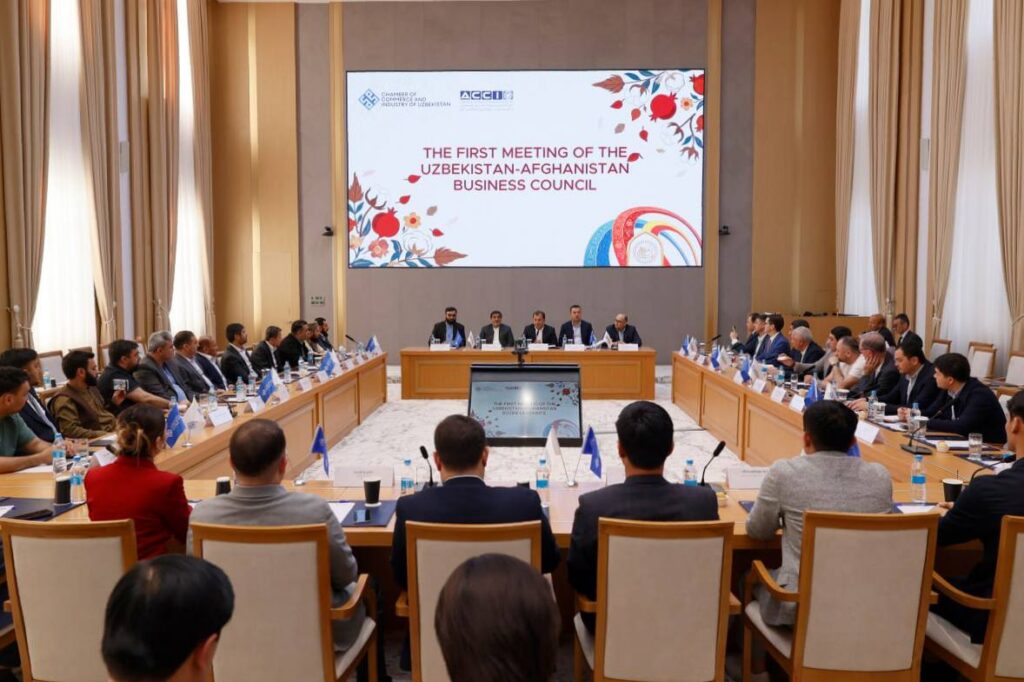
Uzbekistan has reopened the Termez-Hairaton passenger crossing, restoring direct movement between Uzbekistan and Afghanistan, the country’s Chamber of Commerce and Industry has announced via its official Telegram channel. While visa requirements remain in effect, the decision marks a significant step toward improving cross-border mobility and trade. Passenger movement across the strategic bridge had been suspended since 2021, complicating travel for Uzbek entrepreneurs. To reach Mazar-i-Sharif, just 75 kilometers from the Ayritom checkpoint, businesspeople were previously forced to take an all-day detour through Tajikistan. The resumption of direct access eliminates a major logistical barrier for exporters and traders. Officials say the reopening is expected to bring substantial benefits for Uzbek companies exporting goods to Afghanistan. Bilateral trade has been growing steadily, and the authorities project that the restored route will help push exports to $2.5 billion by 2026. Uzbekistan and Afghanistan have also been working to deepen broader economic cooperation. During a visit to Kabul in August of last year, Uzbek Prime Minister Abdulla Aripov held talks with Afghan officials on expanding trade, strengthening energy collaboration, and partnering on key projects in copper, iron, oil, and gas. At that time, both sides agreed that bilateral trade could reach $1 billion in 2024, with the potential to rise to $3 billion in the near future.