• KZT/USD = 0.00220
  • TJS/USD = 0.10800
  • UZS/USD = 0.00009
  • TMT/USD = 0.29850
  • KZT/USD = 0.00220
  • TJS/USD = 0.10800
  • UZS/USD = 0.00009
  • TMT/USD = 0.29850
  • KZT/USD = 0.00220
  • TJS/USD = 0.10800
  • UZS/USD = 0.00009
  • TMT/USD = 0.29850
  • KZT/USD = 0.00220
  • TJS/USD = 0.10800
  • UZS/USD = 0.00009
  • TMT/USD = 0.29850
  • KZT/USD = 0.00220
  • TJS/USD = 0.10800
  • UZS/USD = 0.00009
  • TMT/USD = 0.29850
  • KZT/USD = 0.00220
  • TJS/USD = 0.10800
  • UZS/USD = 0.00009
  • TMT/USD = 0.29850
  • KZT/USD = 0.00220
  • TJS/USD = 0.10800
  • UZS/USD = 0.00009
  • TMT/USD = 0.29850
  • KZT/USD = 0.00220
  • TJS/USD = 0.10800
  • UZS/USD = 0.00009
  • TMT/USD = 0.29850
07 September 2026

Viewing results 1 - 6 of 103

Skyward Ambitions: Navigating the Growth and Challenges of Kazakhstan’s Aviation Industry

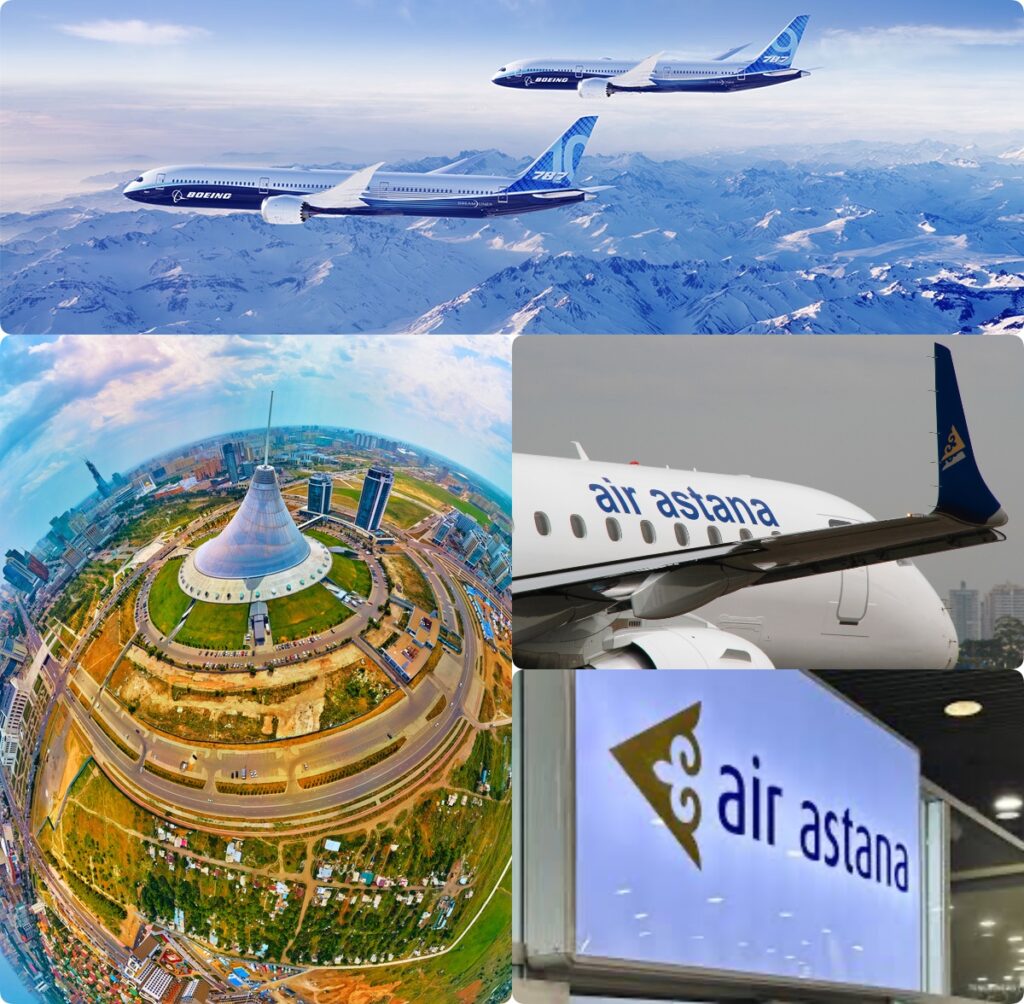
According to the Concept for the Development of the Transport and Logistics Potential of the Republic of Kazakhstan by 2030, the development of the country's civil aviation industry should be conducted in three key areas: flight safety, route network development, and infrastructure modernization. So, how do things stand today in regard to fulfilling these tasks? As previously reported by TCA, Uzbekistan has far surpassed Kazakhstan in direct air routes to key countries; from Tashkent, one can even fly to New York, which remains an elusive dream for Kazakhstanis. In 2011, Air Astana approached Boeing regarding the purchase of three 787 Dreamliner aircraft. However, when approached by TCA in August 2024, Air Astana stated that "since 2011, there have been several macroeconomic, global changes, which affected the market situation, and the timing of aircraft deliveries has been revised, including delays on the part of the manufacturer."   Safety In July of this year, a landmark event for the aviation industry occurred when President Kassym-Jomart Tokayev vowed to open the Permanent Mission of Kazakhstan to the International Civil Aviation Organization (ICAO). This was another step towards introducing advanced standards in the aviation industry, and a decision which is in line with the trend of removing all restrictions for domestic carriers on flights to the European Union from Kazakhstan. The issue was discussed at a meeting of the EU Flight Safety Committee, with the participation of representatives of the aviation authorities of 27 countries. Unfortunately, however, cases of safety violations in civil aviation in Kazakhstan are not decreasing. According to the Bureau of National Statistics, in 2023 there were 58 accidents in air transportation, compared to 47 in the previous year. In the last month alone, three incidents involving damage to planes occurred at Astana Airport alone. The causes were weather conditions, as well as the actions of the air harbor operator. Fortunately, there were no casualties. One of the most hotly debated problems in the aviation industry for many years has been the issue of construction in areas surrounding airports. Law enforcement are now taking measures to bring these areas into compliance. According to data from the Aviation Administration of Kazakhstan, in 2023, during an inspection by the General Prosecutor's Office, it was revealed that within the boundaries of airport safety zones, local executive bodies had allocated approximately 1,200 plots for the construction of residential, commercial and other facilities, on which more than 900 buildings have been erected. Over 100,000 different structures have been built within the territory of airfields without the approval of airport commissions (residential, commercial, industrial, etc.). The cities of Almaty, Shymkent, Atyrau, and Aktobe have seen the most serious cases of illegal construction. In order to establish clear requirements for the use of airfield territories, legislative amendments have since been introduced regarding the procedure for granting rights to plots located on such land.   Air geography The air transportation market in Kazakhstan is growing: 8.3 million passengers traveled by air between January-July 2024. This constitutes a 14% growth when...
Will Direct Flights from Kazakhstan to the U.S. Become a Reality?

Kazakhstan and Uzbekistan spent the first thirty years of independence embroiled in rivalries rooted in the Soviet-era. However, the two countries have since moved towards cooperation, and both Tashkent and Astana have tasted success. One area in which Uzbekistan has far surpassed Kazakhstan in direct air routes to key countries. From Tashkent, one can even fly to New York, which is still a dream for Kazakhstanis who want to reach the U.S. via direct flights. As previously reported by TCA, however, at the end of July, the authorities in Kazakhstan stated that the first B787 “Dreamliner” will be delivered in late 2025, bringing Astana’s long-held goal of direct flights to the United States by the end of 2025 a step closer. But will this dream become a reality? In January 2022, the Parliament of Kazakhstan adopted the draft law "On ratification of the agreement between the Government of the Republic of Kazakhstan and the Government of the United States of America on Air Transport". The agreement itself was signed back on December 30, 2019,  when it referenced the flight route Nur-Sultan - New York. Then Minister of Industry and Infrastructure Development (MIID), Kairbek Uskenbayev said that a joint commission of representatives of American airlines had reviewed the airports of the capital and Almaty, and concluded that they met international standards. Earlier, the MIID had specified that under the "Open Skies" regime, the fifth freedom of the air would allow Kazakhstan's airlines to bring passengers to the United States, then pick up passengers there and transport them to a third country, that is, to fly in transit through the United States. Concerning cargo, the agreement provided a seventh degree of freedom, which also allows a Kazakh airline to transport cargo from the U.S. to Canada or the United Kingdom without additional authorization. U.S. companies in Kazakhstan would have similar rights. At a meeting held in 2022, which was attended by the Director General of the Aviation Administration, Catalin Radu, and the Minister of Industry and Infrastructural Development of Kazakhstan, Kairbek Uskenbayev, it was stated that work has been underway since the beginning of 2022 to increase technical capacity in preparation for the upcoming FAA International Aviation Safety Assessment (IASA) into launching direct flights between Kazakhstan and the United States. According to Talgat Lastayev, the Civil Aviation Committee Chairman, Kazakhstan had raised its flight safety assurance level to 84%, 15% above the global average. Plans for the capital's airport changed, however. On the sidelines of a government event in May 2023, when asked by journalists when flights to New York was expected to commence, Peter Foster, head of Air Astana, Kazakhstan's largest airline, responded stating, "Flights are planned to begin by 2025. There is a small correction to be made; the flights will be from Almaty. The Almaty - New York route will at the initial stage be three times a week, with a further increase to 5 flights a week, and if there is good performance, daily flights. There will be no...

U.S. Refurbishment of Pilatus PC-12 Aircraft for Uzbekistan

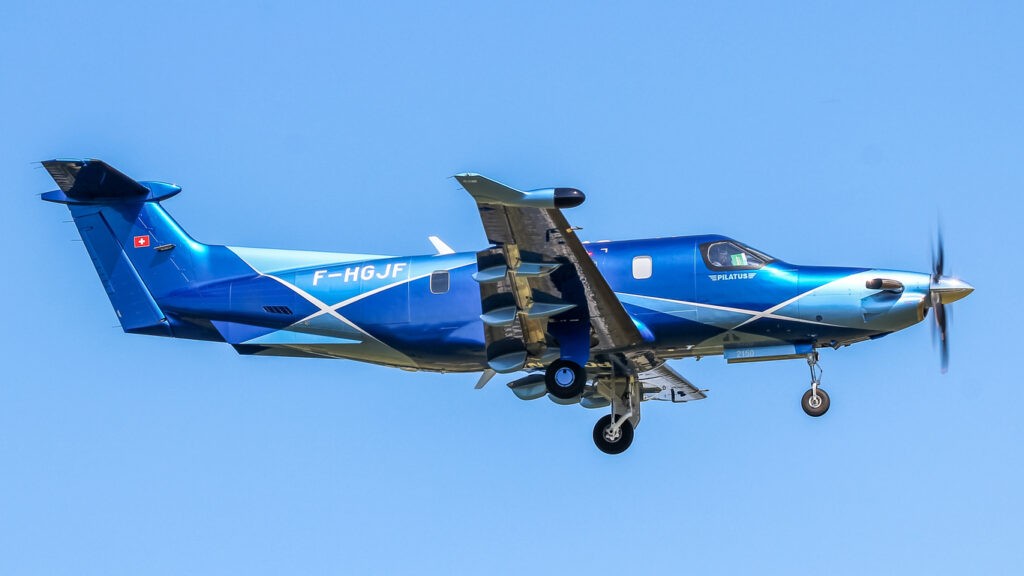
US company Sierra Nevada Corporation (SNC) has been awarded a $64.2 million contract to refurbish six Pilatus PC-12 aircraft for Uzbekistan. The work will be performed in Uzbekistan and completed by August 2027. According to the U.S. Defense Department's website, the contract which was awarded under the U.S. Department of Defense's Foreign Military Sales (FMS) program, includes not only the restoration of the aircraft but also logistical support and on-site maintenance. The Pilatus PC-12 is a single-engine turboprop aircraft widely used for various missions, including surveillance and transportation. Since the aircrafts' proven reliability lends itself to civilian and military applications, their rehabilitation will have a significant impact on the expansion of Uzbekistan's aviation capabilities, including long-range monitoring and transportation missions. It is worth noting that the Pilatus PC-12 aircraft is often used in difficult conditions due to its ability to take off and land on short runways, making it indispensable for operations in Uzbekistan's remote and hard-to-reach regions.

U.S. Company to Support Kazakhstan’s Production of Sustainable Aviation Fuel

Kazakhstan’s national oil and gas company KazMunayGas (KMG) and the American technology company LanzaJet have signed a memorandum of cooperation for a strategic partnership in the production of environmentally sustainable aviation fuel (SAF) in Kazakhstan. While in the United States from August 5-7, KMG Chairman of the Board Askhat Khassenov visited the American company’s laboratory in Chicago and met with LanzaJet CEO Jimmy Samartzis. Khassenov noted that KMG aims to reduce its carbon footprint by 15% by 2031, compared to 2019 levels, and developing the country's biofuels market will support Kazakhstan's goal of carbon neutrality. He then stated that in response to the current rise in the global demand for SAF, his company is considering its production in Kazakhstan. LanzaJet CEO, Jimmy Samartzis, emphasized the importance of Kazakhstan's initial steps towards producing environmentally friendly jet fuel and expressed readiness to provide full technological support. LanzaJet specializes in SAF production technology from ethanol (ethanol-to-jet or alcohol-to-jet) and has long-term off-take agreements with major airlines. In January 2024, the company launched the world's first commercial-scale LanzaJet Freedom Pines Fuels plant for SAF production from ethanol. KMG earlier said that a preliminary feasibility study for the possible construction of a SAF production facility in Kazakhstan had already been completed by KMG and Air Astana with financial assistance from the European Bank for Reconstruction and Development (EBRD). SAF (Sustainable Aviation Fuel), an alternative to conventional jet fuel, represents a promising tool for decarbonizing the aviation industry. SAF can be derived from bioethanol (ethanol) produced from plants and other renewable sources, and compared to traditional jet fuel, reduces carbon emissions by 80%. In Europe, all jet fuel must contain 2% SAF from 2025 onwards, and the use of eco-friendly jet fuel must rise to 63% by 2050.

Boom in Uzbekistan’s International Flights

In the first half of 2024, Uzbekistan's airports processed 53,300 flights of which 16, 300 were domestic and 36,900 international; an increase of 37% compared to the same period last year, according to a report by Uzbekistan Airports' press service. From January to June, Uzbek airports served 6 million 369,384 thousand passengers on domestic flights, 1 million 263,304 thousand passengers on domestic flights, and 5 million 106,80 thousand passengers on international flights; an increase of 36%  compared to the first quarter of  2023. In the first half of the year, 40.7 tons of cargo and mail were transported, 18% more than last year. Today, Uzbek airports provide passenger services on 84 routes. The 15% increase is attributed to the addition of new air carriers and the simultaneous launch of several new routes. Uzbekistan Airports currently  cooperates with 45 airlines.

Uzbekistan’s Soaring Air Transit Potential

Located at the heart of Central Asia, Uzbekistan offers great potential for air transit. According to the Transport Ministry of Uzbekistan, the country’s airspace transit routes comprise a 60% flow between Southeast Asia and Europe; 20% between the Middle East and China, Korea, and Japan; 10% between the Middle East and Russia; and 10% between Southeast Asia and Canada and the USA. The State Unitary Enterprise Uzaeronavigation, operating under the Ministry of Transport and responsible for air traffic control in Uzbekistan, currently serves over 500 airlines from around the world. As evidenced by the growth of traffic in the Uzbek airspace, routes through Uzbekistan are becoming increasingly profitable for many countries’ air carriers. Last year, Uzaeronavigation served 188 thousand flights, including 143 thousand by foreign airlines. Between January and April 2024, over 74 thousand flights were serviced in Uzbekistan’s airspace, an increase of 30% compared to the first quarter of 2023. Flights operated by Uzbek airlines rose by 42% to over 17 thousand, and those operated by foreign airlines increased by 26% to 56 thousand.