• KGS/USD = 0.01143 0%
  • KZT/USD = 0.00206 0%
  • TJS/USD = 0.10811 -0.18%
  • UZS/USD = 0.00008 0%
  • TMT/USD = 0.28571 0%
  • KGS/USD = 0.01143 0%
  • KZT/USD = 0.00206 0%
  • TJS/USD = 0.10811 -0.18%
  • UZS/USD = 0.00008 0%
  • TMT/USD = 0.28571 0%
  • KGS/USD = 0.01143 0%
  • KZT/USD = 0.00206 0%
  • TJS/USD = 0.10811 -0.18%
  • UZS/USD = 0.00008 0%
  • TMT/USD = 0.28571 0%
  • KGS/USD = 0.01143 0%
  • KZT/USD = 0.00206 0%
  • TJS/USD = 0.10811 -0.18%
  • UZS/USD = 0.00008 0%
  • TMT/USD = 0.28571 0%
  • KGS/USD = 0.01143 0%
  • KZT/USD = 0.00206 0%
  • TJS/USD = 0.10811 -0.18%
  • UZS/USD = 0.00008 0%
  • TMT/USD = 0.28571 0%
  • KGS/USD = 0.01143 0%
  • KZT/USD = 0.00206 0%
  • TJS/USD = 0.10811 -0.18%
  • UZS/USD = 0.00008 0%
  • TMT/USD = 0.28571 0%
  • KGS/USD = 0.01143 0%
  • KZT/USD = 0.00206 0%
  • TJS/USD = 0.10811 -0.18%
  • UZS/USD = 0.00008 0%
  • TMT/USD = 0.28571 0%
  • KGS/USD = 0.01143 0%
  • KZT/USD = 0.00206 0%
  • TJS/USD = 0.10811 -0.18%
  • UZS/USD = 0.00008 0%
  • TMT/USD = 0.28571 0%

Viewing results 1 - 6 of 65

UN General Assembly Backs Kazakhstan’s Initiative to Establish UN Center in Almaty

The United Nations General Assembly has unanimously adopted a resolution supporting the establishment of the UN Regional Centre for Sustainable Development Goals (SDGs) for Central Asia and Afghanistan in Almaty. The initiative was put forward by Kazakhstan on behalf of the Central Asian states. According to the Kazakh Foreign Ministry, 152 UN member states co-sponsored the resolution, underscoring its broad international support and high significance. Kazakhstan’s Role in Regional Development The idea to establish the UN SDG Centre was first proposed by Kazakh President Kassym-Jomart Tokayev during the 74th session of the UN General Assembly. He suggested locating the center in Almaty’s new Building of International Organizations, which already hosts 18 UN agencies. Tokayev emphasized that, as the largest economy in Central Asia, Kazakhstan is committed to strengthening regional cooperation and promoting sustainable development. He highlighted the growing role of middle powers in global governance, positioning Kazakhstan as a key player in fostering regional integration and international collaboration. A Hub for Regional Cooperation The new UN SDG Centre will serve as a platform for coordinating international and regional efforts, facilitating best practice exchanges, providing technical assistance, and implementing joint projects. It will work closely with governments, international organizations, the private sector, and civil society to achieve measurable development outcomes. Additionally, the center will play a crucial role in revitalizing the UN system at the regional level. Its mission includes enhancing coordination between UN agencies, adapting global initiatives to regional priorities, and promoting inclusive multilateral cooperation, a goal aligned with ongoing UN reforms aimed at improving efficiency and effectiveness. Supporting Afghanistan’s Economic Stability A key focus of the center will be economic development in Afghanistan, as the country’s stability and prosperity are directly linked to the security and well-being of Central Asia. By addressing Afghanistan’s economic challenges, the center aims to contribute to long-term regional stability and growth.

A Taste of Kazakhstan: Interview with Almaty’s Apple City Cider

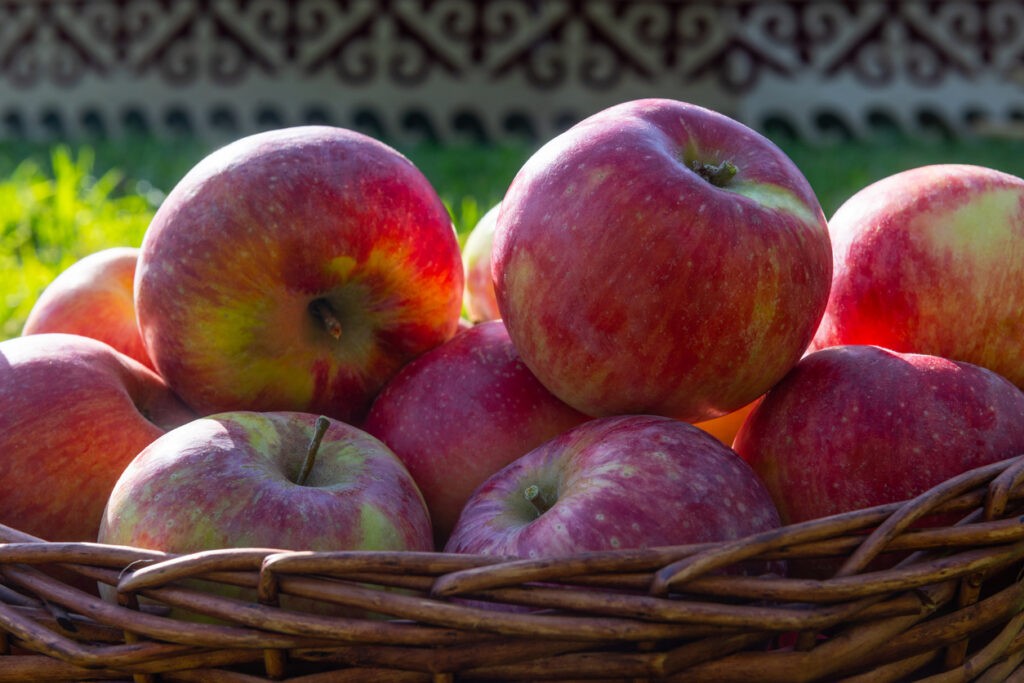
Englishman Alexander Thomas is the passionate founder of Apple City Cider, an Almaty-based craft cidery dedicated to producing high-quality, locally sourced ciders that celebrate tradition with a modern twist. With a deep-rooted love for orchards and fermentation, Thomas blends innovation with time-honored techniques to create crisp, flavorful ciders. TCA: What first brought you to Almaty, and what kept you here? AT: I used to work for the world’s largest publishing group, where I reported on different market sectors. When I covered aviation, I used to fly around the world to speak to different airline CEOs to discuss their route strategies and fleets. I first came to Kazakhstan to interview Air Astana’s CEO, Peter Foster. I was supposed to fly to Paris to speak with KLM and Air France, but that meeting was canceled, so I flew back to London. Sitting next to me, little did I know, was my future wife. In the same company, I very much enjoyed the coverage of the drinks industry. I had originally wanted to make wine in the south of France, but after marrying a Kazakh girl, we decided to start our business in Kazakhstan. Instead of pressing grapes in the South of France, we began pressing apples in Almaty. TCA: Can you tell us the inspiration for Apple City Cider? AT: We started the business because no one was making cider in the birthplace of the apple, around that time, cider was not even available to purchase in Kazakhstan. Around the same time we went on sale, another alcohol manufacturer began to produce cider as well, but we are the only cider specialists; the main business of the others is spirits and other alcoholic drinks. [caption id="attachment_28689" align="aligncenter" width="1706"] Image: TCA, Henry Kuvin[/caption] TCA: How did Almaty respond to your business idea, and what were the main challenges when establishing your company? AT: Consumers are very happy with the product and happy that we started our business here. Like other local companies, Almaty Cider has received a lot of positive support from the city; they love how it’s called “Almaty Cider.” The concept of eating locally and supporting local businesses is a global phenomenon, and Almaty is no exception. The fact that Almaty is the birthplace of the apple, proven by science, made it the ideal location to start such a business. The Malus Sieversii apple, native to the Almaty region, is perfect for cider. The levels of tannins, fruit sugar, and acidity, while not ideal for eating, make a great-tasting cider. TCA: Almaty, the place of abundant apples, does not have a huge cider culture – how has this changed since you established the business, and where do you see it going? AT: Cider was not available even as an imported product until about three to four years ago. Since then, we have seen imported brands come to the market, and people have developed a taste for it. In Russia, for example, there are now over 100 independent cideries. The first person...

Marked by Tragedy: Why Kazakhstan’s Independence Day Is a Day of Reflection

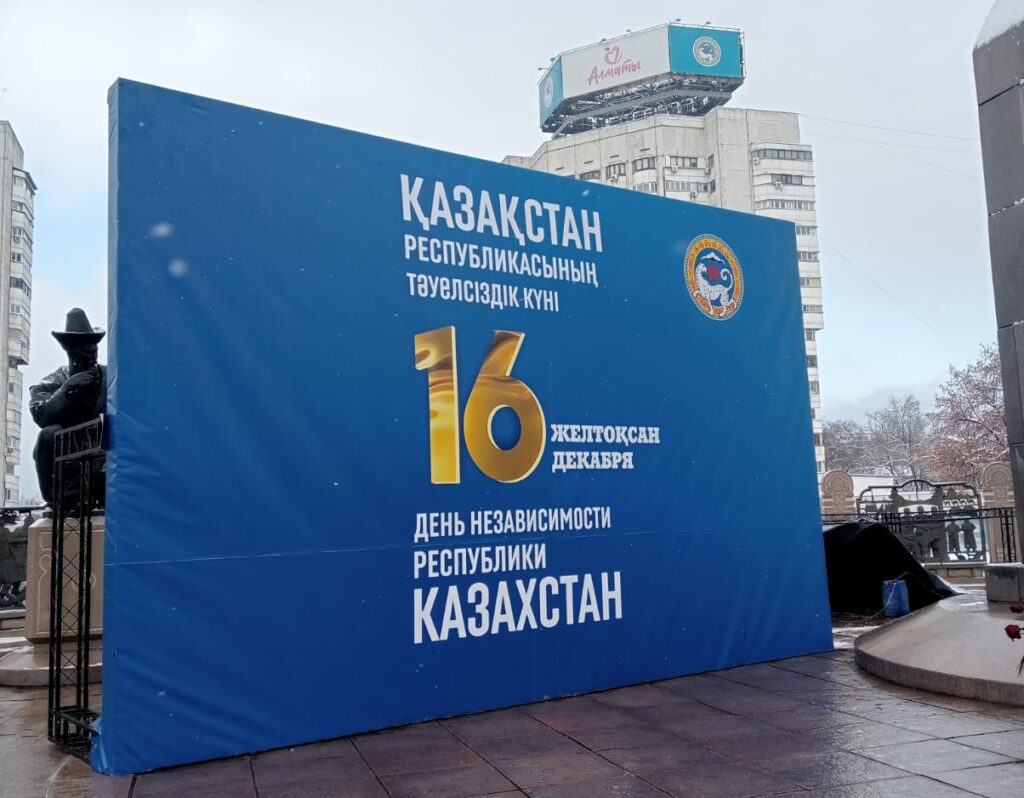
On December 16, Kazakhstan marks Independence Day, commemorating the adoption of the Law on Independence and State Sovereignty of the Republic of Kazakhstan in 1991. Until 2022, the country observed this holiday over two days - December 16 and 17 - but recent legislative changes have reduced the celebration to a single day. The amendments to the Law on Holidays in the Republic of Kazakhstan, adopted in September 2022, redefined the country’s official holidays. Republic Day on October 25 regained its national holiday status, while December 1 - Day of the First President - was removed as a public holiday. Independence Day, while still classified as a state holiday, was given a more somber tone, with official emphasis placed on honoring the sacrifices that paved the way to sovereignty. [caption id="attachment_26631" align="aligncenter" width="1204"] @TCA, Askar KubaizhanovIndependence monument[/caption] From Republic Day to Independence Day The roots of Republic Day lie in Kazakhstan’s Declaration of State Sovereignty, adopted on October 25, 1990, as the Soviet Union was nearing its collapse. The declaration symbolized Kazakhstan’s first step toward independence. However, following the country’s full independence in 1991, December 16 became the primary national holiday. Republic Day lost its significance in 2009 but was reinstated as a national holiday in 2022. President Kassym-Jomart Tokayev, in his proposal to restore Republic Day, emphasized its role as the foundation of Kazakhstan’s independence journey. He suggested that Independence Day, while significant, should serve as a time for mourning and remembrance to honor those who contributed to the country’s sovereignty. [caption id="attachment_26632" align="aligncenter" width="1600"] @TCA, Askar Kubaizhanov[/caption] The Legacy of December 1986: Zheltoksan Protests December 16 carries weighty historical significance for Kazakhstan. On this day in 1986, protests erupted in Alma-Ata (now Almaty) after Moscow appointed Gennady Kolbin - a Soviet official with no prior ties to Kazakhstan - as head of the Kazakh SSR. Young Kazakh protesters demanded the application of the Korenization principle, which advocated for local leadership in Soviet republics. The protests, often viewed as a precursor to Kazakhstan’s independence movement, were violently suppressed by Soviet authorities. The operation reportedly codenamed “Blizzard,” was designed to provoke unrest and then crush it through bloodshed. Controversially, Nursultan Nazarbayev, who would later become Kazakhstan’s first president, was aligned with Soviet power at the time. In his memoir "Without Right and Left, "Nazarbayev claimed he led one of the protest columns during the demonstrations. For many Kazakh citizens, particularly those who participated in or were affected by the events, December 16-17 remain days of mourning. Almaty’s Peace Street was renamed Zheltoksan Street to honor the memory of the victims. December 2011: The Zhanaozen Tragedy The somber tone surrounding Independence Day was reinforced by the events of December 16, 2011, in Zhanaozen. For months prior, oil workers in the Mangystau region had been on strike, demanding better wages. The protests escalated when workers occupied the city’s central square. On Independence Day, clashes broke out between protesters and local officials during holiday celebrations. The situation turned violent when a group of...

Kazakhstan Develops Program to Revive Famous Aport Apple Variety

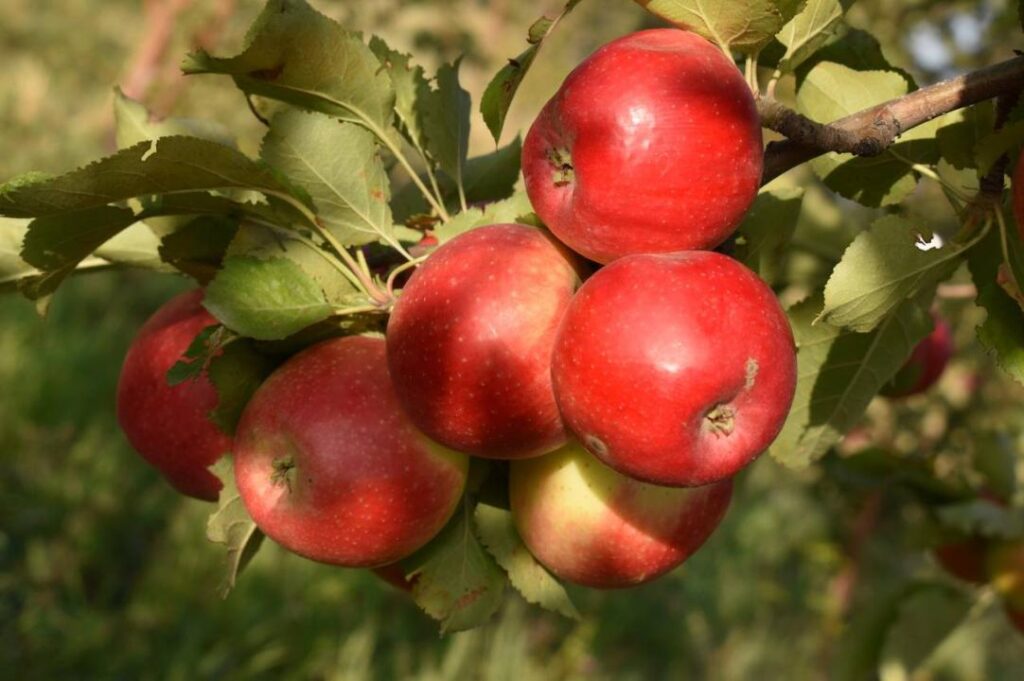
Kazakhstan's Ministry of Agriculture in cooperation with the National Agrarian Scientific and Educational Center have launched a program to revive the legendary Kazakh apple variety - aport. Aport is a capricious variety that requires special cultivation conditions. Quality apples can only be produced in orchards growing 850-1,250 meters above sea level. There are few such areas in the foothills of Almaty and the nearby region. Unlike other apple varieties, which begin to bear fruit in 4-6 years, aport needs 8-9 years to give a first harvest. Nevertheless, aport apples, distinguished by their large size, distinct smell, and succulent nature, are in great demand. The aport revival program, designed for 2024-2028, involves private investors and specialized nurseries. The program will grow the required number of saplings to begin the full-scale commercial cultivation of apple orchards. In the first stage, in 2024, the seeds of the Sievers apple tree were collected, and the development of national standards for growing Kazakhstan's aport began. In 2025, seedlings will be planted on ten hectares to become a mother garden supplying saplings for nurseries. During the next two years, it is planned to grow a sufficient number of saplings to plant an orchard on 100 hectares. Later, aport saplings will be offered to private gardeners for commercial cultivation. In 1970, there were 3.8 million aport trees in Kazakhstan, but by 1984, only 1.4 million remained. In 2012, scientific research began on the revival and rejuvenation of the variety, including establishing an experimental garden of aport grafted onto Sievers apple trees. In 2023, Kazakh scholars harvested the first large fruits weighing 400-500 g. Kazakhstan is the birthplace of apples — particularly the famous aport apples, which grow in the Almaty region. Translated from Kazakh, Almaty roughly means “place of abundance of apples.” One of Almaty's main landmarks, the first sight to greet visitors to Mount Kok-Tobe, which looms over the city, is a granite statue of an apple with water gushing from its core.

Almaty Uncovered: Locals Reveal Must-Visit Spots and Hidden Gems

Almaty is a city filled with history, warmth and a variety of unique places. For each resident this city is special, and each corner of it evokes their own feelings and associations. TCA spoke to Almaty residents of different ages and professions about which places they consider their favorites.   Damir, 19, student programmer: “I don't have a specific favorite place in Almaty, but there is one associated with my childhood memories - the Green Bazaar. As a child, I often went there with my mother to buy fresh produce, and every trip to the market was a real adventure for me. I used to look with interest at the showcases with fruits and spices, enjoying the unique atmosphere of the place. The Green Bazaar is not just a market, but a living museum filled with aromas and sounds that I associate with my childhood.” [caption id="attachment_23549" align="aligncenter" width="1200"] Shymbulak; image: Kalabaha1969[/caption] Serikzhan, 22, English teacher “My favorite place in Almaty is Shymbulak. In both winter and summer, there’s a lot to do here: skiing, hiking in the mountains, parties and events. If you want to take a break from the hustle and bustle of the city, you can just walk along the trails and enjoy the views. Shymbulak isn’t just a ski resort, but a source of many warm memories, as my family and I used to come here often, even on weekdays after school.”   Amir, 27, designer and SMM specialist: “My favorite place in Almaty is a small burger shop called Kuropatka. There are always a few people there. It's not a place of high cuisine, but the prices are very affordable and the burgers are incredibly tasty. However, it's not even about the food, it's about the memories. It was the starting point of my adventures with friends who have now left Kazakhstan. Years later, our favorite meeting place remains unchanged, preserving a piece of the past.” [caption id="attachment_23548" align="aligncenter" width="1200"] Botanical Gardens, Almaty; image: Dianakz[/caption] Raihan, 41, interior designer: “Almaty is my favorite city. I adore it for its green parks, quiet squares and for its unique seasons - be it crisp snow in the winter or rustling leaves in the fall. Every morning I savor the mountain views and watch sunsets drenched in a multitude of hues. This city is also known for its old Soviet modernist architecture, and the fountains in the summer lend a welcome coolness. For me, Almaty is a city of endless festivals, performances and creative meetings.” [caption id="attachment_23550" align="aligncenter" width="1200"] Tamgaly-Tas; image: Mheidegger[/caption] Myktybek, 19, targetologist “Tamgaly-Tas is one of the most interesting places in the vicinity of Almaty. It’s a place with unusual rocks on which you can see ancient inscriptions, petroglyphs, and images of Buddha. The historical and cultural value of this place is huge. It connects us with ancient times and gives us a feeling of something eternal. Walking among these rocks is like traveling back in time, where every stone has its own story to...

Start of Robot Deliveries in Almaty

Almaty is now  using Yandex Qazaqstan robots for home deliveries of orders from restaurants and cafes via its Yandex Go service. Equipped with sensors, including lidar and cameras, which enable them to recognize objects and avoid obstacles and  pedestrians, as well as a neural network system capable of recognizing traffic lights and road signs, the robots move independently around the city. With a capacity of 60 liters, each robot's cargo compartment can accommodate, for example, several pizzas and drinks, accessed by customers via the Yandex Go app. During the first phase, the robots will operate within one city district but in time, travel further afield and expand connections between new cafes and restaurants. Welcoming the initiative, Zhanabek Olzhas Nurzhanuly, head of Almaty's digitalization department, said the use of the robots could help  make the city greener and more convenient for residents. In addition to making deliveries, robots have also appeared in Yandex Maps, where they can replace the usual navigation cursor via a simple app. update. Delivery robots are actively used in several countries. For example, Starship Technologies' robots have already made over 5 million deliveries in Estonia, the UK, and U.S.  In the latter, in partnership with Grubhub, they mainly serve university campuses, and in Europe, robots deliver food and goods via apps such as Bolt Food,