• KGS/USD = 0.01144 0%
  • KZT/USD = 0.00210 0%
  • TJS/USD = 0.10528 0.19%
  • UZS/USD = 0.00008 0%
  • TMT/USD = 0.28571 0.28%
  • KGS/USD = 0.01144 0%
  • KZT/USD = 0.00210 0%
  • TJS/USD = 0.10528 0.19%
  • UZS/USD = 0.00008 0%
  • TMT/USD = 0.28571 0.28%
  • KGS/USD = 0.01144 0%
  • KZT/USD = 0.00210 0%
  • TJS/USD = 0.10528 0.19%
  • UZS/USD = 0.00008 0%
  • TMT/USD = 0.28571 0.28%
  • KGS/USD = 0.01144 0%
  • KZT/USD = 0.00210 0%
  • TJS/USD = 0.10528 0.19%
  • UZS/USD = 0.00008 0%
  • TMT/USD = 0.28571 0.28%
  • KGS/USD = 0.01144 0%
  • KZT/USD = 0.00210 0%
  • TJS/USD = 0.10528 0.19%
  • UZS/USD = 0.00008 0%
  • TMT/USD = 0.28571 0.28%
  • KGS/USD = 0.01144 0%
  • KZT/USD = 0.00210 0%
  • TJS/USD = 0.10528 0.19%
  • UZS/USD = 0.00008 0%
  • TMT/USD = 0.28571 0.28%
  • KGS/USD = 0.01144 0%
  • KZT/USD = 0.00210 0%
  • TJS/USD = 0.10528 0.19%
  • UZS/USD = 0.00008 0%
  • TMT/USD = 0.28571 0.28%
  • KGS/USD = 0.01144 0%
  • KZT/USD = 0.00210 0%
  • TJS/USD = 0.10528 0.19%
  • UZS/USD = 0.00008 0%
  • TMT/USD = 0.28571 0.28%

Viewing results 1 - 6 of 117

Decolonial Futurism: A Focus on Kazakhstan’s Pavilion at the 60th Venice Biennale

Kazakh artists have traditionally been marginalized in the global art scene due to political intricacies and a complex cultural identity. With historical influences and colonization by both Russia and China, Kazakh artists are now carving out a unique artistic identity and sharing it with international audiences. The Kazakh pavilion "Jerūiyq: Journey Beyond the Horizon" at the 60th International Art Exhibition of the Venice Biennale, from April 20 to November 24, represents a major milestone in changing perceptions of Kazakh art. Staged in the Naval Historical Museum, the exhibition reinterprets the ancient legend of Jerūiyq, drawing inspiration from Kazakh myths and the visionary journey of the 15th-century philosopher Asan Kaigy. The word "kaigy" means "pain" in Kazakh, symbolizing the nation's traumatic encounters with modernity's darker aspects: the devastating famine of the 1930s, the craters left by nuclear tests in Semey, the shrinking of the Aral Sea, and the wounds inflicted on the Kazakh landscape. The exhibition traces the evolution of Kazakh utopian imagination from the 1970s to today through artists’ visions of ideal worlds, where their utopian imagination merges with the artistic movement of "decolonial futurism." On behalf of TCA, Naima Morelli interviewed curator Anvar Musrepov on the concept and significance of Kazakhstan's participation in the Venice Biennale. TCA: How did the idea for the Kazak pavilion “Jerūiyq: Journey Beyond the Horizon” evolve? A.M: In our curatorial research, we found that the theme of utopia and futuristic imagination has concerned several generations of Kazakhstan's artists since the 1970s. Using this as a starting point, we decided to establish, in chronological order, a collection of works by multiple generations of artists. Divided by decades, the collection manifested a wave of Kazakh futurism, including themes of spirituality, cosmism, nomadism, and utopian ideas. This in turn, will help formulate a term to comprehensively describe and unite all these intuitions that have concerned Kazakh artists in different historical periods. [caption id="attachment_18933" align="aligncenter" width="522"] Sergey Maslov, "Baikonur" at the Venice Biennale [/caption]   TCA: The exhibition’s title alludes to the ancient legend of Jerūiyq. What is it about and  how have you interpreted it? A.M: Jeruiq is an ancient legend about a utopian land that according to many myths, was sought by Asan Kaigy, advisor to the first Kazakh khans Zhanibek and Kerey. Legend describes it as a land that has fermented, a place where time has stopped, a land full of vividness, devoid of disease or longing. We found in this ancient Kazakh legend, an ideal metaphor to unite all the intuitions presented in the exhibition and manifest the chronology of post-nomadic futuristic imagination. If established, the definition of this unique phenomenon, could become a movement in Kazakh art. TCA: What can you tell us about the philosopher Asan Kaigy? A.M: Asan Kaigy is a quasi-historical character who features in Kazakhstan’s rich oral tradition where history and memory are passed down from mouth to mouth. Every region of Kazakhstan has local legends about miracles performed by Asan Kaigy. One such legend says that he found...
VI ECG Film Festival Goes Beyond the Moving Image

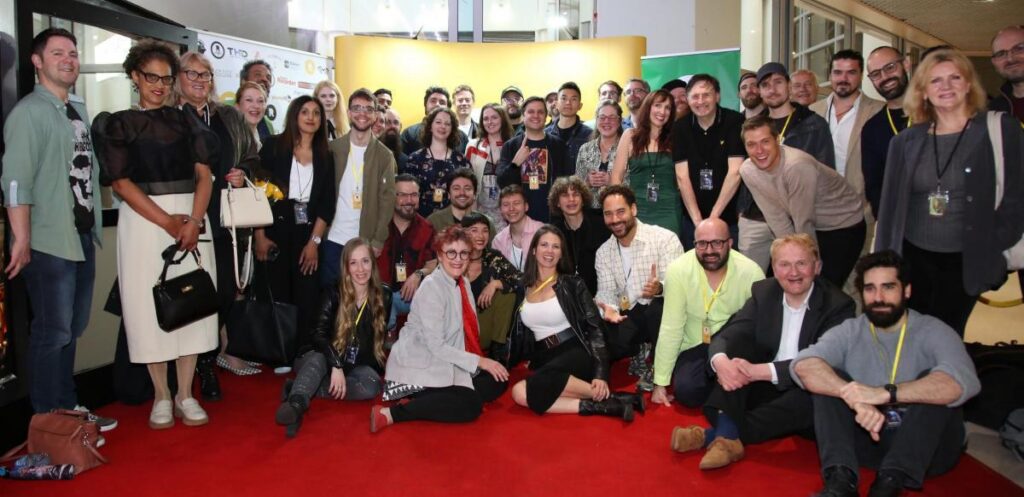
The VI ECG Film Festival staged in London from 24-28 May, in partnership with the eighth UK Romford Film Festival at Premier Cinemas Romford, attracted over 100 entries from 22 countries. The Eurasian Creative Guild (ECG) is the sole platform promoting Eurasian cinema in the UK and this year’s festival featured work by directors from Poland, the UK, Kyrgyzstan, Spain, Russia, Iran, Uzbekistan, China, Armenia, and Kuwait. The non-profit organization was founded by Marat Ahmedjanov in London in 2015 to unite and promote Eurasian cultural and artistic practices to English-speakers, and as befits its mission, the festival went far beyond the ‘moving image’ to showcase work by visual artists, authors, poets, and musicians. In film, the competition attracted over 100 competition entries from 22 countries and with support from  SIFFA film festival organiser Lubov Balagova-Kandur, included screenings of several Russian films such as the comedy ‘Aul's Challenge;’ the war drama ‘Maria. Save Moscow;’ a documentary on the poet ‘3723 Voznesensky’, and a Jordanian love story ‘Cherkes’. Central Asian films took several awards, including Best Eurasian Short film: ‘Happy Independence Day’ by Camila Sagyntkan (Kazakhstan); Best Eurasian Documentary Film: Sailing Seven Seas by Tatania Borsh (Russia-Kyrgyzstan); Audience Choice Award: ‘Sharaf Rashidov- Inspirer for the Development of Mirzachul’ by  Shukhrat Khaitov (Uzbekistan); and the Honorary Achievement Certificate for Documentary Drama: ‘Behtarin’ by Mohsen Rahimi (Kuwait-Tajikistan). Visual artists from Kyrgyzstan took centre stage in the exhibition ‘‘Nomadic Narratives’, which also highlighted work by Dungan artist Rahima Arli, created during her ECG Horizons Rugby residency near London. ECG has a long and ongoing tradition of publishing works by Central Asian writers which would otherwise remain inaccessible to English readers, under Hertfordshire Press. Editor John Farndon took pleasure in presenting three new stories under the collective title ‘Akhriman, Lord of Darkness’ by highly renowned Tajik author Gulsifat Shahidi, as well as ‘Is It Necessary to Worship at Notre Dame?’ by Kazakh author Alikhan Zhaksylyk. Lovers of literature also enjoyed the opportunity to view the Kazat Akmatov Memorial in Romford, which both honours the esteemed Kyrgyz writer and serves as a beacon of strength for all Central Asian artists living and visiting London. The well-established Azerbaijani poet Sahib Mamedov read poems which he dedicated to the festival participants. Music too, featured highly at the event. In addition to a concert, medals of appreciation from Marta Brassart, ECG Chair, were presented to the musical duo Sherkhon, alongside artist Rahima Arli and young film director Timur Akhmedjanov, and recitals given by the duo from Uzbekistan Sherxon and the director of the Kazakh Cultural Centre in London, Kamshat Kumysbai. Now in its sixth season, the festival continues to gather momentum and this year, attracted audiences from Italy, Kazakhstan, Poland, USA, Russia, Kyrgyzstan, Austria, and Uzbekistan, and welcomed as guests of honour, the Mayor of Romford, Gerry O'Sullivan with MPs from the London Borough of Havering, and representatives from the embassies of Kyrgyzstan, Uzbekistan, Tajikistan, Russia and Belarus. As testimony to ECG’s unique promotion of Eurasian film, cinema audiences were...

Kazakhstan’s Goodwill Ambassadors

A Goodwill Ambassadors of Kazakhstan project has been newly launched by Kazakhstan’s Ministry of Foreign Affairs. Initiated by President Kassym-Jomart Tokayev, the project aims to increase the country’s visibility and promote its achievements abroad. Under the scheme, Kazakhs excelling in art, sports, science, medicine, and other fields are enlisted to expand cultural and humanitarian communications by serving as conduits of peace, friendship, and international solidarity. Addressing the ‘ambassadors’ at the launch ceremony on June 6, Deputy Prime Minister–Minister of Foreign Affairs of Kazakhstan Murat Nurtleu announced: “In an unprecedented geopolitical environment, public and cultural-humanitarian diplomacy is becoming increasingly in demand. Thanks to your victories and outstanding performances on world stages, arenas, and conferences, our turquoise flag is raised across the globe, and our national anthem resounds with pride.” The profile of participants, publicly recognized for their contribution in shaping a positive image of the country internationally, is wide-ranging and to date, includes: Violin virtuoso, conductor, and director of the Alliance of Orchestras of the Asia-Pacific region Marat Bisengaliev; Olympic champion cyclist Alexander Vinokurov; artist and anti-nuclear activist Karikbek Kuyukov; pop singer Mirhidai Mirfarukh, known globally by his stage name Adam; Chairman of the Executive Board of the University Medical Center Corporate Fund and cardiac surgeon Yuri Pya; political scientist and historical map researcher Mukhit-Ardager Sydyknazarov; chief conductor of the State Academic Folklore and Ethnographic Orchestra named after Tlendiyev “Otyrar Sazy” Dinara Tlendiyeva; and powerlifting world record holder and Guinness Book record holder Sergey Tsyrulnikov.    

Sixth Eurasia Creative Guild Film Festival to be Held in the U.K.

From May 24-28, Premier Cinemas Romford will host the Eurasia Creative Guild (ECG) Film Festival, in collaboration with the Romford Film Festival for the sixth consecutive year, featuring a diverse line-up of films from across the globe. Founded by the ECG to foster deeper cultural ties and understanding, the festival will feature 100 submissions from 22 countries, with movies from Spain, Kazakhstan, Kuwait, the U.K., Iran, Uzbekistan, Russia, Cyprus, Kyrgyzstan, Jordan, Tajikistan, Armenia, and China. In addition to the competition, there will be a program of educational films. The opening ceremony will feature an exhibition of original work by Central Asian artists, headlined by Rahima Makhmut from Kyrgyzstan, and a presentation by Gulsifat Shakhidi, a renowned writer from Tajikistan, of her latest book. On May 28, the ECG will present awards for the Best Eurasian Film, Best Short Film, Best Documentary, and Best Screenplay.

Uzbekistan Opens New  Museum Commemorating WW2 Japanese POWs

On 30 April, Uzbekistan Minister of Ecology, Environmental Protection and Climate Change Aziz Abdukhakimov  joined by Ambassador of Japan to Uzbekistan Hatori Takashi, founder and director of the museum, Jalil Sultanov, and representatives of the Japan Society in Uzbekistan to celebrate the opening of a new museum in Tashkent commemorating Japanese prisoners of war. Over 20,000 Japanese POWs captured by the Soviet Union during the second world war, were interned in Uzbekistan between 1945-1950. During this period, the prisoners were dispersed across the country to construct buildings, dams, and roads in regions including Angren, Bekabad, and Kokand, and in Tashkent, built the Alisher Navoi Opera Theatre, the Mukini Theatre, the Central Telegraph and Ministry of Culture, as well as barracks still in use today. According to estimates, 817 died in the process. The new premises, under construction since 2023, replace the original museum founded in May 1998. Housing photographs, documents, and artefacts, such as prisoners’ workwear and a wooden crib made for the local market, the collections testify to the lives of Japanese POWs in Uzbekistan, and given a new lease of life, are expected to become a major draw for Japanese tourists visiting the country.

Development of Kazakhstan’s Cinematography: An Inside Look – An Interview with Kazakh Actor, Abay Kazbayev, on Kazakhstan’s Film Industry and its Prospects for Development

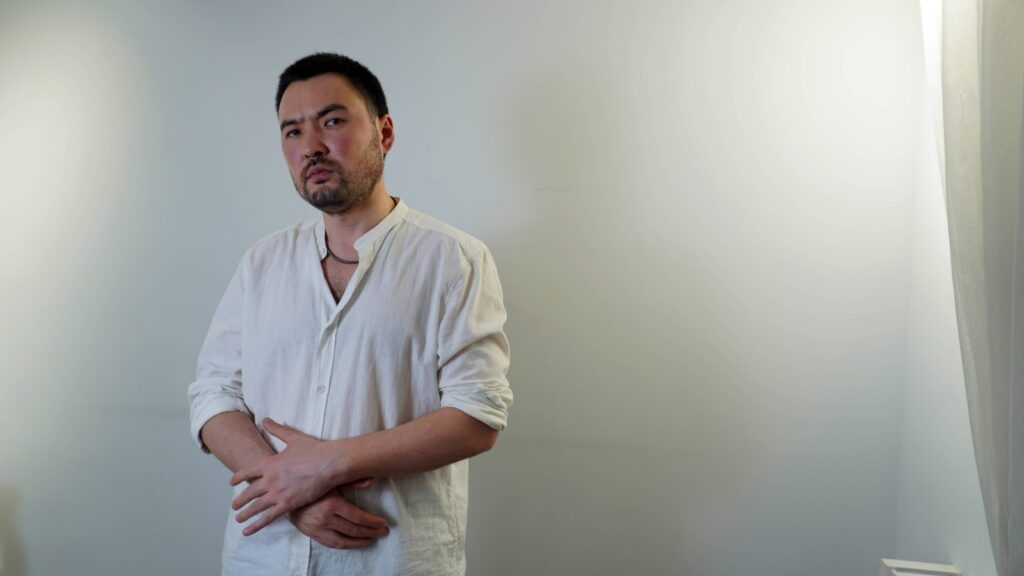
Kazakhstan's film industry is attracting more and more attention globally, and many talented actors are contributing to its development. One such theater and film actor is Abay Kazbayev, who agreed to share his experience and vision of the industry.   How did you start in the industry?   I have no specialized education, but I’m constantly learning. I started to explore a career path as an actor at the age of 33, after trying my hand in many different fields.  I’m now actively engaged in developing my range, from plasticity to internal monologue. To date, I’ve worked on series such as Shahristan, Upperty, and Shabashniki. Shooting the latter, I had to shave my head for the role, which looked strange. In general, I like to experiment on the image. It’s interesting to observe the change of type. I also worked on two theater projects, on one of which I was lucky enough to work with Saulius Varnas, a European theater director. He staged the play, A House in the Middle of Spring, based on Eugene Ionesco's script, Hunger and Thirst. On this project, I worked with such professionals as Marat Amiraev, Altynshash Shayakhmetova, Sharim Dostay, and others. In my second theater project, I had the lead role, but, unfortunately, we managed to stage just one private performance. (Shakhrisatn is a Kazakh detective thriller from 2023; Marat Amiraev is a famous Kazakh actor who starred in such series as 5:32 and Prisoners; Altynshash Shayakhmetova is a Kazakh actress who starred in such series as Boztorgai and Bir Toksan.)   How do you perceive the evolution of Kazakhstan's cinematography over the past decades? What key changes have taken place, in your opinion?   It is difficult to talk about decades, as ten years ago, I was in a completely different sphere. But I can say that coming to the movie theater I can now watch one or two of our domestic films, which certainly pleases me. Ten or twenty years ago, the release of a Kazakhstani film in theaters was something of an event, but it’s now become the norm. Many people criticize our movies for being limited to comedies and crime dramas but I for one, greatly enjoy movies such as Business in the Kazakh Way. It is still too early to talk about (local movies) as an industry, since to my mind, it doesn’t exist as such. Having said that, we have plenty of people engaged in creating movies: directors, producers, actors, - actors turned directors, actors turned producers, and vice versa. A highlight for me, was the movie Nomad. Released about twenty years ago, it ignited the dreams of many aspiring artists many of whom have since made a name for themselves, including Sanjar Madi, who starred in many of its scenes. Other key events include Akan Satayev's The Racketeer which came out a few years after Nomad, followed by Farhat Sharipov's The Tale of the Pink Hare. Both provided a wave of new faces and young blood to...