• KZT/USD = 0.00210
  • TJS/USD = 0.10810
  • UZS/USD = 0.00008
  • TMT/USD = 0.29850
  • KZT/USD = 0.00210
  • TJS/USD = 0.10810
  • UZS/USD = 0.00008
  • TMT/USD = 0.29850
  • KZT/USD = 0.00210
  • TJS/USD = 0.10810
  • UZS/USD = 0.00008
  • TMT/USD = 0.29850
  • KZT/USD = 0.00210
  • TJS/USD = 0.10810
  • UZS/USD = 0.00008
  • TMT/USD = 0.29850
  • KZT/USD = 0.00210
  • TJS/USD = 0.10810
  • UZS/USD = 0.00008
  • TMT/USD = 0.29850
  • KZT/USD = 0.00210
  • TJS/USD = 0.10810
  • UZS/USD = 0.00008
  • TMT/USD = 0.29850
  • KZT/USD = 0.00210
  • TJS/USD = 0.10810
  • UZS/USD = 0.00008
  • TMT/USD = 0.29850
  • KZT/USD = 0.00210
  • TJS/USD = 0.10810
  • UZS/USD = 0.00008
  • TMT/USD = 0.29850

Viewing results 1 - 6 of 37

Trump Signals G20 Invitation in Outreach to Kazakhstan and Uzbekistan

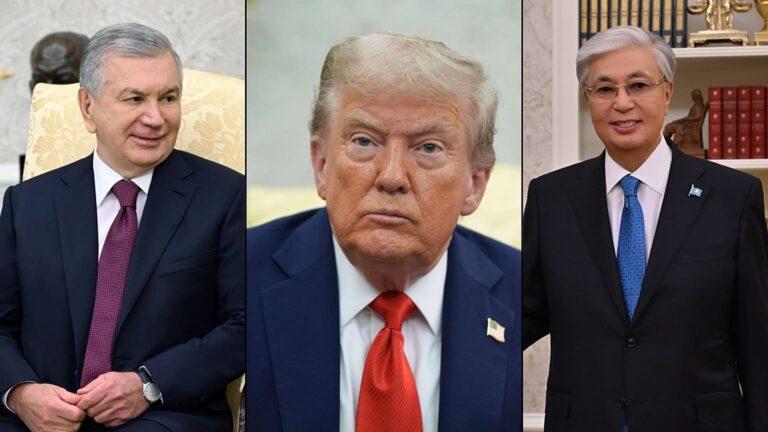
Recent telephone conversations between the presidents of Kazakhstan and Uzbekistan and United States President Donald Trump have generated significant international attention. Beyond routine diplomatic communication, the exchanges carry broader geopolitical implications for Central Asia. Trump has publicly stated his intention to invite the leaders of both countries to the G20 summit, which the United States will host in Miami in 2026. The announcement drew widespread international media coverage, highlighting growing global interest in the region. Official statements from Kazakhstan’s presidential office said that President Kassym-Jomart Tokayev held a lengthy conversation with Trump that covered a range of issues, including the conflict in Ukraine. Tokayev described the situation as complex, noting that territorial concerns remain central and require realistic compromises. He reiterated Kazakhstan’s readiness to offer a platform for negotiations, while clarifying that the country does not seek to act as a mediator. Notably, Kazakhstan’s official summary did not mention a potential G20 invitation, nor did the U.S. readout refer to peace talks. Uzbekistan’s statement likewise focused on strengthened political engagement, the launch of joint projects worth billions of dollars, the establishment of an American-Uzbek Business and Investment Council, and expanded regional cooperation, including within the C5+1 format, without explicitly mentioning the G20 summit Despite these omissions, Trump confirmed on his social network Truth Social that the U.S. plans to host the G20 next year and intends to invite the presidents of Kazakhstan and Uzbekistan as guests. At this stage, the announcement appears to be an expression of intent rather than a formal invitation. Nevertheless, the signal marks a notable shift in U.S. foreign policy priorities toward Central Asia. Even guest invitations for Kazakhstan and Uzbekistan would amount to recognition of their growing roles as “middle powers” in global affairs, giving them a rare platform to engage directly with the world’s leading economies. Regional Context and Broader Dynamics The timing of the calls is significant. They followed an informal meeting of Commonwealth of Independent States (CIS) leaders in St. Petersburg, an event observers characterized as largely ceremonial. The summit was marked by the conspicuous absence of Azerbaijan’s president, who cited scheduling conflicts for his nonattendance. Preparations for the 2026 G20 summit are already underway. In mid-December, the first meeting of G20 Sherpas was held in Washington, bringing together representatives from the world’s leading economies and international organizations. Poland was invited as the only full guest of the U.S. presidency for this meeting. The State Department outlined key priorities for the upcoming summit: stimulating economic growth, ensuring access to reliable and affordable energy, and advancing innovative technologies. While the G20 is a forum rather than a formal international organization, and its decisions are advisory and shaped by differing member interests, participation would still provide Kazakhstan and Uzbekistan with an influential platform. Direct engagement at this level would allow both countries to present their priorities on economic development and sustainable growth to a global audience.

American Companies Explore Investment Prospects in Tajikistan

President Emomali Rahmon’s recent visit to the U.S. has sparked renewed interest in the Tajik economy. In New York, a major investment forum showcased large-scale development projects to American companies from hydropower initiatives to green data centers. U.S.-Central Asia Engagement via C5+1 An event titled Presentation on Tajikistan’s Investment Opportunities was held at the Vista LIC Hotel in New York. It was organized by the state-owned Tajinvest enterprise with support from the State Committee for Investment of Tajikistan and the U.S., Tajikistan Business Council. The gathering marked the tenth anniversary of the C5+1 platform, a regional framework for economic cooperation between the U.S. and Central Asia. Timed to coincide with Rahmon’s official visit to Washington, the event was designed to promote Tajikistan’s economic potential to U.S. businesses. Jonibek Ismoil Hikmat, Tajikistan’s permanent representative to the United Nations, opened the event with a speech emphasizing the country’s strategic aspirations. “Today, we are creating a new Silk Road, not of caravans and goods, but of ideas, innovations, and investments,” he stated. Elena Son, Executive Director of the U.S.-Tajikistan Business Council, encouraged American firms to more actively explore the Tajik market. She shared her experience accompanying major U.S. companies to Dushanbe, affirming that Tajikistan is increasingly ready for serious investment. “They sometimes take a long time to get started, but once they do, no one can catch up with them,” she noted, describing the pace of Tajik partners once projects are underway. Investment Mechanisms and Key Projects Tajinvest CEO Dilshod Jurazoda delivered a presentation titled How to Invest in Tajikistan? He outlined legislative guarantees, investor support mechanisms, and the implementation of a One-Stop-Shop model within Tajinvest to streamline business entry. Jurazoda highlighted a portfolio of strategic projects open to foreign investment, including: Dushanbe Mall Dushanbe Arena Hall Expo Center Dushanbe Sugdbarktaminot energy complex Mehrgon agro-cultural complex in Sughd Green data centers leveraging Tajikistan’s hydropower capacity Tourism infrastructure development projects U.S. Businesses Signal Interest The event featured interactive sessions, with participants pitching projects, engaging in open discussions, and networking in an informal setting. Representatives of major U.S. investment and tech firms were in attendance, including Edward Mermelstein (Atlantic Bridge Capital), Val Kogan (Mid-Atlantic-Eurasia Business Council), Burke McCormack (Ardmore Capital), Mack Kerker and David Halpert (Penataran), Leon Nektalov (Leon Diamond), Sam Bousfield (Samson Sky), and Erkin Mustafokulov (United Bros LC). The U.S. delegation stressed that direct dialogue with Tajik officials offered valuable insights into the local market and practical opportunities for cooperation. The New York presentation underscored growing American interest in Tajikistan. With major projects on offer, abundant energy resources, and demonstrated government support, prospects for deepening bilateral economic ties appear increasingly favorable.

Tajikistan and the U.S. Sign Agreements Worth Over $3.2 Billion

On the sidelines of the second Central Asia-U.S. Summit (C5+1) held in Washington, Tajikistan signed a series of agreements with American companies totaling more than $3.2 billion. The deals span the aviation, digital technology, artificial intelligence, energy, and manufacturing sectors. Landmark Agreement with Boeing The largest deal involves Tajik airline Somon Air, which plans to purchase 14 Boeing aircraft and aviation systems valued at $3.2 billion. The U.S. State Department described the agreement as a milestone that will “strengthen confidence in American aerospace technology” and noted it as the most significant aviation contract ever signed between the two countries. The second largest agreement was concluded with U.S. based Transparent Earth. The $32.5 million deal includes remote sensing technologies and technical assistance to improve efficiency in Tajikistan’s mining and agricultural sectors. In the digital sphere, Tajikistan reached an agreement with Starlink to expand satellite internet access. The initiative aims to enhance connectivity in the country’s remote mountainous. regions, facilitating digital inclusion and expanding online services. Artificial Intelligence, Infrastructure, and Industry A separate set of agreements focuses on artificial intelligence. U.S. tech firm Perplexity AI and Tajik startup zypl.ai signed a landmark agreement to develop the world’s first AI-based agent browser tailored for government use. According to the developers, this innovation is designed to boost the efficiency of public administration and solidify Tajikistan’s emerging role in digital governance. Additionally, SuperMicro, Cerebris, and zypl.ai will collaborate on the development of AI-powered data centers. To support this infrastructure, Tajikistan plans to build 1 GW of hydroelectric capacity, laying the groundwork for the country to evolve into a regional IT hub. In the manufacturing sector, Coca-Cola will invest $9 million in expanding its Dushanbe plant, boosting production and strengthening its market position in Tajikistan. According to the U.S. State Department, these agreements are expected to generate thousands of jobs and stimulate “billions of dollars in U.S. exports.” A New Chapter in Tajik-U.S. Relations On November 6, President Emomali Rahmon met with U.S. President Donald Trump in Washington. The two leaders discussed cooperation in critical minerals, digital technology, and aviation modernization, with a particular focus on boosting trade and investment. More than 70 U.S. affiliated companies are currently operating in Tajikistan. The summit also featured a C5+1 business conference, during which Tajikistan showcased its investment projects and export potential to an international audience. Following the forum, President Trump described the gathering as the start of “a wonderful new relationship between the United States and the countries of Central Asia,” and reiterated the strategic importance of the region, stating the U.S. is ready to “actively engage in Eurasia”.

“President of Peace” or “President of the World”? Mirziyoyev’s Interpreter Draws Attention During Comments on Trump

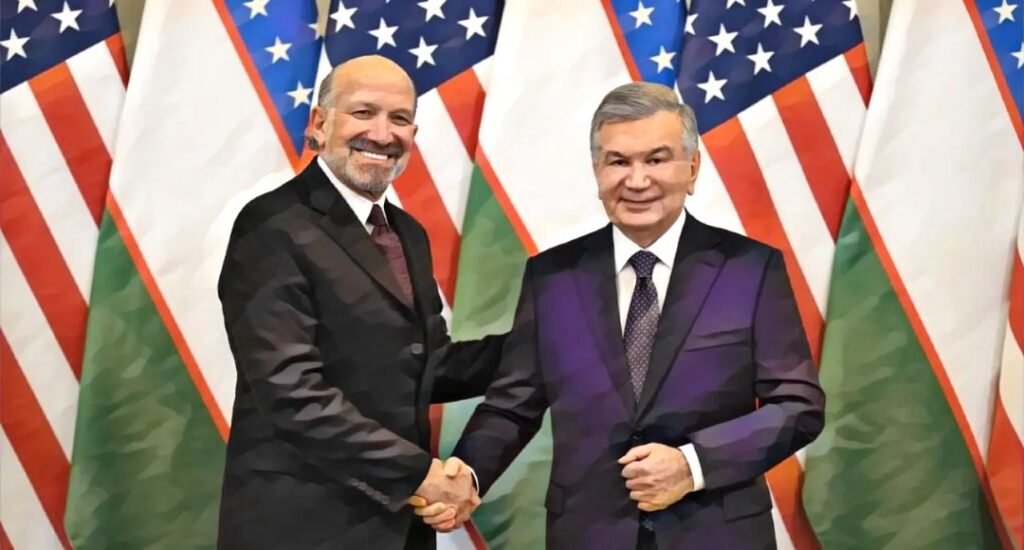
President Shavkat Mirziyoyev’s remarks at the recent C5+1 summit in Washington drew international attention following a translation error reported in several foreign media outlets. According to his press service, Mirziyoyev told U.S. President Donald Trump that people in Uzbekistan refer to him as a “president of peace,” citing what he described as Trump’s role in helping resolve multiple armed conflicts. However, the simultaneous interpreter rendered the phrase as “president of the world,” leading international media, including Reuters, to report that Mirziyoyev had used that expression. The two leaders had previously met on 23 September at the United Nations headquarters. During that meeting, Mirziyoyev congratulated Trump for contributing to the resolution of “seven conflicts,” specifically mentioning the settlement between Azerbaijan and Armenia. The Uzbek news outlet Kun.uz later published a full translation of the conversation in Uzbek. According to that report, Mirziyoyev also stated that Trump was deserving of a Nobel Prize, although this remark was not translated during the meeting. The renewed attention came as Trump announced what he described on Truth Social as an “incredible Trade and Economic Deal” between the United States and Uzbekistan. According to the U.S. president, Uzbekistan has committed to investing and purchasing nearly $35 billion in key American sectors over the next three years, with expected commitments exceeding $100 billion over the next decade. Trump specified that the sectors include critical minerals, aviation, automotive parts, infrastructure, agriculture, energy, chemicals, and information technology. He thanked Mirziyoyev and said Washington looks forward to a “long and productive partnership.” On the same day, Mirziyoyev joined the leaders of Kazakhstan, Kyrgyzstan, Tajikistan, and Turkmenistan at the C5+1 summit held at the White House and chaired by Trump. During the session, the Uzbek president proposed the creation of a permanent C5+1 Secretariat that would rotate among member states, as well as the establishment of a ministerial coordinating council on investment and trade. He also suggested forming a Central Asian Investment Partnership Fund and a special committee on critical minerals. Additional proposals included collaboration on agricultural technologies, coordination on transport corridors linking Central Asia with the South Caucasus and Europe, and the organization of a cultural heritage exhibition in the United States. Uzbekistan also offered to host the next C5+1 summit in Samarkand.

Washington Shifts C5+1 From Diplomacy to Deals

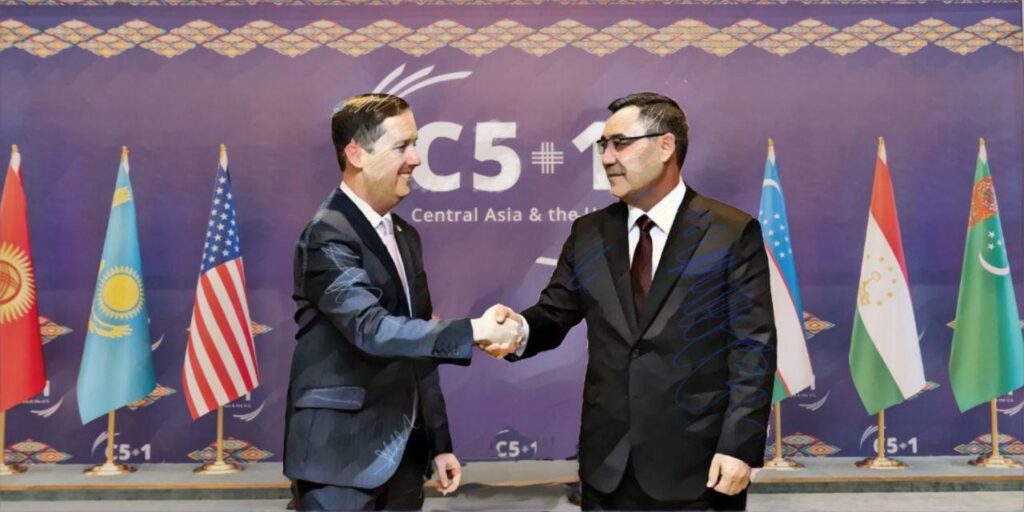
On November 6, 2025, Washington hosted the C5+1 summit, bringing U.S. President Donald Trump together with the leaders of Kazakhstan, Kyrgyzstan, Tajikistan, Turkmenistan, and Uzbekistan. The tone shifted from broad diplomacy to deliverable transactions, with officials emphasizing cooperation on critical raw materials. The timing signified a broader shift in supply chains away from China and Russia, and the discussion moved from general diplomacy to transactions that can be tracked and delivered. The private-sector track also accelerated. The B5+1 (“B” for “business”) platform is meant to carry follow-through on minerals, processing, logistics, and services. It complements state-to-state commitments by putting contract-ready work streams and policy dialogue in the same frame. Verification is simple: match U.S. and host-government readouts with company filings and ministry communiqués issued after the summit. Subsequent notices should specify instruments, values, financing, timelines, and the units responsible. What Was Signed Versus What Was Signaled The summit mixed firm orders with preliminary commitments. Uzbekistan Airways converted eight options for the Boeing 787-9 (covered by FAA Type Certificate Data Sheet T00021SE) into a firm order, bringing its total to twenty-two Dreamliners. That flows into the manufacturer’s backlog and starts financing and ground-side preparation. Tajikistan’s Somon Air announced up to four 787-9s and ten 737 MAX; that signals intent, with binding contracts and financing to follow. Engine families for the 787-9 are Rolls-Royce Trent 1000 TEN and GE Genx-1B, setting maintenance and training paths. Air Astana said it had selected up to fifteen 787-9s. Slot allocation and financing are next, along with sale-and-leaseback or operating-lease decisions. A parallel commercial package aimed to show that U.S.–Central Asia ties can move on a near-term clock, framed publicly through the Department of Commerce’s announced “C5+1 Deal Zone,” earmarked at “over $25 billion.” Rare earths and related inputs sat at the center of the talks. Aviation and other signings were presented as tangible outcomes. The substance rests with the underlying company agreements and national approvals, although the packaging usefully aggregates a single narrative for public consumption. Minerals were cast as the strategic core, even though many projects remain in the early stages. Public readouts emphasized supply-chain resilience and competition with China and Russia. For shipments into the European Union, the bottleneck remains the processing limits set by the EU Critical Raw Materials Act. Customs classification uses the Harmonized System (HS), a universal tariff code maintained by the World Customs Organization (WCO): tungsten falls under HS 8101, while rare-earth metals and their compounds are under HS 2805 and HS 2846. Bankability likewise depends on recognized industry disclosure rules for reporting mineral resources, which require standardized geology, sampling, and reserve estimates before serious financing proceeds. Wire services likewise underscored rare earths and closer cooperation along the value chain. Country Outcomes Kazakhstan. The most tangible non-aviation item was a tungsten venture at Northern Katpar and Upper Kairakty, with an indicated project scope of around $1.1 billion. A Letter of Interest (LOI) from the U.S. Export–Import Bank (EXIM) suggests a figure near $900 million on a 70/30 structure with...

U.S. Secretary of State Marco Rubio Plans Visit to Central Asia in 2026

U.S. Secretary of State Marco Rubio announced on Wednesday his intention to visit all five Central Asian countries in 2026. Rubio made the statement during a meeting with the foreign ministers of Kazakhstan, Kyrgyzstan, Tajikistan, Turkmenistan, and Uzbekistan. The visit is part of a broader diplomatic initiative by U.S. President Donald Trump's administration to strengthen ties with the resource-rich region. Today, the presidents of the five Central Asian republics, Kassym-Jomart Tokayev (Kazakhstan), Sadyr Japarov (Kyrgyzstan), Emomali Rahmon (Tajikistan), Serdar Berdimuhamedov (Turkmenistan), and Shavkat Mirziyoyev (Uzbekistan), are scheduled to meet with President Trump in Washington. The summit is expected to focus on cooperation in the extraction of rare earth elements and other natural resources in Central Asia. Rubio emphasized the alignment of U.S. and Central Asian interests in promoting responsible and sustainable development of the extractive sector. “You are seeking to use the resources that God has blessed your countries with to create responsible development and diversify your economies,” he said at a reception hosted by the State Department. “I personally intend to visit in the coming year. All five [countries], so I know it would probably be a week-long trip. So we’ve got to work on that and make that happen together.” U.S. Deputy Secretary of State Christopher Landau stated that the invitation extended to Central Asian leaders is part of President Trump’s personal initiative to deepen engagement with the region. He highlighted broad opportunities for cooperation in business, investment, and strategic partnerships. Also speaking at the reception, Republican Senator James Risch said he intends to introduce legislation to repeal the Jackson-Vanik amendment, a Cold War-era law that restricts U.S. trade with non-market economies.