• KGS/USD = 0.01143 0%
  • KZT/USD = 0.00213 0%
  • TJS/USD = 0.10593 0.47%
  • UZS/USD = 0.00008 0%
  • TMT/USD = 0.28571 0%
  • KGS/USD = 0.01143 0%
  • KZT/USD = 0.00213 0%
  • TJS/USD = 0.10593 0.47%
  • UZS/USD = 0.00008 0%
  • TMT/USD = 0.28571 0%
  • KGS/USD = 0.01143 0%
  • KZT/USD = 0.00213 0%
  • TJS/USD = 0.10593 0.47%
  • UZS/USD = 0.00008 0%
  • TMT/USD = 0.28571 0%
  • KGS/USD = 0.01143 0%
  • KZT/USD = 0.00213 0%
  • TJS/USD = 0.10593 0.47%
  • UZS/USD = 0.00008 0%
  • TMT/USD = 0.28571 0%
  • KGS/USD = 0.01143 0%
  • KZT/USD = 0.00213 0%
  • TJS/USD = 0.10593 0.47%
  • UZS/USD = 0.00008 0%
  • TMT/USD = 0.28571 0%
  • KGS/USD = 0.01143 0%
  • KZT/USD = 0.00213 0%
  • TJS/USD = 0.10593 0.47%
  • UZS/USD = 0.00008 0%
  • TMT/USD = 0.28571 0%
  • KGS/USD = 0.01143 0%
  • KZT/USD = 0.00213 0%
  • TJS/USD = 0.10593 0.47%
  • UZS/USD = 0.00008 0%
  • TMT/USD = 0.28571 0%
  • KGS/USD = 0.01143 0%
  • KZT/USD = 0.00213 0%
  • TJS/USD = 0.10593 0.47%
  • UZS/USD = 0.00008 0%
  • TMT/USD = 0.28571 0%

Viewing results 1 - 6 of 49

Kazakhstan Initiates International Program to Save the Caspian Sea

The ongoing shallowing of the Caspian Sea is no longer a national issue, it is emerging as a significant international challenge. Kazakh President Kassym-Jomart Tokayev emphasized that the crisis requires collective action and the adoption of an intergovernmental program. Since the early 2000s, the Caspian Sea’s water level has been steadily declining. As previously reported by The Times of Central Asia, by the summer of 2025, the sea had fallen below 29 meters relative to global sea level, marking a historic low. The northern basin, which borders Russia and Kazakhstan, is drying up particularly rapidly, due in large part to decreased flow from the Volga River. This is not the first time Kazakhstan has raised concerns about the Caspian Sea on the international stage. According to Tokayev, “the need to develop an intergovernmental program to preserve the Caspian Sea has matured.” The president believes that participation should extend beyond the five littoral states, Russia, Iran, Azerbaijan, Turkmenistan, and Kazakhstan, to include other nations invested in the region’s environmental health. He recalled that during his visit to China in early September, he proposed the creation of a specialized international organization. “This is not only a problem for one country, but for a number of states,” Tokayev stressed in his annual address to the nation. At the same time, the president acknowledged that Kazakhstan faces its own internal water management challenges. Losses in some irrigation and water channels reach 50-60%, and resource accounting is still being carried out using outdated technologies. “As for the culture of conserving natural resources, especially water, we must admit that we have big problems here: as they say, the horse didn’t lie down,” Tokayev remarked. To address these issues, he proposed creating a unified digital platform for water resources, powered by artificial intelligence. This platform would enable accurate hydrogeological monitoring and the development of a national water balance. Tokayev said this system would provide the foundation for a long-term water policy and help attract investment into the sector. Tokayev also stressed that environmental safety should become part of Kazakhstan’s national ideology. He highlighted the ongoing Taza Kazakhstan (“Clean Kazakhstan”) initiative, which began in 2024. Under this project, approximately 860,000 hectares of land have been cleaned and over 4 million trees planted. “If such active work continues, Kazakhstan will become a truly green country, an inspiring example and a valuable legacy for future generations,” Tokayev said. He also called for the introduction of a unified standard for environmental education, from schools to universities.

Kazakhtelecom CEO Confirms 2026 Launch of Caspian Submarine Cable Project

Kazakhstan and Azerbaijan have entered the active implementation phase of the long-anticipated submarine fiber-optic cable (SFOC) project across the Caspian Sea. According to Bagdat Mussin, CEO of Kazakhtelecom JSC, the underwater cable system is scheduled for completion and launch by the end of 2026. First proposed in 2019, the project involves the construction of two parallel fiber-optic lines, spanning approximately 380 to 400 kilometers, to connect the digital infrastructures of Kazakhstan and Azerbaijan. Originally, Kazakh telecom operators Transtelecom and KazTransCom participated alongside Azerbaijan’s AzerTelecom. However, by 2022, the Kazakh companies had exited the venture, and in 2023, Kazakhtelecom assumed the lead role on behalf of Astana. On August 22, 2023, Kazakhtelecom and AzerTelecom formalized their partnership by signing a joint venture agreement in Amsterdam. Mussin stated that national operators have now completed site surveys of the coastal infrastructure, identifying locations for both a beach manhole and a cable landing station. A specialized survey vessel, currently operating from the Kazakh port of Bautino, is mapping the seabed to assess depth, terrain, underwater currents, and geological conditions to finalize the cable route. “The bridge's capacity is designed to meet future demands and will support at least 400 Tbit/s. When the first byte of data travels through this artery, the Caspian will become a unique digital bridge between Asia and Europe,” Mussin said. As previously reported by The Times of Central Asia, the total cost of the project is estimated at $50.6 million. The cable is part of a wider regional initiative to advance digital transformation and sustainable connectivity across Eurasia.

NCOC Wins Temporary Reprieve in Environmental Case in Kazakhstan

An Astana court has overturned a multi-billion-dollar environmental fine imposed on the North Caspian Operating Company (NCOC), the consortium developing the Kashagan oil field in Kazakhstan’s sector of the Caspian Sea. The ruling was based on procedural violations by Kazakhstan’s environmental authorities. However, the court made clear that the decision does not prevent the re-filing of claims once the procedural flaws are addressed. The NCOC consortium comprises KMG Kashagan B.V. (16.877%), Shell Kazakhstan Development B.V. (16.807%), Total EP Kazakhstan (16.807%), Agip Caspian Sea B.V. (16.807%), ExxonMobil Kazakhstan Inc. (16.807%), CNPC Kazakhstan B.V. (8.333%), and Inpex North Caspian Sea Ltd. (7.563%). In March 2023, the Ministry of Ecology and Natural Resources filed a $4.2 billion lawsuit against NCOC, based on a complaint from the Atyrau Region Department of Ecology. The agency alleged that more than 1.7 million tons of sulfur were being stored at the Kashagan site, far exceeding the 2022 legal limit of 730,000 tons. NCOC denied the allegations, stating that its sulfur production and storage practices fully complied with Kazakh legislation and international standards. In March 2025, an arbitration court ruled in favor of NCOC. The case then proceeded to the appellate level, where the Administrative Chamber of the Astana Court annulled the initial enforcement order due to violations of the Administrative Procedure Code by the environmental authorities. “It has been established that the authorized body committed violations of the Administrative Procedure Code of the Republic of Kazakhstan when issuing the order, which was the basis for overturning the contested order,” the court’s press service stated. The court emphasized that its ruling was procedural and did not address the substance of the environmental claims. “The court did not assess the validity of the conclusions of the Department of Ecology on the merits. Thus, the decision does not affect the substance of the violations identified and does not prevent the authorized body from taking further action after the procedural errors have been corrected,” the statement continued. As previously reported by The Times of Central Asia, this is not Kazakhstan’s only legal dispute with NCOC. An international arbitration case remains ongoing, in which the government is seeking $150 billion in lost profits, citing delays in the Kashagan field’s launch and the failure to meet oil delivery commitments.

Kazakhstan and Turkey Tighten Ties Amid Shifting Caspian Dynamics

Kazakhstan’s President Kassym-Jomart Tokayev arrived in Turkey on an official visit late on Monday, where he held talks with President Recep Tayyip Erdoğan. The two leaders went on to co-chair the fifth meeting of the Kazakhstan–Turkey High-Level Strategic Cooperation Council. Coming amid heightened tensions in the Caspian region, particularly between Russia and Azerbaijan, the trip appears aimed at recalibrating regional dynamics, though analysts say its full implications remain unclear. Tokayev’s visit ended on a ceremonial high, as Erdoğan bestowed upon him the Devlet Nişanı, Turkey’s highest state honor. Accepting the award, Tokayev — who noted he had previously declined both domestic and foreign distinctions — thanked the Turkish president and people, highlighting Kazakhstan’s political and economic achievements. Erdoğan, in turn, praised Kazakhstan as the “center of peace and stability in its region.” Yet with Kazakhstan straddling both Central Asia and the Caspian basin — each a strategic priority for Ankara — it remains unclear which “region” Erdoğan had in mind. Much of the visit, however, played out behind closed doors. The official press release offered only general statements and few specifics. But the images released were polished and plentiful. Ahead of the summit, Tokayev met with prominent Turkish business leaders already active in Kazakhstan or planning future investments in the country’s economy. Political analyst Adil Kaukenov, a China specialist, weighed in on Tokayev’s business meetings via his Telegram channel, stating that the main topics were processing and logistics. His colleague Daniyar Ashimbayev, meanwhile, interpreted the visit as evidence that Astana is pursuing the foreign policy course it deems necessary. “I have already written about the logistical and geopolitical rivalry between Central Asia, the South Caucasus, and Asia Minor,” Ashimbayev observed. “A strange situation even arose when Kazakhstan signed one agreement on the Trans-Afghan Highway with Kabul, and Tashkent signed another. Or the constant discussion between Tashkent and Baku on the development of the Trans-Caspian corridor without the participation of Ashgabat and Astana. Tensions have risen in relations between Baku and Moscow, which could jeopardize Caspian logistics. Against this backdrop, the Kazakh authorities are methodically pushing through their agenda.” Ashimbayev also recalled Kazakhstan’s recent diplomatic successes, such as securing EU sanctions exemptions for agricultural and coal exports. “In this regard, Tokayev’s trip to Ankara was intended to resolve possible contradictions and misunderstandings in bilateral relations,” Ashimbayev concluded. While official sources emphasized economic and cultural-humanitarian cooperation as the main themes of the visit, Ashimbayev hinted that more sensitive topics may have been discussed privately. “The Turkish release mentions that the parties discussed defense issues, while the Kazakh release says they talked about IT,” he noted. “But by and large, the meaning of the talks is that both leaders calmly sorted out mutual issues, with no one acting as a supplicant or ‘vassal’ (as is sometimes the case at similar meetings). Kazakhstan methodically focused on the issues of interest to it and correctly discussed the issues raised by the host of the summit.” A closer analysis of publications on Akorda, the Kazakh presidential...

Kazakhstan PM Urges Joint Action to Save the Caspian Sea

Kazakh Prime Minister Olzhas Bektenov has urged the five Caspian littoral states to coordinate efforts in response to the steadily declining water levels of the Caspian Sea, describing it as one of the region’s most pressing environmental threats. Speaking at the inaugural International Environmental Conference in Manzherok, Russia, Bektenov emphasized the urgency of a collective response. “Since the early 2000s, the water level in the Caspian Sea has been steadily declining. To study this and other challenges, Kazakhstan has established the Caspian Sea Research Institute. Scientists’ forecasts are alarming. We need decisive joint measures,” Bektenov stated, according to his press service. The Caspian Sea is bordered by Kazakhstan, Russia, Iran, Azerbaijan, and Turkmenistan. As previously reported by The Times of Central Asia, the sea’s water level dropped to less than 29 meters below sea level by summer 2025, a historic low. The northern Caspian, which borders Kazakhstan and Russia, is experiencing the most rapid desiccation. In addition to the Caspian issue, Bektenov addressed other major environmental concerns. He highlighted Kazakhstan’s work in the Aral Sea region, where the country currently chairs the International Fund for Saving the Aral Sea. Key priorities include reinforcing the Kokaral Dam, restoring the Syr Darya delta, revitalizing the fishing industry, and reforesting the dried seabed. Kazakhstan is also establishing a saxaul nursery on the desiccated Aral seabed to produce 1.5 million seedlings annually. The goal is to cover up to 40% of Kazakhstan’s portion of the former sea with saxaul forests. Bektenov also underscored the growing threat of glacier melt. Experts warn that Central Asia’s glaciers could shrink significantly by 2100. The UNESCO Central Asian Regional Glaciological Center, based in Almaty, is already serving as a key platform for research and monitoring. Kazakhstan, he added, is ready to implement joint hydrotechnical initiatives, including reservoir regulation and the introduction of automated water accounting systems. Bektenov concluded by noting the symbolic importance of the forum’s location in the Altai region, often regarded as the cradle of Turkic civilization and a cornerstone of cultural and humanitarian cooperation.

Opinion: A Sea of Discord? Intensifying Military Drills Threaten Stability in the Caspian Region

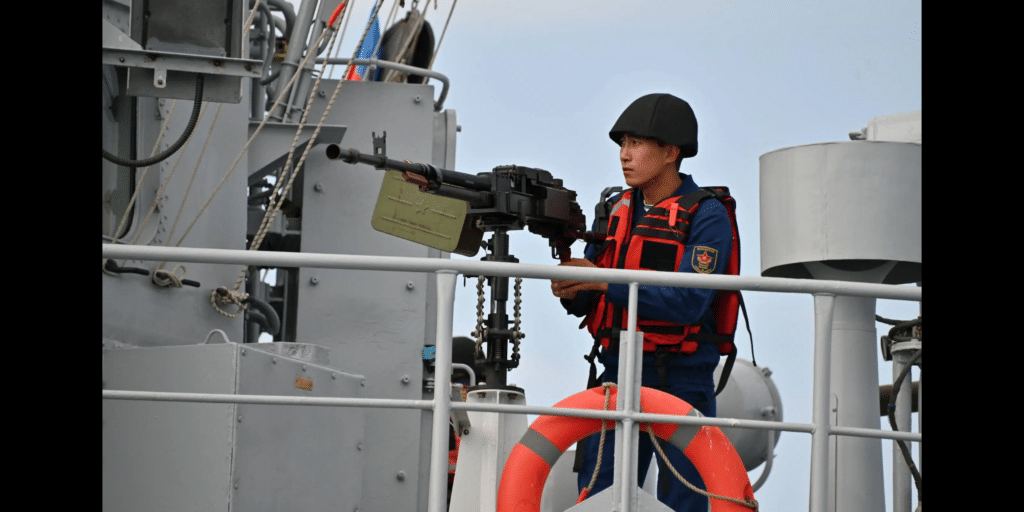
On Monday, Russia and Iran launched joint military exercises in the Caspian Sea under the banner “Together for a Safe and Secure Caspian Sea.” Officially, the drills aim to enhance maritime security and naval cooperation between the two countries and are being coordinated by Iran’s Northern Fleet. While such exercises might once have passed without much notice, their timing and frequency reflect a shifting dynamic: the Caspian region is rapidly emerging as a potential hotspot in global geopolitics. Just one month prior, the same waters hosted joint military exercises between Azerbaijan and Kazakhstan, held in Aktau, western Kazakhstan. These were followed by the “Tarlan-2025” air and tactical drills in Azerbaijan from July 8-10, which focused on enhancing UAV operations and military coordination. Baku’s strategic alliance with Ankara is a key factor here. Azerbaijan, a close Turkish partner, is now engaged in a more strained relationship with Russia. Moscow’s muted reaction to this cooling suggests an awareness that Ankara is increasingly shaping a Turkic military-political bloc, an emerging force in a region of strategic importance to both Russia and China. Earlier this month, Turkey launched its annual Anadolu-2025 special forces exercises. Participants included troops from 33 nations, Kazakhstan, Azerbaijan, Pakistan, Uzbekistan, and others but notably excluded Russia. For the first time, in 2024, military exercises were held in the Caspian without Russian involvement. The Birleistik (Unity) 2024 drills were conducted at Kazakhstan’s Oymasha training ground and Cape Tokmak along the Caspian coast. Troops from Azerbaijan, Kazakhstan, Kyrgyzstan, Tajikistan, and Uzbekistan rehearsed scenarios including conflict zone identification, night maritime operations, and amphibious landings. Previously, regional military cooperation had been limited to bilateral engagements, such as the 2023 UZAZ exercises (Azerbaijan-Uzbekistan), Kanzhar-2023 (Kazakhstan-Uzbekistan), and Hazri-2023 (Azerbaijan-Kazakhstan). The spike in joint drills during 2024-2025 underscores growing rivalries between regional and global powers. These operations are not mere formalities but reveal emerging security alignments and geopolitical signals. Three distinct blocs appear to be coalescing in the Caspian, with implications for Central Asia as well. The first bloc includes Russia, Iran, and China. These nations have held annual “Maritime Security Belt” exercises since 2019, with the most recent in March 2025 off the Iranian coast. The second bloc comprises Turkey, Azerbaijan, and members of the Organization of Turkic States (OTS). Defense ties among these countries are becoming a core element of OTS cooperation. At the 10th OTS Summit in Astana in 2023, Azerbaijani President Ilham Aliyev emphasized defense as the main guarantor of member state security, citing ongoing regional conflicts and violations of international law. The third bloc, more pragmatic and focused, is the Kazakhstan-Azerbaijan partnership. These countries are cooperating on the basis of the 2018 Caspian Convention to secure maritime communications. Azerbaijan contributes military expertise, particularly in UAV and drone warfare developed during the Karabakh conflicts. Kazakhstan brings diplomatic credibility and promotes regional governance and connectivity, offering a stabilizing complement to Azerbaijan’s military strengths. In sum, the Caspian Sea, once colloquially referred to as “Russia’s lake”, is steadily losing that identity. It is transforming into...