Caspian Sea Shrinking Faster Than Expected, Risking Aral Sea-Like Disaster
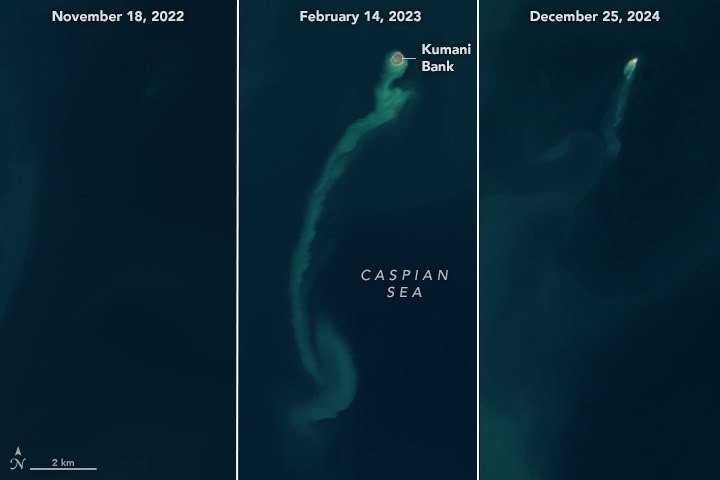
The Caspian Sea is shoaling at an alarming rate, raising concerns among environmentalists in the countries that border it. According to the global movement Save The Caspian Sea, the sea level has dropped by two meters over the past 18 years. If this trend continues, the water level could fall by another 18 meters by 2100, triggering an ecological catastrophe much sooner than anticipated. Kazakh Coastlines Recede by 50 Kilometers The most dramatic retreat of the Caspian shoreline has been recorded along the Kazakh coast, where the sea has receded by 50 kilometers. Environmental activist Vadim Ni, founder of Save The Caspian Sea, reports that from 2005 to 2023, the sea’s surface area has shrunk by more than 30,000 square kilometers. This drastic change is devastating local ecosystems, particularly the Caspian seal population, which has declined from one million to just 70,000. Each year, thousands of dead seals are found along Kazakhstan’s coastline. Shipping and Oil Production at Risk Falling water levels are also disrupting shipping and trade in the Caspian Sea. Cargo ships can no longer enter the port of Aktau, a critical hub in the Trans-Caspian transport corridor that connects Kazakhstan with Azerbaijan. The Kazakh government has developed a dredging project to keep Aktau operational, with plans approved in December 2024. The project is expected to cost 42 billion tenge ($84 million). Additionally, the shoaling of the Caspian Sea is limiting the loading capacity of transport ships to just 75% of their maximum displacement. This also hinders access to the Kashagan oil field, one of Kazakhstan’s largest energy projects. [caption id="attachment_29154" align="aligncenter" width="671"] The Caspian Sea as seen from space; image: NASA[/caption] Ecologists Warn of Aral Sea-Like Collapse Russian ecologist Alexander Veselov has warned that the Caspian Sea could face the same fate as the Aral Sea, which virtually disappeared due to overuse and mismanagement. “The Caspian Sea may split into several parts, water quality will deteriorate, leading to mass deaths of swans, sturgeons, and seals. However, state authorities are failing to respond adequately to the crisis,” Veselov said. Impact on Climate and Regional Weather The Caspian Sea plays a crucial role in regulating the climate across Central Asia and beyond. Pyotr Zavyalov, deputy director of the Shirshov Institute of Oceanology at the Russian Academy of Sciences, warns that a continued drop in sea level could alter precipitation patterns as far as the Pacific region. The current average sea level of the Caspian stands at minus 29.5 meters relative to the World Ocean, the lowest point in 400 years. However, precise long-term predictions remain difficult due to the complex interactions of evaporation, river runoff, and precipitation. Volga River and Algae Threaten Caspian’s Future The Volga River, which supplies 90% of the Caspian’s water, has seen its flow dramatically reduced due to the construction of numerous dams in recent years. Meanwhile, scientists have recorded the spread of the dinophyte algae Ceratium tripos var. balticum in the Middle Caspian Sea. This invasive species can trigger harmful algal blooms, reducing oxygen...