• KGS/USD = 0.01144 0%
  • KZT/USD = 0.00205 0%
  • TJS/USD = 0.10685 -0.37%
  • UZS/USD = 0.00008 0%
  • TMT/USD = 0.28490 0%
  • KGS/USD = 0.01144 0%
  • KZT/USD = 0.00205 0%
  • TJS/USD = 0.10685 -0.37%
  • UZS/USD = 0.00008 0%
  • TMT/USD = 0.28490 0%
  • KGS/USD = 0.01144 0%
  • KZT/USD = 0.00205 0%
  • TJS/USD = 0.10685 -0.37%
  • UZS/USD = 0.00008 0%
  • TMT/USD = 0.28490 0%
  • KGS/USD = 0.01144 0%
  • KZT/USD = 0.00205 0%
  • TJS/USD = 0.10685 -0.37%
  • UZS/USD = 0.00008 0%
  • TMT/USD = 0.28490 0%
  • KGS/USD = 0.01144 0%
  • KZT/USD = 0.00205 0%
  • TJS/USD = 0.10685 -0.37%
  • UZS/USD = 0.00008 0%
  • TMT/USD = 0.28490 0%
  • KGS/USD = 0.01144 0%
  • KZT/USD = 0.00205 0%
  • TJS/USD = 0.10685 -0.37%
  • UZS/USD = 0.00008 0%
  • TMT/USD = 0.28490 0%
  • KGS/USD = 0.01144 0%
  • KZT/USD = 0.00205 0%
  • TJS/USD = 0.10685 -0.37%
  • UZS/USD = 0.00008 0%
  • TMT/USD = 0.28490 0%
  • KGS/USD = 0.01144 0%
  • KZT/USD = 0.00205 0%
  • TJS/USD = 0.10685 -0.37%
  • UZS/USD = 0.00008 0%
  • TMT/USD = 0.28490 0%

Viewing results 1 - 6 of 98

How Armenia–Azerbaijan Peace Lowers Corridor Risk for Central Asia

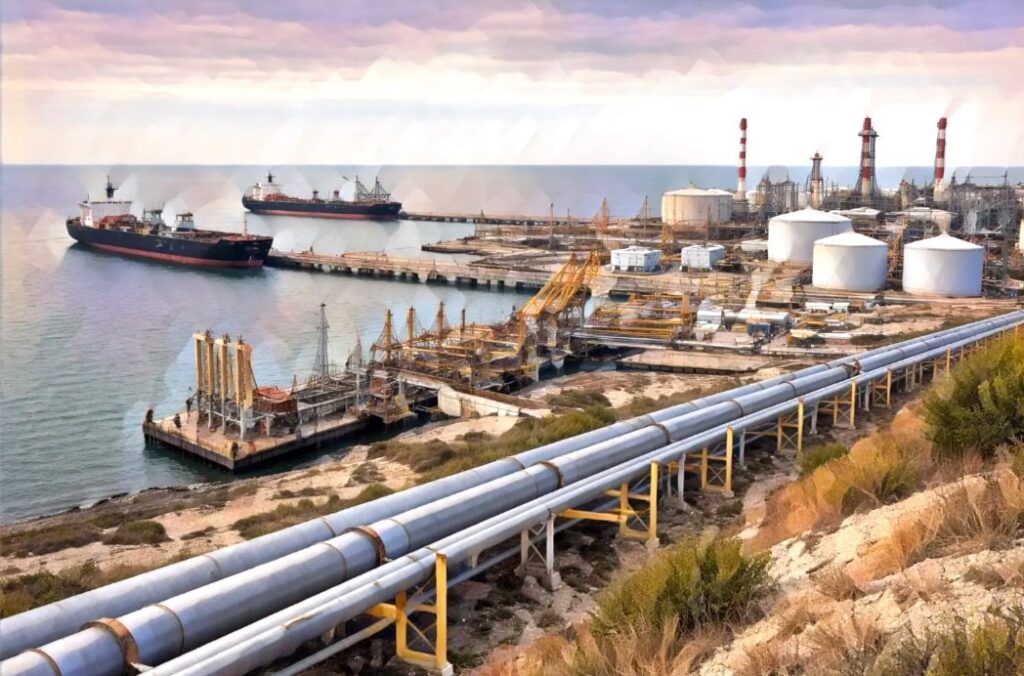
The framework announced on 8 August 2025 in Washington for Armenia–Azerbaijan peace and development resets the security–economics equation in the South Caucasus and holds deep implications for Central Asia. At its core is the mutual recognition of territorial integrity, renunciation of force, and a transit arrangement under Armenian jurisdiction linking mainland Azerbaijan with its exclave of Nakhchivan across the Syunik province. For Central Asia, the immediate significance is the de-risking of the westbound Caspian–Caucasus–Anatolia artery centered on Azerbaijan’s Alat Port and the Baku–Tbilisi–Kars (BTK) rail route. As reported by Azerbaijan Railways, BTK’s operating capacity was lifted to 5 million tons/year (t/y) in May 2024 and has a path for expanding to 17 million tons in later phases. Alat currently lists 13 berths and dedicated ferry roll-on/roll-off (“ro-ro”) facilities. A dependable Armenian-jurisdiction link would create a second, legally unambiguous passage across the South Caucasus. Single-route dependence through Georgia would be reduced, as would the variance of end-to-end journey times. That reliability directly benefits Kazakhstan and Turkmenistan, whose westbound flows move by rail-ferry from Aktau/Kuryk to Alat and from Turkmenbashi to Alat before continuing overland toward Türkiye. Peace Reframes the Middle Corridor These developments also strengthen the business case for incremental investments in ports, ferries, rail paths, and energy interconnectors tied to the Middle Corridor, including swap-based energy routing already practiced between Azerbaijan and Kazakhstan. At Alat, confirmed as the hinge of the Middle Corridor, political risk converts into bankable time, which prices into contracts, which later in turn finances small but decisive capacity steps; bankable time begets bankable trade. Conflict risk in the South Caucasus has been a priced variable since 2020. A durable peace narrows that risk band and yields three operational effects with country-specific salience. First, marine war-risk and cargo premiums in nearby high-risk theaters such as the Gulf, typically ranging from 0.2–0.3% of hull value, rose to 0.5% during recent tensions. This figure offers a benchmark for how underwriters re-price routes as perceived closure risk changes. Second, forwarders can trim buffer time, improving asset utilization for rail paths and ro-ro (roll on, roll off) rotations pairing the Caspian ports (Alat, Aktau/Kuryk, Turkmenbashi). Third, carriers gain confidence to publish regular rotations and pre-position equipment; the Azerbaijan Caspian Shipping Company notes 1–2-day intervals in favorable conditions and shows multiple departures on a given day (e.g., August 15 listed Alat–Kuryk, Alat–Turkmenbashi, etc.). Lower variance is not cosmetic; it is collateral for contracts. Banks recognize collateral. Insurers do, too. When variability falls, rate discovery improves; as a result, multi-month slots or rail-path agreements become financeable. This is precisely the mechanism exporters from Kazakhstan and Turkmenistan need to secure predictable capacity into Azerbaijan and onward to Türkiye. Reliability also changes routing choices. At Alat, rail-ferry cargo arriving from Aktau/Kuryk or Turkmenbashi can be planned to run either via Georgia or via Syunik toward Kars, whichever route minimizes dwell time and schedule variance for the onward leg. Even where pure distance savings are modest, gains in reliability reduce movements of empty containers. They also...

The View From Ankara – President Tokayev’s Working Visit to Turkey

The official visit of President of Kazakhstan Kassym-Jomart Tokayev to Turkey on July 29, 2025, carries a multidimensional and strategic significance that extends far beyond the boundaries of diplomatic protocol. This engagement stands out as part of an ongoing multidimensional process of transformation marked by deepening regional alliances in the fields of science, energy, and logistics. Invited by President Recep Tayyip Erdoğan, Tokayev co-chaired the fifth meeting of the Turkey-Kazakhstan High-Level Strategic Cooperation Council. As a result of this summit, 20 bilateral agreements were signed, encompassing new frameworks of regional integration, especially in the fields of mining, energy, transportation, and higher education. Energy Diplomacy and Resource Geopolitics One of the most striking dimensions of the visit was the negotiation of new cooperation mechanisms aimed at transporting Kazakh oil to global markets via Turkey. According to President Tokayev, currently 1.4 million tons of Kazakh oil are transported annually through the Baku–Tbilisi–Ceyhan pipeline. Under the newly signed memoranda of understanding, the parties aim to increase this volume. This development not only strengthens Turkey’s ambition to become a regional energy hub but also holds critical importance for Kazakhstan’s strategy to diversify export routes and secure access to safe ports. Furthermore, the expressed intent of Turkish Petroleum Corporation (TPAO) to operate in Kazakhstan signals that the collaboration may extend beyond transport into production processes as well. Kazakhstan's reserves of rare earth elements and strategic minerals are of considerable value to both European and Asian economies prioritizing green energy transitions. In this context, the agreements signed in the mining sector may herald a new phase — one that mandates not only commercial but also technological and scientific R&D collaborations. Strategic Dimensions of the Middle Corridor Another key agenda item during the visit was the development and activation of the Trans-Caspian International Transport Route, commonly referred to as the ‘Middle Corridor.’ According to data shared by Tokayev, approximately 85% of road freight transported between China and Europe passes through Kazakhstan. This positions Kazakhstan as the backbone of the region’s logistics infrastructure. Turkey’s central role in the Middle Corridor makes it a decisive actor in the route’s integration with Europe. In this regard, Kazakhstan’s efforts to modernize its rail and road infrastructure, alongside its revival of maritime transport on the Caspian Sea, when combined with Turkey’s port capacity and transportation infrastructure, offer significant synergistic potential. These developments also underscore the strategic importance of the Zangezur Corridor and reinforce the value of uninterrupted transportation from China to Europe via Turkey, bypassing the Iranian route. Education and Academic Diplomacy The visit also drew attention for its scientific and cultural dimensions, in addition to its economic focus. Joint initiatives such as Gazi University’s planned establishment of a branch within the South Kazakhstan Pedagogical University can contribute to aligning the Turkish higher education model with Kazakhstan’s ongoing education reforms. Moreover, the Turkish Maarif Foundation’s new school initiatives in Kazakhstan signify a broadening and institutionalization of bilateral cooperation in education. These efforts may extend beyond student exchange programs to encompass joint research...

Kazakhstan and Turkey Reshape Their Eurasian Partnership

President Kassym-Jomart Tokayev’s visit to Ankara consolidated bilateral ties, but it also marked a deeper strategic inflection. The visit marks a broader regional convergence between two major Eurasian actors as they coordinate a strategic regional architecture. Thus, Tokayev’s language emphasized an “expanded strategic partnership,” signaling a move beyond traditional trade or cultural diplomacy. Ankara, for its part, went well beyond symbolic gestures in its response, with binding institutional agreements and substantive infrastructural commitments. The timing of the visit underscores its significance against the current geopolitical backdrop, where Central Asia is once again the object of keen attention from external actors vying for footholds and influence. In this context, the Kazakhstan–Turkey axis appears not as a knee-jerk reaction to outside machinations but as a deliberate autonomous regional vector that enhances the agency of both countries. Strategic Depth of the Tokayev Visit Tokayev’s trip to Turkey represents an assertion of multidimensional regional agency: Kazakhstan’s long-standing multi-vector foreign policy was once a balancing act among great powers, but it has now entered a phase of selective consolidation. This bilateral intensification indexes a shift in the configuration of Eurasian geoeconomics, as strategic weight disperses across an increasingly differentiated agentic field. The Astana–Ankara alignment means that both countries can act with diminished external dependence, even as global architectures become more unstable and contested. Tokayev’s diplomacy suggests the emergence of an equilibrium strategy anchored in regional connectivity rather than bloc affiliation. Ankara’s perspective is equally structural. The shared vocabulary — “coordination,” “deepening,” “integration” — signals a logic of long-horizon strategic cooperation. Complementarities Across the Bilateral Core The current Kazakhstan–Turkey relationship exhibits a structurally complementary relationship rarely sustained at this depth between two regional powers so geographically distant from one another. On one side, Kazakhstan brings economic scale, resource depth, and transit centrality to the Middle Corridor. On the other, Turkey brings not only industrial experience and defense sector credibility but maritime access, NATO membership, and a flexible political reach into Europe, the Middle East, and the Mediterranean basin. The evolution of mutual strategic trust based on converging structural interests binds these capacities of the two sides together. For Kazakhstan, Turkey provides logistical continuity and downstream industrial expansion; Ankara also diversifies Astana's international geoeconomic network. For Turkey, Kazakhstan provides resource access, eastward corridors, and meta-regional relevance beyond the Black Sea. These structural interests converge across multiple material economic sectors: energy, defense-industrial cooperation, agrotechnology, education, and digital logistics. Nor is this convergence driven solely by state policy: both countries’ private sectors increasingly perceive each other as entry points into economic systems adjacent to one another. The Organization of Turkic States (OTS) as an Institutional Amplifier The Organization of Turkic States (OTS), now maturing into an institutionalized platform for regional legitimacy with a shared symbolic and infrastructural vocabulary, enables Kazakhstan–Turkey cooperation to transcend the limits of bilateralism while maintaining its coherence. Joint positions on transport, trade, education, and foreign policy are advanced and discussed within a common multilateral setting where proposals are negotiated horizontally with other Turkic states. Through...

After U.S. Strikes, Kazakhstan Warns of Deteriorating Security in Caspian Region

Kazakhstan said on Sunday that U.S. military strikes on Iran pose “serious consequences” for security in the Caspian region. “As a result of recent U.S. military actions against Iran, the international situation is rapidly deteriorating, posing serious consequences for the security of states in our region,” Kazakhstan’s Ministry of Foreign Affairs said after the United States joined Israel’s war against Iran and attacked several Iranian nuclear sites. “Kazakhstan, as one of the Caspian region states, maintains cooperation with Iran in various spheres. We believe that all disputes, including those related to nuclear issues, must be resolved through negotiations based on the United Nations Charter,” the ministry said. “We urge all relevant states to accelerate the development of an agreement aimed at preventing the proliferation of nuclear weapons and providing security guarantees for states that comply with the non-proliferation regime under international oversight,” it said. Kazakhstan, Azerbaijan, Turkmenistan, Iran and Russia border the Caspian Sea. The area is an important trade route.

What Does Raisi’s Death Mean for the Caspian Sea Region?

By Robert M. Cutler The death of Iranian President Ebrahim Raisi in a helicopter accident on May 19 will have significant effects on Iranian domestic politics and foreign policy. These include not only Iran's relations with Armenia and Azerbaijan directly, but also indirectly through the Trans-Caspian International Trade Route (TITR, also called the "Middle Corridor") and the International North–South Transit Corridor (INSTC). Despite conspiracy theories, the only reasonable alternative hypothesis to an accidental crash is that the pilot intentionally ran the helicopter into the mountain head-on at full speed. Both possibilities may be subsumed under the category "Act of God". Raisi was working to normalize relations with Azerbaijan and was seen as a potential - even likely - future Supreme Leader of Iran, succeeding the 85-year-old Ali Khamenei, who is in poor health. Now, however, it is not out of the question that his death leads to a reorientation of Tehran's foreign policy and a wave of radicalization. The outcome will depend upon the obscure machinations of the theocratic and security-service elite, for which the formal organizational and constitutional arrangements set the framework but do not determine the result. The Iranian president is not the most powerful individual in the country's political system, but he is still influential. Raisi had sought to improve ties with Azerbaijan, including water projects on the Aras River and discussions about transportation links. These initiatives may now face delays or even reversals. Yerevan's strategic significance for Tehran's relationship with Moscow and its broader regional ambitions will not diminish; indeed, their bilateral military-industrial cooperation has only grown since Russia's re-invigoration of its war of aggression against Ukraine in February 2022. At the same time, Tehran's relations with Baku are more complicated, for myriad present-day and historical reasons, not least but not only concerning the Azerbaijani minority in Iran.   The South Caucasus and Trans-Caspian Implications Armenia and Azerbaijan are nevertheless persevering in their bilaterally-based practical cooperation and peace negotiations, now proceeding without third-party mediation. The most recent high-level meeting in this process took place between their respective foreign ministers in Almaty on May 10–11. These significant discussions followed talks between them in Berlin in February of this year, and they took place in the context of ongoing efforts to delimit and demarcate the two countries' common border. Delimitation refers to drawing and describing lines on maps, whereas demarcation is the process of installing physical markers on the territory. Demarcation has already begun in the sensitive Tovuz region, and the Russian contingent assisting Armenian border guards under a bilateral agreement has already been withdrawn. In April, as a result of this process, Armenia returned four villages to Azerbaijan. Unresolved issues involve territorial claims against Azerbaijan in Armenia's constitution and the reopening of regional transit routes. Armenian Prime Minister Nikol Pashinyan's initiative for the necessary constitutional reforms, along with his border-demarcation initiatives and continuing peace negotiations, have provoked anti-government protests in Armenia, fueled by the irredentist and xenophobic segments of the diaspora, which are the best established, most...

Is the China–Kyrgyzstan–Uzbekistan Railway Project Losing Steam Again?

By Robert M. Cutler The China–Kyrgyzstan–Uzbekistan (CKU) railway was first proposed in 1997. There seemed finally to be a prospect for a start to the project after agreements at the Xi'an summit amongst China and the five Central Asian countries in May 2023. Construction on the 523-kilometre route was scheduled to begin several months after, but this has still not happened. Disagreements over the route and—still worse—over the funding risk relegating the project back to the drawing-boards where it has languished for over a quarter-century. After the initial agreement in 1997, it was these essentially unchanging disagreements over financing and the route within Kyrgyzstan that stalled negotiations, and over a final agreement of conditions for its construction in the early 2000s. These disagreements concern the geo-economic strategies of the respective parties, and they have not changed in over two decades.  China favors a shorter route, while Kyrgyzstan pushes for a longer one to benefit its domestic infrastructure. Specifically, Kyrgyzstan wants to use the railway's construction to establish better connections between the northern and southern parts of the country, which are separated by a mountain range.   Further difficulties in CKU implementation For Uzbekistan, a turning-point was its decision in 2017 to send railway experts to discuss the project with Kyrgyzstan. Then in 2019, Uzbekistan invited Turkey to co-finance the Kyrgyz section. The current cost of the whole project is estimated at $6 billion. A preliminary agreement has been reached on the division of this total, according to which each of the three parties will contribute 30 per cent (but at different stages of the project), with the source of the final 10 per cent including the cost of the feasibility study still to be determined. Despite this progress, public concerns in Kyrgyzstan over several critical practical issues remain unaddressed and continue to complicate a final agreement. These include the anticipated influx of Chinese workers, the professional development of local railway engineers, the allocation of investments for industrial projects along the railway corridor and the facilitation of increased exports of Kyrgyzstan's products to the Chinese market. These elements are essential for the long-term viability and success of the CKU railway initiative. Interestingly, these are very similar to the concerns of Kazakhstan that delayed the construction of the first (i.e., the Atasu–Alashankou) segment of the Kazakhstan–China oil export pipeline in the early 2000s. Moreover, China originally insisted on compensation from Bishkek for its contribution in the form of ownership of Kyrgyz mines, including the world’s second-largest iron-ore reserve at Zhetim Too, which Kyrgyz President Sadyr Japarov claims is worth at least $50 billion. It does not help matters that this site adjoins a large glacier, the water from which is crucial for irrigation of major Kyrgyz agricultural holdings.   Other Uzbek initiatives for infrastructure connectivity On 1 November 2023, at a forum of the Shanghai Co-operation Organization (SCO) meeting in Tashkent, transportation officials from Uzbekistan, Kyrgyzstan and Russia signed a memorandum to establish a new Kyrgyzstan–Russia trade corridor through Turkmenistan (who, incidentally,...