• KGS/USD = 0.01144 0%
  • KZT/USD = 0.00204 0%
  • TJS/USD = 0.10782 0%
  • UZS/USD = 0.00008 0%
  • TMT/USD = 0.28490 0%
  • KGS/USD = 0.01144 0%
  • KZT/USD = 0.00204 0%
  • TJS/USD = 0.10782 0%
  • UZS/USD = 0.00008 0%
  • TMT/USD = 0.28490 0%
  • KGS/USD = 0.01144 0%
  • KZT/USD = 0.00204 0%
  • TJS/USD = 0.10782 0%
  • UZS/USD = 0.00008 0%
  • TMT/USD = 0.28490 0%
  • KGS/USD = 0.01144 0%
  • KZT/USD = 0.00204 0%
  • TJS/USD = 0.10782 0%
  • UZS/USD = 0.00008 0%
  • TMT/USD = 0.28490 0%
  • KGS/USD = 0.01144 0%
  • KZT/USD = 0.00204 0%
  • TJS/USD = 0.10782 0%
  • UZS/USD = 0.00008 0%
  • TMT/USD = 0.28490 0%
  • KGS/USD = 0.01144 0%
  • KZT/USD = 0.00204 0%
  • TJS/USD = 0.10782 0%
  • UZS/USD = 0.00008 0%
  • TMT/USD = 0.28490 0%
  • KGS/USD = 0.01144 0%
  • KZT/USD = 0.00204 0%
  • TJS/USD = 0.10782 0%
  • UZS/USD = 0.00008 0%
  • TMT/USD = 0.28490 0%
  • KGS/USD = 0.01144 0%
  • KZT/USD = 0.00204 0%
  • TJS/USD = 0.10782 0%
  • UZS/USD = 0.00008 0%
  • TMT/USD = 0.28490 0%

Viewing results 1 - 6 of 87

Is the China–Kyrgyzstan–Uzbekistan Railway Project Losing Steam Again?

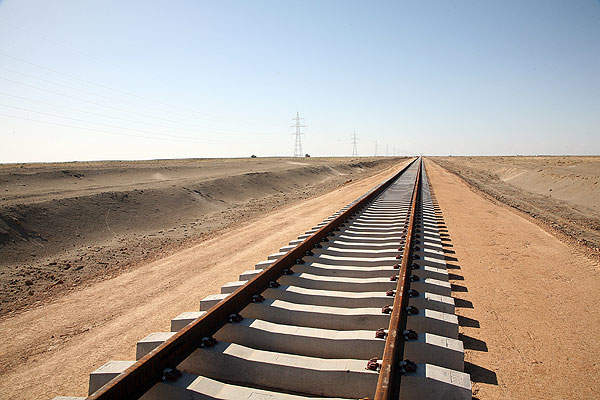
By Robert M. Cutler The China–Kyrgyzstan–Uzbekistan (CKU) railway was first proposed in 1997. There seemed finally to be a prospect for a start to the project after agreements at the Xi'an summit amongst China and the five Central Asian countries in May 2023. Construction on the 523-kilometre route was scheduled to begin several months after, but this has still not happened. Disagreements over the route and—still worse—over the funding risk relegating the project back to the drawing-boards where it has languished for over a quarter-century. After the initial agreement in 1997, it was these essentially unchanging disagreements over financing and the route within Kyrgyzstan that stalled negotiations, and over a final agreement of conditions for its construction in the early 2000s. These disagreements concern the geo-economic strategies of the respective parties, and they have not changed in over two decades.  China favors a shorter route, while Kyrgyzstan pushes for a longer one to benefit its domestic infrastructure. Specifically, Kyrgyzstan wants to use the railway's construction to establish better connections between the northern and southern parts of the country, which are separated by a mountain range.   Further difficulties in CKU implementation For Uzbekistan, a turning-point was its decision in 2017 to send railway experts to discuss the project with Kyrgyzstan. Then in 2019, Uzbekistan invited Turkey to co-finance the Kyrgyz section. The current cost of the whole project is estimated at $6 billion. A preliminary agreement has been reached on the division of this total, according to which each of the three parties will contribute 30 per cent (but at different stages of the project), with the source of the final 10 per cent including the cost of the feasibility study still to be determined. Despite this progress, public concerns in Kyrgyzstan over several critical practical issues remain unaddressed and continue to complicate a final agreement. These include the anticipated influx of Chinese workers, the professional development of local railway engineers, the allocation of investments for industrial projects along the railway corridor and the facilitation of increased exports of Kyrgyzstan's products to the Chinese market. These elements are essential for the long-term viability and success of the CKU railway initiative. Interestingly, these are very similar to the concerns of Kazakhstan that delayed the construction of the first (i.e., the Atasu–Alashankou) segment of the Kazakhstan–China oil export pipeline in the early 2000s. Moreover, China originally insisted on compensation from Bishkek for its contribution in the form of ownership of Kyrgyz mines, including the world’s second-largest iron-ore reserve at Zhetim Too, which Kyrgyz President Sadyr Japarov claims is worth at least $50 billion. It does not help matters that this site adjoins a large glacier, the water from which is crucial for irrigation of major Kyrgyz agricultural holdings.   Other Uzbek initiatives for infrastructure connectivity On 1 November 2023, at a forum of the Shanghai Co-operation Organization (SCO) meeting in Tashkent, transportation officials from Uzbekistan, Kyrgyzstan and Russia signed a memorandum to establish a new Kyrgyzstan–Russia trade corridor through Turkmenistan (who, incidentally,...

Kazakhstan Creates Caspian Sea Research Institute

The Kazakhstan government has approved the establishment of the Caspian Sea Research Institute, its Ministry of Water Resources and Irrigation said on January 26th.  The new institute will study the environmental problems of the Caspian Sea, the problem of its decreasing water levels, the causes of mass deaths of seals and fish, and issues of preserving the population of the Caspian seal. The institute will closely interact with similar institutes in other Caspian states. The institute will provide objective and independent information about the ecosystem of the Caspian Sea, the ministry said, adding that its research data will serve as the basis for decision-making by state and local executive bodies concerning Caspian issues.

New vistas for trans-Caspian projects

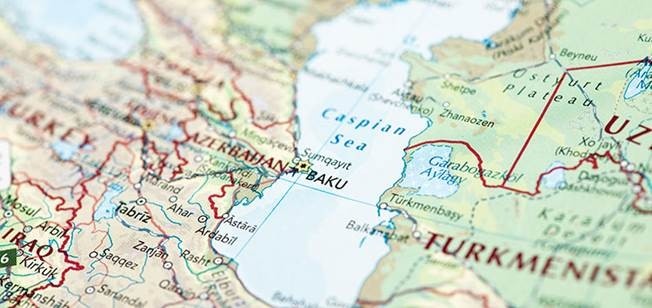
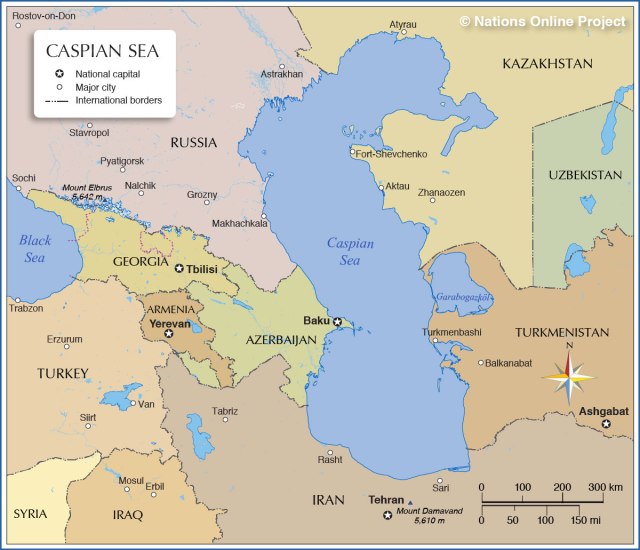
BISHKEK (TCA) — The Caspian Sea is a promising area for cooperation between its littoral states — Azerbaijan, Iran, Kazakhstan, Russia, and Turkmenistan; but their cooperation in the transport and energy spheres is hindered by different geopolitical, and economic, interests of the regional states. We are republishing the following article on the issue, written by Stephen Blank*: Continue reading

Kazakhstan, Azerbaijan launch construction of fiber optic line on Caspian seabed

NUR-SULTAN (TCA) — Prime Minister of Kazakhstan Askar Mamin and Prime Minister of Azerbaijan Ali Asadov on November 19 attended the ceremony of launching the construction of the TransCaspian Fiber Optic in Aktau, Kazakhstan. The fiber-optic communication line between the two countries will be laid on the bottom of the Caspian Sea, the press service of the Prime Minister of Kazakhstan reported. Continue reading

Russia moves to strengthen its profile in Central Asian gas politics, threatens Trans-Caspian

BISHKEK (TCA) — Russia has moved to increase its imports of natural gas from Central Asian countries with the purpose to increase its influence on the regional countries, and to prevent the construction of a Trans-Caspian gas pipeline to deliver Turkmen gas to Europe. We are republishing the following article on the issue, written by Azad Garibov*: Continue reading

Turkmenistan: OSCE promotes development of green ports, connectivity in Caspian region

TURKMENBASHI, Turkmenistan (TCA) — Two OSCE-supported events launched activities in Turkmenistan aimed at promoting green ports and connectivity in the Caspian Sea region. A roundtable discussion for experts on 29 October took place in Ashgabat and a technical workshop was held on 30 October at the Turkmenbashi International Seaport, the OSCE reported. Continue reading