• KGS/USD = 0.01144 0%
  • KZT/USD = 0.00207 0%
  • TJS/USD = 0.10440 -0.19%
  • UZS/USD = 0.00008 0%
  • TMT/USD = 0.28490 0%
  • KGS/USD = 0.01144 0%
  • KZT/USD = 0.00207 0%
  • TJS/USD = 0.10440 -0.19%
  • UZS/USD = 0.00008 0%
  • TMT/USD = 0.28490 0%
  • KGS/USD = 0.01144 0%
  • KZT/USD = 0.00207 0%
  • TJS/USD = 0.10440 -0.19%
  • UZS/USD = 0.00008 0%
  • TMT/USD = 0.28490 0%
  • KGS/USD = 0.01144 0%
  • KZT/USD = 0.00207 0%
  • TJS/USD = 0.10440 -0.19%
  • UZS/USD = 0.00008 0%
  • TMT/USD = 0.28490 0%
  • KGS/USD = 0.01144 0%
  • KZT/USD = 0.00207 0%
  • TJS/USD = 0.10440 -0.19%
  • UZS/USD = 0.00008 0%
  • TMT/USD = 0.28490 0%
  • KGS/USD = 0.01144 0%
  • KZT/USD = 0.00207 0%
  • TJS/USD = 0.10440 -0.19%
  • UZS/USD = 0.00008 0%
  • TMT/USD = 0.28490 0%
  • KGS/USD = 0.01144 0%
  • KZT/USD = 0.00207 0%
  • TJS/USD = 0.10440 -0.19%
  • UZS/USD = 0.00008 0%
  • TMT/USD = 0.28490 0%
  • KGS/USD = 0.01144 0%
  • KZT/USD = 0.00207 0%
  • TJS/USD = 0.10440 -0.19%
  • UZS/USD = 0.00008 0%
  • TMT/USD = 0.28490 0%

Viewing results 1 - 6 of 1240

TRNC President Urges Central Asia to Tread Carefully on Cyprus in EU Deals

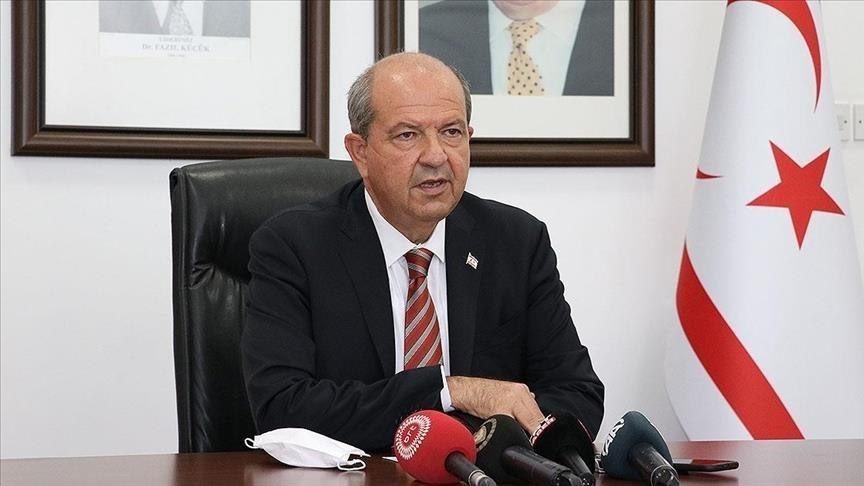
Ersin Tatar, President of the Turkish Republic of Northern Cyprus (TRNC), has urged Central Asian nations to exercise caution in their dealings with the European Union, particularly regarding the Cyprus issue. His remarks were reported by Anadolu Agency during a recent meeting with representatives of the Association of Turkish Travel Agencies (TÜRSAB). Tatar acknowledged that it is “understandable” for Central Asian countries to cooperate with the EU in pursuit of their national interests. “These countries have various projects and partnerships with the EU, especially in trade and development. That’s normal,” he said. “But I believe the Turkish states should be more careful in their relations with the Greek Cypriot side.” Turkic Solidarity and the Role of TRNC Highlighting the cultural and linguistic connections among Turkic nations, Tatar highlighted the importance of maintaining solidarity within the Organization of Turkic States (OTS), where the TRNC has held observer status since 2022. “The TRNC values its growing relationship with member states such as Kazakhstan, Uzbekistan, Kyrgyzstan, and Turkmenistan,” he said. Tatar expressed concern that recent EU overtures toward Central Asia could be aimed at limiting the TRNC’s engagement in the Turkic bloc. “The EU, which showed little interest in the region before, is now making deals. This raises questions,” he noted. Cyprus Issue and EU Documents Reaffirming the Turkish Cypriot stance on the Cyprus issue, Tatar reiterated support for a two-state solution and called on Turkic nations to extend the same diplomatic openness to Northern Cyprus as they do to the internationally recognized Greek Cypriot administration. “Our expectation is that they treat us with the same openness they show to the Greek Cypriots,” he said, warning that EU documents may contain references to UN resolutions on Cyprus that could be misinterpreted. “Do they really know what those articles mean and what consequences they might have?” he asked. Central Asia-EU Relations on the Rise Tatar’s comments follow the recent EU-Central Asia Summit in Samarkand, held on April 3-4, which marked a new chapter in regional cooperation. The summit culminated in the signing of the Samarkand Declaration, underscoring the intent to build a strategic partnership between the two regions. “Over the past seven years, the trade turnover between Central Asian countries and the EU has quadrupled, amounting to 54 billion euros,” said Uzbek President Shavkat Mirziyoyev in remarks to Euronews. European Commission President Ursula von der Leyen also welcomed the shift, stating, “The EU and Central Asia are becoming closer partners, and this summit marks the beginning of a new phase in our cooperation.”
Balancing Secularism and Belief: Central Asia Grapples with Rising Islamization

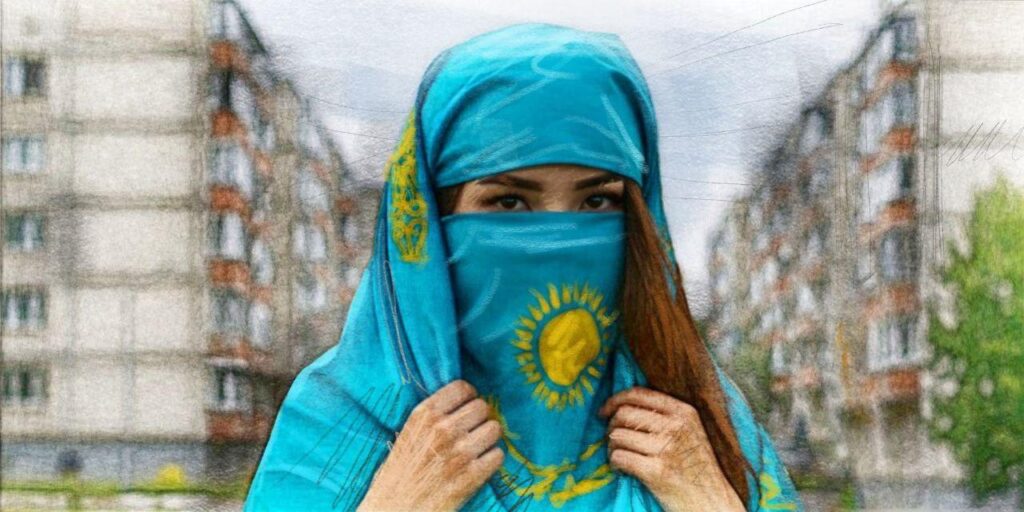
Although the Central Asian republics officially uphold secular governance, they may be experiencing a subtle, creeping Islamization beneath the surface. While state-controlled media across the region maintain that religious movements are well-managed, occasional incidents suggest a growing divergence between official narratives and societal realities. One such incident recently drew attention in Kazakhstan, where a photo circulated online showing girls in burkas holding a Kazakh flag inscribed with Arabic script. The image prompted Mazhilis Deputy Yermurat Bapi to call on the government to intensify efforts against radical religious movements. “Our attention was drawn to the fact that the inscriptions on the flag in Arabic script were produced with a special printing tool. This is not just hooliganism or inappropriate behavior. It is a direct challenge to our society, our statehood, and our national traditions,” Bapi said. Citing "national interests, traditions, and culture," Bapi has previously campaigned for a ban on religious clothing, specifically hijabs and niqabs, in public places. On social media, proponents of a Central Asian caliphate have railed against national traditions, denouncing Nauryz, criticizing local costumes and instruments, and rejecting pre-Islamic cultural heritage. Since President Shavkat Mirziyoyev took office in 2016, Uzbekistan has cautiously liberalized its religious policy. However, strict state control persists. Imams must be approved by the Muftiate, unregistered religious groups are banned, and mosque inspections are routine. The state endorses the Hanafi madhhab as the “national form of Islam” and recognizes Naqshbandi Sufism as part of its cultural heritage. Salafi and extremist movements are actively suppressed, and while former “black lists” of suspected extremists are being revised, some religious prisoners are being rehabilitated. Islamic education is expanding through madrasas, Islamic colleges, and the Islamic Academy of Uzbekistan. Tajikistan has pursued an aggressive campaign to secularize public life. The Islamic Renaissance Party, once a legal political force, was banned in 2015 as “extremist.” The state restricts youth access to mosques, prohibits the hijab in schools and public offices, and has shuttered over 1,500 mosques since 2011. As previously reported by TCA, a 2024 law bans “foreign clothing” - widely interpreted as targeting Arabic attire, including the hijab - to promote national dress. Islam is framed as a cultural element within state ideology, with the Committee on Religious Affairs closely monitoring clerics. Kyrgyzstan is widely viewed as the most religiously open state in the region. Post-Soviet liberalization allowed Islam to grow organically, with little initial oversight. Today, numerous Islamic groups, including Salafis, operate within the country. Rural communities and youth increasingly identify with Islam. Private madrasas and Islamic NGOs are flourishing, and hijab adoption is on the rise. Though the government has begun tightening oversight following incidents of radicalization, Salafi influence continues to grow. By 2023, there were 130 Islamic educational institutions, including 34 madrasas for girls. In Turkmenistan, one of the world’s most closed societies, religious freedom is strictly curtailed. All religious activity is monitored, and Islamic institutions are intertwined with nationalist and presidential cult rhetoric, often referred to as “Turkmen Islam.” Unregulated Islamic movements and foreign...

Trump’s Tariff Blitz Targets Global Imports, Kazakhstan Faces Harshest Impact in Central Asia

U.S. President Donald Trump has announced sweeping new tariffs on all goods imported into the United States, citing the need to protect American industry and jobs. Speaking at a White House press conference, Trump outlined a base tariff rate of 10% that will apply to 185 countries. However, several nations and blocs face significantly higher rates: China will see a 34% tariff, the European Union 20%, Switzerland 31%, and Israel 17%. The steepest tariffs were imposed on Vietnam (46%), Cambodia (49%), and Laos (48%). Notably absent from the list are Russia, Belarus, Mexico, Iran, Canada, and Belarus. Ukraine, however, will face the base 10% rate. Kazakhstan Hit with 27% Tariff The new U.S. duties also target Central Asian nations. According to a comparative chart published by the White House, Uzbekistan, Turkmenistan, Tajikistan, and Kyrgyzstan will face 10% tariffs on their exports to the U.S. Meanwhile, Kazakhstani goods will be subject to a much higher rate of 27%. The White House document notes that Kazakhstani imports currently face a 54% tariff in Kazakhstan, figures that surprised local analysts, who have questioned the methodology behind the calculations. The rationale for the elevated rate on Kazakhstan remains unclear. However, the country's Ministry of Trade and Integration has initiated consultations with his U.S. counterparts to explore options for exempting certain goods. According to a preliminary analysis, many of Kazakhstan’s key exports fall under exceptions outlined in U.S. regulations. “In 2024, trade turnover between Kazakhstan and the United States amounted to $4.2 billion,” the ministry stated. “Kazakhstan's primary exports to the U.S. - crude oil, uranium, silver, and ferroalloys - constitute 92% of total exports and are included in the exemption list under the U.S. President’s decree on reciprocal tariffs.” Turning Tariffs Into Opportunities Despite the steep new tariffs, some experts believe the impact on Kazakhstan will be limited. Financial analyst Rasul Rysmambetov argues that Kazakhstan’s marginal role in global trade dynamics shields it from major economic fallout. “The real battle is between the U.S. and the world’s largest economies, China and the EU,” Rysmambetov wrote on his Telegram channel. “Our trade with the U.S. accounts for less than 1% of Kazakhstan’s total foreign trade. Even with a 27% tariff, the effect will be negligible.” Rysmambetov noted that Kazakhstan exported over $2 billion worth of goods to the U.S. in 2024, while imports totaled $1 billion, maintaining a trade surplus for the tenth consecutive year. “We’re on the tariff list, but it’s mostly symbolic,” he added, emphasizing that Kazakhstan’s exports largely consist of strategic materials. Rysmambetov also sees potential upsides: countries facing new duties may seek alternative markets, possibly offering Kazakhstan better terms on imports such as equipment, metals, vehicles, and construction materials. “Global trade tensions can open windows of opportunity, for strategic borrowing, better equipment deals, and expanded exports. But quick action is key,” he concluded. International Backlash The U.S. move drew swift condemnation from European Commission President Ursula von der Leyen, who called the policy a “severe blow to the global economy.” “Uncertainty will...

New Report Urges Local Irrigation Equipment Production to Tackle Water Scarcity in Central Asia

The Eurasian Development Bank (EDB) and the United Nations Industrial Development Organization (UNIDO) have jointly released a report titled Irrigation Equipment Production in Central Asia: Industrialising the Water Sector, highlighting the urgent need to localize irrigation equipment manufacturing in the region. The publication argues that establishing a domestic irrigation equipment manufacturing sector could serve as a strategic response to mounting water challenges in Central Asia. It calls for coordinated action by regional governments, international organizations, and private sector actors to implement investment and policy frameworks aimed at reducing reliance on imports and fostering a self-sufficient production ecosystem. Heavy Dependence on Imports The report identifies irrigation equipment as a key strategic area for bolstering food security and managing water resources more efficiently. Currently, the regional market for such equipment is valued between $130 million and $200 million, with over 90% of this demand met through imports. Despite this dependency, governments across Central Asia are taking proactive steps to modernize agriculture. Substantial financial and non-financial support is being extended to farmers, and plans are underway to expand irrigated farmland and adopt advanced irrigation technologies. According to the study, the irrigated area in Central Asia is projected to grow to 10.6 million hectares by 2040. This expansion is expected to drive demand for up to two million units of irrigation equipment, with the potential to generate $426 million annually in local production. The report further estimates the annual market for new sprinklers at $114 million and for drip irrigation systems at $220 million. Cluster-Based Development To address these needs, the publication proposes a cluster-based approach to developing local irrigation equipment production hubs. Nikolai Podguzov, Chairman of the EDB Management Board, emphasized the economic potential of localization: “The region’s demand for irrigation equipment could more than double by 2030. Localizing production will not only help retain investments within the local economy but also stimulate the development of precision irrigation technologies, digital water management tools, engineering labs, and knowledge-sharing centers focused on best practices in irrigation and water use.”

EU’s Kaja Kallas: Russia Must Not Use Central Asia to Bypass Sanctions

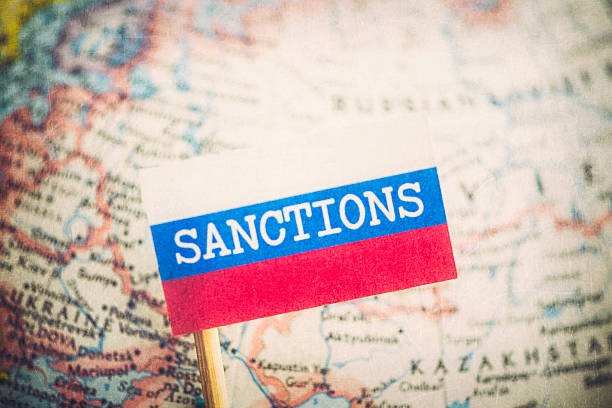
European Union sanctions against Russia are affecting Central Asian economies, but the EU remains determined to prevent the region from being used to circumvent those measures. This was emphasized by EU High Representative for Foreign Affairs Kaja Kallas during the 20th EU-Central Asia Ministerial Meeting held in Turkmenistan's capital, Ashgabat. “The EU has introduced 16 sanctions packages to weaken Russia’s military machine, and we are working on the 17th,” Kallas stated. “I understand these sanctions impact your economy, but we all want this war to end. Russian companies must not use Central Asia to bypass these restrictions.” The ministerial meeting on March 27 brought together the foreign ministers of Kazakhstan, Kyrgyzstan, Tajikistan, Turkmenistan, and Uzbekistan. Discussions centered on preparations for the upcoming EU-Central Asia Summit, scheduled for April 2025 in Samarkand. Strengthening U.S.-Uzbekistan Ties In a parallel development, U.S.-Uzbekistan relations are showing signs of deeper engagement. On March 26, Ambassador Furkat Sidikov hosted a Congressional Breakfast with U.S. Representative Trent Kelly, focused on trade and investment opportunities. Congressman Kelly praised Uzbekistan’s ongoing reforms and expressed support for lifting the Jackson-Vanik Amendment, a Cold War-era restriction on trade. A Shift in U.S. Strategy Toward Kazakhstan Meanwhile, experts are calling for a more nuanced U.S. approach to Kazakhstan. Dr. Robert M. Cutler, Times of Central Asia correspondent, noted that Kazakhstan’s close ties with Russia and China stem from geopolitical necessity rather than ideological alignment. He urged Washington to maintain consistent engagement with Kazakhstan and prioritize economic and strategic cooperation over political pressure.

Central Asia’s Crypto Gamble: Growth Amid Uncertainty

Central Asian countries are approaching the cryptocurrency and crypto-mining industry at varying speeds. While some are just beginning to explore the sector, others have already taken significant, albeit sometimes contradictory, steps. Kazakhstan: From Mining Powerhouse to Regulatory Caution Kazakhstan once emerged as a global leader in bitcoin mining. Between mid-2021 and early 2022, the country ranked third in the world in terms of bitcoin mining capacity, accounting for 13.22% of global computing power, trailing only the United States and China. This boom was fueled by low electricity costs, favorable tax conditions, and an influx of miners fleeing stricter regulations in China. However, the rapid growth strained Kazakhstan’s energy infrastructure. The Ministry of Energy reported that while annual electricity consumption had previously grown by an average of 2%, in 2021 it surged by 6.1% and up to 12% in the densely populated southern energy zone. Digital mining was cited as the primary cause. By early 2025, Kazakhstan’s share of global mining capacity had dropped to just 1.4%, placing it outside the top five globally. Although around 60 companies are currently active in the sector, some operations have stalled. Tax legislation has tightened since 2022, with miners required to pay 1-2 tenge per kilowatt-hour depending on the energy source. Illegal mining and unlicensed exchanges remain a challenge; in 2024 alone, 12 criminal cases were launched against underground platforms. Despite these setbacks, experts see potential for a more sustainable and regulated industry. The Astana International Financial Center (AIFC) has become the hub for cryptocurrency operations. A 2023 law on digital assets and updated rules from the Astana Financial Services Authority (AFSA) in 2024 have laid a more comprehensive legal foundation, including provisions on cybersecurity and anti-money laundering. Over 10 licensed cryptocurrency exchanges now operate in Kazakhstan, including global names like Binance, Bybit, and Bitfinex Securities. New initiatives such as the digital tenge and the Cryptocard aim to further integrate blockchain into daily financial transactions. President Kassym-Jomart Tokayev reaffirmed the government's commitment to digital transformation in March 2025: “The development of the digital asset industry and blockchain technology plays a major role. Urgent measures must be taken to liberalize regulation, ensure the legal circulation of digital assets and crypto exchanges, and attract investment in digital mining,” he said. Uzbekistan: State-Supported Growth Uzbekistan has made blockchain and digital assets a policy priority. The National Agency for Perspective Projects (NAPP) is the main regulatory body. Between 2022 and 2024, the agency issued 14 licenses to cryptocurrency companies. The UzNEX exchange, an internationally licensed platform, has played a key role in developing the crypto market in both Uzbekistan and the wider region. Its services include crypto asset trading, staking, and NFT transactions. In 2024, it expanded its list of supported cryptocurrencies (including Toncoin) and plans to launch a digital art platform. Total trading volume exceeded $1 billion in 2024. Kyrgyzstan: Building a Legal Framework Since 2022, Kyrgyzstan has actively developed its regulatory environment for digital assets. The key legislation is the Law on Virtual Assets, which outlines...