• KGS/USD = 0.01144 0%
  • KZT/USD = 0.00208 0%
  • TJS/USD = 0.10465 -0.29%
  • UZS/USD = 0.00008 0%
  • TMT/USD = 0.28571 0%
  • KGS/USD = 0.01144 0%
  • KZT/USD = 0.00208 0%
  • TJS/USD = 0.10465 -0.29%
  • UZS/USD = 0.00008 0%
  • TMT/USD = 0.28571 0%
  • KGS/USD = 0.01144 0%
  • KZT/USD = 0.00208 0%
  • TJS/USD = 0.10465 -0.29%
  • UZS/USD = 0.00008 0%
  • TMT/USD = 0.28571 0%
  • KGS/USD = 0.01144 0%
  • KZT/USD = 0.00208 0%
  • TJS/USD = 0.10465 -0.29%
  • UZS/USD = 0.00008 0%
  • TMT/USD = 0.28571 0%
  • KGS/USD = 0.01144 0%
  • KZT/USD = 0.00208 0%
  • TJS/USD = 0.10465 -0.29%
  • UZS/USD = 0.00008 0%
  • TMT/USD = 0.28571 0%
  • KGS/USD = 0.01144 0%
  • KZT/USD = 0.00208 0%
  • TJS/USD = 0.10465 -0.29%
  • UZS/USD = 0.00008 0%
  • TMT/USD = 0.28571 0%
  • KGS/USD = 0.01144 0%
  • KZT/USD = 0.00208 0%
  • TJS/USD = 0.10465 -0.29%
  • UZS/USD = 0.00008 0%
  • TMT/USD = 0.28571 0%
  • KGS/USD = 0.01144 0%
  • KZT/USD = 0.00208 0%
  • TJS/USD = 0.10465 -0.29%
  • UZS/USD = 0.00008 0%
  • TMT/USD = 0.28571 0%

Viewing results 1 - 6 of 36

Uzbekistan Leads Central Asia in World Happiness Report

The World Population Review has announced this year's list of the happiest countries in the world. Since 2002 the World Happiness Report has used statistical analysis to determine the probable wellbeing of countries. To determine the happiest country in the world, researchers analyzed Gallup poll data collected from 143 countries over the past three years. The index looks at six categories: gross domestic product per capita, social support, life expectancy, freedom to make life choices, generosity of the general population, and perceptions of internal and external corruption levels. The seven happiest countries in the world for 2024 are all in Europe, with six of them being in Northern Europe. Finland is in first place, followed by Denmark, Iceland, Sweden, Israel, the Netherlands, and Norway. Afghanistan ranked as the least happy country in 2024, placing 143rd. This is due to factors like low life expectancy, low GDP per capita, and the impact of the Taliban takeover. Uzbekistan takes 47th place in the ranking and is the happiest country in Central Asia. Kazakhstan is next, in 49th place overall, falling from 44th last year. Kazakhstan’s relatively slow population growth will allow the country to continue makihttps://timesca.com/uzbekistan-leads-central-asia-in-world-happiness-report/ng economic progress and reduce poverty in the coming decades. Tajikistan ranks 88th on the list. The World Happiness Report says: “Tajikistan’s population boom threatens its economy and resources. The government has implemented laws in the past to encourage contraception, and while this has helped bring down the birth rate, the country still has a long way to go.” The report doesn’t provide information about Kyrgyzstan and Turkmenistan this year. According to the most recent data for them, Turkmenistan was 78th in 2022, and Kyrgyzstan was 62nd in 2023.
Uzbekistan to Head CIS Interstate Space Council

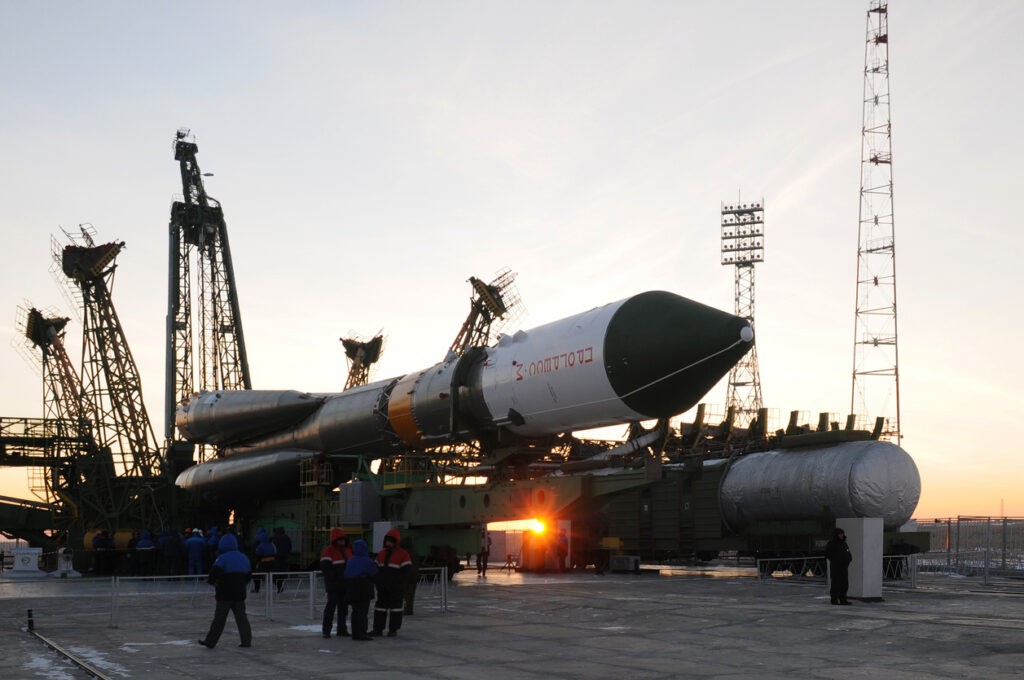
Uzbekistan will head the Interstate Space Council of CIS countries for 2024-2025, and Shukhrat Kadirov, Director of the Uzbekcosmos agency, was unanimously elected as the council chairman. This decision was made at the Fifth Council meeting, which was held in Tashkent. According to CIS rules, the council's chairmanship is passed alphabetically between the participating countries; Tajikistan held the previous chairmanship. Kadirov proposed enhancing cooperation in space education and initiating joint projects to train young specialists. He also noted that the council faces ambitious tasks, including coordinating within the UN and deepening cooperation in space technologies. In August this year, Uzbekistan announced its accession to the 1967 treaty on the exploration and use of space. It was also reported that Uzbekistan will not send weapons of mass destruction into space; the country has advocated reducing the risk of space militarization. The CIS Interstate Space Council is an organization established to coordinate the efforts of CIS countries in space activities. The Council deals with space research, technological developments, and the implementation of joint projects in the space sphere. The organization's importance lies in strengthening cooperation between the countries in using space technologies for scientific research, communications, and navigation. The Council also works on coordination within international organizations such as the UN.

CSTO to Finalize Tajik-Afghan Border Security Plan by End of Year

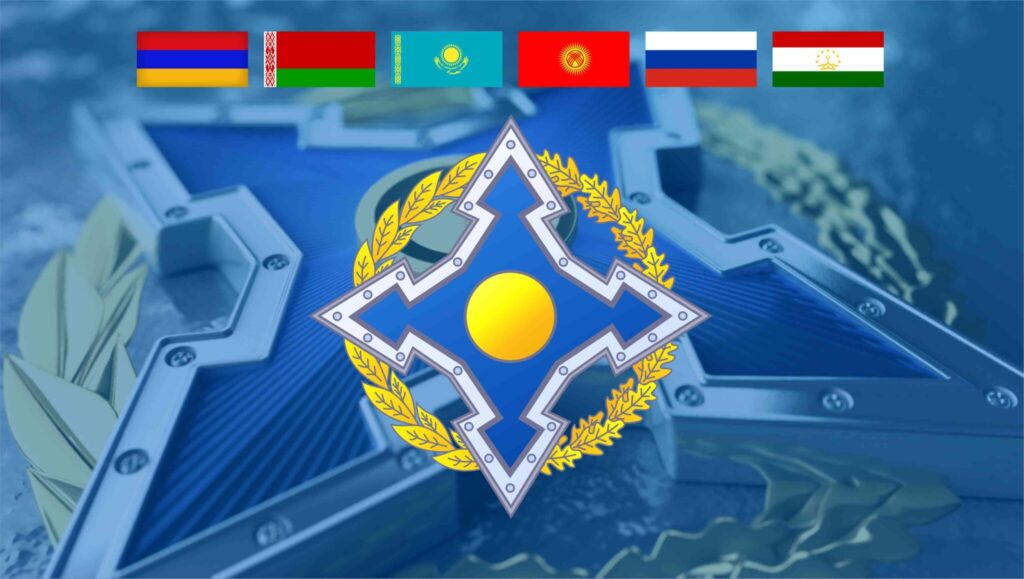
The program by the Collective Security Treaty Organization (CSTO) to strengthen the Tajik-Afghan border will be adopted by the end of 2024, the Secretary-General of the CSTO, Imangali Tasmagambetov, announced. “Continuous work is underway to develop and implement specific measures to strengthen our security space. The most striking example is the CSTO Targeted Interstate Program to Strengthen the Tajik-Afghan Border, scheduled for adoption this year,” he said. According to him, the CSTO is characterized by open and honest discussions of all current issues, without exception, in the mode of constructive and “soft” alliance and decision-making strictly in compliance with the principle of consensus. “And in terms of fundamental issues of mutual support and collective security, we act exclusively consolidated,” Tasmagambetov said. “Our common task for the foreseeable future is to strengthen the role and significance of the organization in the changing system of international relations while maintaining a commitment to established principles and priorities and at the same time corresponding to the modern context of regional and global security,” he added. The first decision to strengthen the Tajikistan-Afghanistan border was made in 2013. The program itself consists of three stages, the first of which is designed for five years. The state border between Tajikistan and Afghanistan is part of the southern border of the so-called CIS and post-Soviet territory. The total length of its border is 1374.2 km, of which 1184.4 km is a river border and 189.8 km is an island border.

With the Russian Language Waning in Central Asia, Will Other Languages Replace It?

Russian is still the most widespread foreign language in Kazakhstan, though its role is declining there, and across Central Asia in general. At the same time, the people of the region have been slow to learn other languages, in part due to economic factors such as slowing globalization, according to the Kazakhstani political analyst Zamir Karazhanov, who is head of the Kemel Arna Public Foundation.   The language of cities Since declaring independence in 1991, all the counties of Central Asia have made promoting their national languages a priority. But foreign languages, which link the region with the rest of the world, have also historically been seen as critical. In practice, however, the study and use of foreign languages other than Russian is not widespread. The Russian language is losing its prominence in Kazakhstan as the number of ethnic Russians declines. According to official statistics, as of January 1, 2024, Russians made up 14.89% of the country’s population, down from close to 40% in 1989. Nevertheless, thanks to the education system and Kazakhstan’s proximity to Russia, the level of proficiency in Russian remains high. In Kazakhstan and Kyrgyzstan, Russian is a second official language. In Tajikistan, it is called the “language of interethnic communication”. In Uzbekistan and Turkmenistan, however, it does not have an official status. More than 90% of Kazakhstanis know Russian to some degree, while 20% of the population considers it their native language. Meanwhile, those figures for Turkmenistan are 40% and 12% respectively. In Kyrgyzstan, about 44% know Russian and 5% consider it their native language; in Uzbekistan, it is about 50% and 2.7%; and in Tajikistan, 55% and 0.3%. Kazakhstan's President Kassym-Jomart Tokayev has repeatedly spoken about the need to preserve the Russian language in Kazakhstan, and the unacceptability of language-based discrimination. Last year, he unveiled the International Russian Language Organization, established by the CIS Heads of State Council. “The new organization is open to all countries and, of course, very relevant from the point of view of global humanitarian cooperation,” explained Tokayev, while underlining that measures to promote the Russian language in the Eurasia region and elsewhere are congruous with the trend of strengthening national identities. “Kazakhstan will continue the policy of bolstering the status of the state language of Kazakh,” Tokayev said at the time. Today, Kazakhstan has many Russian-language media, while Russian remains the lingua franca at meetings among post-Soviet countries. Even though Russian is concentrated in big cities, all Kazakhstanis receive a significant amount of western and other foreign news from Russian sources. “Russian is spoken in most of Kazakhstan. In the biggest city, Almaty, communicating in Russian is not a problem. But, if you move 30-50 km outside the city, it gets harder to speak it. Russian is the language of cities and the language of interethnic interaction,” the political analyst Karazhanov told The Times of Central Asia. “Of course, the number of native speakers of the Kazakh language is growing, and the number of Russian speakers is declining, but Kazakh...

Uzbekistan Releases Foreign Trade Data For 2024 So Far

The Statistics Agency of Uzbekistan has presented a report on the country’s foreign trade turnover in January-July 2024. According to the report, during this period, the country's foreign trade turnover (FTT) reached $36.8 billion and increased by $1.9 billion, or 5.3%, compared to January 2023. The volume of exports amounted to $14,786 million, which decreased by 1.1% compared to last year; imports increased by 10.1% and amounted to $22,049 million. Kazakhstan became one of Uzbekistan's largest foreign economic partners after China and Russia during this period. This may be due to a common border, trade in the CIS free trade area, and the recent liberalization of mutual economic relations. Uzbekistan has trade relations with 187 countries worldwide. A significant share of FTT was recorded in the PRC (18.6%), Russia (18.5%), Kazakhstan (6.2%), Turkey (4.6%), and South Korea (3.2%). From January to July 2024, the share of the CIS countries in the foreign trade turnover was 35.3%, which increased by 3.1% compared to the corresponding period of 2023. The total cost of FTT with these countries was $13,020.8 million. Exports reached $4,940.3 million, while imports amounted to $8,080.5 million. Uzbekistan's FTT with the Eurasian Economic Union member states amounted to $9,913.1 million. The export volume reached $3,230.5 million, and the import volume reached $6,682.5 million.

CSTO to Hold Series of Military Exercises in Central Asia

In the coming days, the Collective Security Treaty Organization (CSTO) will hold a series of exercises to protect stability in the Central Asia region. The director of the First Department of the CIS countries, Mikael Agasandyan, told RIA Novosti: “Russia is consistently making efforts to develop the CSTO’s potential as an effective structure responsible for maintaining stability in member states and the vast Eurasian space. In the coming weeks, a series of exercises are planned with various components of the Organization’s Collective Forces on the territory of Kazakhstan, Kyrgyzstan, and Tajikistan, aimed at practicing joint actions in the Central Asian region to protect the stability and collective security, in particular, taking into account the situation in Afghanistan.” He also noted the interest in the CSTO's work on the part of Eurasian states that share the opinion on the importance of creating a single, indivisible, and reliable security space on the continent. The Times of Central Asia has previously written about other CSTO military exercises held in Kazakhstan.