• KGS/USD = 0.01144 0%
  • KZT/USD = 0.00194 -0%
  • TJS/USD = 0.10896 -0%
  • UZS/USD = 0.00008 0%
  • TMT/USD = 0.28571 0.28%
  • KGS/USD = 0.01144 0%
  • KZT/USD = 0.00194 -0%
  • TJS/USD = 0.10896 -0%
  • UZS/USD = 0.00008 0%
  • TMT/USD = 0.28571 0.28%
  • KGS/USD = 0.01144 0%
  • KZT/USD = 0.00194 -0%
  • TJS/USD = 0.10896 -0%
  • UZS/USD = 0.00008 0%
  • TMT/USD = 0.28571 0.28%
  • KGS/USD = 0.01144 0%
  • KZT/USD = 0.00194 -0%
  • TJS/USD = 0.10896 -0%
  • UZS/USD = 0.00008 0%
  • TMT/USD = 0.28571 0.28%
  • KGS/USD = 0.01144 0%
  • KZT/USD = 0.00194 -0%
  • TJS/USD = 0.10896 -0%
  • UZS/USD = 0.00008 0%
  • TMT/USD = 0.28571 0.28%
  • KGS/USD = 0.01144 0%
  • KZT/USD = 0.00194 -0%
  • TJS/USD = 0.10896 -0%
  • UZS/USD = 0.00008 0%
  • TMT/USD = 0.28571 0.28%
  • KGS/USD = 0.01144 0%
  • KZT/USD = 0.00194 -0%
  • TJS/USD = 0.10896 -0%
  • UZS/USD = 0.00008 0%
  • TMT/USD = 0.28571 0.28%
  • KGS/USD = 0.01144 0%
  • KZT/USD = 0.00194 -0%
  • TJS/USD = 0.10896 -0%
  • UZS/USD = 0.00008 0%
  • TMT/USD = 0.28571 0.28%
09 December 2025

Viewing results 1 - 6 of 9

Kyzyl-Ompol Mining Resumes Under New Law, Public Concern Persists

Trial production of titanomagnetite has commenced at the Kyzyl-Ompol deposit near Balykchy in Kyrgyzstan’s Issyk-Kul region, First Deputy Prime Minister Bakyt Torobaev announced in a recent interview with local media. According to Torobaev, the deposit holds an estimated 20 million tons of titanomagnetite, and the total value of useful elements in the subsoil could approach $1 billion. “When this project was just starting, few believed in it. Today we see concrete results: experimental development has begun, infrastructure and technology are being developed. The potential of the deposit is enormous,” he said. Torobaev added that the site is also being used to test new technological solutions that could be implemented elsewhere in the country. A Controversial Resource and Legal Shifts Mining at Kyzyl-Ompol was previously prohibited due to the presence of uranium and thorium, radioactive elements often found alongside titanomagnetite. Their extraction has been banned in Kyrgyzstan since 2019, following widespread public protests over environmental and health concerns. However, a 2023 law lifted the ban under strict environmental compliance conditions. The bill’s explanatory note cited the need for alternative revenue sources in light of economic challenges stemming from the COVID-19 pandemic and regional sanctions. President Sadyr Japarov emphasized that titanomagnetite comprises roughly 95% of the deposit’s reserves. The Ministry of Natural Resources, Ecology, and Technical Supervision has assured the public that current extraction technologies meet all safety and environmental standards and pledged ongoing oversight. Economic Potential and Public Concerns Government estimates suggest that the project’s initial phase could contribute approximately $150 million to the state budget and generate around 1,000 jobs. Torobaev described Kyzyl-Ompol as having the potential to become a “second Kumtor”, a reference to the country’s largest and most profitable gold mine. Nonetheless, public debate continues. Critics caution that the area’s known uranium reserves could pose environmental risks if disturbed, particularly in the ecologically sensitive Issyk-Kul region. Titanomagnetite is used in metallurgy, particularly for producing specialized steels, and also has applications in the chemical and energy sectors. Discovered in 1951, the Kyzyl-Ompol deposit comprises five sites. To date, detailed geological surveys have been conducted on only one, with its reserves officially registered in the state balance.
Investors Push Back Against New Renewable Energy Bill in Kyrgyzstan

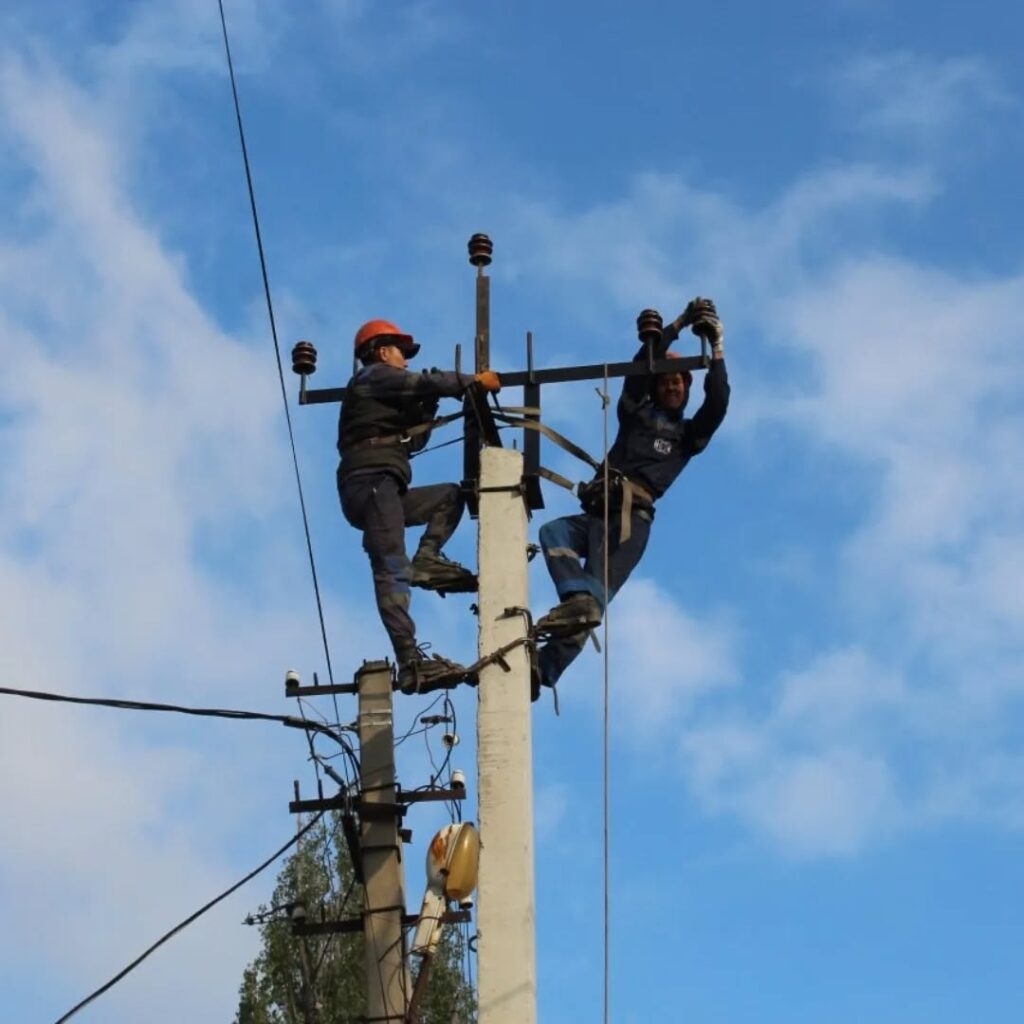
A new draft law proposed by Kyrgyzstan’s Ministry of Energy has sparked concern among renewable energy investors. The legislation, currently under public review until June 20, 2025, imposes new financial and technical obligations on owners of small hydropower plants as well as solar and wind power installations. Following the review period, the bill will be submitted to the president for approval. Key Provisions and Investor Backlash Under the proposed law, operators of small hydroelectric and other renewable energy facilities would be required to pay 1% of their electricity sales revenue to local authorities. Additionally, they must maintain the ability to accumulate at least 30% of the station’s installed capacity. The draft also stipulates that electricity generated from renewable energy sources (RES), which is neither consumed by the producer nor sold under contract, will be priced at the average tariff of the previous year. Lawmakers claim the bill ensures transmission support for RES providers, mandating that distribution companies and relevant organizations enable the smooth delivery of electricity from private generators to consumers, provided the infrastructure allows. However, industry representatives argue that the legislation could stall growth in the sector. A letter from a consortium of small hydropower companies in the Chui and Issyk-Kul regions warns that the proposed changes create unnecessary obstacles and risk deterring both domestic and foreign investment. “No domestic, let alone foreign, investor will be interested in implementing renewable energy projects if the payback period at a tariff of 1.71 KGS ($0.020) per kWh is extended to 20-25 years,” said Rakhatbek Irsaliyev, director of the consortium. “This is especially true given that such projects are not implemented for personal use or resale, but to cover the country’s growing electricity deficit.” The consortium is urging the government to revisit its tariff policy. Specifically, they are calling for a system that allows energy producers to sell at updated, higher rates, rather than last year’s average. In Kyrgyzstan, electricity tariffs are typically adjusted annually on May 1. Broader Energy Context Kyrgyzstan has long touted its substantial energy potential, particularly in hydropower. With abundant rivers and glaciers, it ranks third in hydropower resources among CIS countries, following Russia and Tajikistan. Yet, less than 10% of this potential is currently being utilized. Government efforts to address the energy shortfall include the commissioning of 18 small hydropower plants in 2025 and the expansion of wind and solar infrastructure nationwide. A major project, Kambarata HPP-1 on the Naryn River, is also in development, involving cooperation with neighboring countries. Meanwhile, the CASA-1000 initiative is nearing completion. This project aims to export summer surplus electricity from Kyrgyzstan and Tajikistan to Pakistan via Afghanistan. Despite this progress, international organizations like the World Bank have urged Kyrgyzstan to raise electricity tariffs for both residential and commercial users. Since 2024, the government has begun implementing gradual tariff hikes, but experts argue that the pace is insufficient. “The tariffs set for industrial and commercial consumers allow costs to be recouped. These categories pay a fair price,” said Katarina Gassner, a World...

Qosh Tepa Canal Sparks Concerns in Central Asia

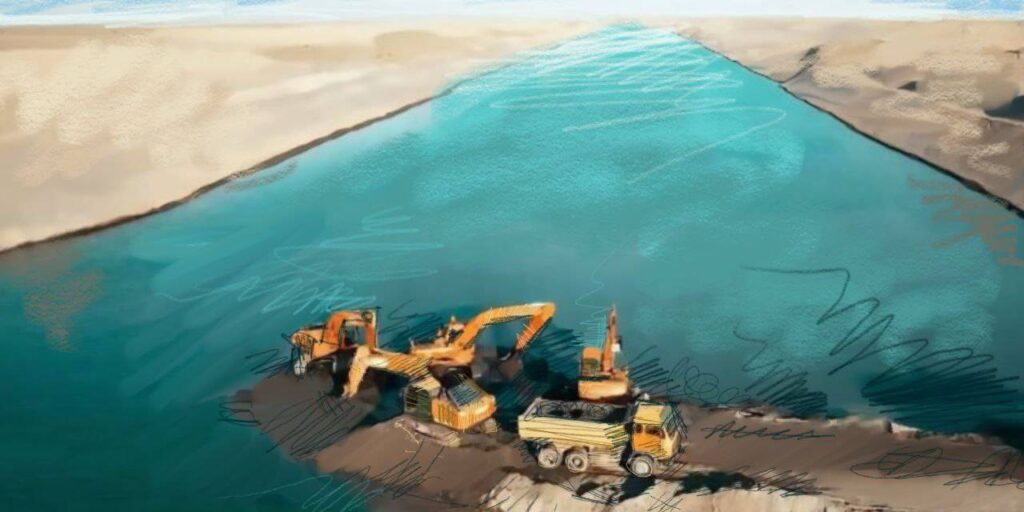
Afghanistan is rapidly advancing construction of the Qosh Tepa Canal, a large-scale water infrastructure project in the north of the country that could have far-reaching consequences for its Central Asian neighbors, according to Euronews. The 285-kilometer canal aims to divert an estimated 25-30% of the Amu Darya River’s flow to irrigate more than 500,000 hectares of farmland. The Amu Darya is one of Central Asia’s principal water sources, flowing through Tajikistan, Uzbekistan, and Turkmenistan. Uzbekistan and Turkmenistan, both downstream countries, depend heavily on the river for agriculture and hydroelectric power. Experts warn the canal could reduce Uzbekistan’s water intake by 15% and Turkmenistan’s by as much as 80%, with potential consequences including reduced crop yields, job losses, deepened poverty, and even cross-border tensions or migration. Although Kazakhstan and Kyrgyzstan are not directly linked to the Amu Darya, the ripple effects could still reach them. Azamatkhan Amirtayev, leader of Kazakhstan’s Baytaq party, cautioned that Uzbekistan may compensate by drawing more water from the Syr Darya River, thereby reducing Kazakhstan’s water supply by up to 40%. Environmental concerns are also mounting. The Aral Sea, already severely degraded by decades of mismanagement, may face further deterioration. “This project could be the last nail in the coffin for the Aral Sea,” said regional water expert Bulat Yessekin. He urged Central Asian countries to engage Afghanistan through offers of shared energy and food in exchange for coordinated water management. The canal’s implications were a key topic at the recent Water Security and Transboundary Water Use conference, where participants warned that it threatens to reverse years of regional cooperation aimed at restoring the Aral Sea. While Central Asian countries participate in international water-sharing frameworks, Afghanistan does not. Its Taliban-led government remains unrecognized internationally and is not bound by existing treaties. However, diplomatic ties are evolving. Uzbekistan has opened channels of cooperation with Kabul, and both Kazakhstan and Kyrgyzstan have removed the Taliban from their lists of banned organizations. Afghanistan’s Deputy Foreign Minister Mohammad Naeem Wardak expressed openness to dialogue. “The Qosh Tepa canal will not be to the detriment of anyone,” he stated. Kazakhstan, which chairs the International Fund for Saving the Aral Sea in 2025, has proposed using the platform to initiate talks. The country’s Ministry of Water Resources emphasized that any solution must involve regional cooperation and the adoption of water-saving technologies to reduce wastage.

OSCE, European Embassies Concerned About Media Freedom in Tajikistan

A conference was held in Dushanbe to mark World Press Freedom Day, celebrated annually on May 3. Despite Tajikistan's slight rise in the 2025 Press Freedom Index, international observers remain unconvinced that the situation in the country has improved. Official ratings vs. real-world conditions The event was organized by the media unit of the OSCE Office of Programs in Tajikistan, with support from Internews, the EU Delegation, and the embassies of Germany, France, and the United Kingdom. Discussions focused on the state of free speech, prospects for sustainable media development, and the role of women in journalism. According to Reporters Without Borders, Tajikistan ranked 153rd out of 180 countries in 2025, an improvement of two places from the previous year. However, Nuriddin Karshiboev, chairman of the National Association of Independent Media of Tajikistan (NAIMT), argued that the ranking does not reflect the lived reality. “The reality is different. The situation with freedom of expression and freedom of the press remains tense due to the prosecution of journalists, pressure on their relatives, self-censorship, and other factors,” he said. Karshiboev also criticized the ineffectiveness of existing mechanisms to protect journalists and a lack of understanding among some international media-support organizations. Freedom of speech is a right, not a privilege EU Ambassador to Tajikistan Raimundas Karoblis emphasized that journalism should never be grounds for intimidation or imprisonment. “No journalist should be subjected to intimidation or imprisonment for doing their job,” he told forum participants. Karoblis underlined that freedom of expression is not a political stance or cultural nuance, but a universally recognized right. “Freedom of expression in the media is a right, not a crime. The European Union’s protection of media freedom is not an external imposition. It is not a ‘European or Western value’ that can be exported or imposed, it is a universal human right recognized by all who believe in justice, dignity, and responsibility,” he said. He added that independent media do not threaten social stability but rather form its cornerstone. “Dynamic, independent media are not a threat to stability. They are the foundation of peace, democratic and economic progress,” Karoblis said, reaffirming the EU’s commitment to supporting journalists in Tajikistan and globally. High-profile cases against journalists In February 2025, Reporters Without Borders published a report highlighting increased repression of media figures in Tajikistan. One of the most notable cases involved freelance journalist Rukhshona Khakimova, who was sentenced to eight years in prison for treason following a closed trial. Her alleged offense was writing an analytical article on Chinese influence in Tajikistan. Khakimova is also the niece of an opposition politician sentenced to 18 years for an alleged coup attempt. Another case involved Ahmad Ibrohim, editor-in-chief of the weekly Payk, who was arrested in August 2024 on charges of corruption, extortion, and extremism. His trial was also held behind closed doors. According to media reports, the case was triggered by an officer from the State Security Committee demanding a bribe in exchange for renewing the paper’s state registration. Despite prosecution...

Uzbekistan Raises Concern over Treatment of its Migrants in Russia

Uzbekistan has urged Russia to pay greater attention to reports of mistreatment and rights violations involving Uzbek migrant workers living and working in Russia. The issue was formally raised on May 2 during a meeting in Tashkent between Uzbekistan’s Deputy Foreign Minister Bobur Usmonov and Russian Ambassador to Uzbekistan Oleg Malginov. According to Uzbekistan’s Ministry of Foreign Affairs, Usmonov expressed deep concern over the growing number of reports detailing abuse and harsh treatment of Uzbek migrants. He emphasized that such cases constitute violations of the rights and freedoms of Uzbek citizens, which should be safeguarded under the laws of their host country. The two officials also reviewed priority areas of bilateral cooperation, including upcoming events on both bilateral and multilateral agendas. They confirmed that collaboration in the consular and legal sectors remains strong. Regular consultations are held on consular issues, and a joint working group on labor migration continues to operate, focusing on employment and migration processes. “Protecting the rights and interests of citizens is at the center of our cooperation,” the Uzbek side said in an official statement. Topics discussed included pre-departure language and vocational training, simplifying the work permit application process, and ensuring that migrants comply with Russian legal requirements upon arrival. Meanwhile, on May 3, Uzbek President Shavkat Mirziyoyev and his Russian counterpart Vladimir Putin held a phone call to discuss deepening their strategic partnership. The leaders reviewed cooperation in trade, industry, and regional business, and praised the recent Innoprom. Central Asia exhibition in Tashkent. They also noted expanding ties in education, culture, sports, and tourism. Just days earlier, on April 29, a delegation from Uzbekistan, led by Deputy Prosecutor General Shohrukh Aminov, visited Moscow for the first session of a joint labor migration working group. Both parties agreed to enhance legal migration frameworks and to ensure fair and dignified treatment of migrant workers. The Uzbek government reiterated its expectation that Russian authorities will investigate the reported abuses and keep their Uzbek counterparts informed of the outcomes.

International Human Rights Activists Demand Release of Tajik Journalist Rukhshona Khakimova

The Observatory for the Protection of Human Rights Defenders has strongly condemned the sentencing of Tajik journalist Rukhshona Khakimova, calling on Tajik authorities to release her immediately and unconditionally​. In a statement issued on March 3, the Observatory asserted that Khakimova’s prosecution is linked to her participation in a politically sensitive poll on China’s influence in Tajikistan. The survey, commissioned by the Kyrgyz NGO Barometer, included interviews with political figures, some of whom belong to the opposition and face pressure from authorities​. “Ms. Khakimova is officially charged with ‘high treason’ under Article 305 of Tajikistan’s Criminal Code. This charge is part of a broader investigation into an alleged coup attempt, despite the absence of credible evidence. It is being used to suppress critical voices,” the statement said. Concerns Over Due Process and Human Rights Violations Human rights organizations have raised concerns about the secrecy of the trial, closed court sessions, and lack of transparency in the investigation. Activists argue that these factors indicate serious violations of due process. A particularly troubling aspect of the case is Khakimova’s separation from her two young children, who are two years old and nine months old. At the time of her arrest, she was still breastfeeding her younger child. Authorities have denied her mother’s request to bring the infant to the detention center, and her property has been confiscated, exacerbating her family’s financial difficulties. The Observatory for the Protection of Human Rights Defenders has urged the Tajik government to: Release Khakimova immediately. Respect her rights as a mother and consider the wellbeing of her children. Ensure a fair and transparent judicial process. International Condemnation Several other human rights organizations, including Human Rights Watch (HRW) and Reporters Without Borders (RSF), have also condemned the eight-year prison sentence handed to Khakimova. The 31-year-old journalist was convicted of “complicity in high treason using her official position”, a charge that has sparked public outrage and widespread debate on social media. On February 13, the Chairman of Tajikistan’s Supreme Court acknowledged public criticism of the verdict but defended the decision, stating that Tajik law does not provide for leniency in cases involving “especially grave crimes”. Khakimova’s case has become a symbol of shrinking press freedoms in Tajikistan. With global human rights organizations increasing pressure, the Tajik government now faces growing calls to reconsider her sentence and uphold freedom of the press and due process.