• KZT/USD = 0.00223
  • TJS/USD = 0.10810
  • UZS/USD = 0.00009
  • TMT/USD = 0.29850
  • KZT/USD = 0.00223
  • TJS/USD = 0.10810
  • UZS/USD = 0.00009
  • TMT/USD = 0.29850
  • KZT/USD = 0.00223
  • TJS/USD = 0.10810
  • UZS/USD = 0.00009
  • TMT/USD = 0.29850
  • KZT/USD = 0.00223
  • TJS/USD = 0.10810
  • UZS/USD = 0.00009
  • TMT/USD = 0.29850
  • KZT/USD = 0.00223
  • TJS/USD = 0.10810
  • UZS/USD = 0.00009
  • TMT/USD = 0.29850
  • KZT/USD = 0.00223
  • TJS/USD = 0.10810
  • UZS/USD = 0.00009
  • TMT/USD = 0.29850
  • KZT/USD = 0.00223
  • TJS/USD = 0.10810
  • UZS/USD = 0.00009
  • TMT/USD = 0.29850
  • KZT/USD = 0.00223
  • TJS/USD = 0.10810
  • UZS/USD = 0.00009
  • TMT/USD = 0.29850
22 September 2026

Viewing results 1 - 6 of 137

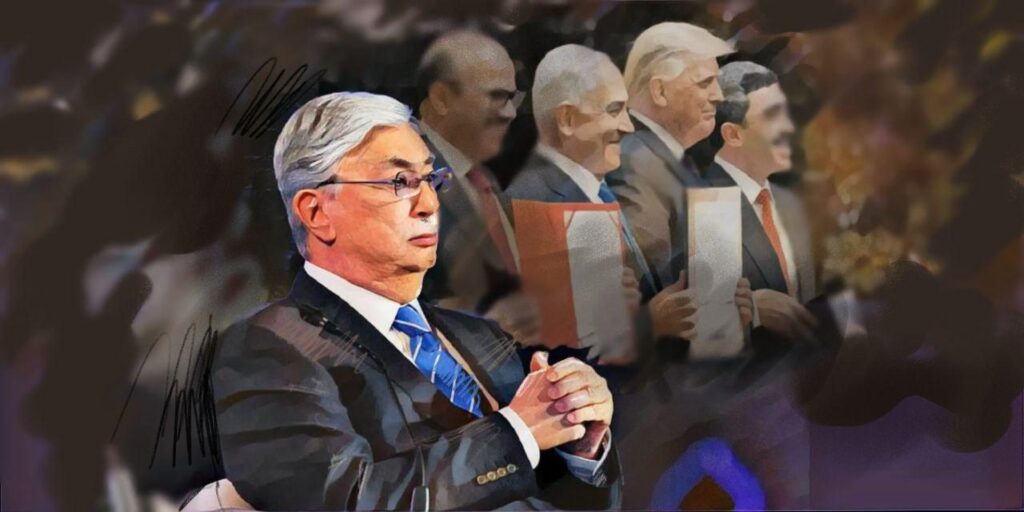
Kazakh Diplomacy: Why Tokayev Aligned Kazakhstan With the Abraham Accords

On November 6, 2025, President Kassym-Jomart Tokayev confirmed that Kazakhstan had formally acceded to the Abraham Accords, aligning the Central Asian state with the U.S.-brokered diplomatic framework. Launched during Trump’s first presidential term, the Abraham Accords seek to expand diplomatic normalization between Israel and Muslim-majority states. Initially signed in September 2020 by Israel and the United Arab Emirates, and separately by Israel and Bahrain, the Abraham Accords were later expanded to include Morocco and Sudan. Within the broader Abraham Accords framework, Washington continues to seek Saudi Arabia’s participation, a step viewed as diplomatically significant given the kingdom’s custodianship of two of Islam’s holiest sites. However, the process was derailed following the outbreak of the Gaza war in late 2023, triggered by a Hamas attack on Israel. Riyadh has since insisted that normalization can only proceed once there is meaningful progress toward establishing a Palestinian state. Kazakhstan, a secular state with a Muslim-majority population, has maintained diplomatic ties with Israel since April 1992. Embassies were opened in 1996, and bilateral relations have expanded steadily, including in trade, defense, and humanitarian fields. In 2016, Israeli Prime Minister Benjamin Netanyahu visited Kazakhstan, highlighting the strength of this relationship. These longstanding ties help explain why Kazakhstan’s accession did not mark a shift in its bilateral relationship with Israel. Because Kazakhstan established full diplomatic relations with Israel decades ago, several analysts have described the country’s accession to the Abraham Accords as largely symbolic. Uzbek political scientist Kamoliddin Rabbimov argues that the decision was a calculated gesture rather than a shift in Kazakhstan’s geopolitical orientation. “The question arises: is Kazakhstan really ready to weaken its relations with China, Turkey, and Russia in order to join the American-Israeli alliance? I don’t think so,” Rabbimov said. “President Tokayev most likely just formally supported Trump’s initiative by saying ‘yes’ without putting any real geopolitical meaning into it. Nevertheless, even such a ‘yes’ is capable of slightly upsetting the balance in Kazakhstan’s foreign policy.” Giorgio Cafiero, the CEO of Washington-based Gulf State Analytics, views the move as strategic positioning. “Given the Trump administration’s determination to expand the scope of the Abraham Accords, this move by Kazakhstan was a relatively easy way to win the White House’s favor.” German analysts at Kettner Edelmetalle emphasize Kazakhstan’s natural resource wealth as a key factor. “The country has significant deposits of minerals and rare earth elements, resources that are indispensable for modern technologies. By strengthening ties with Washington, Astana apparently hopes to attract more American investment in this strategically important sector.” Eldar Mamedov, non-resident fellow at the Queens Institute and a former senior advisor to the European Parliament, views the development through the lens of geopolitical balancing. “The Abraham Accords are merely a tool in Astana’s deliberate efforts to diversify its geopolitical dependence on Moscow and strengthen its strategic relations with the United States,” he writes. “Perceiving them as the beginning of a new, ideologically defined bloc misinterprets the fundamentally pragmatic and self-interested nature of Kazakhstan’s calculations.” Kazakhstan’s accession to the Abraham Accords reflects...
Uzbekistan Urges Diplomats to Actively Defend Citizens Abroad

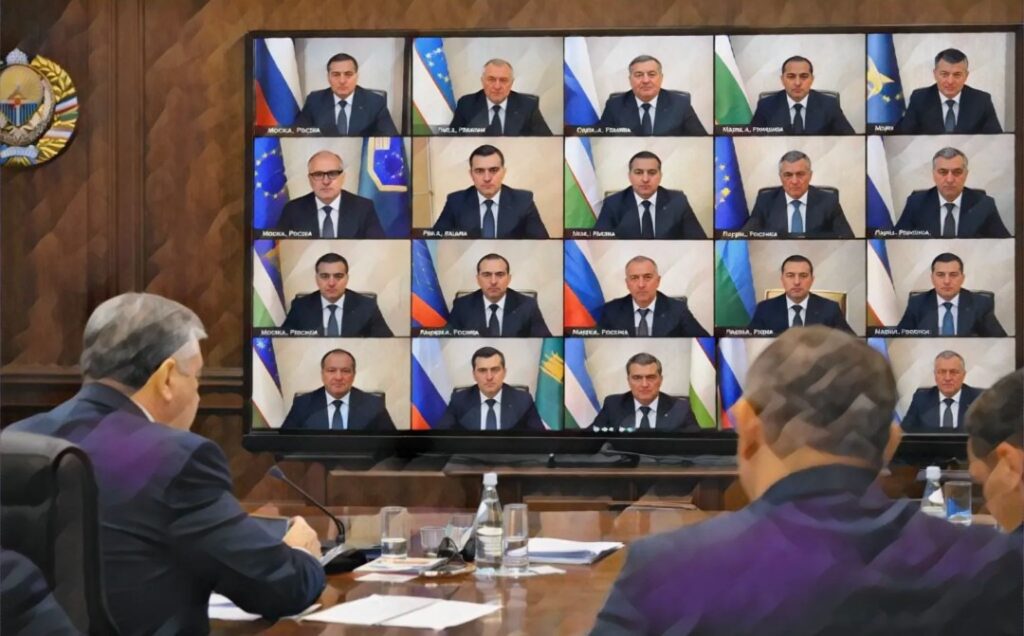
President Shavkat Mirziyoyev has directed Uzbekistan’s diplomats to take a more proactive role in protecting the rights of citizens living and working abroad, amid rising public concern over reported abuses during migration checks and raids in foreign countries. The issue was raised during a video conference chaired by Mirziyoyev on the performance of the Ministry of Foreign Affairs and the country's diplomatic missions overseas, according to the president’s press secretary. Mirziyoyev noted that the presence of Uzbek citizens residing abroad illegally remains a pressing issue for the state. In 2025, Uzbekistan secured a migration amnesty for more than 150,000 of its nationals in Russia. During the meeting, officials were instructed to intensify talks with other countries to facilitate legal employment pathways for Uzbek citizens, while also stressing that migrants must comply with the laws of their host countries. The president said that assisting labor migrants, particularly in countries experiencing rising inflows of Uzbek workers, must become a central responsibility of consular staff. Special attention was given to European states, where the number of Uzbek labor migrants has grown in recent years. He also called for the simplification of consular registration procedures and the elimination of excessive bureaucracy. Reports of rights violations during foreign law enforcement raids have triggered significant public backlash. Mirziyoyev criticized the Ministry of Foreign Affairs for often responding only with formal diplomatic notes, saying that ambassadors and consuls must provide qualified legal support and actively defend the interests of Uzbek citizens in such cases. The president also raised concerns about the risk of young people and students abroad being drawn into radical movements. He called on diplomats to abandon “cabinet diplomacy” and instead visit construction sites, dormitories, and classrooms to directly engage with citizens and address their needs. As part of the new measures, officials were instructed to establish a free call center for citizens abroad facing difficult situations, enabling rapid coordination with the relevant ministries. Separately, the Foreign Ministry has yet to confirm whether it has issued a diplomatic note in response to recent remarks by Russian propagandist Vladimir Solovyov, who suggested launching a “special military operation” in Central Asia. In an interview with Kun.uz, parliamentary deputy Bobur Bekmurodov said it may be premature to assess the ministry’s response but noted that Solovyov’s comments could warrant declaring him an undesirable person in Uzbekistan.

Japarov Credits Mirziyoyev’s in Resolving Kyrgyzstan-Tajikistan Border Dispute

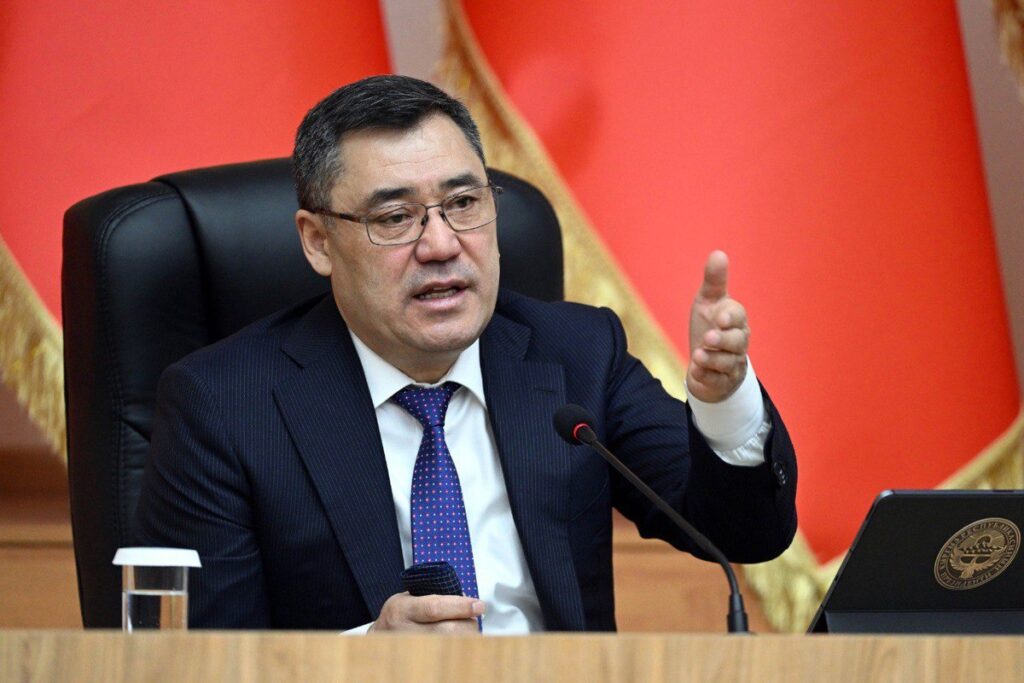
Kyrgyz President Sadyr Japarov has detailed how the long-standing border conflict with Tajikistan was resolved, citing direct diplomacy, enhanced military capabilities, and crucial regional mediation. His remarks came during the second part of the documentary President, aired on Kyrgyzstan’s Region TV. Japarov recounted that after the deadly clashes along the Kyrgyz, Tajik border in April 2021, he opted to visit Dushanbe for direct talks with Tajik President Emomali Rahmon, despite opposition from some members of his inner circle, including State Committee for National Security Chairman Kamchybek Tashiyev. The negotiations, which lasted ten hours, ended without immediate results. “We talked for many hours, but at that time we could not reach an agreement,” Japarov recalled in the film. The 2021 conflict, triggered by disputes over infrastructure near the Kyrgyz village of Kok-Tash, exposed significant weaknesses in Kyrgyzstan’s defense capacity. The two-day confrontation involved heavy weaponry, including mortars, armored vehicles, and helicopter gunships. Official figures reported 54 fatalities, hundreds of injuries, and mass civilian displacement. Japarov said the violence spurred a modernization of the Kyrgyz military. The country began acquiring advanced equipment, including Turkish-made Bayraktar Akıncı and Aksungur drones. By the time renewed clashes broke out in September 2022, the president claimed that the balance of power had shifted. “By then, the forces were already equal, and we had begun to gain air superiority,” he said. Despite these developments, Japarov stressed that diplomacy ultimately brought resolution, and credited Uzbek President Shavkat Mirziyoyev with playing a pivotal role. “At summits, I told Rahmon, ‘Let’s sit down and talk.’ At first he refused. The second time, he agreed,” Japarov stated. “I must say that the role of Uzbekistan’s President Shavkat Mirziyoyev was very significant. He persuaded us not to miss the moment and to reach an agreement. That’s how we sat down and resolved the border issue.” Kyrgyz Foreign Minister Jeenbek Kulubaev supported this view, describing Mirziyoyev as a regional leader who consistently urged neighbors to resolve disputes peacefully. He noted that Mirziyoyev had warned unresolved conflicts risk deterring both investors and tourists, who often see Central Asia as a single, interconnected region. Kyrgyzstan and Tajikistan officially signed a border delimitation agreement on March 13 of last year, following a preliminary signing on March 31 in Khujand during a trilateral meeting involving the leaders of Kyrgyzstan, Tajikistan, and Uzbekistan.

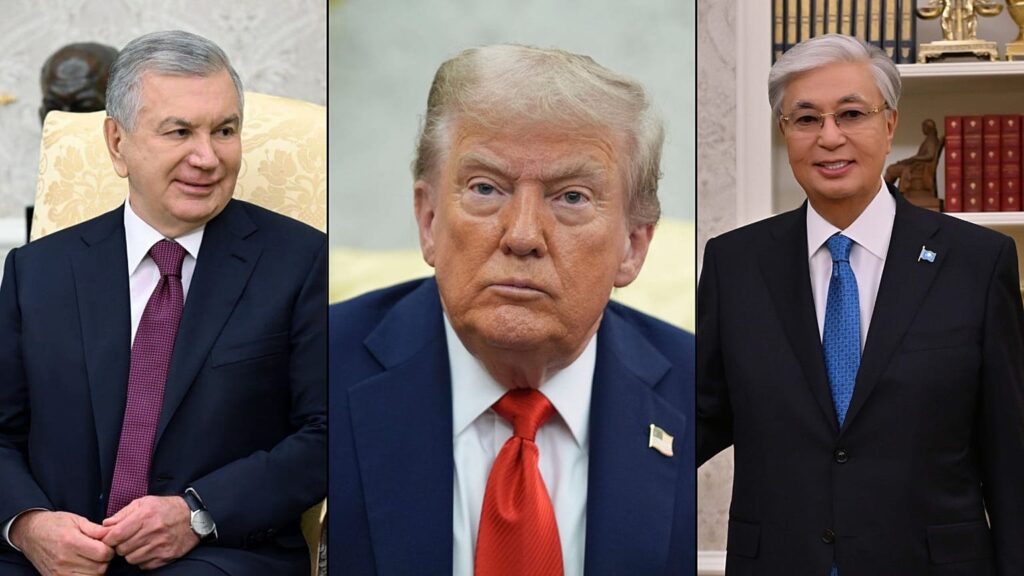
Tokayev, Mirziyoyev Have Telephone Conversations with Trump

According to Akorda, a phone conversation took place today between Kazakhstan's President Kassym-Jomart Tokayev and U.S. President Donald Trump. The leaders spoke about their bilateral agenda and the current international situation, including in Ukraine. Tokayev confirmed his commitment to implementing the agreements reached during his visit to Washington in November of this year. He emphasized the complexity of resolving the war in Ukraine. Tokayev also invited Trump to visit Kazakhstan. Almost at the same time, Trump wrote on his social media site, Truth Social: "This morning, I had two wonderful phone conversations with Kassym-Jomart Tokayev, President of the Republic of Kazakhstan, and Shavkat Mirziyoyev, President of the Republic of Uzbekistan. We discussed the importance of establishing peace in ongoing conflicts, as well as expanding trade and cooperation between our countries. Relations with both countries are impressive. The United States will host the G20 summit next year, and we will invite both of these leaders to join us as guests at this very important event, which will take place in Miami!"

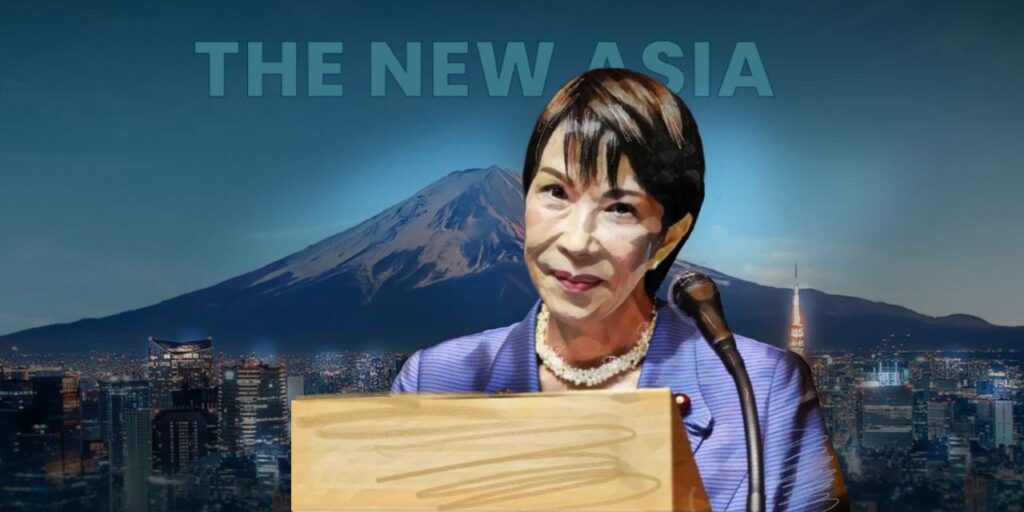
Japan Steps Out of the Shadows With First Central Asia Leaders’ Summit

On December 19-20, Tokyo will host a landmark summit poised to reshape Eurasian cooperation. For the first time in the 20-year history of the “Central Asia + Japan” format, the dialogue is being elevated to the level of heads of state. For Japan, this represents more than a diplomatic gesture; it signals a shift from what analysts often describe as cautious “silk diplomacy” to a more substantive political and economic partnership with a region increasingly central to global competition over resources and trade routes. The summit will be chaired by Japanese Prime Minister Sanae Takaichi. The leaders of all five Central Asian states, Kazakhstan, Kyrgyzstan, Tajikistan, Turkmenistan, and Uzbekistan, have confirmed their participation. Alongside the plenary session, bilateral meetings and a parallel business forum are scheduled to take place. Why Now? Established in 2004, the “Central Asia + Japan” format has largely functioned as a platform for foreign ministers and technical cooperation. According to Esbul Sartayev, assistant professor at the Center for Global Risks at Nagasaki University, raising the dialogue to the head-of-state level marks a deliberate step by Japan to abandon its traditionally “secondary” role in a region historically dominated by Russia and China. This shift comes amid a changing geopolitical context: disrupted global supply chains, intensifying competition for critical and rare earth resources, and a growing U.S. and EU presence in Central Asia. In this environment, Tokyo is promoting a coordinated approach to global order “based on the rule of law”, a neutral-sounding phrase with clear geopolitical resonance. Unlike other external actors in Central Asia, Japan has historically emphasized long-term development financing, technology transfer, and institutional capacity-building rather than security alliances or resource extraction. Japanese engagement has focused on infrastructure quality, human capital, and governance standards, allowing Tokyo to position itself as a complementary partner rather than a rival power in the region. Economy, Logistics, and AI The summit agenda encompasses a range of priorities: sustainable development, trade and investment expansion, infrastructure and logistics, and digital technology. Notably, the summit is expected to include a new framework for artificial intelligence cooperation aimed at strengthening economic security and supply chain development. It is also likely to reference expanded infrastructure cooperation, including transport routes linking Central Asia to Europe. As a resource-dependent country, Japan sees Central Asia as part of its evolving “resource and technological realism” strategy. For the Central Asian states, this presents a chance to integrate into new global value chains without being relegated to the role of raw material suppliers. Kazakhstan: Deals Worth Billions The summit coincides with Kazakh President Kassym-Jomart Tokayev’s official visit to Japan from December 18-20. During the visit, more than 40 agreements totaling over $3.7 billion are expected to be signed. These span energy, renewables, digitalization, mining, and transport. Participants include Samruk-Kazyna, KEGOC, Kazatomprom, KTZ, and major Japanese corporations such as Marubeni, Mitsubishi Heavy Industries, Toshiba, and JOGMEC. Japan’s ambassador to Kazakhstan, Yasumasa Iijima, has referred to Kazakhstan as a future Eurasian transport and logistics hub, highlighting its strategic role in developing the Trans-Caspian...

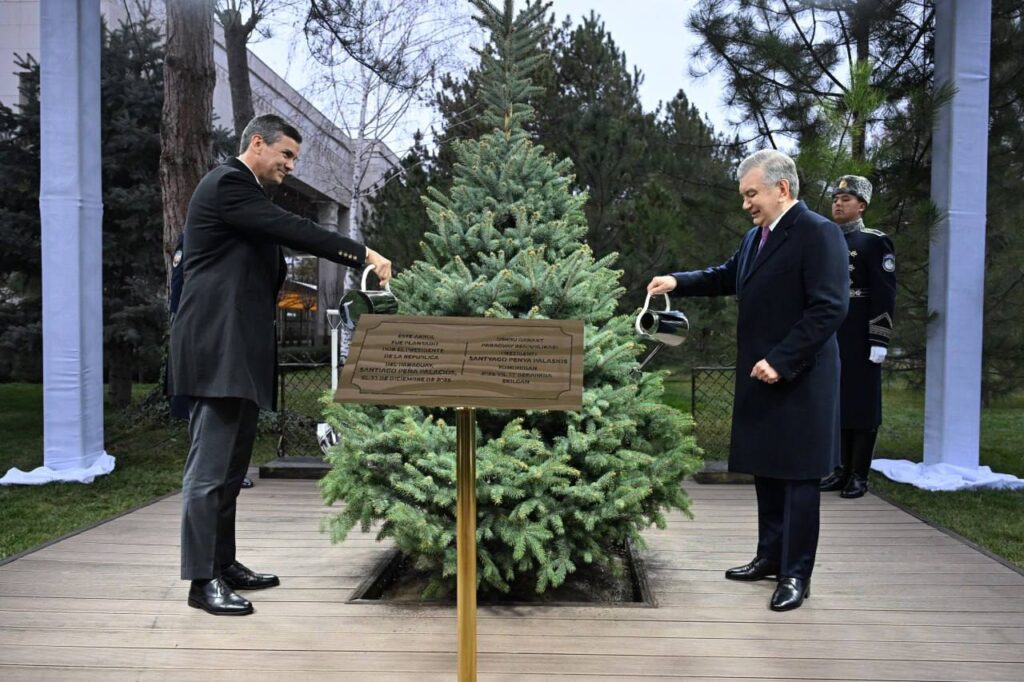
Uzbekistan, Paraguay Deepen Ties During First-Ever Presidential Visit

Uzbekistan and Paraguay have agreed to enhance political and economic cooperation following high-level talks in Tashkent, according to the presidential press service. The meeting between Uzbek President Shavkat Mirziyoyev and Paraguayan President Santiago Peña took place at the Kuksaroy residence, with participation from both countries’ official delegations. Mirziyoyev welcomed his counterpart and highlighted the historical significance of the visit, noting it as the first time a president from a Latin American country has traveled to Uzbekistan. The visit is expected to usher in a new era of bilateral relations. The two leaders discussed expanding cooperation across several sectors. Talks focused on increasing mutual trade, strengthening business contacts, and initiating joint projects in agriculture, food production, the chemical industry, digital technologies, tourism, and sports. Cultural, educational, and humanitarian collaboration were also emphasized as priority areas. The sides also exchanged views on international and regional developments. Following the talks, Mirziyoyev and Peña signed a joint statement reaffirming their commitment to strengthening political dialogue and expanding practical cooperation. Uzbek media reported that two additional documents were signed in the presence of the presidents: a protocol concluding bilateral market-access negotiations related to Uzbekistan’s accession to the World Trade Organization, and a memorandum between the foreign ministries to establish a mechanism for political consultations. The meeting concluded with a symbolic gesture. The two presidents planted a tree on the Alley of Honored Guests at the Kuksaroy residence, symbolizing their intention to open a new chapter in Uzbekistan-Paraguay relations.