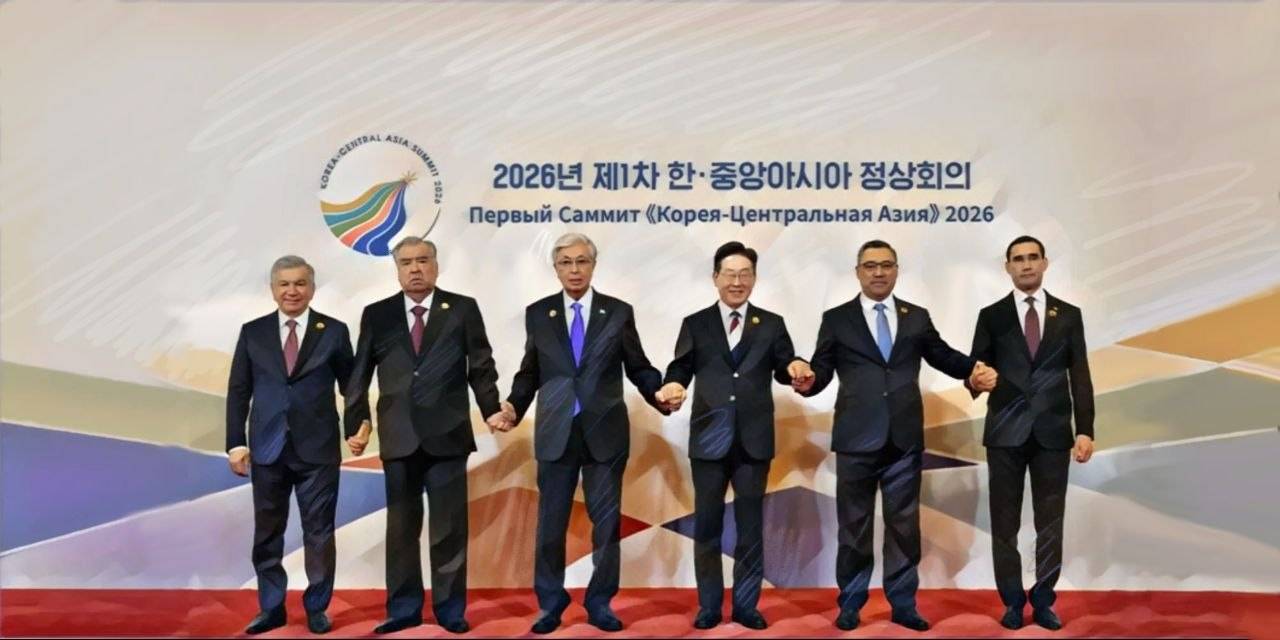
The first Central Asia-Republic of Korea Summit brought five countries to Seoul with very different records of working with Korean capital. Kazakhstan arrived with commercial agreements worth about $19 billion, while Uzbekistan is discussing multibillion-dollar financing through the state-owned Export-Import Bank of Korea. In Turkmenistan, Korean companies are expanding beyond their traditional role in the gas-chemical industry; Tajikistan is offering mineral resources; and Kyrgyzstan is establishing a dedicated government contact point to help attract Korean businesses.
On September 16, the presidents of all five Central Asian states met South Korean President Lee Jae Myung together for the first time. Until now, the Korea-Central Asia Cooperation Forum, established in 2007, had operated mainly at a ministerial level. A permanent secretariat was established in 2017, and in 2020 the meetings were elevated to the level of foreign ministers.
The leaders adopted the Seoul Declaration, agreeing to hold summits every two years, with Kazakhstan set to host the next in 2028. Ministerial meetings in the intervening years will review implementation and prepare the next summit’s agenda.
The declaration also envisages Korea Desks across the five Central Asian countries to help businesses address administrative obstacles. The leaders expressed interest in combining Central Asian minerals with Korean technology to build joint production networks, and agreed to pursue measures to reduce non-tariff barriers.
Seoul also sees Central Asia as part of its own industrial strategy. South Korea, one of the world’s leading producers of automobiles, electronics, batteries, and ships, needs stable supplies of energy and raw materials. Opening the summit, Lee spoke of combining the region’s resources with Korean exploration and processing technologies. Critical minerals, energy, and supply-chain resilience were among the main issues at the meeting.
In 2025, South Korea’s trade with the five countries reached $10 billion for the first time: Korean exports totaled $8.67 billion, while imports from Central Asia amounted to $1.39 billion. Cumulative Korean investment in the region reached $6.48 billion. Kazakhstan and Uzbekistan continue to account for most of this trade and investment.
The talks in Seoul showed how different the next step could look in each of the five countries.
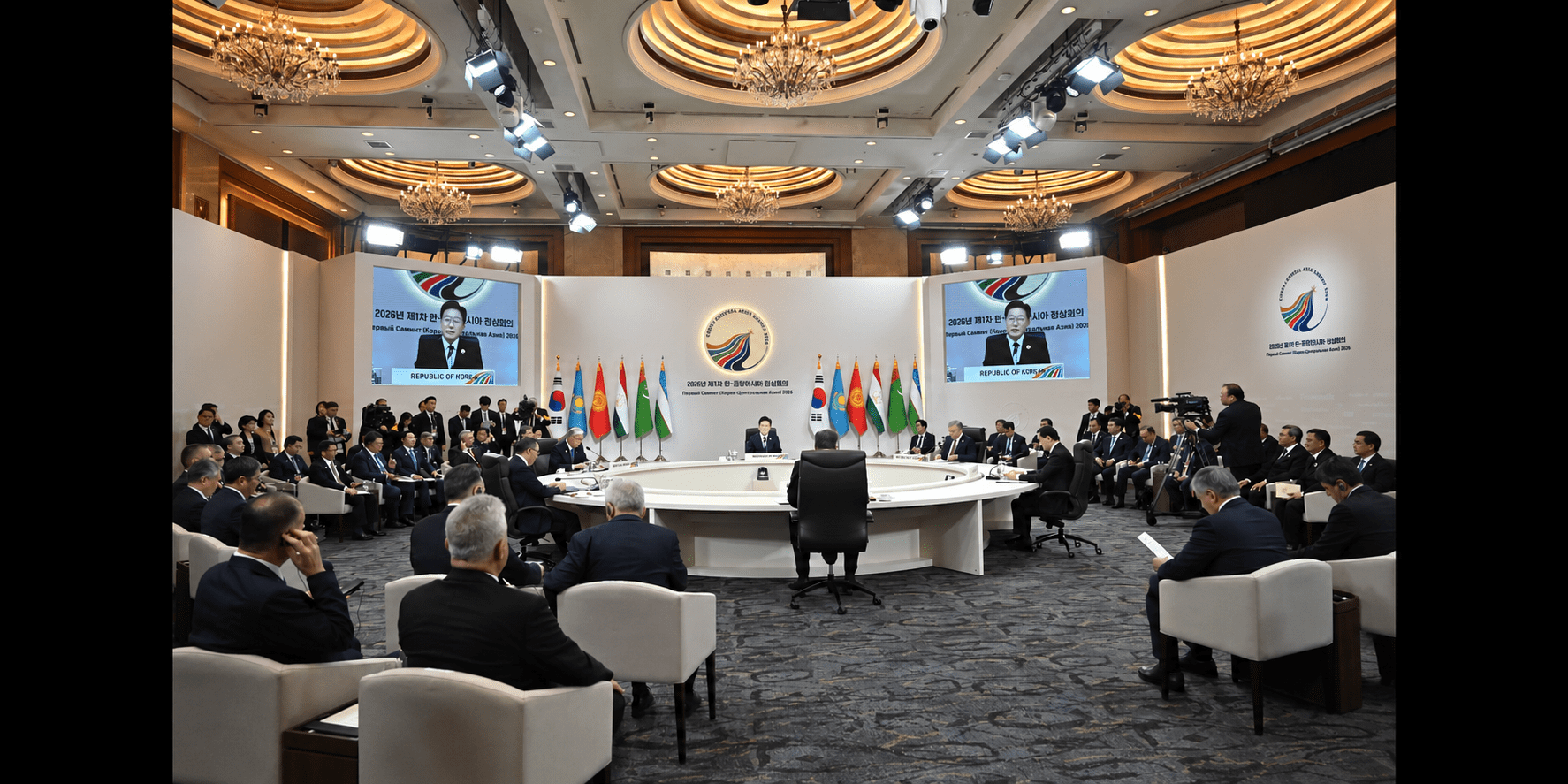
Image: Akorda
Kazakhstan: $19 Billion in Agreements and Large-Scale Industry
Kazakhstan arrived at the summit with the largest announced commercial package. On September 15, a day before the regional summit, Kazakhstan and South Korea signed around 80 agreements worth approximately $19 billion through the Kazakhstan-Korea Business Council in Seoul. About $11 billion is associated with projects involving Samruk-Kazyna, Kazakhstan’s sovereign wealth fund, which controls major state assets in oil and gas, energy, transport, telecommunications, and uranium mining.
The $19 billion figure represents the value of signed agreements and announced projects at different stages of development. Behind the headline figure are several major industrial projects. QazaqGaz and Hyundai Engineering agreed to implement a gas processing plant at Karachaganak with an annual capacity of 5 billion cubic meters. KazMunayGas and Samsung E&A signed an agreement on expanding the Pavlodar refinery’s capacity to 9 million metric tons a year. Doosan Enerbility is participating in a 1 GW power plant project in the Turkestan Region.
The minerals portfolio includes joint drilling by Tau-Ken Samruk, the Ognevsky Mining and Processing Plant, and the Korea Institute of Geoscience and Mineral Resources (KIGAM) at the Bakennoye lithium deposit. A memorandum with POSCO Holdings covers technologies for processing, separation, and the refining of rare-earth materials.
On September 15, Kassym-Jomart Tokayev and Lee Jae Myung upgraded bilateral relations to a future-oriented comprehensive strategic partnership. The two sides exchanged 13 memorandums and agreements covering the economy, energy, critical minerals, artificial intelligence, science, and other areas.
Civil nuclear energy also appeared on the list. Kazakhstan is beginning to build its own nuclear power sector, while South Korea has reactor technology and experience constructing nuclear power plants abroad. The documents signed in Seoul open the way for cooperation, but do not mean that a Korean company has been selected for any specific Kazakh nuclear project.
Lee described Kazakhstan as an important partner for South Korea’s economic security. “Kazakhstan is rich in energy and resources and has great potential in advanced industries of the future,” the South Korean president said during his talks with Tokayev.
Uzbekistan: $8 Billion Through Korea Eximbank
Uzbekistan arrived in Seoul with a portfolio of prospective joint projects worth nearly $12 billion. They span industry, transport, digital infrastructure, artificial intelligence, pharmaceuticals, biotechnology, and raw-material processing.
Following talks between Shavkat Mirziyoyev and Lee Jae Myung, the two sides signed 13 documents covering transport, aviation, agriculture, artificial intelligence, education, healthcare, and intellectual property.
A separate part of Uzbekistan’s agenda centers on the Export-Import Bank of Korea, or Korea Eximbank, South Korea’s state-owned export credit agency. Through the bank and its funds, Seoul finances overseas projects involving Korean equipment, technologies, and companies.
Mirziyoyev supported a new $8 billion partnership program with the bank. The two sides are discussing high-speed train deliveries, the creation of a Bio-Center, critical mineral processing, and digital technologies. Korean financial institutions and companies are expected to be brought into the construction of a new Tashkent-Samarkand railway. Another proposal is to establish a center for the design and testing of semiconductors and advanced materials.
The $8 billion partnership program requires individual projects to be prepared and approved before financing is released. The Uzbek presidential readout also confirmed the launch of a joint fund to finance critical mineral projects, but did not specify the size of the fund.
The breadth of projects reflects South Korea’s expanding economic engagement with Uzbekistan. The first decades of Korean involvement were closely associated with automobile manufacturing and major industrial enterprises. These are now being joined by railways, biotechnology, digital infrastructure, critical minerals, and microelectronics.
Turkmenistan: From Gas-Chemicals to Water and the Caspian
Turkmenistan has not announced a package comparable to Kazakhstan’s $19 billion or Uzbekistan’s multibillion-dollar financing programs. Instead, Korean companies are broadening the range of industries in which they operate.
Serdar Berdimuhamedov and Lee Jae Myung signed an intergovernmental agreement on the promotion and reciprocal protection of investments. Other agreements cover the chemical industry, construction, water management, transport, communications, and shipbuilding.
Daewoo Engineering & Construction signed a memorandum covering potential participation in modernizing a 250-kilometer section of the Karakum Canal. Hyundai Corporation signed a memorandum in road transport, while LS Cable & System signed one covering communications. Other documents link Korean companies with the Turkmenbashi Complex of Oil Refineries and the Balkan shipyard on the Caspian Sea.
The Korean side also identified the modernization of Caspian ports, environmentally friendly transport, and smart logistics, or digital management of freight flows, as areas for cooperation.
Korean contractors have long worked in Turkmenistan’s gas-chemical sector. The Seoul agreements add water, ports, communications, transport, and shipbuilding to that relationship.
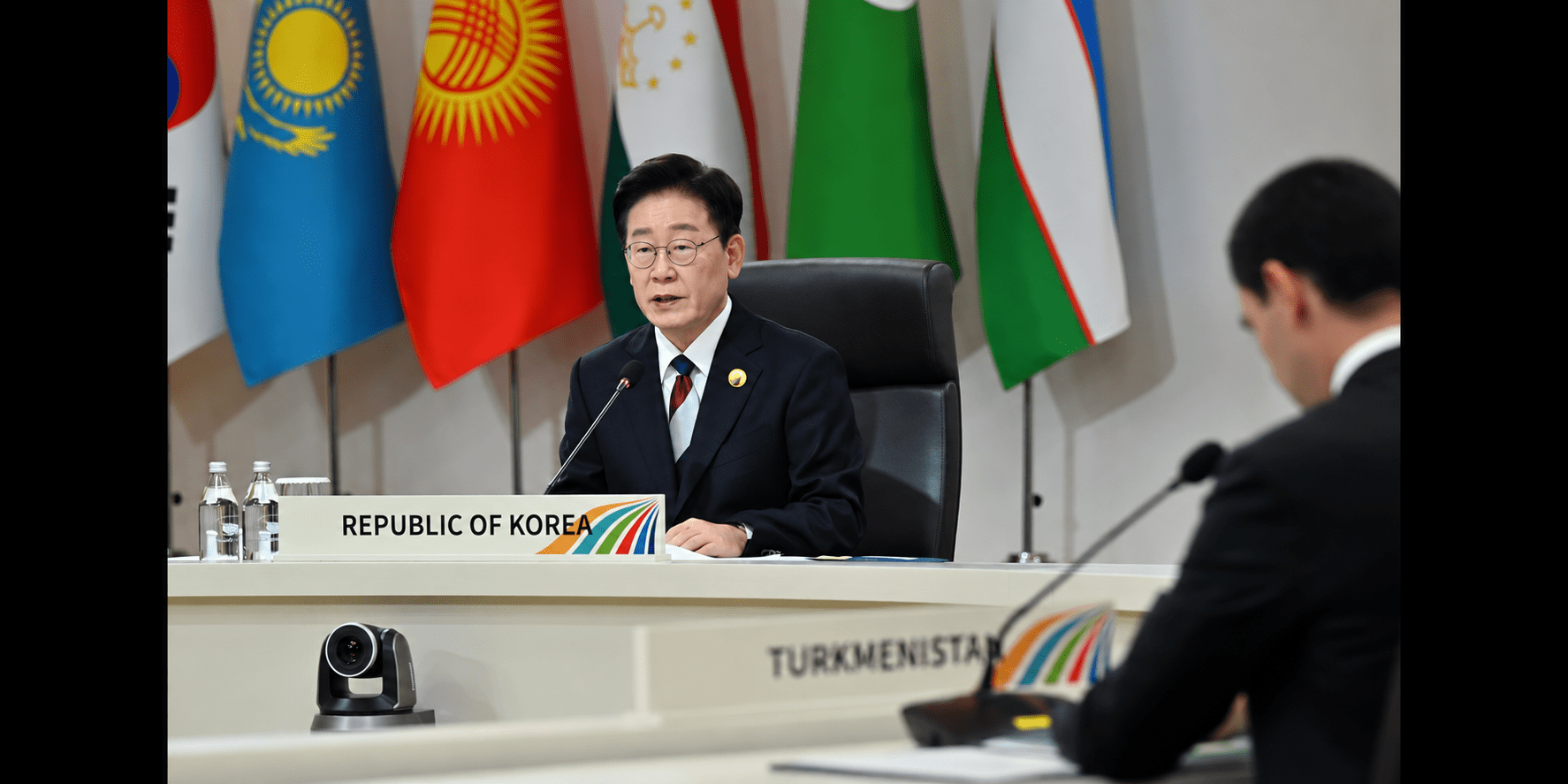
Image: Akorda
Tajikistan: Antimony Reaches the Presidential Agenda
Emomali Rahmon and Lee Jae Myung held talks on September 16 immediately before the summit. The countries upgraded their relationship to a comprehensive partnership. Seventeen agreements were signed during the visit, most aimed at expanding economic cooperation. Seoul separately identified railways, critical minerals, and digital technologies as promising areas.
The minerals issue is particularly important to South Korea. In August, the Korean trade ministry identified gold, silver, and antimony among Tajikistan’s resources of interest for potential cooperation.
Antimony is used in batteries, electronics, flame-retardant materials, and defense applications. Its global market is far smaller than those for copper or iron ore, but mining and processing are highly concentrated. China holds a leading position, and Beijing’s export restrictions have pushed industrial economies to actively seek alternative sources.
Ahead of the summit, Seoul and Dushanbe discussed opportunities for joint mineral exploration and project financing, alongside supply-chain development. The August talks sought to connect Tajikistan’s resources with Korean technology and demand.
Rail infrastructure has emerged alongside minerals. For mountainous, landlocked Tajikistan, transportation costs directly affect the economics of export-oriented mining. Korean participation is being discussed in infrastructure, technology, and specialist training.
Kyrgyzstan: A Korea Desk for Investors
Kyrgyzstan and South Korea signed 18 agreements and memorandums covering critical minerals, energy, infrastructure, trade, and other areas.
One of the more concrete decisions is to establish a Korea Desk within the Kyrgyz government, intended to serve as a dedicated point of contact for trade and investment between the two countries. The sides also agreed to work toward mutual recognition of halal certification and jointly explore business opportunities in critical minerals.
For Korean food and cosmetics manufacturers, mutual recognition of halal certification could make it easier to work not only in Kyrgyzstan, but also with consumers elsewhere in the region.
The agreements also envisage closer cooperation with the Korea Trade-Investment Promotion Agency (KOTRA), South Korea’s state agency that helps companies find overseas markets, partners, and investment opportunities.
South Korea’s corporate presence in Kyrgyzstan remains significantly smaller than in Kazakhstan and Uzbekistan. Bishkek is therefore starting with a more basic task: creating a mechanism through which Korean companies can identify projects and resolve administrative issues.
One Summit, Five Different Economies
The differences among the five countries are an important feature of the new format. Kim Sang-chul, a researcher at the Institute of Central Asian Studies at Hankuk University of Foreign Studies, highlighted the differences.
“The Central Asian countries differ in terms of resources, industrial structure and level of economic development,” he told The Korea Times. In his assessment, a regional meeting can identify broad areas of cooperation, while specific projects require separate negotiations with each nation.
The agreements announced in Seoul will now need financing and implementation to deliver economic benefits.