• KGS/USD = 0.01144 0%
  • KZT/USD = 0.00214 0%
  • TJS/USD = 0.10815 0.19%
  • UZS/USD = 0.00008 0%
  • TMT/USD = 0.28571 0%
  • KGS/USD = 0.01144 0%
  • KZT/USD = 0.00214 0%
  • TJS/USD = 0.10815 0.19%
  • UZS/USD = 0.00008 0%
  • TMT/USD = 0.28571 0%
  • KGS/USD = 0.01144 0%
  • KZT/USD = 0.00214 0%
  • TJS/USD = 0.10815 0.19%
  • UZS/USD = 0.00008 0%
  • TMT/USD = 0.28571 0%
  • KGS/USD = 0.01144 0%
  • KZT/USD = 0.00214 0%
  • TJS/USD = 0.10815 0.19%
  • UZS/USD = 0.00008 0%
  • TMT/USD = 0.28571 0%
  • KGS/USD = 0.01144 0%
  • KZT/USD = 0.00214 0%
  • TJS/USD = 0.10815 0.19%
  • UZS/USD = 0.00008 0%
  • TMT/USD = 0.28571 0%
  • KGS/USD = 0.01144 0%
  • KZT/USD = 0.00214 0%
  • TJS/USD = 0.10815 0.19%
  • UZS/USD = 0.00008 0%
  • TMT/USD = 0.28571 0%
  • KGS/USD = 0.01144 0%
  • KZT/USD = 0.00214 0%
  • TJS/USD = 0.10815 0.19%
  • UZS/USD = 0.00008 0%
  • TMT/USD = 0.28571 0%
  • KGS/USD = 0.01144 0%
  • KZT/USD = 0.00214 0%
  • TJS/USD = 0.10815 0.19%
  • UZS/USD = 0.00008 0%
  • TMT/USD = 0.28571 0%

Viewing results 1 - 6 of 149

Up to 300,000 Uzbeks Labor Migrants Expected to Return Home

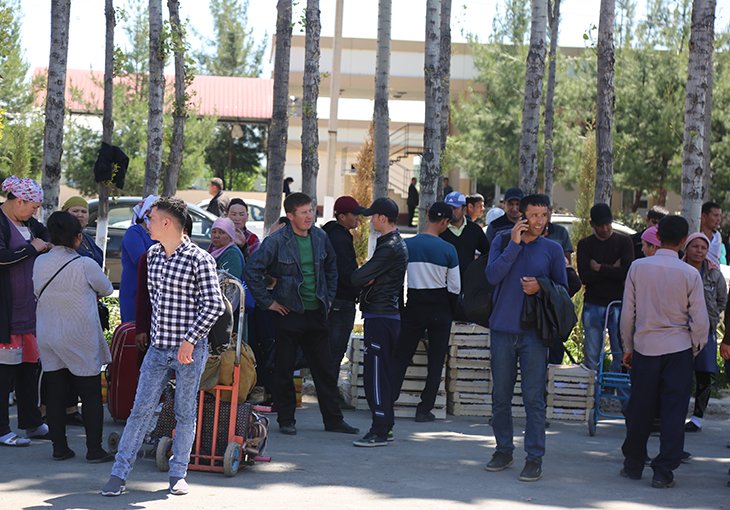
On May 10, an online meeting was held under the chairmanship of President Mirziyoyev on the issue of employment and mobilizing the internal capabilities of local industry. Mirziyoyev reiterated that the issue of employment and income of is of primary importance, and warned leaders at all levels that laxity in this regard will not be tolerated. Mirziyoyev also touched upon the issue of labor migration: 58,000 labor migrants returned between January and March of this year, followed by another 57,000 in April alone. Up to 300,000 people are expected to return by the end of the year, and the importance of providing them with gainful employment and helping them with social issues was emphasized. Officials were tasked with creating a single information platform on migration, helping compatriots working abroad who find themselves in difficult situations, and providing jobs for those returning.

Central Asia as an Emerging Economic Region

Central Asia, spanning an area from the Caspian Sea in the west to China in the east and from Afghanistan in the south to Russia in the north, is rapidly emerging as a significant economic block. Comprising five post-Soviet states — Kazakhstan, Kyrgyzstan, Tajikistan, Turkmenistan, and Uzbekistan — this region is distinguished by its rich natural resources and strategic geographic position, as well as its natural beauty and cultural heritage. With a combined population of around 75 million people, Central Asia has emerged as a dynamically developing market that is increasingly attracting global interest. The transformation unfolding in Central Asia holds both promise and significant challenges for its residents and foreign investors alike. This shift is driven by increasing calls for political reform, the dynamism of a youthful population, and an imperative for sustainable development alongside the pressing need to diversify economic bases.   Structural changes following independence in 1991 set the stage for robust growth from 2000s onward Following the collapse of the Soviet Union in 1991, Central Asian countries faced the challenge of transitioning from centrally-planned to market-oriented economies. This period was marked by significant economic difficulties across the region including negative GDP growth and hyperinflation, compounded by the complexities of privatization, legal reforms, and both social and political instability. The nations responded with different development strategies aimed at market liberalization, infrastructure improvement, and the utilization of natural resources. By 2000, Central Asia experienced a noticeable economic resurgence, marking a striking contrast to the conditions in 1991. In that year, Uzbekistan's GDP growth was at -0.5%, Kyrgyzstan at -7.9%, and Kazakhstan at -11%. A decade later, these countries reported positive growth rates of 4.2%, 5.3%, and 13.5%, respectively. This remarkable turnaround can be attributed to the "low base effect," where the initially low economic indicators set the stage for significant improvements over time. The total GDP of Central Asian countries has grown seven times since the beginning of the 2000s. In comparison with the global economic growth rate of +2.6% annually, the Central Asian region grew by an average of 6.2% between 2000 and 2023 according to IMF data. All Central Asian states are forecasted to outpace the IMF’s projected growth rate for emerging markets and developing economies 2024 which stands at 4.2%; however, actual growth will depend on reforms and foreign investment. Kazakhstan has set the highest growth goal with a five-year target GDP increase to $450 billion, which would require an achievable but challenging 6% annual growth. As illustrated below, Kazakhstan stands out as the economic powerhouse of Central Asia with a GDP almost 1.5 times that of all the other countries combined.     Labor markets: Optimal demographics for growth and innovation According to United Nations data, approximately 75 million people live in Central Asia, representing 1% of the world’s population. Relative to the global median age, all of Central Asia boasts a young population. A youthful population fuels economic growth by replenishing the workforce, driving innovation, and expanding consumer markets. It supports older demographics...

Kumtor Gold Boosts Kyrgyzstan Economy

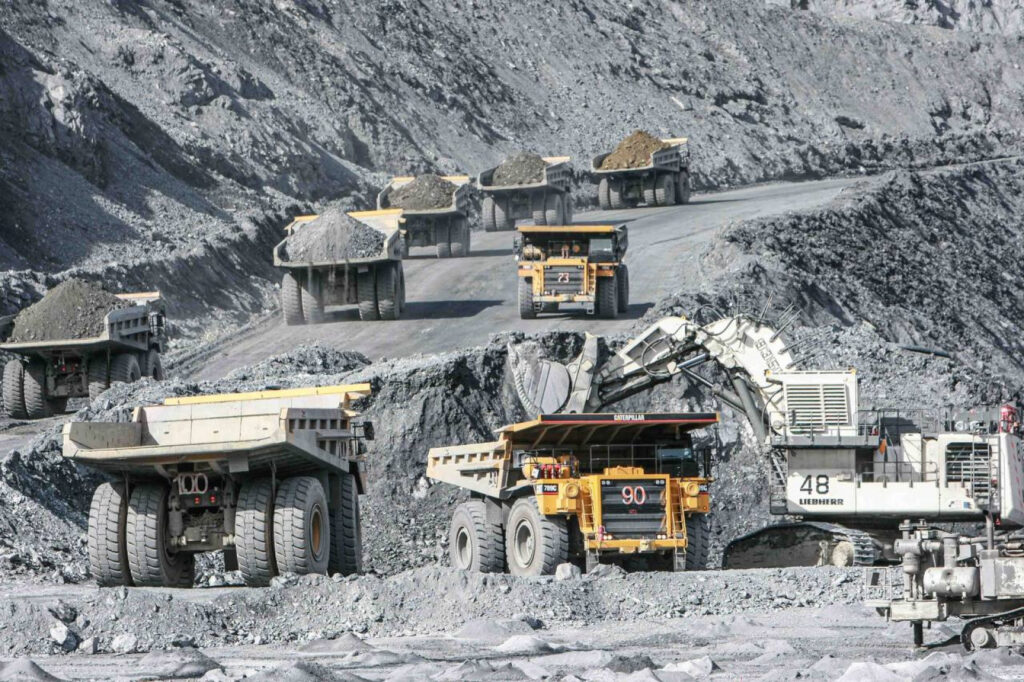
On May 7, Chairman of the Cabinet of Ministers of the Kyrgyz Republic Akylbek Japarov inspected the Kumtor gold mine in the permafrost zone of the Issyk-Kul region. Sitting 4,000 meters above sea level, the mine serves one of the world’s ten largest gold deposits and prior to being nationalized in 2021, was owned by Canadian company, Centerra Gold. The mine now has over 3,000 employees, 99.9% of whom are local specialists, and more than 800 specialist vehicles, machinery and equipment to ensure uninterrupted production. With reference to the significant developments to the site since nationalisation,  the Prime Minister emphasized the importance of the state’s role in maintaining its efficient operation. Last year, the mine generated 17.2 billion soms (over $194 million) in taxes and social payments - equivalent to roughly one-third of Kyrgyzstan’s state budget. Japarov also inspected Kumtor’s underground gold mining project, which launched in February, will enable the further extraction of about 115 tons of gold. At Kumtor’s open-pit mine, it currently takes one ton of processed ore and over 40 tons of extracted waste rock to produce 5-7 grams of gold. Underground mining has the potential to double that yield with less damage to the environment than its open-pit equivalent. Further to the prime minister’s visit, it was reported that from 2026, mining will begin on ore waste stored at the Kumtor mine tailings and according to estimates, will produce an additional 120 tons of gold. In 2023, the Kumtor mine produced 13,567 tons of gold, with a total revenue of $848 million, and net profit of $302.5 million.  

Over 100,000 People with Disabilities Employed in Kazakhstan

According to statistics issued by Kazakhstan’s Ministry of Labor and Social Protection of the Population on 1 April, 730.5 thousand people with disabilities live in Kazakhstan, equivalent to 3.6% of the total population. Amongst the 419.9,000 of working age, over 11.8,000 have received state support in securing employment, and today, 104.8,000 or 27.4% have jobs. In adherence to the Social Code of Kazakhstan, companies and organizations with at least 50 employees are required to establish a quota of jobs for persons with disabilities in the amount of 2% to 4%. The only exclusions are positions involving heavy manual work and potentially dangerous working conditions. In January-March alone, 3.9,000 people with disabilities were employed under the quota, 12 people received short-term vocational training, and 1.2,000 were trained in the rudiments of entrepreneurship. Since 2018, subsidies have also been available to help cover employers’ costs of equipping  and creating specialized workplaces for persons with disabilities.  

Job Creation Main Task of Government in 2024, Says PM

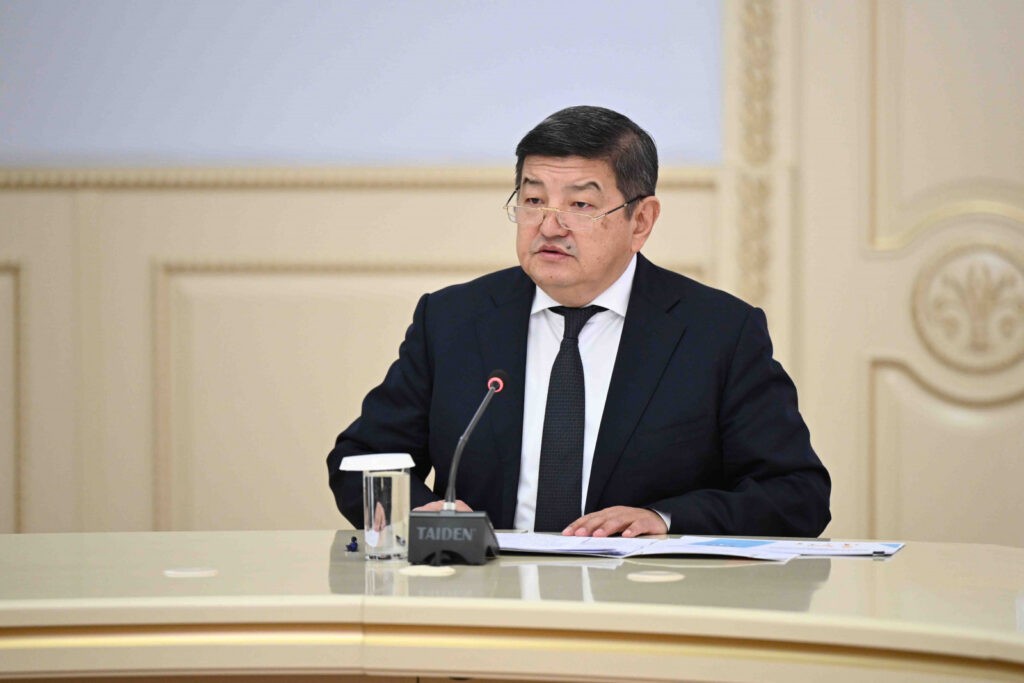
The creation of at least 250,000 jobs is one of the most important tasks of the Cabinet of Ministers for 2024, the Chairman of the Cabinet of Ministers and Head of the Administration of the President of the Kyrgyz Republic, Akylbek Japarov stated at a cabinet meeting on January 11th. “This year should be a breakthrough in all respects,” the minister said. “Yesterday marked three years since Sadyr Japarov became president. During this time, we have managed to do a lot, and we are already seeing the results of this work.” Japarov went on saying that the creation of new industries, the development of the agricultural sector, the opening of new mining projects, the launch of railway construction and building large hydropower facilities will speed up the implementation of the goals planned for 2024. “In the near future, a list of a hundred large industrial facilities that should be launched this year will be approved,” said Japarov. Addressing an acute shortage of qualified labor in the construction and clothing industries, Japarov said that “many clothing enterprises have to attract foreign labor, while our citizens are in labor migration outside the country. Therefore, this whole range of issues should be a priority for all government bodies.”

Tajikistan: EU, Caritas Germany help provide vocational training for persons with disabilities

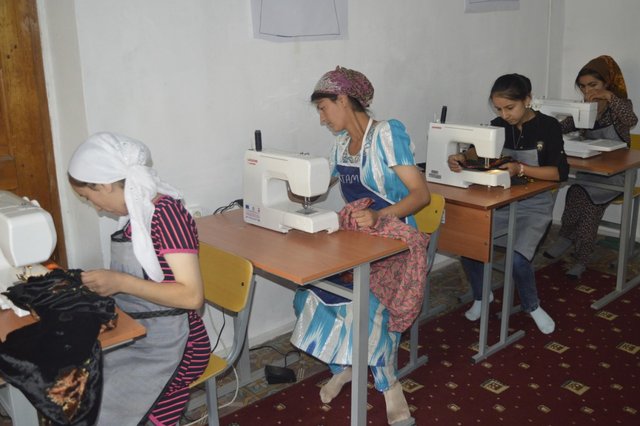
DUSHANBE (TCA) — As part of the project “Supporting civil society in applying community based rehabilitation for people with disabilities in Ayni district”, which is funded by the European Union and Caritas Germany and implemented by the Branch of the German CARITAS Association in Tajikistan in partnership with the Local Government Authority of Ayni district and Public Organizations ASTI and DARO and also with support of Adult Training Center in Tajikistan’s Ayni district, a new Vocational Training Center has been established in the center of the district. The official opening ceremony last week was attended by Gulsara Zokirzoda, Deputy Chairperson of Ayni district, Shodiqul Bobojonov, head of Economy and Trade Department and representatives of other local government, public and international organizations and institutions as well as mass media. Continue reading