• KGS/USD = 0.01144 0%
  • KZT/USD = 0.00205 0%
  • TJS/USD = 0.10785 0.09%
  • UZS/USD = 0.00008 0%
  • TMT/USD = 0.28571 0.28%
  • KGS/USD = 0.01144 0%
  • KZT/USD = 0.00205 0%
  • TJS/USD = 0.10785 0.09%
  • UZS/USD = 0.00008 0%
  • TMT/USD = 0.28571 0.28%
  • KGS/USD = 0.01144 0%
  • KZT/USD = 0.00205 0%
  • TJS/USD = 0.10785 0.09%
  • UZS/USD = 0.00008 0%
  • TMT/USD = 0.28571 0.28%
  • KGS/USD = 0.01144 0%
  • KZT/USD = 0.00205 0%
  • TJS/USD = 0.10785 0.09%
  • UZS/USD = 0.00008 0%
  • TMT/USD = 0.28571 0.28%
  • KGS/USD = 0.01144 0%
  • KZT/USD = 0.00205 0%
  • TJS/USD = 0.10785 0.09%
  • UZS/USD = 0.00008 0%
  • TMT/USD = 0.28571 0.28%
  • KGS/USD = 0.01144 0%
  • KZT/USD = 0.00205 0%
  • TJS/USD = 0.10785 0.09%
  • UZS/USD = 0.00008 0%
  • TMT/USD = 0.28571 0.28%
  • KGS/USD = 0.01144 0%
  • KZT/USD = 0.00205 0%
  • TJS/USD = 0.10785 0.09%
  • UZS/USD = 0.00008 0%
  • TMT/USD = 0.28571 0.28%
  • KGS/USD = 0.01144 0%
  • KZT/USD = 0.00205 0%
  • TJS/USD = 0.10785 0.09%
  • UZS/USD = 0.00008 0%
  • TMT/USD = 0.28571 0.28%

Viewing results 1 - 6 of 84

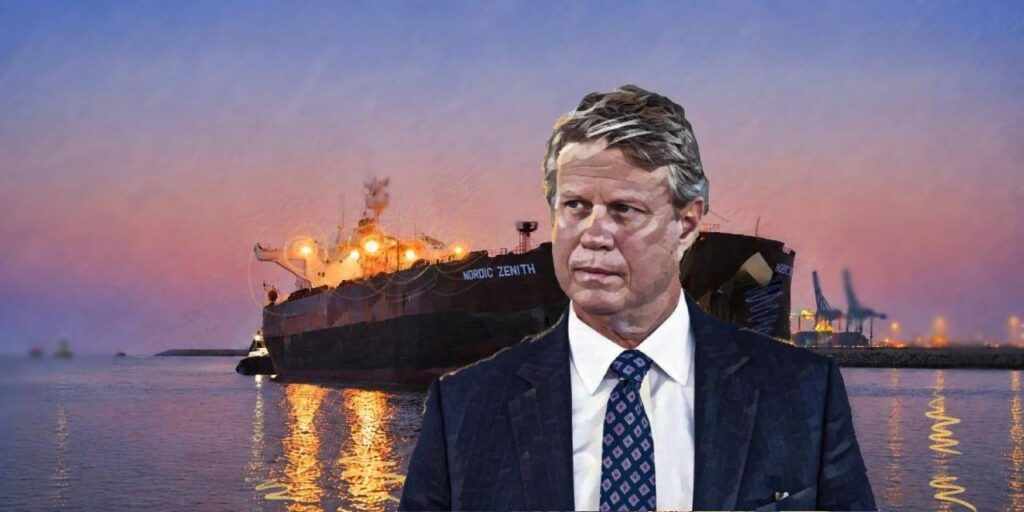
Kazakhstan Opens Criminal Probe Over Calls to Attack CPC Oil Pipeline

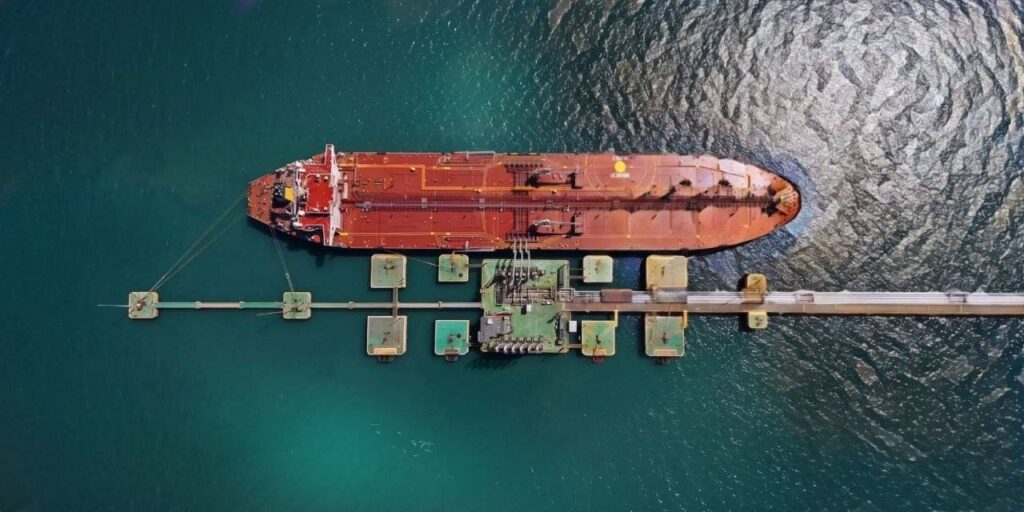
Kazakhstan has opened a criminal investigation into public statements that authorities say encouraged attacks on the Caspian Pipeline Consortium (CPC), the main export route for the country’s crude oil, after months of disruption at the system’s Black Sea terminal turned a foreign security risk into a domestic legal and political issue. Prosecutor General Berik Asylov confirmed the case in a written reply to a parliamentary inquiry on January 6. "On December 17, 2025, the Astana City Police Department launched a pre-trial investigation under Part 1 of Article 174 of the Criminal Code of the Republic of Kazakhstan (incitement of social, national, tribal, racial, class, or religious discord) into negative public comments regarding damage to the Caspian Pipeline Consortium," the Prosecutor General stated. The authorities have yet to name suspects, publish the posts under review, or announce any arrests. The file remains at the evidence-gathering stage, and prosecutors have left open whether any charges will ultimately be filed under Article 174, or reclassified under other provisions once investigators assess the intent and impact. The probe follows a request by Mazhilis deputy, Aidos Sarym, who said that some social media commentary crossed from opinion into encouragement of harm to strategic infrastructure, endorsed attacks on the CPC, and urged further strikes on critical sites. The political sensitivity is rooted in the 1,500-kilometer pipeline’s central role in Kazakhstan’s economy. CPC carries crude from western Kazakhstan to a marine terminal near Russia’s Black Sea port of Novorossiysk, where the oil is loaded onto tankers for delivery to global markets. The pipeline is owned by a consortium that includes Kazakhstan, Russia, and several international energy companies. The system dominates Kazakhstan’s oil export economy. More than 80% of the country’s crude oil exports move through the CPC route, which also carries more than 1% of global oil supplies, making it a pressure point for both markets and state revenue when operations are disrupted. The investigation follows a period of repeated disruption at the Novorossiysk terminal in late 2025, after a naval drone strike damaged one of the offshore loading points used to transfer oil from the pipeline to tankers. The damage forced operators to suspend loadings and move vessels away while inspections and repairs were carried out, sharply reducing export capacity. The CPC relies on single-point moorings positioned at sea to load crude onto tankers, a critical constraint on the entire system; when one goes offline, capacity drops quickly. The pipeline cannot store large volumes, forcing upstream producers to cut or slow output. By late December, the impact was visible in Kazakhstan’s production figures. Oil output fell by about 6% during the month after the late November strike constrained exports. Production at the Tengiz oilfield, the country’s largest, dropped by roughly 10%. Exports of CPC Blend crude fell to about 1.08 million barrels per day in December, the lowest level in more than a year, as the terminal operated with only one functioning mooring while others remained offline due to damage and maintenance. Operational pressures continued as...

Central Asia, Vanadium, and the U.S. National Security Strategy

Dated November 2025 and released publicly in early December, the U.S. National Security Strategy links overseas trade and investment, but overlooks Central Asia as a target region for critical minerals. This oversight merits reconsideration in the NSS’s next iteration, given the region’s known natural resource base, openness to foreign investment, proficiency in mining operations, low processing costs, and manageable geopolitical risks. As governments and businesses review supply-chain resilience for critical minerals, vanadium – not one of the 17 rare earth metals – has increasingly become a strategically relevant rather than optional or cyclical commodity. It is widely used in high-strength steel, grid-scale energy storage functions such as redox flow batteries, and infrastructure with defense and industrial applications. A recent letter from the U.S. Congress highlights a critical shortfall of vanadium in the United States: with 14,000 metric tons consumed in 2024, only 3,800 tons were produced domestically. Imports, mainly from Brazil and South Africa, are at risk due to shifting market conditions, meaning the U.S. needs a more structured and focused industrial-like approach to counter unnecessary import dependencies and geopolitical stresses. U.S. supply is secured solely through imports and recycling, given that the mining of vanadium-bearing mineral precursors is minimal to non-existent in the United States. With mining dominated by China and Russia, and with South African production in decline, today’s need to secure primary materials and supply chains means the U.S. must invest overseas until domestic mining is viable. What is needed is vertical integration from mine to final product – vanadium pentoxide (V205), vanadium trioxide (V2O3), and vanadium sulfate (VOSO₄ / V₂(SO₄)₃) for batteries. In an October Development Finance Corporation media release, DFC CEO Ben Black said that “Securing critical minerals is a paramount matter of U.S. strategic interest and economic prosperity.” That’s clearly beyond dispute. Central Asia and Vanadium Central Asia as a region fits within the U.S.’s broader geostrategic goals and geographic diversification plans aimed at building solid asset-based partnerships that go beyond raw material extraction and precarious trading arrangements. Last November's gathering of Central Asia’s five presidents at the White House finally placed the region firmly on the global map. U.S. Assistant Secretary of State for South and Central Asian Affairs Paul Kapur has also been clear: “Under President Trump’s and Secretary Rubio’s leadership, we’re elevating the C5+1 partnership as a priority — a strategic priority and an economic priority.” Here, amongst critical minerals, vanadium surely emerges as a priority commodity, given the near absence of U.S. domestic mining. Kazakhstan leads Central Asia in vanadium mining and production, hosting the region’s most productive deposits. Established operations, strong infrastructure, cost advantages, supportive laws, tax incentives, and a free FX regime make the country highly attractive to investors. Kazakhstan has three vanadium assets—Balasausqandiq in advanced production and Lisakovsk and Kurumsak in exploration—making them attractive targets for miners or funds with long horizons and low-cost capital. Kyrgyzstan has scattered, under-explored vanadium deposits, including in the Jetim Mountain Range. Uzbekistan is expanding exploration, but the value is yet to...

2025: The Year Central Asia Stepped Onto the Global Stage

For much of the post-Soviet era, Central Asia occupied a peripheral place in global affairs. It mattered to its immediate neighbors, but rarely shaped wider debates. In 2025, that changed in visible ways. The region became harder to ignore, largely not because of ideology or alignments, but because of assets that the world increasingly needs: energy, minerals, transit routes, and political access across Eurasia. One of the clearest signs came in April, when the European Union and the leaders of Kazakhstan, Kyrgyzstan, Tajikistan, Turkmenistan, and Uzbekistan met in Samarkand for their first summit at the head-of-state level. The meeting concluded with a joint declaration upgrading relations to a strategic partnership, with a focus on transport connectivity, energy security, and critical raw materials. The document marked a shift in how Brussels views Central Asia, moving beyond development assistance toward geopolitical cooperation, as outlined in the official EU–Central Asia summit joint declaration. European interest is rooted in necessity. Russia’s war in Ukraine has forced EU governments to rethink energy imports, supply chains, and overland trade routes. Central Asia sits astride the most viable alternatives that bypass Russian territory. It also holds resources essential to Europe’s green transition, including uranium and a range of industrial metals. The region’s leaders spent much of the year framing their diplomacy around these tangible advantages, rather than abstract political alignments. The United States followed a similar track. Through the C5+1 format, Washington deepened engagement with all five Central Asian states, with particular emphasis on economic cooperation and supply-chain resilience. A key element has been the Critical Minerals Dialogue, launched to connect Central Asian producers with Western markets. This initiative formed part of a broader U.S. effort to diversify access to strategic materials and reduce dependence on Russia and China. Russia remained a central but changing presence in Central Asia throughout 2025. Economic ties, labor migration, and shared infrastructure ensured that Moscow continued to matter across the region. At the same time, however, Russia’s war in Ukraine constrained its ability to act as the dominant external power it once was. Central Asian governments maintained pragmatic relations with Moscow, but they increasingly treated Russia as one partner among several rather than the default reference point. Trade continued, security cooperation persisted, and political dialogue remained active, yet the balance shifted toward hedging rather than dependence. Uranium sits at the center of this shift, with the United States having banned imports of certain Russian uranium products under federal law, with waivers set to expire no earlier than January 1, 2028. As Washington restructures its nuclear fuel supply chain, Central Asia’s role has grown sharply. According to the U.S. Energy Information Administration’s 2024 Uranium Marketing Annual Report, Kazakhstan supplied 24% of uranium delivered to U.S. reactor operators, while Uzbekistan accounted for about 9%. Canada and Australia remain major suppliers, but the Central Asian share is now strategic rather than marginal. That economic weight translated into political visibility. In December, U.S. President Donald Trump said he would invite Kazakhstan and Uzbekistan to attend...

Central Asia Considers Single Gas Ring to Link Regional Energy Systems

A proposal to connect the five Central Asian capitals into a unified, synchronized gas network has generated widespread debate among regional energy experts following a major industry forum in Tashkent. The idea, referred to as the “Central Asia Gas Ring,” was introduced by Kazakh oil and gas analyst Askar Ismailov during the Central Asia Oil & Gas Forum in early November. An analysis of the proposal was later published by the Uzbek outlet Upl.uz, citing assessments from regional and international experts. The concept envisions physically linking the gas transportation systems of Uzbekistan, Kazakhstan, Turkmenistan, Kyrgyzstan, and Tajikistan into an integrated regional ring, modeled on the existing Central Asian Unified Power System, which already enables cross-border electricity coordination. According to Ismailov, natural gas should be seen not only as a tradable resource but as a strategic instrument for regional integration and energy security, especially in the context of growing geopolitical volatility. Experts cited by Upl.uz argue that a gas ring could help countries better manage seasonal fluctuations in demand and reduce the risk of widespread energy shortages. Recent winter blackouts, particularly in Uzbekistan, have heightened concerns about supply resilience. The proposed system could also ensure more stable gas flows to Kyrgyzstan and Tajikistan, which lack significant domestic hydrocarbon resources and frequently experience shortages. The initiative has attracted interest beyond Central Asia. Valérie Ducrot, head of the Global Gas Center, described the plan as a new model of energy cooperation that could attract international investment if the five participating states align their energy policies. Research groups such as SPIK and SpecialEurasia, also cited in the analysis, view the project as a potential cornerstone of regional infrastructure, aligning national interests around shared goals for stability and integration. Economic incentives vary across the region. For Turkmenistan, Uzbekistan, and Kazakhstan, the ring could provide enhanced flexibility in export routes and pricing mechanisms. For gas-dependent Kyrgyzstan and Tajikistan, the proposal promises greater energy security, seen as essential for long-term economic and social development. External stakeholders, including China and the European Union, are expected to show interest in financing the project, while Russia is likely to seek continued influence over pricing structures and logistics. Ismailov estimates the total cost at between $4 billion and $5 billion, with most of the funding needed for modernization of aging Soviet-era pipelines and construction of select new infrastructure segments. While Upl.uz notes that technical and political hurdles remain, the proposal highlights growing momentum toward collective energy solutions in Central Asia.

Alisher Sultanov Leaves Office After a Decade of Declining Gas Production in Uzbekistan

Alisher Sultanov was relieved of his post as presidential representative on energy security on December 16, ending some ten years of dubious performance as one of Uzbekistan’s top energy officials. Under Sultanov’s watch as head of the state oil and gas company and then as a top official in Uzbekistan’s Energy Ministry, the country’s oil and gas production decreased, and Uzbekistan went from being a gas exporter to an importer. A Career in the Gas and Oil Sector Sultanov started working in Uzbekistan’s energy sector in the mid-1990s and gradually made his way through the ranks at the state oil and gas company Uzbekneftegaz. In 2015, Sultanov became Uzbekneftegaz’s chairman, serving in that position until 2018. In 2017, Sultanov was appointed Deputy Prime Minister in charge of the fuel, energy, and industrial sector, and in February 2019, he was named Energy Minister. He stepped down as Energy Minister in April 2022, officially for health reasons, but by 2023 was back as presidential advisor on oil and gas, chemical, and energy matters, though that title was changed in July 2025 to the president’s representative on energy security. Stagnation and Decline Uzbekistan does not have large oil reserves. BP’s Statistical Review of World Energy has continually put Uzbekistan’s oil reserves at somewhere around 600-620 million barrels. Uzbekistan does have significant natural gas reserves of at least some 1.1 trillion cubic meters, however, according to the BP Statistical Review of World Energy. The country has been working with international partners to explore for new deposits, particularly in areas of the recently dried out Aral Sea. In 2011, Uzbekistan’s average oil production was some 80,000 barrels per day (bpd), and gas production for that year was some 56.6 billion cubic meters (bcm). Uzbekistan was still sourcing from many fields that had been producing since Uzbekistan was a Soviet republic, and it was not surprising that yields from these depleted fields started decreasing after 2011. Sultanov became head of Uzbekneftegaz in August 2015, and that year, oil production had already dropped to some 60,000 bpd and gas to some 53.6 bcm. Both fluctuated only a little over the next three years, ending 2018 at an average of 64,000 bpd and 58.3 bcm. The 2018 figure for gas was the peak production year of the 2011-2020 period, though it fell well short of the 66 bcm Uzbekneftegaz was predicting for 2018. After Sultanov was named Energy Minister in 2019, the figure for gas production fell significantly. In 2019, gas production was 57.5 bcm, but in 2020, only 47.1 bcm, though oil output held steady at 67,000 bpd and 61,000 bpd, respectively. Gas production increased slightly in 2021 to 50.9 bcm, but then dropped to 48.9 bcm in 2022. The decrease continued after Sultanov stepped down as Energy Minister in April 2022, plummeting to 44.2 bcm in 2023 and 42.2 bcm in 2024. With a rapidly growing population and expanding industrial sector, Uzbekistan’s domestic gas consumption was sharply increasing, rising from 43.6 bcm in 2020 to 54.6...

Opinion: Abraham Accords Can Help Kazakhstan Reshape Its Energy Future

On 6 November 2025, after speaking with Kazakhstan’s President Kassym-Jomart Tokayev and Israel’s Prime Minister Benjamin Netanyahu, U.S. President Donald Trump announced that Kazakhstan would join the Abraham Accords. Astana and Jerusalem have maintained full diplomatic relations since 1992, but Kazakhstan’s entry pushes the Accords beyond the Middle East and North Africa and into the Eurasian heartland. This matters at a time when Washington wants to re-energize the initiative and deepen its C5+1 engagement with the region. Kazakhstan’s decision fits its multi-vector policy. The decision also builds on the country’s role as a key component of the Trans-Caspian International Transport Route (TITR, “Middle Corridor”), which links Chinese production to European markets. Cargo volumes reached about 4.5 million tons in 2024 and are expected to rise to around 5.2 million tons in 2025. A recent report by Boston Consulting Group expects rail freight through the Middle Corridor to quadruple by the decade’s end. The Accords do not change Kazakhstan’s formal status with Israel. The question is, rather, whether they unlock deeper economic cooperation. The Times of Central Asia has already reported on clear opportunities for cooperation in sectors such as water and agricultural efficiency, grid and industrial productivity, and cybersecurity and administrative modernization. In the energy sector, like the others, the Accords give Israeli companies a clearer political and legal framework for working with Kazakhstan’s energy and infrastructure sectors. Gulf Cooperation Council states, and the United Arab Emirates (UAE) in particular, could provide project finance as well. Hard Energy, Nuclear Fuel, and Israeli Technology Astana’s principal concern in the energy sector is how to raise net revenue: the goal here is to make the sector more resilient to external pressure without incurring prohibitive capital costs. Israeli firms can address that problem at an operational level. The PrismaFlow sensing system developed by Prisma Photonics is a proven technology that uses existing optical fiber as a sensing system. Thousands of kilometers of pipeline can be monitored in real time for leaks, third-party interference, and attempted theft, without having to install physical sensors along the route. KazTransOil and Prisma Photonics could develop a program through an Abraham Accords framework to overlay this technology on selected trunk network segments and on the systems that deliver crude to export pipelines. Energy-sector cybersecurity is another area where Israeli companies can help Kazakhstan’s hard-energy system. The Israeli firm Radiflow specializes in operational-technology (OT) cybersecurity for oil and gas installations, tailored to pipeline and production environments. Its systems provide continuous network visibility and better anomaly detection. Its risk-based threat management reduces both the likelihood and the cost of cyber incidents that might interrupt flows or force precautionary shutdowns. KazMunayGas, KazTransOil, and their joint ventures could implement a structured audit and remediation program with Radiflow as a strategic partner. The uranium sector presents another opportunity for Kazakhstan–Israel cooperation, potentially a more strategic one. OT security systems can provide monitoring and control layers for uranium mining, in-situ leaching fields, and logistics chains. Kazakhstan accounts for over 40% of the world's uranium...