• KGS/USD = 0.01143 -0%
  • KZT/USD = 0.00191 -0%
  • TJS/USD = 0.10823 0.19%
  • UZS/USD = 0.00008 0%
  • TMT/USD = 0.28490 -0.28%
  • KGS/USD = 0.01143 -0%
  • KZT/USD = 0.00191 -0%
  • TJS/USD = 0.10823 0.19%
  • UZS/USD = 0.00008 0%
  • TMT/USD = 0.28490 -0.28%
  • KGS/USD = 0.01143 -0%
  • KZT/USD = 0.00191 -0%
  • TJS/USD = 0.10823 0.19%
  • UZS/USD = 0.00008 0%
  • TMT/USD = 0.28490 -0.28%
  • KGS/USD = 0.01143 -0%
  • KZT/USD = 0.00191 -0%
  • TJS/USD = 0.10823 0.19%
  • UZS/USD = 0.00008 0%
  • TMT/USD = 0.28490 -0.28%
  • KGS/USD = 0.01143 -0%
  • KZT/USD = 0.00191 -0%
  • TJS/USD = 0.10823 0.19%
  • UZS/USD = 0.00008 0%
  • TMT/USD = 0.28490 -0.28%
  • KGS/USD = 0.01143 -0%
  • KZT/USD = 0.00191 -0%
  • TJS/USD = 0.10823 0.19%
  • UZS/USD = 0.00008 0%
  • TMT/USD = 0.28490 -0.28%
  • KGS/USD = 0.01143 -0%
  • KZT/USD = 0.00191 -0%
  • TJS/USD = 0.10823 0.19%
  • UZS/USD = 0.00008 0%
  • TMT/USD = 0.28490 -0.28%
  • KGS/USD = 0.01143 -0%
  • KZT/USD = 0.00191 -0%
  • TJS/USD = 0.10823 0.19%
  • UZS/USD = 0.00008 0%
  • TMT/USD = 0.28490 -0.28%
16 November 2025

Viewing results 1 - 6 of 50

Central Asia’s Increasing Profile in Global Climate Policy

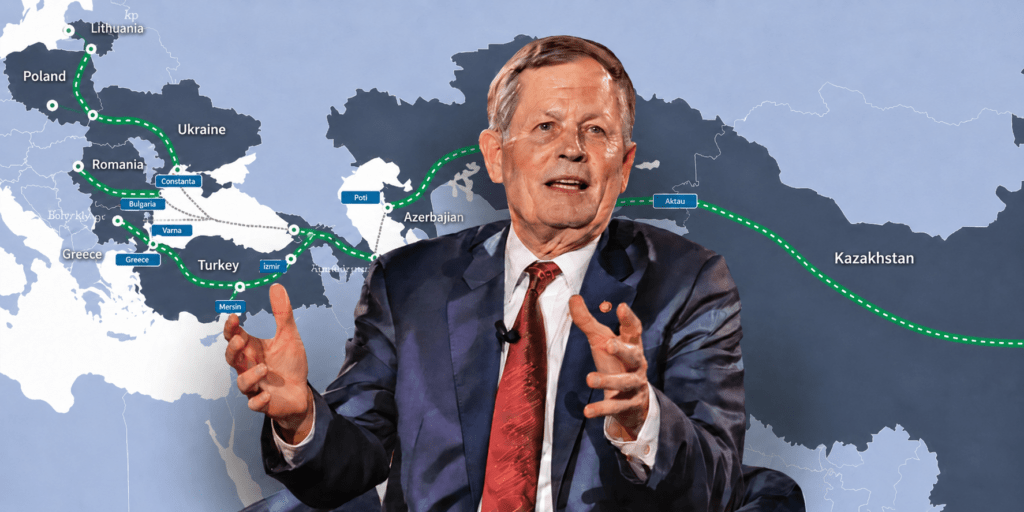
Between 11 and 22 November, the 29th Conference of the Parties (COP29) to the United Nations Framework Convention on Climate Change (UNFCCC) will take place in Baku, Azerbaijan. In the run-up to this global event, Central Asian countries have been continuing their integration into the cooperative implementation of the global energy and environmental agenda. Such measures include, but are not limited to, commitments to reducing methane emissions, contributions to green supply chains, and — for Kazakhstan in particular — its nuclear policy based on multi-vector diplomacy. One may anticipate their especially enhanced presence in view of the fact that several them have strategic-partner relations with Azerbaijan, which is cooperating with them also in the implementation of the Trans-Caspian International Trade Corridor (TITR or "Middle Corridor"). The Central Asian states are using their implementation of global energy and environmental priorities as an instrument to integrate further into the international system. Following their participation at COP28 (30 November – 23 December 2023, in Dubai, United Arab Emirates), all five of them signed the Global Methane Pledge to reduce methane emissions by at least 30% by 2030. They have also stepped up their contributions to green supply chains, signalling their ambitions to become more important players in global geoeconomics. At the same time, these initiatives also seek to promote domestic economic diversification. Kazakhstan, in particular, continues to play a central role with its multi-vector approach, notably in the nuclear energy sector, positioning itself at the intersection of sustainability and global energy security. Kazakhstan holds 12% of global uranium reserves. It became the world’s leading producer in 2009 and in 2022 accounted for 43% of global production. In Central Asia, Uzbekistan has a Rosatom-sponsored NPP project under way, as does Kyrgyzstan. Along with Kazakhstan, Uzbekistan and Turkmenistan in particular actively engaged in discussions on climate policy at COP28, acknowledging the need to balance their resource-rich economies with global sustainability goals. One of the key outcomes was the region's collective involvement in the Global Methane Pledge. Global environmental policy bodies have assessed that methane emissions are a significant concern for global climate policy. The effect of this assessment will be to load still greater financial burdens on oil and gas companies by making development of hydrocarbon deposits, and the transmission of hydrocarbon resources to market, more expensive. Kazakhstan’s commitment to cutting methane emissions by 30% by 2030 exemplifies this shift, signalling a readiness to reform domestic industries in line with global climate targets. Turkmenistan has the highest methane emissions intensity in the region, but challenges remain in terms of monitoring and implementation. Uzbekistan’s leadership was also highlighted at COP28. The country’s ambitious plans to scale up solar and wind energy by 2030 align with broader regional goals of reducing dependence on hydrocarbons. This is Tashkent's (and the region's) way of enhancing their profile as "good global citizens" as policy decisions by political bodies at the international level increasingly emphasize decarbonization. Uzbekistan has made strides in "green supply chains" by focusing on the renewable energy sector...

ADB Allocates $15 Million to Tajikistan for Power Grid Reconnection in Central Asia

The Asian Development Bank (ADB) has approved a grant of $15 million for a project to reconnect Tajikistan’s power lines to the Central Asian unified electricity grid. The reconnection, it is reported, will be carried out through mutual relations with Uzbekistan. “Through the Central Asia Regional Economic Cooperation (CAREC) program, ADB actively promotes regional power trade among countries in Central Asia and beyond,” said ADB Director General for Central and West Asia Yevgeniy Zhukov. “Our support improves the sustainability of the regional power system and helps reduce greenhouse gas emissions in the region.” The additional funding will build a new 22-kilometer, 500-kilovolt power line in northern Tajikistan, connecting the Sughd substation to the New Syrdarya substation in Uzbekistan. This will increase the ability to send and receive electricity between Kazakhstan, Kyrgyzstan, Tajikistan, and Uzbekistan and improve the infrastructure to prevent blackouts. The project will also help ensure that Tajikistan’s energy system is ready to provide regulatory opportunities for the continued integration of renewable energy in the region. In the long term, it will become a key component of the electricity evacuation scheme for the Rogun hydropower plant in Tajikistan. Previously, ADB approved $17.5 million in grant assistance to improve women's agricultural skills and ensure food security in Tajikistan.

Kazakhstan Enters Era of Peaceful Nuclear Energy

Kazakh President Kassym-Jomart Tokayev's bet on a referendum to secure citizens' consent to construct a nuclear power plant has worked. The Central Election Commission of Kazakhstan announced the final results of the referendum held last Sunday, in which 63,66% of citizens eligible to vote showed up at the polling stations. 71.12 % answered “Yes” to the question on the ballot paper about consent to constructing the nuclear power plant. Organizations engaged in sociological surveys of voters at the exit polls announced similar results on Sunday night and Monday. “The exit poll of the Institute of Complex Social Studies - Astana (SOCIS-A) called the referendum participants' decision to favor the construction of nuclear power plants in Kazakhstan. 'For' voted 69.8%, ‘Against’ - 30.2%. Similar figures were shown by the Institute of Eurasian Integration exit poll ('For' - 71.8%, 'Against' - 28.2%). According to the Institute of Public Policy of the Amanat party, 72.3% of referendum participants voted in favor of the NPP construction. In comparison, 27.7% voted against,” Kazakhstani political analyst Eduard Poletayev said on his Facebook account. His colleague Daniyar Ashimbayev, commenting on the exit poll data, emphasized that Kazakhstanis have managed to overcome old phobias related to Chernobyl and tests at the Semipalatinsk nuclear test site, as well as “enemy propaganda.” By 'propaganda', he means the agitation work of opponents to NPP construction. [caption id="attachment_24131" align="alignnone" width="300"] @ТСА/Kubaizhanov[/caption] “For many years, projects to return to nuclear energy were discussed, but there was always a lack of political will, and powerful foreign pressure prevented the decision necessary for the country. And even now, during the campaign period, we have seen the active work of propagandists paid from abroad to not only disrupt the plans for the construction of nuclear power plants but also to try to destabilize the situation in the country,” said Ashimbayev. Ashimbayev implies that the United States is putting sticks in the wheels of the development of Kazakhstan's nuclear industry. And the point here is not that American nuclear corporations were left off the shortlist, which Kazakhstan is considering, but in the usual policy of containment. Not Kazakhstan, of course, but Russia and China - Washington's main geopolitical rivals and competitors. Realizing this, Tokayev, after voting in the referendum and answering journalists' questions afterward, said that he would like the NPP to be built by an international consortium, presumably from the companies of those countries that were on the shortlist: Russia, China, South Korea, and France. “This is not an easy question. The government should engage in analysis and conduct appropriate negotiations. My vision for this issue is for an international consortium to work in Kazakhstan, consisting of global companies with the most advanced technologies. Further, as they say, life will show,” Tokayev said. Kazakhstan has turned another significant page in its history. In 400 days of discussing nuclear power plants - how long it took from when Tokayev first mentioned atomic power to the end of the campaign period - the president's team has managed the...

U.S. Ready to Participate in Construction of Nuclear Power Plant in Kazakhstan

The U.S. has expressed its willingness to participate in constructing a nuclear power plant (NPP) in Kazakhstan. Senior Vice President of the U.S. Chamber of Commerce Khush Choksi made this statement during the visit of the U.S. business delegation to Almaty, Informburo.kz reports. “The U.S. has the best technologies for nuclear power plants. And we hope there will be an open tender, allowing American companies to participate,” said Choksi, answering journalists' questions. As The Times of Central Asia previously reported, the referendum on nuclear power in Kazakhstan was held on October 6. According to preliminary data, 71.12% of Kazakhstanis voted to build a nuclear power plant, but the official results have yet to be announced. Potential participants in constructing the nuclear power plant are also being discussed. Russia, China, France, South Korea, and France are among the countries that are considered suppliers of technologies for NPP construction. These states have proposed their projects, and the Kazakhstani authorities are considering them. It is expected that the winner may be an international consortium, and the final decision will be made based on technical and financial conditions. The preliminary cost of one NPP unit is estimated at $5 billion.

Referendum for Nuclear Power in Kazakhstan Passes

Kazakhstan's nuclear energy referendum on October 6 passed with a 71.12 % majority, marking a pivotal shift in the country's energy strategy. The nation has faced significant challenges with an aging energy infrastructure and a reliance on Russia to fill the gaps. The decision comes with historical sensitivities as Kazakhstan continues to grapple with the legacy of Soviet-era nuclear tests that caused widespread harm. The referendum offered citizens a direct voice in shaping their energy future, reflecting both the urgency of addressing the country’s current needs and the deep-seated concerns over nuclear safety. On the referendum ballot, Kazakhstanis were asked, “Do you agree to the construction of a nuclear power plant in Kazakhstan?”. The voter turnout was high, according to the Central Referendum Commission, with 7,820,918 Kazakhstan citizens receiving ballots, amounting to a 63.87% voter turnout. The voter turnout for the referendum on the new constitution in Kazakhstan, held on June 5, 2022, was similarly high at 68.44%. As the world's largest uranium producer, Kazakhstan is well-positioned to leverage its rich resources to transition towards more sustainable energy solutions. President Kassym-Jomart Tokayev has emphasized the critical importance of nuclear energy, not only in meeting the immediate electricity needs amidst frequent power outages but also in aligning with global environmental commitments. At the Convention on Climate Change (COP28) held in Dubai on December 1, 2023, Tokayev made a Global Methane Pledge to reduce methane emissions by 30 percent by 2030. The nuclear power plant is expected to reduce Kazakhstan's reliance on fossil fuels, thus decreasing greenhouse gas emissions. Uzbekistan has already begun construction of a nuclear power plant 55km from the Kazakhstan border. Kyrgyzstan may also build a nuclear power plant in the Chui region, which is less than 300km south of the planned Kazakhstani plant in Ulken on Lake Balkash. International observers from the Shanghai Cooperation Organization (SCO), the Organization of Turkic States (OTS), and the Conference on Interaction and Confidence Building Measures in Asia (CICA) have all affirmed that the recent referendum was conducted in accordance with current legislation, describing it as open, free, and legitimate. Kazakhstan’s Deputy Foreign Minister Roman Vassilenko noted the participation of over 200 foreign journalists during the referendum, underscoring the transparency and openness of the voting process. Radio Free Europe, through its affiliate Azattyk, was critical of the referendum. An incident of ballot stuffing at a Turkestan poll station was reported, as were accessibility issues for the disabled voters in the Uralsk region. One observer witnessed a suspicious busload of voters in Turkestan. RFE correspondents reported difficulty in getting voter turnout results throughout the afternoon at a station in Karganda and Aktobe. With that in mind, the irregularities seem to be few and far between overall: The League of Young Voters, a vigilant group of local observers, identified a total of 20 technical violations across the country’s 10,249 polling stations. The referendum day proceeded without significant issues, shifting attention to Kazakhstan's urgent energy shortfalls. With the nuclear power plant expected to be operational in 2034,...

Kyrgyzstan Begins Construction of Another Small Hydropower Plant

The construction of a small hydroelectric power plant on the Ak-Buura River at the Papan reservoir in Kyrgyzstan’s southern Osh region has begun. The Ak-Buura River supplies water to Kyrgyzstan’s second-largest city, Osh. The Papan reservoir is located in the Papan Gorge, and the power plant will be constructed in the narrowest part of the Ak-Buura River valley. The small hydropower plant will have a capacity of 25 MW and will generate 103 million kWh of electricity per year. The project costs $27 million. "The construction of a small hydroelectric power plant at the Papan reservoir is another strategic step towards the country’s energy independence," Chairman of Kyrgyzstan’s Cabinet of Ministers Akylbek Japarov stated at the ceremony to launch the construction on October 5. In recent years, Kyrgyzstan has been working to expand its energy capacity by building small and large hydroelectric plants to address electricity shortages. Earlier this year, Kyrgyzstan constructed small hydroelectric power plants in Bala-Saruu in the northwestern Talas region and Kok-Art and Kainama small hydropower plants in the southern Jalal-Abad region. In 2023, Kyrgyzstan met 80% of its electricity demand, which totaled 17.2 billion kilowatt-hours. The remaining 20%, or 3.4 billion kilowatt-hours, was imported. Energy Minister Taalaibek Ibraev last week stated that despite an increase in water levels at Kyrgyzstan’s largest Toktogul hydroelectric power plant (HPP) reservoir this year, the country would still be facing an electricity deficit of about 3.9 billion kilowatt-hours. The positive is that Ibraev said in parliament on October 4 that there will be no scheduled blackouts this winter, as his ministry has done a good job preparing the power distribution system for the coming winter. The Energy Ministry has installed new and repaired all the existing transformers nationwide. In previous years, Kyrgyzstan practiced scheduled restrictions on electricity supply for several hours a day to save electricity during peak consumption hours in winter. The minister also announced that starting January 1, 2025, Turkmenistan will supply Kyrgyzstan with 1.7 billion kilowatt-hours of electricity.