• KGS/USD = 0.01143 0%
  • KZT/USD = 0.00213 0%
  • TJS/USD = 0.10593 0.47%
  • UZS/USD = 0.00008 0%
  • TMT/USD = 0.28571 0%
  • KGS/USD = 0.01143 0%
  • KZT/USD = 0.00213 0%
  • TJS/USD = 0.10593 0.47%
  • UZS/USD = 0.00008 0%
  • TMT/USD = 0.28571 0%
  • KGS/USD = 0.01143 0%
  • KZT/USD = 0.00213 0%
  • TJS/USD = 0.10593 0.47%
  • UZS/USD = 0.00008 0%
  • TMT/USD = 0.28571 0%
  • KGS/USD = 0.01143 0%
  • KZT/USD = 0.00213 0%
  • TJS/USD = 0.10593 0.47%
  • UZS/USD = 0.00008 0%
  • TMT/USD = 0.28571 0%
  • KGS/USD = 0.01143 0%
  • KZT/USD = 0.00213 0%
  • TJS/USD = 0.10593 0.47%
  • UZS/USD = 0.00008 0%
  • TMT/USD = 0.28571 0%
  • KGS/USD = 0.01143 0%
  • KZT/USD = 0.00213 0%
  • TJS/USD = 0.10593 0.47%
  • UZS/USD = 0.00008 0%
  • TMT/USD = 0.28571 0%
  • KGS/USD = 0.01143 0%
  • KZT/USD = 0.00213 0%
  • TJS/USD = 0.10593 0.47%
  • UZS/USD = 0.00008 0%
  • TMT/USD = 0.28571 0%
  • KGS/USD = 0.01143 0%
  • KZT/USD = 0.00213 0%
  • TJS/USD = 0.10593 0.47%
  • UZS/USD = 0.00008 0%
  • TMT/USD = 0.28571 0%

Viewing results 1 - 6 of 246

Central Asia countries restoring forest landscapes

ASTANA (TCA) — 2.5 million hectares of forest landscape will be restored by countries in the Caucasus and Central Asia under the Bonn Challenge by 2030. The commitment was made by Armenia, Georgia, Kazakhstan, Kyrgyzstan, Tajikistan and Uzbekistan at the first Ministerial Roundtable on Forest Landscape Restoration and the Bonn Challenge in the Caucasus and Central Asia, held on 21-22 June in Astana, Kazakhstan. The meeting also adopted the Astana Resolution, committing the region to go beyond 2.5 million ha, and strengthen partnerships and regional cooperation to this end. Continue reading

Kazakhstan: expedition to climb summit of Altay for Sustainable Development Goals

ASTANA (TCA) — An international expedition consisting of representatives of UNDP in Kazakhstan, the Asian Development Bank, the European Bank for Reconstruction and Development, the World Bank, the Kazakh Tourism national company and local environmental specialists on 23 June-1 July will climb Mount Belukha in Altay Mountains. A well-known Kazakh climber, Maksut Zhumayev, who has climbed Mount Everest twice, will also join the expedition. Akimat (administration) of the East Kazakhstan region also provides support for the project. Continue reading

United Nations system in Kyrgyzstan refuses single-use plastic

BISHKEK (TCA) — The United Nations Country Team in Kyrgyzstan has made a decision to stop using single-use plastics at meetings and events supported by the United Nations. “We will work with hotels, service providers, and partners to urge them to follow our green policy. It is aimed at deepening environmental awareness about the major environmental challenges created by omnipresent global products, especially plastic bottles and plastic shopping bags,” the UN in Kyrgyzstan said. Continue reading

EU–Central Asia environmental cooperation focuses on green investments

TASHKENT (TCA) — High level representatives of all five Central Asian countries, the European Union, International Financial Institutions (IFIs), international and regional organizations, and NGOs gathered for the 8th meeting of the EU-CA Working Group on Environment and Climate Change (WGECC) on 7-8 June in Tashkent, Uzbekistan to discuss the progress in cooperation on environment, climate change and water. The meeting was held under the chairmanship of Mr Massimo Cozzone from Italy, the coordinating EU country for the process, the Delegation of the European Union to Uzbekistan reported. Continue reading

Kazakhstan’s geographic society completes expedition to Aral Sea

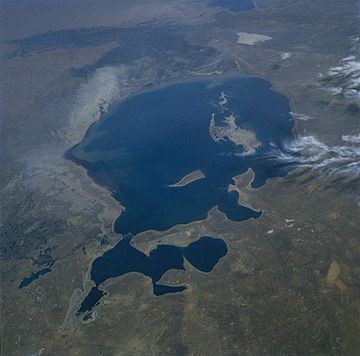
ASTANA (TCA) — The 20-day expedition of Kazakhstan’s National Geographic Society QazaqGeography around the North and South Aral Sea finished last week. The trip covered more than 7,000 km across Kazakhstan and Uzbekistan and included nine regions of Kazakhstan, seven regions of Uzbekistan, and the Republic of Karakalpakstan (Uzbekistan), the official website of the Prime Minister of Kazakhstan reported. Continue reading

Toxic Aral Sea salt storm hits Uzbekistan, Turkmenistan

TASHKENT (TCA) — Large parts of western Uzbekistan and northern Turkmenistan are recovering from a severe salt storm that has damaged agriculture and livestock herds, RFE/RL's Uzbek Service reported. The three-day storm hit Uzbekistan's Karakalpakstan and Khorezm regions, as well as Turkmenistan's Dashoguz Province, beginning on May 26. The salt — lifted from dried-out former parts of the Aral Sea — left a white dust on farmers' fields and fruit trees that is expected to ruin many crops. The storm also caused flights at the Urgench airport to be canceled, made driving hazardous, and caused breathing difficulties for many people. Particularly hard hit by the storm, which reached speeds of more than 20 meters per second, were the Uzbek regions of Khorezm, Navoi, and Bukhara. Remnants of the storm were also reported as far south as Ashgabat, the capital of Turkmenistan. Temirbek Bobo, 80, told RFE/RL's Uzbek Service that it was the first time he had seen such a harsh storm. "I've seen the wind bring sand before, but this was the first time I saw salt. This event can be called a catastrophe," said Bobo, who lives in the Takhiatash district of Karakalpakstan. "The whole day there was nothing but salt rain [coming down]. The sun was not visible." He added: "Nature began to take revenge on us for [what we have done] to the Aral Sea." A representative of the Karakalpakstan's Council of Ministers, who spoke on condition of anonymity, said the council had not received any instructions regarding the situation, but suggested that the region's Agricultural Ministry may have. Salt storms are common in areas near the Aral Sea, but this one carried salt over a much wider area. The Aral Sea once was one of the four largest seas on Earth, but intensive irrigation projects set up by the Soviet Union in the 1960s led to its desiccation. The runoff from nearby agricultural fields has polluted the remaining parts of the Aral Sea with pesticides and fertilizers, which have crystallized with the salt. Inhalation of the salt can cause severe throat and lung problems. The salt also can poison farmers' produce and cause chemical damage to buildings.