• KZT/USD = 0.00215
  • TJS/USD = 0.10810
  • UZS/USD = 0.00008
  • TMT/USD = 0.29850
  • KZT/USD = 0.00215
  • TJS/USD = 0.10810
  • UZS/USD = 0.00008
  • TMT/USD = 0.29850
  • KZT/USD = 0.00215
  • TJS/USD = 0.10810
  • UZS/USD = 0.00008
  • TMT/USD = 0.29850
  • KZT/USD = 0.00215
  • TJS/USD = 0.10810
  • UZS/USD = 0.00008
  • TMT/USD = 0.29850
  • KZT/USD = 0.00215
  • TJS/USD = 0.10810
  • UZS/USD = 0.00008
  • TMT/USD = 0.29850
  • KZT/USD = 0.00215
  • TJS/USD = 0.10810
  • UZS/USD = 0.00008
  • TMT/USD = 0.29850
  • KZT/USD = 0.00215
  • TJS/USD = 0.10810
  • UZS/USD = 0.00008
  • TMT/USD = 0.29850
  • KZT/USD = 0.00215
  • TJS/USD = 0.10810
  • UZS/USD = 0.00008
  • TMT/USD = 0.29850
13 August 2026

Viewing results 1 - 6 of 69

Central Asia Loses 14 Million Tons of Crops Annually Due to Poor Storage Infrastructure

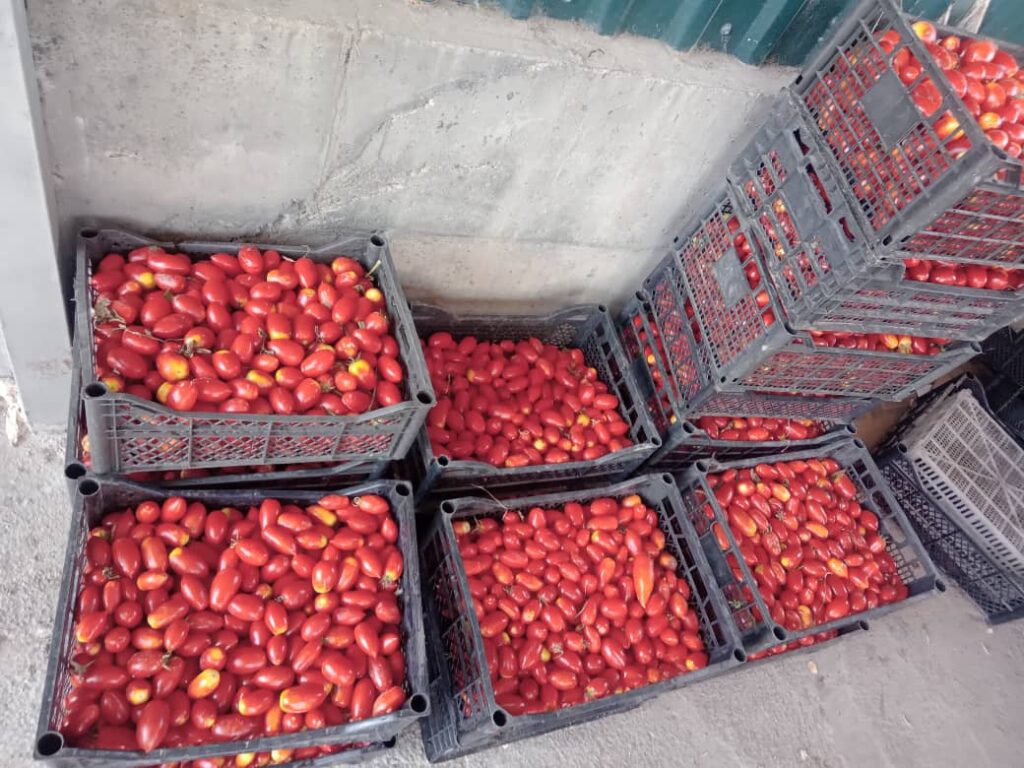
Each year, approximately 14 million tons of agricultural products are lost across Central Asia due to inadequate storage infrastructure, according to a recent analytical report from the Eurasian Development Bank (EDB). In Kyrgyzstan, Tajikistan, and Uzbekistan, so-called “dry warehouses” remain the norm. A significant share of produce is stored in facilities lacking the conditions necessary for long-term preservation. As a result, large volumes of crops spoil annually, especially during seasonal peaks. The EDB notes that Eurasian countries are entering a new logistics phase. The rapid growth of e-commerce and retail expansion is generating unprecedented demand for modern warehouse infrastructure. According to the bank’s projections, total demand for warehouse space in the region will double by 2040, surpassing 120 million square meters. Between 2020 and 2024, the region’s total warehouse space increased from 48 to 58 million square meters. Russia remains the dominant player, with around 53 million square meters of commercial and logistics space. Central Asian countries, however, continue to lag far behind. Crop losses peak during the autumn harvest and spring sales of residual stock. During these times, buffer storage and efficient transport logistics are critical. Without these, “farmers are forced to sell surpluses at the lowest price or throw them away,” EDB analysts warn. Experts identify the warehouse sector as a key driver of trade growth in Eurasia. Realizing this potential, however, will require coordinated action among governments, businesses, and international institutions. The report emphasizes the need for a unified institutional environment to enhance investment appeal and market transparency. “The region, which has long remained on the periphery of global logistics flows, is now shaping a new map of Eurasian logistics. In the coming years, the market will remain highly dynamic: more than 20 million square meters of new warehouse space is planned for commissioning, including 1.6 million square meters in Central Asian countries,” the report states. Kyrgyzstan serves as a case in point. In 2020, amid the COVID-19 pandemic, agriculture was the country’s only growing sector. Yet farmers struggled with oversupply, cabbage, in particular, had to be fed to livestock or discarded due to a lack of buyers and storage facilities. A similar situation unfolded with potatoes.

Kyrgyzstan to Launch Program for Recycled Resources Market

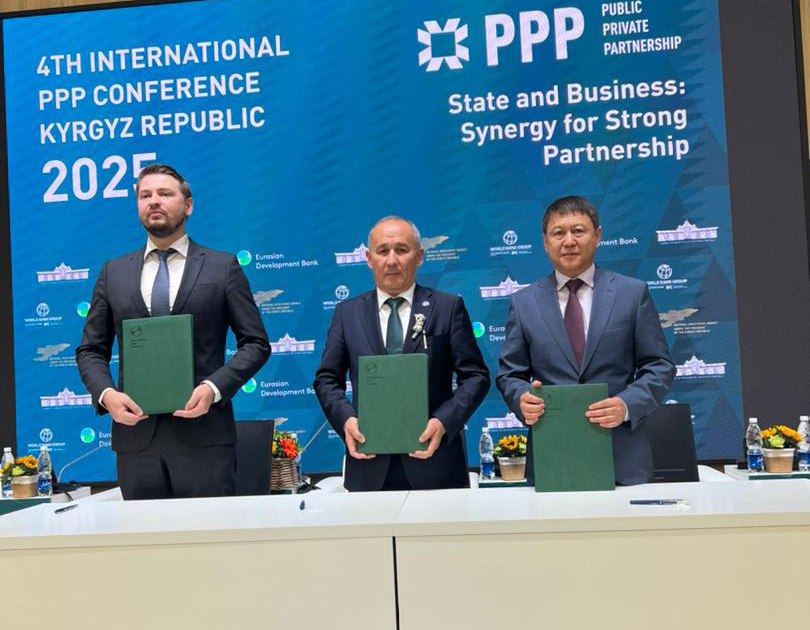
Kyrgyzstan’s Ministry of Natural Resources, Ecology, and Technical Supervision, supported by the Russian-Kyrgyz Development Fund (RKDF) and the Eurasian Development Bank (EDB), has signed a trilateral agreement to develop a national program for establishing a recycled resources market. The agreement was formalized in Bishkek. According to the ministry, the initiative aims to support the creation of a modern waste management system based on green economy principles and more efficient use of raw materials. The RKDF and EDB will provide financing and expert support for drafting the program. The forthcoming plan will include pilot projects integrating recycled materials into economic activity, improvements to recycling infrastructure and supply chains, and incentives to encourage businesses to increase the use of secondary raw materials. Minister of Natural Resources Meder Mashiev emphasized that building a recycled resources market is key to transitioning toward a circular economy. He added that international support would help integrate secondary materials into production and unlock new business opportunities. RKDF Chairman Artem Novikov noted that the final program would serve as a tool to stimulate recycling, attract investment, and bolster the country’s climate resilience efforts. The agreement underscores Kyrgyzstan’s growing cooperation with international financial institutions in the field of environmental development.

Investment in Kyrgyzstan’s Economy Rises by 20 Percent

In the first eight months of 2025, several sectors of Kyrgyzstan’s economy experienced substantial growth, particularly in finance, manufacturing, hospitality, and food services. According to the National Statistical Committee of Kyrgyzstan, domestic investment surged most notably in the hospitality and food service sectors, which saw a 170 percent increase. The manufacturing sector reported a 110 percent rise, driven largely by state funding for new industrial facilities. Officials emphasized that the primary sources of investment were allocations from the state budget and enterprises’ internal funds. “The implementation of government investment programs is creating conditions for accelerating growth in sectors such as construction, transport, energy, and irrigation,” the Ministry of Finance of Kyrgyzstan stated. Foreign investment was concentrated in financial intermediation and insurance, particularly in Bishkek. Between January and July 2025, nearly $94 million was invested in this sector, an 80 percent increase. Finance and insurance accounted for 40 percent of all foreign investment received by Kyrgyzstan during this period. The Eurasian Development Bank (EDB) also released its analysis of investment trends in Kyrgyzstan. According to EDB analysts, the country achieved double-digit economic growth this year, largely due to increased investment in industry, transport, and construction. Kyrgyzstan’s GDP expanded by 11.5 percent between January and July 2025. “Investment growth is driven both by domestic resources and external financing, including foreign direct investment. This demonstrates the region’s strong adaptability to the new realities of the global economy,” said EDB Chief Economist Evgeny Vinokurov.

EDB to Fund Feasibility Study for Kyrgyz Hydropower Cascade

On September 18, the Eurasian Development Bank (EDB) and Orta Asya Investment Holding signed an agreement to develop a feasibility study for the Suusamyr-Kokomeren hydropower plant cascade project in Kyrgyzstan. The study will be financed by the EDB, a multilateral development bank headquartered in Almaty that invests across its member states: Armenia, Belarus, Kazakhstan, Kyrgyzstan, Russia, Tajikistan, and Uzbekistan. This agreement builds on earlier investment deals between Kyrgyzstan and Central Asian Investment Holding, a subsidiary of Turkey’s İhlas Holding, to develop both the Kokomeren and Kazarman cascades. With a combined capacity of 2,217 MW, these agreements were signed on August 11 by Kyrgyz Energy Minister Taalaibek Ibraev and Ahmet Mücahid Ören, Chairman of İhlas Holding’s Board of Directors. These projects are considered strategically important for both Kyrgyzstan and the broader Central Asian region, with planned investments exceeding $6 billion. Once completed, they are expected to increase Kyrgyzstan’s electricity generation capacity by more than 50%, meeting rising domestic demand and enabling future electricity exports. The Kokomeren River cascade will include three hydroelectric plants with a combined capacity of 1,305 MW: Karakol HPP - 33 MW Kokomeren-1 HPP - 360 MW Kokomeren-2 HPP - 912 MW Under the terms of the agreements, Central Asian Investment Holding will operate the plants for 20 years, with Kyrgyzstan guaranteeing the purchase of the electricity generated. İhlas Holding, through its subsidiary, is also developing a 250 MW natural gas-fired combined heat and power plant (CHPP-2) in Bishkek. Scheduled for commissioning in 2028, CHPP-2 is expected to enhance the capital’s heating and electricity supply while reducing reliance on the aging coal-fired Thermal Power Plant, currently the city’s primary energy source. The parallel development of hydropower and cleaner thermal energy projects is seen as central to Kyrgyzstan’s energy transition, offering both economic benefits and improved environmental outcomes.

Uzbekistan Approves Share Purchase Plan to Join Eurasian Development Bank

President Shavkat Mirziyoyev has approved Uzbekistan’s plan to acquire shares in the Eurasian Development Bank (EDB), formally initiating the country’s accession to the institution’s 2006 founding agreement. The decision was published on the official legal portal, Lex.uz. Under the approved terms, Uzbekistan will receive 777,777 shares in the EDB’s charter capital, each valued at $1,000. Of these, 168,411 shares (21.7%) are payable, while the remaining 609,366 shares (78.3%) will be paid on demand. The president’s decree also outlines a payment schedule, with funding to begin from the state budget in 2025. The Ministry of Investments, Industry, and Trade has been tasked with executing the share purchase in accordance with established procedures. The Ministry of Economy and Finance will allocate the necessary funds, which will be included in the state budget from 2026 onward. The Central Bank of Uzbekistan will serve as the depository for EDB funds and assets within the country. President Mirziyoyev described Uzbekistan’s participation in the EDB as a strategic move to strengthen regional economic ties. “Joining the Eurasian Development Bank will open new opportunities for financing infrastructure, industrial, and trade projects that directly serve our long-term development goals,” he said. Deputy Prime Minister Jamshid Khodjaev has been appointed Uzbekistan’s authorized representative to the EDB, with Deputy Minister Khurshid Teshabaev designated as his deputy. The Ministry of Investments, Industry, and Trade will serve as the country’s authorized body in dealings with the bank. This move is part of Uzbekistan’s broader strategy to deepen integration with Eurasian economic institutions. In 2024, officials confirmed that Uzbekistan aims to complete its accession to the EDB by early 2025. Uzbekistan has held observer status in the Eurasian Economic Union (EAEU) since 2020 and already participates in collaborative projects on trade, transport, e-commerce, and climate change. Founded in 2006 by Russia and Kazakhstan, the EDB now also includes Armenia, Belarus, Kyrgyzstan, and Tajikistan. The bank’s core mission is to finance large-scale investment projects that promote economic growth and regional integration.

EDB Estimates Central Asia-China Transport Connectivity Projects at $9 Billion

China has emerged as the principal investor in regional transport infrastructure, with analysts from the Eurasian Development Bank (EDB) estimating that cross-border projects linking Central Asia and China will require $9 billion in funding through 2035. According to the EDB, 12 projects valued at more than $9 billion are either underway or in the planning stages. These account for 17% of the $52.8 billion allocated to 90 transport corridor projects across Central Asia. The initiatives are expected to significantly boost trade and cargo flows with China, already the region’s largest trading partner. China-Kyrgyzstan-Uzbekistan Railway The most ambitious among them is the long-anticipated China-Kyrgyzstan-Uzbekistan (CKU) railway, a $4.7 billion project that will establish the first direct rail link between China and these two Central Asian states. Half of the funding will come from a Chinese concessional loan, while the remainder will be provided by a joint venture created to build and operate the railway. China will hold a 51% stake in the venture, while Kyrgyzstan’s contribution is valued at $575.75 million. On August 31 in Tianjin, Kyrgyz President Sadyr Japarov met with Chinese President Xi Jinping. Following the meeting, officials signed a letter of intent regarding China’s preferential loan to finance Kyrgyzstan’s share, according to the Kyrgyz presidency. The 523-kilometer railway officially broke ground on December 27, 2024, in Jalal-Abad, Kyrgyzstan. Once completed, the CKU will link Kashgar (China) with Torugart, Makmal, and Jalal-Abad (Kyrgyzstan), and Andijan (Uzbekistan). The line is projected to carry up to 15 million tons of cargo annually, significantly reshaping regional trade flows. Currently, Kazakhstan is the only Central Asian country with a direct railway connection to China. Kazakhstan’s Leading Role Kazakhstan leads Central Asia in cross-border infrastructure investment with China, accounting for $3.4 billion or 37% of the total. Key projects include: The modernization of the Dostyk-Moiynty railway section (836 km), scheduled for completion in 2025, which will increase freight capacity fivefold. Construction of the Ayagoz-Bakhty railway line and the launch of a third border crossing with China, aimed at further diversifying transit corridors. Regional Impact The scale and scope of these initiatives underscore the strategic importance of transport connectivity in China-Central Asia relations, particularly under the Belt and Road Initiative. By 2035, upgraded infrastructure is expected not only to enhance regional logistics and reduce transport bottlenecks but also to strengthen Central Asia’s position as a vital transit corridor between China and Europe, fostering deeper economic integration across the Eurasian continent.