• KGS/USD = 0.01143 0%
  • KZT/USD = 0.00207 0%
  • TJS/USD = 0.10465 0.1%
  • UZS/USD = 0.00008 0%
  • TMT/USD = 0.28571 0.28%
  • KGS/USD = 0.01143 0%
  • KZT/USD = 0.00207 0%
  • TJS/USD = 0.10465 0.1%
  • UZS/USD = 0.00008 0%
  • TMT/USD = 0.28571 0.28%
  • KGS/USD = 0.01143 0%
  • KZT/USD = 0.00207 0%
  • TJS/USD = 0.10465 0.1%
  • UZS/USD = 0.00008 0%
  • TMT/USD = 0.28571 0.28%
  • KGS/USD = 0.01143 0%
  • KZT/USD = 0.00207 0%
  • TJS/USD = 0.10465 0.1%
  • UZS/USD = 0.00008 0%
  • TMT/USD = 0.28571 0.28%
  • KGS/USD = 0.01143 0%
  • KZT/USD = 0.00207 0%
  • TJS/USD = 0.10465 0.1%
  • UZS/USD = 0.00008 0%
  • TMT/USD = 0.28571 0.28%
  • KGS/USD = 0.01143 0%
  • KZT/USD = 0.00207 0%
  • TJS/USD = 0.10465 0.1%
  • UZS/USD = 0.00008 0%
  • TMT/USD = 0.28571 0.28%
  • KGS/USD = 0.01143 0%
  • KZT/USD = 0.00207 0%
  • TJS/USD = 0.10465 0.1%
  • UZS/USD = 0.00008 0%
  • TMT/USD = 0.28571 0.28%
  • KGS/USD = 0.01143 0%
  • KZT/USD = 0.00207 0%
  • TJS/USD = 0.10465 0.1%
  • UZS/USD = 0.00008 0%
  • TMT/USD = 0.28571 0.28%

Viewing results 1 - 6 of 125

Japanese Company to Develop Urban Master Plan for Bishkek

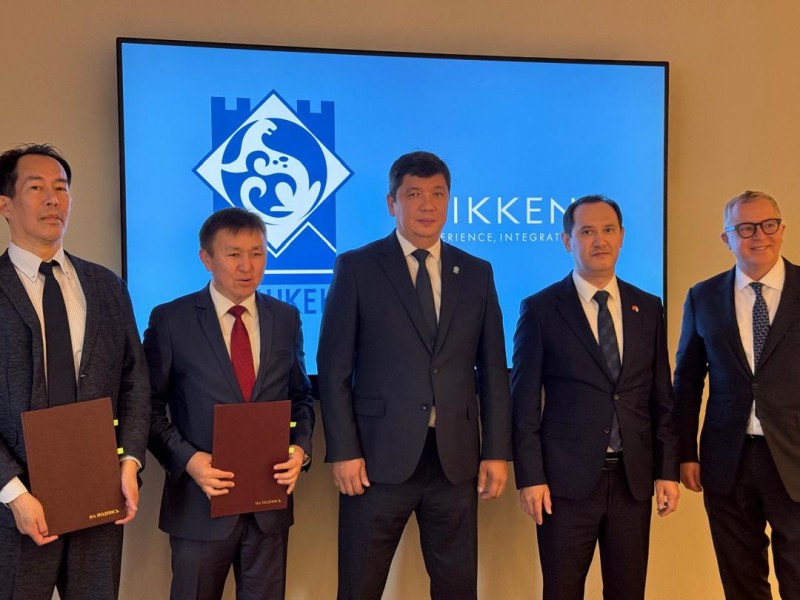
A Memorandum of Cooperation in urban planning and architecture has been signed between the Bishkek municipality and Nikken Sekkei Ltd, a Japanese architectural, planning and engineering firm. Based on a survey of amenities required by the capital’s citizens, the project represents the Japanese company’s first foray into urban planning in Central Asia. The project was approved by the Chief Architect of Bishkek, Urmat Karybaev, who accompanied Mayor of Bishkek Aibek Junushaliev during their attendance at SusHi Tech Tokyo 2024. Hosted by Tokyo last week, the large-scale event brought together leaders from cities in five continents to exchange ideas and discuss advanced technologies and strategies aimed at sustainable urban development. As reported by the municipality’s press service, the deal substantially satisfied Bishkek’s goal to establish new partnerships, exchange knowledge and adopt best practices for the further development of the city.  

Kazakhstan and Malaysia Investment Roundtable

On May 17, the second day of his official visit to Kazakhstan, Prime Minister of Malaysia Anwar Ibrahim joined Kazakhstan Prime Minister Olzhas Bektenov and representatives of the two countries’ business communities for a Kazakhstan-Malaysian investment roundtable in Astana. In his welcoming speech, the Kazakh prime minister reiterated that Malaysia is one of the key trade and economic partners of Kazakhstan in Southeast Asia. Over the past year, bilateral trade turnover increased from $150 million to almost $245 million. The goal is to now unlock the existing potential and exceed the pre-pandemic trade figure of $650 million. Bektenov announced Kazakhstan's intention to diversify exports to Malaysia and called on Malaysian business to jointly explore new opportunities to strengthen partnerships in services, manufacturing, finance, education, subsoil use, agriculture, and construction. Today, 48 companies with Malaysian capital operate in Kazakhstan and 17 joint investment projects totalling over $410 million are being implemented. Prime Minister of Malaysia Anwar Ibrahim announced his country’s intention to strengthen cooperation with Kazakhstan in tourism, education, the energy sector, as well as in the supply of Kazakh halal products. Kazakh and Malaysian businesses agreed to deepen investment ties and explore collaboration in new markets. Agreements and memoranda totaling more than $350 million were signed on cooperation in attracting investment in Islamic finance and trade development, as well as in food processing, mining, gold processing, and joint production of transformer and automotive oil.  

Kyrgyzstan and Malaysia to Revive Bilateral Cooperation

On 15 May, Prime Minister of Malaysia Anwar Ibrahim paid an official visit to Bishkek to engage in talks with President Sadyr Japarov. The agenda focused on the current state of the countries’ bilateral cooperation and the potential for further development in sectors including agriculture, tourism, energy, renewable energy sources, mining, infrastructure, information technology, and the halal industry. The meeting concluded with the signing of a ‘Joint Statement on the comprehensive enhancement of cooperation between the Kyrgyz Republic and Malaysia’, described by President Japarov as a road map for the further development of Kyrgyz-Malaysian relations. At a meeting later in the day with the Prime Minister of Malaysia, Chairman of the Cabinet of Ministers of the Kyrgyz Republic Akylbek Japarov emphasized the importance of joint efforts in the implementation of a more comprehensive business partnership between Kyrgyzstan and Malaysia. In this regard, Akylbek Japarov proposed the immediate revival of the Special Kyrgyz-Malaysian Joint Commission, which created in 1997, had proved an effective means of enhancing cooperation between the two countries. In addition, he invited Malaysian investors to collaborate in projects concerning renewable energy sources, mining, the halal industry, and education, as well as exchanging experience in the field of Islamic finance. The two countries also opened negotiations for the introduction of direct flights between Bishkek and Kuala Lumpur. In response to the meeting, the Prime Minister of Malaysia emphasized his readiness to develop and strengthen the high potential of bilateral cooperation across the board. Towards this goal, he spoke of Malaysia’s interest in establishing cooperation in the banking sector and opening a bank in Kyrgyzstan, and with reference to education, said that his government was considering reducing the fees for Kyrgyz students from low-income families wishing to study in his country.    

Coca-Cola Opens New Production Plant in Uzbekistan

On 15 May, Laziz Kudratov, Minister of Investment, Industry and Trade of Uzbekistan, James Quincey, Chairman and CEO of The Coca-Cola Company, and Tuncay Özilhan, Chairman of the Board of Anadolu Group attended the launch of a new Coca-Cola non-alcoholic beverage production plant in the Samarkand region. The company’s exclusive partner in Uzbekistan is Coca-Cola İçecek, part of the Turkish Anadolu Group. According to the Uzbek Ministry of Investment, Industry and Trade, the new plant built at a cost of  $80 million, will produce 280 million liters of beverages per year and create 200 jobs. The company has now invested $500 million and created over 1,500 new jobs in three plants in Tashkent and Urgench, and in the Namangan region. The combined annual production exceeds 900 million liters of beverages. Plans were also announced for the construction of a new production line in the city of Namangan, costing $50 million and scheduled to open next year. The heads of The Coca-Cola Company and Anadolu Group commended Uzbekistan’s investment climate which nurtures confidence amongst foreign investors to implement long-term projects. Following the launch, James Quincey and Tuncay Özilhan attended a meeting with Uzbekistan’s president Shavkat Mirziyoyev during which agreements were reached on the further expansion of the Coca-Cola Company’s investment program in Uzbekistan. In response to the company's readiness to increase their presence in Uzbekistan,  the president advised that the state was set to adopt a separate roadmap for the accelerated implementation of this and other promising projects.    

Major Mineral Fertilizer Production Plant Planned for Kazakhstan

EuroChem, a global fertilizer leader and China National Chemical Engineering Co. (CNCEC), a global provider of industrial engineering technologies are to collaborate on the design, construction, and commission of a large-scale chemical complex to produce mineral fertilizers in Zhanatas located in Kazakhstan’s Zhambyl region. The agreement was officially signed on 14 May in Astana. Scheduled to open in 2027, the construction of  the chemical complex is part of the Integrated Kazakhstan Industrialization Roadmap and represents the third and final stage of a project in which EuroChem has invested over US$1 billion. EuroChem Group President Oleg Shiryaev said that once in operation, the plant will have an annual output of over one million tons of mineral fertilizers, in high demand by Kazakhstan, other Central Asian countries, China, Russia and Europe. According to a report by the Kazakh Ministry of Industry and Construction, the new enterprise will create 2,400 new jobs. During the signing of the agreement, Minister of Industry and Construction of Kazakhstan Kanat Sharlapaev, welcomed the input of  world leaders in mineral fertilizer production as an important step in developing the country's chemical industry and emphasized: “To be truly food secure, fertilizers are a must. This is therefore a landmark project for us. Its joint implementation with EuroChem and Chinese partners is a great example of large Eurasian cooperation at its best and a significant event for regional food security.”    

Turkish Company to Manufacture Irrigation Systems in Kazakhstan

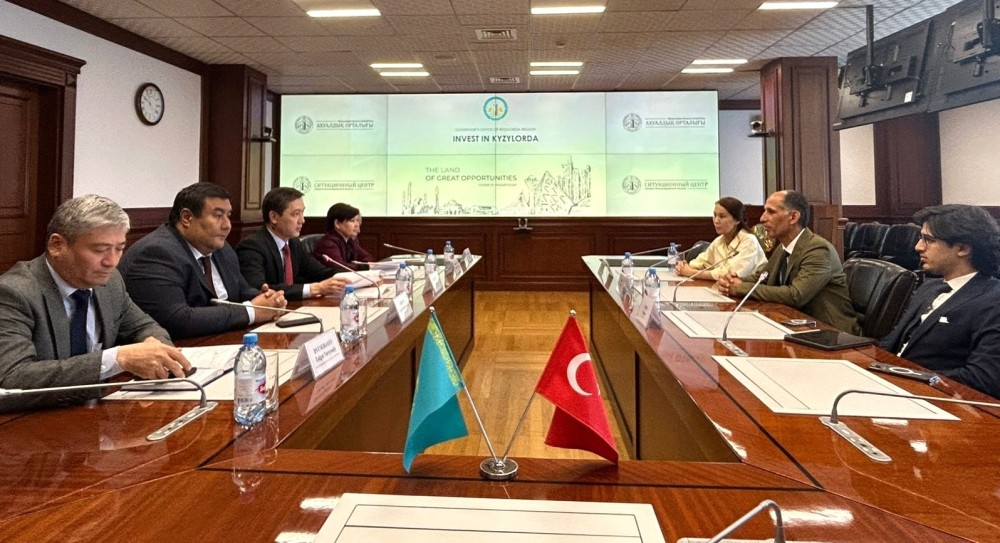
Akplas, a leading Turkish manufacturer, has announced plans to produce modern irrigation systems for agriculture in Kazakhstan’s Kyzylorda region. According to a report issued by Kazakh Invest, agreement on the project was reached during the Turkish company’s visit to Kazakhstan on 11 May. During their meeting, organized with assistance from Kazakh Invest, representatives of Akplas discussed the implementation of the project with Kyzylorda’s executive bodies and inspected the site earmarked for the build of the factory. Expected to be commissioned in early 2025, the first stage of the project will cost around $10 million, followed by a further investment of some $50 million. The facility will initially manufacture sprinkler irrigation systems to serve 80 thousand hectares per year and within five years, increase its production capacity for the irrigation of 400 thousand hectares.