• KGS/USD = 0.01143 0%
  • KZT/USD = 0.00212 0%
  • TJS/USD = 0.10823 0.19%
  • UZS/USD = 0.00008 0%
  • TMT/USD = 0.28571 0%
  • KGS/USD = 0.01143 0%
  • KZT/USD = 0.00212 0%
  • TJS/USD = 0.10823 0.19%
  • UZS/USD = 0.00008 0%
  • TMT/USD = 0.28571 0%
  • KGS/USD = 0.01143 0%
  • KZT/USD = 0.00212 0%
  • TJS/USD = 0.10823 0.19%
  • UZS/USD = 0.00008 0%
  • TMT/USD = 0.28571 0%
  • KGS/USD = 0.01143 0%
  • KZT/USD = 0.00212 0%
  • TJS/USD = 0.10823 0.19%
  • UZS/USD = 0.00008 0%
  • TMT/USD = 0.28571 0%
  • KGS/USD = 0.01143 0%
  • KZT/USD = 0.00212 0%
  • TJS/USD = 0.10823 0.19%
  • UZS/USD = 0.00008 0%
  • TMT/USD = 0.28571 0%
  • KGS/USD = 0.01143 0%
  • KZT/USD = 0.00212 0%
  • TJS/USD = 0.10823 0.19%
  • UZS/USD = 0.00008 0%
  • TMT/USD = 0.28571 0%
  • KGS/USD = 0.01143 0%
  • KZT/USD = 0.00212 0%
  • TJS/USD = 0.10823 0.19%
  • UZS/USD = 0.00008 0%
  • TMT/USD = 0.28571 0%
  • KGS/USD = 0.01143 0%
  • KZT/USD = 0.00212 0%
  • TJS/USD = 0.10823 0.19%
  • UZS/USD = 0.00008 0%
  • TMT/USD = 0.28571 0%

Viewing results 1 - 6 of 48

Kazakhstan Proposes ‘Expert Alliance’ to Reform Global Governance

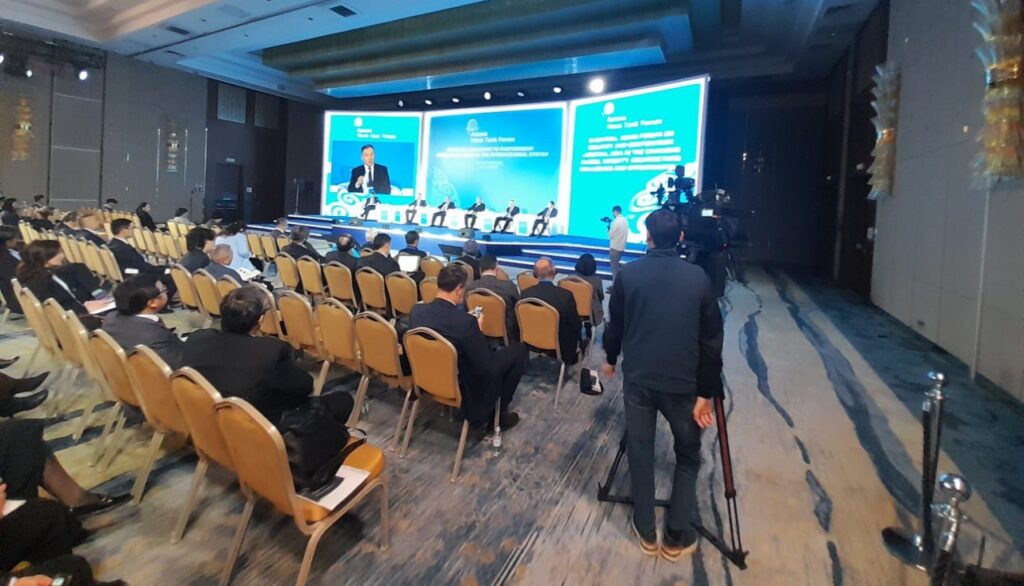
Zhandos Shaimardanov, director of the Kazakhstan Institute for Strategic Studies (KazISS) under the President of the Republic of Kazakhstan, has called for the formation of an international network of think tanks to act as an intellectual capacity for reforming the global governance architecture. He said the proposal stems from lessons learned in regional cooperation efforts across Central Asia. Speaking at the session “Central Asia in the Changing Architecture of Global Security: Challenges and Opportunities” during the Astana Think Tank Forum 2025, Shaimardanov said the world is experiencing a period of geopolitical flux. The old global rules no longer function effectively, while new norms have yet to take shape. “History is giving our region a chance to show leadership,” he said. “Central Asia is realizing its agency and unity, ready to formulate collective responses to global challenges and offer a positive agenda. Trust and mutual respect have made us resilient, and now this political capital must be transformed into institutional resources.” Shaimardanov stressed that the existing global security architecture is in crisis, with mechanisms such as the UN Security Council and arms control frameworks losing effectiveness. “In September, at the UN General Assembly, the President of Kazakhstan rightly observed that serious violations of international law have become the new norm. This is a sign that global institutions need intellectual renewal. When multilateral mechanisms fail, it is the regions that retain the potential for agreement,” he said. From Regional Unity to Global Contribution Shaimardanov recalled that at the sixth Consultative Meeting of the Heads of State of Central Asia, held in Astana last August, regional leaders adopted the "Central Asia 2040" concept, which sets out a long-term vision for cooperation across the region. “Now is the time not just to implement this document without slogans,” he said, “but to present this regional experience to the broader world.” He said that Central Asia’s cooperative model could help redefine the principles of global governance. As a bloc of “middle powers,” the region can offer a constructive and non-hegemonic voice. “In this context, Kazakhstan proposes creating an expert alliance of middle powers, a global network of think tanks and institutions that could help rethink international systems,” Shaimardanov said. He suggested that such a body could cooperate with international organizations, including the United Nations, to develop joint strategies on security, sustainable development, and institutional accountability. “Central Asia can not only adapt to new realities but also offer new ideas that security can be built not on fear but on trust,” he said. Focus Areas: Digital Trust, Water Security, Human Capital Shaimardanov noted that an expert network would help Central Asian countries coordinate on key development challenges, including digitalization, water management, and innovation. He highlighted the example of Kazakh startup Higgsfield AI, which recently achieved unicorn status with a valuation exceeding $1 billion. The company developed a generative AI tool that creates videos from text prompts. “This is a major milestone not only for Kazakhstan but for the entire region,” he said. “It reflects Central Asia’s growing...

Opinion: What the Loss of RFE/RL Would Mean for Central Asia

The decision to terminate the federal grant agreement funding for Radio Free Europe/Radio Liberty (RFE/RL) is a crushing blow for hundreds of millions of people. These people know their governments are not telling them the full truth about what is happening in their countries or in the world outside. The objective information provided by RFE/RL has been important to people such as these. Perhaps as important, since the end of the Cold War, was the platform RFE/RL provides, whenever possible, for people in these countries to explain their views to the outside world. I know, because I worked at RFE/RL for 25 years covering Central Asia. RFE/RL was founded in 1950, and I didn’t show up there until 1997. I can only speak about what I saw and heard when I was an RFE/RL employee. My understanding of my tasks as an RFE/RL employee was that we were supposed to keep close track of what was happening in Central Asia, cover as many of the important topics of the region as possible, and make objective and accurate information on these topics available to the people in Central Asia. During Tajikistan’s 1992-1997 civil war, for example, RFE/RL’s Tajik service, Radio Ozodi, was the most trusted source of information for the people of Tajikistan. During the Coronavirus pandemic, the Turkmen government would not even allow the word COVID to be spoken and denied there were any cases of the virus in the country, leaving RFE/RL’s Turkmen service, Azatlyk, as one of the only sources of information for Turkmenistan’s people about the illness. I lived in Central Asia before joining RFE/RL, so I had some idea of what was important to people there. Calling for respect for fundamental rights is a big part of RFE/RL’s work. Read the constitutions of any Central Asian country and you will see enshrined there the right to freedom of speech, freedom of assembly, the right to freely receive or disseminate information, and much more. In practice, these rights are not always observed in Central Asia. In such a situations RFE/RL’s Central Asian services are a voice for those who, with good reason, are afraid to speak out publicly, or more importantly, for those who did speak out and are punished for that. At RFE/RL we looked for “impact stories,” testimony from people of the region about unfulfilled government promises, abuses, or state mismanagement that were hurting communities and individuals. Central Asian government officials are among the most faithful RFE/RL listeners, and often RFE/RL reports that raised social issues led officials to rectify the situation. Ramshackle buildings or schools were suddenly repaired, electricity or running water became accessible to city districts and rural areas, sufficient food became available to communities. The pleas of average citizens too often fell on deaf ears in government halls, but the criticism of an international organization such as RFE/RL, which was broadcasting to the entire country and Central Asian region, was too embarrassing for officials to ignore. This made RFE/RL unpopular with Central...

Czech Republic Seeks EU Lifeline for RFE/RL

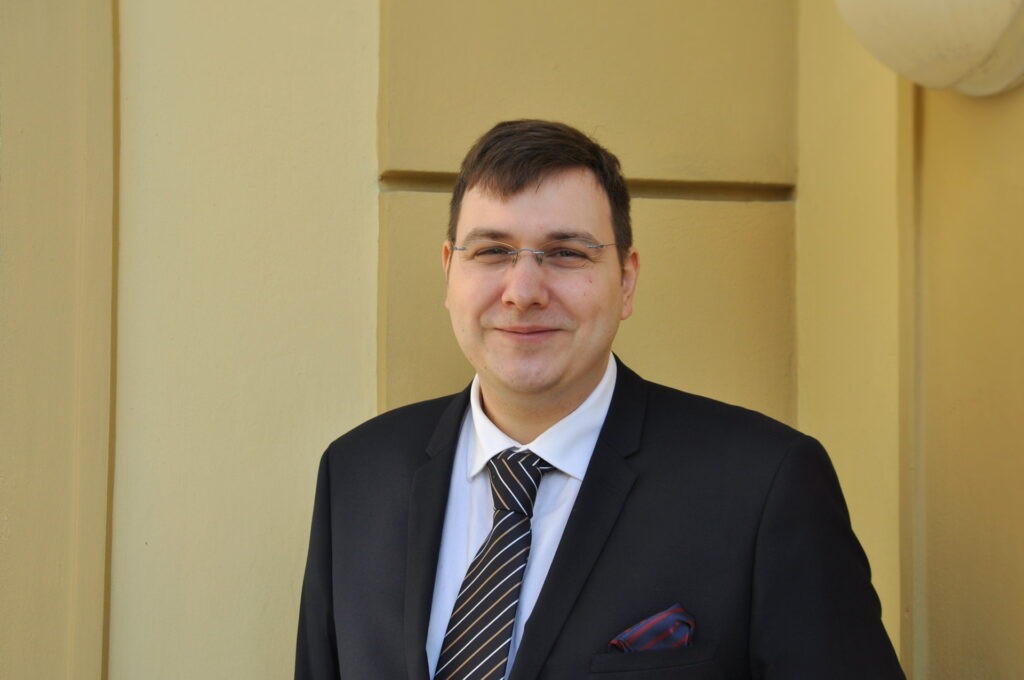
Czech Foreign Minister Jan Lipavský has announced plans to urge EU foreign ministers in Brussels to consider supporting Radio Free Europe/Radio Liberty (RFE/RL) following the termination of its U.S. funding. "We have to start with the political readiness to do something, so I will ask for that today," Lipavsky said before a meeting of EU foreign ministers. On Friday, U.S. President Donald Trump signed an executive order cutting funding for the U.S. Agency for Global Media, which oversees Voice of America and RFE/RL. The move ended federal grants to RFE/RL, originally established during the Cold War to broadcast to the Soviet bloc. On Saturday, RFE/RL President and CEO Stephen Capus said that the cancellation of REF/RL’s grant agreement would be a “massive gift to America’s enemies.”

From Enemy Waves to Fading Signals: Radio Liberty’s Journey in Central Asia

I went to school in Almaty, Kazakhstan, in the 1970s. This period in the Soviet Union is now commonly referred to as the "Era of Stagnation." We felt its effects firsthand. We did not know what freedom of speech was. All media belonged to the state, and all were "party-affiliated." Since there was only one party in the USSR, the Communist Party, all information was exclusively communist. Naturally, the media spoke only of the incredible successes of the working class and the over-fulfillment of party and government plans. We found this completely uninteresting, so we searched for alternative sources of information. Radio broadcasting helped. Almost every home had a radio receiver capable of picking up various wave frequencies. That was when I first heard Voice of America, Radio Liberty, and the BBC. My father listened to these stations. Around the age of 14–15, I also began to listen to these "enemy voices," as they were called at the time. I was primarily interested in the news reports about events that the Soviet press did not cover. And, of course, music. Western radio stations were one of the few sources of information about Western music, which was largely ignored in the USSR. Yes, even music was under ideological pressure. Today, not everyone remembers, but back then, popular bands released new albums almost annually. It was an incredible time for the invention of new sounds — Pink Floyd, Deep Purple, Rainbow, Led Zeppelin, The Rolling Stones, The Beatles, Manfred Mann's Earth Band, 10cc, and many other artists who are now largely forgotten. But they were giants of their time. Thanks to musical radio programs, we were aware of what was happening. The first broadcasts of the Russian Service of Radio Liberty, originally called "Radio Liberation," went on air on March 1, 1953. On March 18 of the same year, the Turkestan editorial office was established, broadcasting in several languages, including Kazakh, Uzbek, Kyrgyz, Tajik, Turkmen, Karakalpak, and Uyghur. Initially, broadcasts in Kazakh, known as "Bostandyk Radiosy" (Radio Liberation), aired four times a week for five minutes each. In the 1960s, the volume of Kazakh-language broadcasting increased to one hour per week, with a four-person team working on its production. By the late 1960s, the Turkestan editorial office was reorganized into "Northern" and "Southern" departments, with the Kazakh program included in the "Northern" department. Khasen Oraltai headed the Kazakh service. In 1971, the Turkestan Editorial Office was further divided into three separate editorial teams: "Turkestan-1," "Turkestan-2," and "Turkestan-3," with Kazakh-language broadcasts conducted through "Turkestan-3." By 1975, broadcast time had increased to half an hour in the morning and evening. Broadcasts were transmitted on shortwave from Munich. Radio Liberty had no correspondents within the Kazakh SSR. In the USSR, the station's broadcasts were jammed until 1988. In the foothills of Almaty, towers that housed jamming equipment for these broadcasts still stand today. In 1993, a Radio Liberty bureau was opened in Almaty, followed by a branch in Astana. However, after President Trump signed an...

USAID Freeze Leaves Central Asian NGOs in Limbo

On January 20, U.S. President Donald Trump signed an executive order suspending funding for most foreign aid programs for 90 days. The move has raised concerns among non-governmental organizations (NGOs) in Central Asia, particularly in Kazakhstan, which has long benefited from U.S. assistance. The order reads: “All heads of departments and agencies responsible for United States foreign development assistance programs shall immediately suspend new commitments and disbursements of development assistance funds to foreign countries and non-governmental implementing organizations, international organizations, and contractors pending a review of such programs for effectiveness and consistency with United States foreign policy to be conducted within 90 days of this order.” Following this directive, U.S. Secretary of State Marco Rubio instructed all diplomatic and consular agencies to issue “stop-work orders” for nearly all active foreign assistance programs. Impact on Kazakhstan and Central Asia According to reports, the funding freeze is expected to affect university grant programs, entrepreneurial initiatives, gender diversity projects, and environmental efforts. The Trump administration has justified the decision by citing the need to reassess spending priorities. Kazakhstan and other Central Asian countries have received U.S. aid for decades. USAID, in particular, has played a significant role in regional development. The agency’s website states: “In Kazakhstan, USAID promotes the U.S. government's Central Asia Strategy, which supports and strengthens the sovereignty and independence of Central Asian countries, both individually and collectively. It also promotes regional connectivity between Central Asia and Afghanistan, advances the rule of law and respect for human rights, and improves the climate for U.S. investment to foster greater regional stability and prosperity.” Since 1992, USAID has funded projects in Kazakhstan focusing on economic diversification, energy, environmental protection, healthcare, and support for media and NGOs. In addition to funding NGOs, USAID collaborates with KazAID, Kazakhstan’s foreign aid agency operating under the Ministry of Foreign Affairs. Reactions from NGO Leaders Denis Dzhivaga, director of the Kazakhstan International Bureau for Human Rights and Rule of Law (KIBHR), told The Times of Central Asia that the aid suspension had been anticipated. “Such a measure was expected," said Dzhivaga. "Even during the election campaign and Trump’s previous presidency, it was clear that he prioritized domestic policy over foreign influence. All NGOs working with USAID and receiving State Department assistance have received letters to halt projects.” However, Dzhivaga noted that KIBHR has limited cooperation with U.S. agencies, so the impact on his organization will be minimal. “In any case, this will negatively affect the NGO sector. The suspension is for three months pending an audit, but even USAID does not seem to know what will happen afterward. I don’t think U.S. assistance to Kazakhstan and Central Asia will stop entirely, but certain projects may be reconsidered - especially those related to discrimination, gender issues, and LGBT rights, as President Trump has already expressed opposition to such initiatives.” Replacing U.S. funding with alternative grants will be challenging, he added. “European donors are already struggling to finance Ukraine, so they are unlikely to allocate substantial funds elsewhere. Many U.S.-backed...

Uzbekistan Plans to Strengthen Strategic Partnership with the U.S.

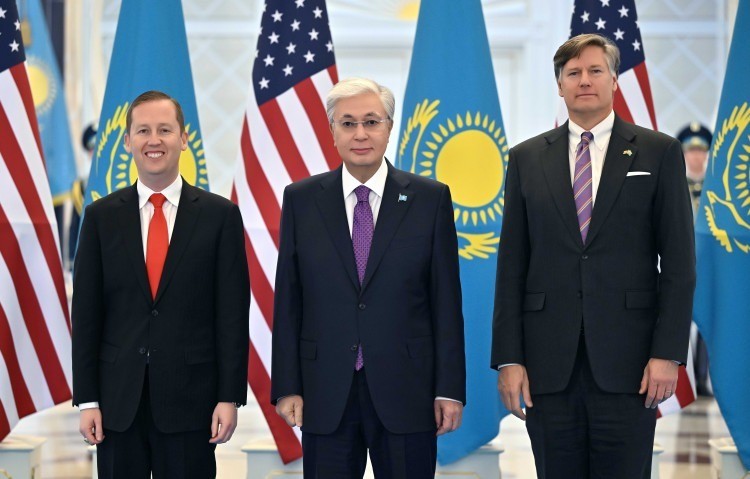
Uzbekistan is actively working to deepen its strategic partnership with the United States. The draft state program for 2025, currently under public discussion, outlines several measures to strengthen these ties. The Ministry of Foreign Affairs, led by Acting Minister Bakhtiyor Saidov, is tasked with expanding bilateral cooperation by the end of 2025. Key initiatives include a high-level visit to the U.S. and the inaugural round of the Enhanced Strategic Partnership Dialogue in Tashkent. The program also aims to bolster collaboration within the “C5+1” format, which features a ministerial meeting, working group discussions, and a summit in Samarkand to mark the format’s 10th anniversary. The program also emphasizes increasing inter-parliamentary cooperation, attracting investors from the Americas, and promoting trade and investment through business forums, exhibitions, and events. Additionally, it prioritizes enhanced security collaboration and sustaining Uzbekistan's strong rankings in U.S. human rights reports. Daniel Runde, Senior Vice President of the Center for Strategic and International Studies, recently urged U.S. policymakers to prioritize relations with Uzbekistan. He described the country as a pivotal partner in maintaining regional stability and countering the influence of Russia and China. Despite geopolitical challenges, including Russia’s invasion of Ukraine and escalating competition with China, Runde highlighted the strategic importance of strengthening ties with Uzbekistan. Uzbekistan's relationship with the U.S. is longstanding. In 2018, President Shavkat Mirziyoyev met with then-President Donald Trump at the White House. Trump lauded Uzbekistan’s rising global stature during the visit, calling it "an honor" to host Mirziyoyev.