• KGS/USD = 0.01144 0%
  • KZT/USD = 0.00205 0%
  • TJS/USD = 0.10782 0%
  • UZS/USD = 0.00008 0%
  • TMT/USD = 0.28490 0%
  • KGS/USD = 0.01144 0%
  • KZT/USD = 0.00205 0%
  • TJS/USD = 0.10782 0%
  • UZS/USD = 0.00008 0%
  • TMT/USD = 0.28490 0%
  • KGS/USD = 0.01144 0%
  • KZT/USD = 0.00205 0%
  • TJS/USD = 0.10782 0%
  • UZS/USD = 0.00008 0%
  • TMT/USD = 0.28490 0%
  • KGS/USD = 0.01144 0%
  • KZT/USD = 0.00205 0%
  • TJS/USD = 0.10782 0%
  • UZS/USD = 0.00008 0%
  • TMT/USD = 0.28490 0%
  • KGS/USD = 0.01144 0%
  • KZT/USD = 0.00205 0%
  • TJS/USD = 0.10782 0%
  • UZS/USD = 0.00008 0%
  • TMT/USD = 0.28490 0%
  • KGS/USD = 0.01144 0%
  • KZT/USD = 0.00205 0%
  • TJS/USD = 0.10782 0%
  • UZS/USD = 0.00008 0%
  • TMT/USD = 0.28490 0%
  • KGS/USD = 0.01144 0%
  • KZT/USD = 0.00205 0%
  • TJS/USD = 0.10782 0%
  • UZS/USD = 0.00008 0%
  • TMT/USD = 0.28490 0%
  • KGS/USD = 0.01144 0%
  • KZT/USD = 0.00205 0%
  • TJS/USD = 0.10782 0%
  • UZS/USD = 0.00008 0%
  • TMT/USD = 0.28490 0%

Viewing results 1 - 6 of 108

Kyrgyzstan: in Kazarman, nothing gold can stay

BISHKEK (TCA) — Mining gold is a troublesome, though lucrative, business in Kyrgyzstan — which often faces opposition from locals in gold-mining areas, which, in turn, scares off foreign investors in gold projects. We are republishing this article on the issue by Nurjamal Djanibekova, originally published by Eurasianet: The language of gold-making spills easily from people’s mouths in Kazarman. Every other townsperson can talk with the best of them about crushing ores, leaching by cyanide and roasting. For a little over 30 years, this town in west-central Kyrgyzstan, home to a giant Soviet-built smelter, has been all about gold. Gripes about the perceived damage caused to the environment by the industry, however, are festering and have galvanized opposition to a new, privately owned gold-refining plant under development since 2016. A couple of times a month since the start of this year, residents have congregated on a square in Kazarman, home to around 12,000 people, in a show of a discontent with Makmal G.L Developing, the Chinese-backed company behind the project. The rallies have typically begun at 10 a.m. in front of the House of Culture building. After organizers set up a microphone and speakers, the town akim, or mayor, Tilek Idirisov, would open proceedings and then give way to others who wished to air their grievances. On February 7, Maksat Yasymov, a former worker at the town’s Makmalzoloto gold smelting plant, came forward to address the crowd, which huddled close around him in a circle under the rapidly falling snow. “We are not at fault here, but at the national level they are saying that an investor has come and that we are against him. We will welcome any investor with open arms if they are proposing something safe and environmentally sound that will provide people with work,” Yasymov declaimed with mounting fervor. “But for six months, these investors have shown us no documents, no feasibility studies. They are the ones at fault. They came here by corrupt means.” Listeners punctuated Yasymov’s delivery with cries of approval, while a stout police officer filmed the gathering on a mobile phone. The assembly concluded without incident and Idirisov, the mayor, assured those present that work on the new plant would be halted and people’s complaints relayed to officials higher up the chain. Murky present Neither promise was kept and so the next protest, on March 1, went less smoothly. Instead of meeting at the House of Culture, as usual, a group of several dozen descended directly on the plant. “People came of their own accord from all over the Toguz-Torou district,” Nuradil Tursunbekov, a member of the town council, told Eurasianet. “It said on the internet that they were brought here by bus, that there were drunk people. Maybe there were some like that, but we sent those people home straight away. People joined the meeting because nobody wants harmful industry here.” After a few hours, a group of rally attendants decided to check for themselves what work was actually going on...

Kyrgyzstan: Kumtor gold output accounted for 9.7% of country’s GDP in 2017

BISHKEK (TCA) — Gold production at the Kumtor mine in Kyrgyzstan in 2017 was 562,749 ounces or 17,503.46 kg. Gold sales in 2017 were 550,134 ounces or 17,111.09 kg with a revenue totaling $685.2 million. Contribution to the national budget in taxes and mandatory payments in 2017 was more than 8.7 billion soms, Kumtor Gold Company said on March 14. Continue reading

Russian company to explore for copper and gold in Uzbekistan

TASHKENT (TCA) — The Russian company Rosgeoperspektiva is expected to carry out geological exploration works to look for copper and gold reserves in the promising areas of Kazakhtau and Kazakhtau-1 in the Navoi region of Uzbekistan, the Jahon information agency reported. Continue reading

Kyrgyzstan ensures smooth operation of country’s largest gold mine

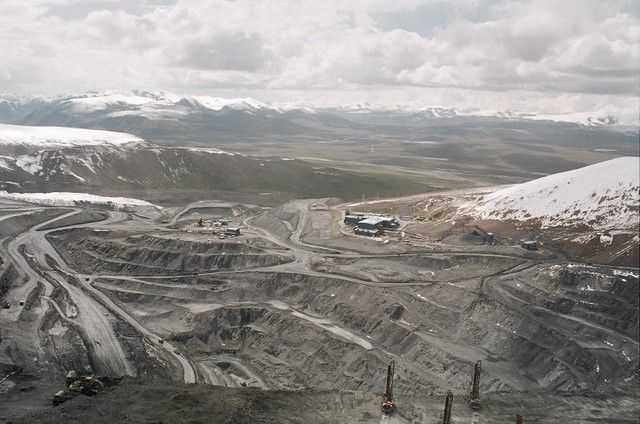
BISHKEK (TCA) — Kyrgyzstan’s Parliament has approved amendments to the country’s Water Code which allow the development of Davydov and Lysyi glaciers at the country’s largest gold deposit, Kumtor. The amendments are necessary for the State Agency for Environmental Protection and Forestry to permit further work at the deposit. The Government submitted the bill to the Parliament after Kyrgyzstan and Centerra Gold signed a new agreement on compliance with environmental standards in Kumtor’s development. Kumtor, the largest gold mine in Central Asia, is located in Kyrgyzstan’s Tien Shan mountains. Canada-based Centerra owns 100% of the Kumtor mine through its wholly owned subsidiary Kumtor Gold Company. The Kyrgyz Republic holds 26.6% shares in Centerra through the state gold company KyrgyzAltyn. Kyrgyzstan’s Government initiated amendments to the Water Code back in 2015 but under the pressure of society, the bill was withdrawn from Parliament. Civil society and environmentalists believe that the adoption of the document would legitimize the destruction of glaciers. Debates on the problem continue so far, and the public has divided into two camps. Some consider the adoption of the law necessary for the economy of the country, while others advocate the environment protection. Government’s arguments Due to amendments to the Water Code, the Government will be able to raise an additional 12.7 billion Kyrgyz soms ($182 million) for the development of the country's economy, said the then Deputy Prime Minister of Kyrgyzstan Duishenbek Zilaliev last week. In the first nine months of 2017, Kumtor contributed more than 6.8 billion soms in taxes and mandatory payments to the national budget of Kyrgyzstan, and more than $238 million in 2016. Kyrgyzstan received $10 million annually as dividends from its shares in Centerra valued at $415 million, he said. In addition, Kumtor will allocate a one-time $10 million payment for cancer treatment in the country. The company paid $310,000 for environmental damage annually but according to the recent agreement, the payment was increased to $3 million. Summing up all the money coming from Kumtor, 12.7 billion soms will be directed to the development of Kyrgyzstan’s economy. When the document is signed by the President, Centerra will be able to conduct a full-scale development in the areas of the Davydov and Lysyi glaciers. If Kumtor does not work, the glaciers will collapse into the quarry and the Government will have to clear it at its own expense, Zilaliyev explained. According to Chairman of the State Committee for Industry, Energy and Subsoil Use Ulanbek Ryskulov, it is impossible to exclude the excavation of ice during mining operations, because the ice masses were deformed towards the quarry and are dangerous for mining operations. They need to be moved to protect the quarry and to maintain safe working conditions. The Lysyi Glacier has been developed by 10% and it will be developed by 20% by the end of the mine operation, he added. The Davydov Glacier has been worked out at 45-50% (70% after completion). In the future, the Environmental Protection Agency will not allow mining...

Kyrgyzstan and Centerra reach settlement concerning Kumtor gold project

BISHKEK (TCA) — Centerra Gold Inc., the Canadian-based gold mining company operating Kyrgyzstan’s Kumtor gold mine, on September 11 said that the Company and its Kyrgyz subsidiaries — Kumtor Gold Company (KGC) and Kumtor Operating Company (KOC) — have entered into a comprehensive settlement agreement with the Government of Kyrgyzstan. The Agreement, among others, provides for full and final resolution of all existing arbitral and environmental claims, disputes, proceedings and court orders, Centerra said. The existing 2009 agreements governing the Kumtor Project remain in full force and effect, including the tax and fiscal regime. KGC has agreed to make a one-time lump sum payment totaling US$57 million to a new, government-administered Nature Development Fund (US$50 million) and to a new, government administered Cancer Care Support Fund (US$7 million) and within 12 months of closing make a further one-time payment of US$3 million to the Cancer Care Support Fund. “First and foremost, this agreement is a comprehensive resolution to all of the outstanding matters affecting the Kumtor Project,” Scott Perry, Centerra Gold’s Chief Executive Officer, said after the signing of the agreement in Bishkek. “Our arrangement provides for the lifting of all restrictions on the freedom of movement of KGC employees as well as the restrictions on the ability of Kumtor to distribute funds to Centerra. The agreement also provides business certainty for future mining operations at the Kumtor Project, as it preserves all rights of the Company, KGC and KOC under the Kumtor Project Agreements and, in order to receive full payment, requires continued compliance by the Government with a number of conditions precedent that are designed to protect Centerra, KGC and KOC. Lastly, this agreement represents a symbol of commitment from Centerra and the Kyrgyz Republic Government, a commitment not only to stability for foreign investment in the Kyrgyz Republic but a commitment to the environment, health and wellbeing of the citizens of Kyrgyzstan.” Sapar Isakov, Prime Minister of the Kyrgyz Republic commented, "We are pleased to have worked together with Kumtor and the Company to reach a solution regarding the Kumtor Project. It is encouraging to see the Company's commitment to the environment with the establishment and funding of a new Nature Development Fund. This new fund will help finance environmental conservation and nature preservation projects throughout Kyrgyzstan going forward. Additionally, the Company has strengthened its social responsibility by committing to fund a new Cancer Care Support Fund with contributions up to US$10 million and to provide stronger annual contributions to the environment and to Kumtor's existing reclamation trust fund. With the resolution of all the outstanding matters regarding the Kumtor Project we have established a new beneficial relationship with our country's largest enterprise and can look forward to a climate of economic stability which will encourage further foreign investment to grow our economy."

EBRD supports inclusion in Kazakhstan through Kyzyl gold deposit development

ASTANA (TCA) — The European Bank for Reconstruction and Development (EBRD) on June 22 said it is deepening its efforts to promote economic inclusion in the energy sector and the extractive industries of Kazakhstan with a US$ 140 million loan to Bakyrchik Mining Venture LLP for the development of the Kyzyl gold deposit. Continue reading