• KGS/USD = 0.01144 0%
  • KZT/USD = 0.00212 0%
  • TJS/USD = 0.10456 0.19%
  • UZS/USD = 0.00008 0%
  • TMT/USD = 0.28490 0%
  • KGS/USD = 0.01144 0%
  • KZT/USD = 0.00212 0%
  • TJS/USD = 0.10456 0.19%
  • UZS/USD = 0.00008 0%
  • TMT/USD = 0.28490 0%
  • KGS/USD = 0.01144 0%
  • KZT/USD = 0.00212 0%
  • TJS/USD = 0.10456 0.19%
  • UZS/USD = 0.00008 0%
  • TMT/USD = 0.28490 0%
  • KGS/USD = 0.01144 0%
  • KZT/USD = 0.00212 0%
  • TJS/USD = 0.10456 0.19%
  • UZS/USD = 0.00008 0%
  • TMT/USD = 0.28490 0%
  • KGS/USD = 0.01144 0%
  • KZT/USD = 0.00212 0%
  • TJS/USD = 0.10456 0.19%
  • UZS/USD = 0.00008 0%
  • TMT/USD = 0.28490 0%
  • KGS/USD = 0.01144 0%
  • KZT/USD = 0.00212 0%
  • TJS/USD = 0.10456 0.19%
  • UZS/USD = 0.00008 0%
  • TMT/USD = 0.28490 0%
  • KGS/USD = 0.01144 0%
  • KZT/USD = 0.00212 0%
  • TJS/USD = 0.10456 0.19%
  • UZS/USD = 0.00008 0%
  • TMT/USD = 0.28490 0%
  • KGS/USD = 0.01144 0%
  • KZT/USD = 0.00212 0%
  • TJS/USD = 0.10456 0.19%
  • UZS/USD = 0.00008 0%
  • TMT/USD = 0.28490 0%

Viewing results 1 - 6 of 130

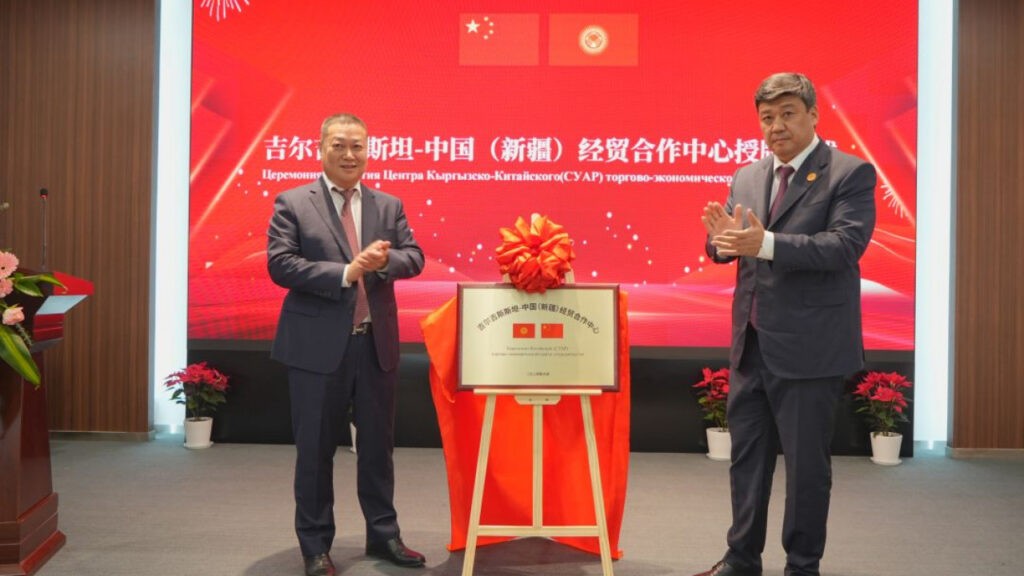
Kyrgyz-Chinese Trade and Economic Cooperation Centre Opens in Urumqi

On June 26, Deputy Chairman of the Cabinet of Ministers of the Kyrgyz Republic Bakyt Torobaev attended the official opening of the Kyrgyz-Chinese (XUAR) Trade and Economic Cooperation Centre in Urumqi, in China’s northwestern Xinjiang Uygur Autonomous Region (XUAR). Established with authorization from the Trade Mission under the Ministry of Economy and Commerce of the Kyrgyz Republic in China, the centre occupies an area of over 400 square metres in the Xing Long Industrial Park, owned by Xing Long Corporation of Xinjiang. The main remit of the centre is to serve as a platform for negotiations between Kyrgyz and Chinese businesses through thematic meetings, events, presentations of projects, as well as the provision of up-to-date information on investment and opportunities for cooperation on joint projects in Kyrgyzstan. The Xing Long Corporation of Xinjiang earlier expressed interest in developing an industrial park in Kyrgyzstan to attract business from Chinese companies.      

China’s Xinjiang Offers Kazakhstan Assistance in Cooperation with Hong Kong and Macao

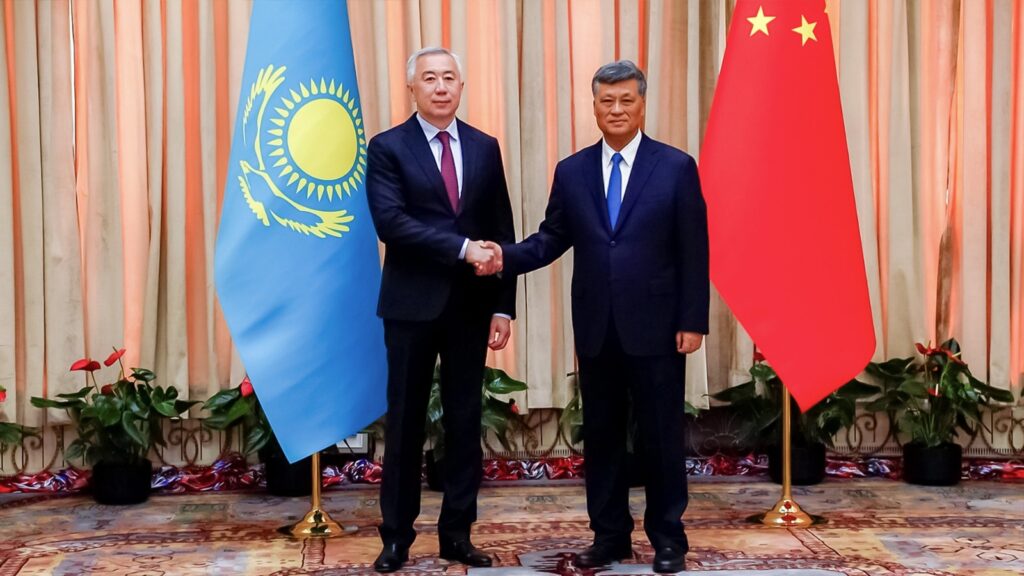
The 3rd Forum of Interregional Cooperation of Kazakhstan and China was held on June 26 in Urumqi, the main city in China’s northwestern Xinjiang Uygur Autonomous Region (XUAR). On the eve of the Forum, the Secretary of the Communist Party Committee of the XUAR, Ma Xingrui, met Deputy Prime Minister of Kazakhstan Serik Zhumangarin, during which he proposed a new direction in investment cooperation between Kazakhstan and China, with the assistance of Xinjiang. “The third forum of interregional cooperation between Kazakhstan and China in Urumqi is a significant result of our close friendly relations,” said Ma Xingrui. “At this new stage of our relationship, we are ready to promote cooperation between Kazakhstan and Hong Kong through Xinjiang. We suggest considering cooperation with large enterprises from Hong Kong and Macao that are ready to invest in Kazakhstan. These are large companies that now at a stage of transforming their activities, are showing great interest in cooperation with Kazakhstan.” Following his statement that in 2023, China became Kazakhstan’s largest trading partner, the Kazakh Deputy Prime Minister said, “XUAR is Kazakhstan’s key partner in China, accounting for almost half of the Kazakh-Chinese trade turnover. The practical expansion of interregional cooperation has significant growth potential. The most promising areas are transport and logistics, agriculture, investment cooperation, eliminating trade barriers, and tourism.” Regarding the above, the parties discussed furthering cooperation in tourism, the development of railways and the construction of new border crossings. With reference to increasing supplies of agricultural products, Zhumangarin announced Kazakhstan’s readiness to raise beef exports to China by up to 500 thousand tons. In 2023, the volume of trade between Kazakhstan and China reached $31.5 billion (+30.1%), including exports by Kazakhstan amounting to $14.7 billion (+12.6%). In January-April 2024, bilateral trade turnover amounted to $9 billion, 10.3% more than the same period of the previous year.    

EDB Annual Meeting and Business Forum to Focus on Eurasian Transport Network

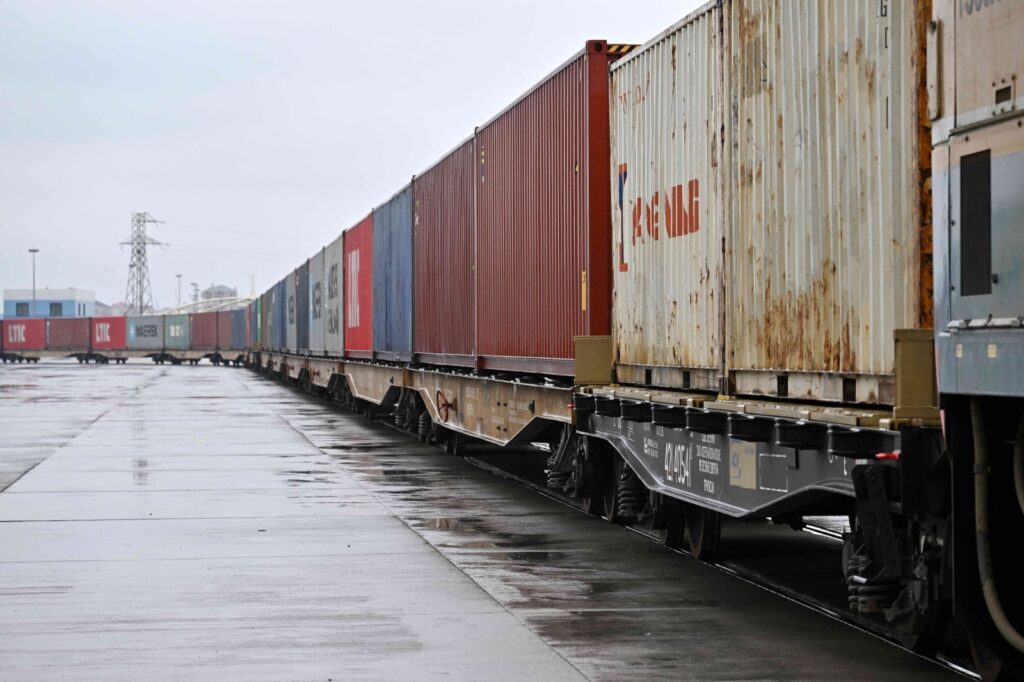
The Eurasian Development Bank’s (EDB) Annual Meeting and Business Forum, to be held in Almaty, Kazakhstan on 27-28 June, is to focus on cross-border transport corridors in Eurasia. The EDB is a multilateral development bank serving Armenia, Belarus, Kazakhstan, Kyrgyzstan, Russia, and Tajikistan. According to the EDB press service, this year’s forum session, “The Eurasian Transport Network: Potential, Challenges and Solutions” will analyse a report on the development of cross-border transport corridors crucial to the region’s economies. The report highlights the significant constraints in economic development posed by the remoteness of Central Asian countries from global markets and their landlocked status. According to EDB estimates, trade costs in some Central Asian nations are 40% higher than those of coastal states. Overcoming the lack of transport connectivity is key to unlocking the strong economic potential of all Central Asian countries. The concept of the transport network is based on the premise that linking East–West and North–South transport corridors generates synergies, creating new routes, logistics opportunities and better through tariffs. The EDB projects that freight traffic along the three main corridors crossing Central Asia (Central Eurasian Corridor, TRACECA and North–South) could potentially increase by almost two-thirds to 1.7 million containers (TEU) by 2030. Implementing this objective will require concerted efforts from all participating countries.    

Kyrgyzstan and EU Sign Enhanced Partnership and Cooperation Agreement

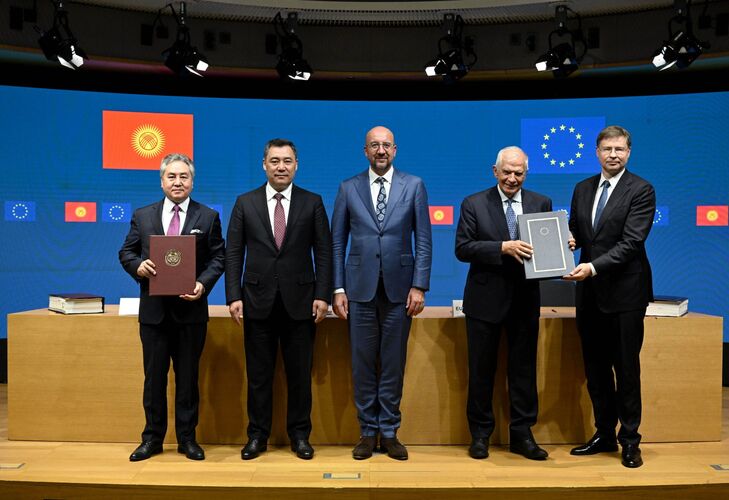
On June 25, President of the Kyrgyz Republic Sadyr Japarov met the President of the European Council Charles Michel in Brussels to discuss issues on Kyrgyzstan-EU interaction. Views were exchanged on prospects for trade and economic cooperation and the implementation of joint projects in energy, transport, rare metals, agriculture, and environmentally- friendly technologies Following the meeting, an Enhanced Partnership and Cooperation Agreement (EPCA) between the European Union and the Kyrgyz Republic was signed by the Minister of Foreign Affairs of the Kyrgyz Republic Jeenbek Kulubaev, High Representative of the European Union for Foreign Affairs and Security Policy/Vice-President of the European Commission Josep Borrell, and Executive Vice-President of the European Commission and Commissioner for Trade Valdis Dombrovskis. The new document replaces the Partnership and Cooperation Agreement (PCA) signed back in 1999. As reported by the Delegation of the European Union to the Kyrgyz Republic, the Agreement provides new legal grounds for reinforced political dialogue and deepening cooperation in areas such as trade and investment, sustainable development and connectivity, research and innovation, education, environment, and climate change, as well as rule of law, human rights, and civil society. It will also strengthen cooperation in foreign and security policy, including issues of conflict prevention and crisis management, risk reduction, cybersecurity, regional stability, disarmament, non-proliferation, arms and export control. In addition, the EPCA will create new opportunities for cooperation in critical raw materials, essential for green and digital transitions. High Representative of the European Union for Foreign Affairs and Security Policy/Vice-President of the European Commission Josep Borrell commented: “We are happy to count the Kyrgyz Republic amongst our close partners. The Enhanced Partnership and Cooperation Agreement demonstrates our steadfast commitment to strengthening and deepening our bilateral relations based on shared values and common interests in all areas of mutual benefit, reflecting new geopolitical and economic realities. We will continue working with Kyrgyzstan on further strengthening the protection of human rights and fundamental freedoms and promote cooperation with civil society which are essential pillars of an open democratic society.” Welcoming the initiative, Executive Vice-President and Commissioner for Trade Valdis Dombrovskis, announced: “This Enhanced Partnership and Cooperation Agreement marks a new chapter in the EU’s economic and trade relations with Kyrgyzstan. We have included an ambitious Trade and Sustainable Development Chapter that aims to promote fair and open competition, while also benefiting Kyrgyz consumers and SMEs. Through this Agreement, we are helping to create more opportunities for EU and Kyrgyz businesses and investors by facilitating trade flows and enhancing cooperation. We believe this partnership will contribute to the prosperity of our regions by generating new and better jobs and boosting economic development and resilience.” Since 2016, the Kyrgyz Republic has benefitted from unilateral and preferential access to the EU market through the Special Incentive Arrangement for Sustainable Development (GSP+) of the EU Generalised Scheme of Preferences. Kyrgyzstan is the EU’s third largest trading partner in Central Asia. GSP+ has contributed to an increase in EU-Kyrgyzstan trade in goods in 2023 by 116% (over 2022) reaching EUR 2.845 billion.    

Kazakhstan Supplies Vital Radiopharmaceuticals to Kyrgyzstan

On 15 June, the Institute of Nuclear Physics in Almaty, Kazakhstan delivered a molybdenum-99/technetium-99 generator, used to diagnose cancer and heart diseases, to Kyrgyzstan. As reported by the Kazakh Ministry of Energy, the provision of the generator to Kyrgyzstan was organized in cooperation with the International Atomic Energy Agency (IAEA). The Institute of Nuclear Physics is the only organization in Kazakhstan certified to produce radiopharmaceuticals that comply with international standards. Today, the Institute produces some 75% of Kazakhstan’s radiopharmaceuticals supplied to medical institutions in the cities of Almaty, Shymkent, and Semey. The supply of radiopharmaceuticals to Kyrgyzstan marks an important step towards strengthening the healthcare system and the availability of advanced medical technologies for the country’s residents.  

Kazakhstan Pushes New Measures to Utilize its Transit Potential

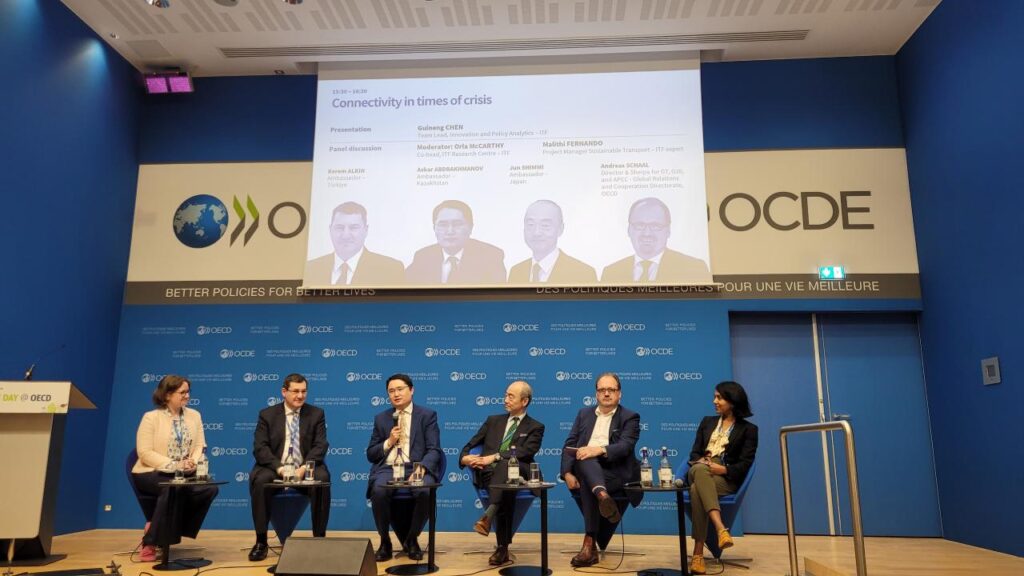
On June 20, Permanent Delegate of Kazakhstan to International Organizations in Paris, Askar Abdrakhmanov, attended the International Transport Forum (ITF) Day at the Organization for Economic Co-operation and Development (OECD) headquarters. In his presentation on “Connectivity in Times of Crisis,” Ambassador Abdrakhmanov focused on Kazakhstan’s measures to further develop its transport infrastructure and international freight transportation, and Astana’s efforts to develop transport cooperation with the country’s neighbouring states. Regarding the potential of both old and new routes, Abdrakhmanov highlighted the construction of second tracks on the Dostyk – Moynty railway on the Kazakhstan and China border, a container hub and dredging projects at Aktau and Kuryk seaports, a new Darbaza – Maktaral railway line with further access through Uzbekistan, Turkmenistan and Iran to the Persian Gulf and the Indian Ocean, and functioning the eastern branches of the North-South corridor. Special attention was paid to the Trans-Caspian International Transport Route (TITR), widely known as the Middle Corridor. He emphasized the importance of the recent joint government venture to establish a single, unified operation of cargo transportation along the Middle Corridor, as well as the launch of the TITR Coordination Platform with the participation of Central Asian states, the South Caucasus, and the European Commission. “The current geopolitical situation has created new economic and logistical challenges for Kazakhstan and other countries in the region, and the answers to them lie in closer cooperation with our neighbours and international partners,” stated the Kazakh diplomat. The International Transport Forum (ITF) at the OECD is an intergovernmental organization with 69 member countries which serves as a think tank for transport policy and organizes annual summits of transport ministers. Kazakhstan has been an ITF member  since 2017.