• KGS/USD = 0.01144 0%
  • KZT/USD = 0.00207 0%
  • TJS/USD = 0.10396 -0.29%
  • UZS/USD = 0.00008 0%
  • TMT/USD = 0.28490 0%
  • KGS/USD = 0.01144 0%
  • KZT/USD = 0.00207 0%
  • TJS/USD = 0.10396 -0.29%
  • UZS/USD = 0.00008 0%
  • TMT/USD = 0.28490 0%
  • KGS/USD = 0.01144 0%
  • KZT/USD = 0.00207 0%
  • TJS/USD = 0.10396 -0.29%
  • UZS/USD = 0.00008 0%
  • TMT/USD = 0.28490 0%
  • KGS/USD = 0.01144 0%
  • KZT/USD = 0.00207 0%
  • TJS/USD = 0.10396 -0.29%
  • UZS/USD = 0.00008 0%
  • TMT/USD = 0.28490 0%
  • KGS/USD = 0.01144 0%
  • KZT/USD = 0.00207 0%
  • TJS/USD = 0.10396 -0.29%
  • UZS/USD = 0.00008 0%
  • TMT/USD = 0.28490 0%
  • KGS/USD = 0.01144 0%
  • KZT/USD = 0.00207 0%
  • TJS/USD = 0.10396 -0.29%
  • UZS/USD = 0.00008 0%
  • TMT/USD = 0.28490 0%
  • KGS/USD = 0.01144 0%
  • KZT/USD = 0.00207 0%
  • TJS/USD = 0.10396 -0.29%
  • UZS/USD = 0.00008 0%
  • TMT/USD = 0.28490 0%
  • KGS/USD = 0.01144 0%
  • KZT/USD = 0.00207 0%
  • TJS/USD = 0.10396 -0.29%
  • UZS/USD = 0.00008 0%
  • TMT/USD = 0.28490 0%

Viewing results 1 - 6 of 101

Kazakhstan’s Nuclear Diplomacy – With China Set to Build Second, Who Will Construct Third Nuclear Power Plant?

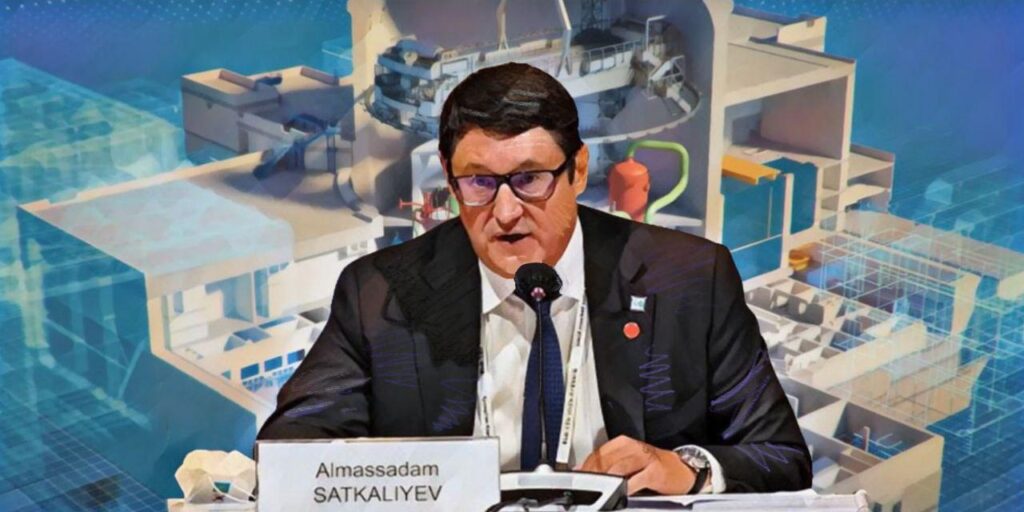
Kazakhstan’s famed hospitality, long enshrined in its national proverbs, has also become a guiding principle in its foreign policy. One recent example is the Kazakh government’s diplomatic maneuvering in the selection of partners for its nuclear power program. Leader of the Race Initially, Kazakhstan planned to build a single nuclear power plant by 2035 to address potential electricity shortages. However, following the October 6, 2024, referendum, where 71.12% of voters approved a plant in the Almaty Region, President Kassym-Jomart Tokayev instructed the government to explore the construction of at least two additional facilities. This directive, as it turns out, was both timely and strategic. In March 2025, the newly formed Atomic Energy Agency, reporting directly to the president, was tasked with overseeing the selection of international consortium leaders. On June 14, the agency announced that Russia’s state-owned Rosatom would lead the consortium to build Kazakhstan’s first nuclear power plant. Rosatom CEO Alexey Likhachev welcomed the decision, stating that the VVER-1200 Generation 3+ reactors, already operating in Russia and Belarus and selected by partners in Hungary, Egypt, Turkey, Bangladesh, and China, would be used. These reactors, he emphasized, meet international safety standards and integrate both active and passive safety systems. Tricks Up Their Sleeves Behind the scenes, the selection process revealed a quiet tug-of-war between Chinese and Russian interests. Ultimately, Rosatom prevailed, thanks, in part, to two strategic moves. First, Rosatom’s supporters enlisted Assystem, an ostensibly independent nuclear engineering consultancy, to assist Kazakhstan Atomic Power Plants LLP in the evaluation process. The firm’s analysis favored Rosatom. Second, to pre-empt concerns about Western sanctions, the Kazakh authorities emphasized that Kazakhstan would be the sole owner and operator of the facility. Atomic Energy Agency head Almasadam Satkaliev stated that Kazakhstan would control the entire production cycle from uranium mining to fuel processing and plant maintenance, thereby limiting direct Russian involvement post-construction. This arrangement may allow the creation of a Kazakh legal entity immune to Western sanctions, as it would be wholly state-owned. Whether this could offer Rosatom a loophole for acquiring restricted components remains an open question but one that few may press given the global interest in nuclear safety. Another Contender Emerges Just hours after Rosatom’s contract was announced, Satkaliev made a second, equally strategic statement: China National Nuclear Corporation (CNNC) would lead the construction of Kazakhstan’s second nuclear power plant. Satkaliev cited CNNC’s “strongest proposals” and revealed plans for a broader agreement on nuclear cooperation with China. “Objectively, few countries can master the entire nuclear cycle. China is one of them,” Satkaliev noted. Back in February, prior to the agency’s creation, Kazakhstan’s Ministry of Energy, then also led by Satkaliev, had identified Kurchatov and Aktau as potential sites for future nuclear facilities. Kurchatov lies near the former Semipalatinsk nuclear test site, while Aktau once hosted the Soviet-era BN-350 fast neutron reactor. The timing of Satkaliev’s announcement is no coincidence. Chinese President Xi Jinping is scheduled to visit Kazakhstan on June 16 for the second China-Central Asia Summit. For a nation that...

Kyrgyz Government Defends Russian Language Amid Push for Kyrgyz-Only Policies

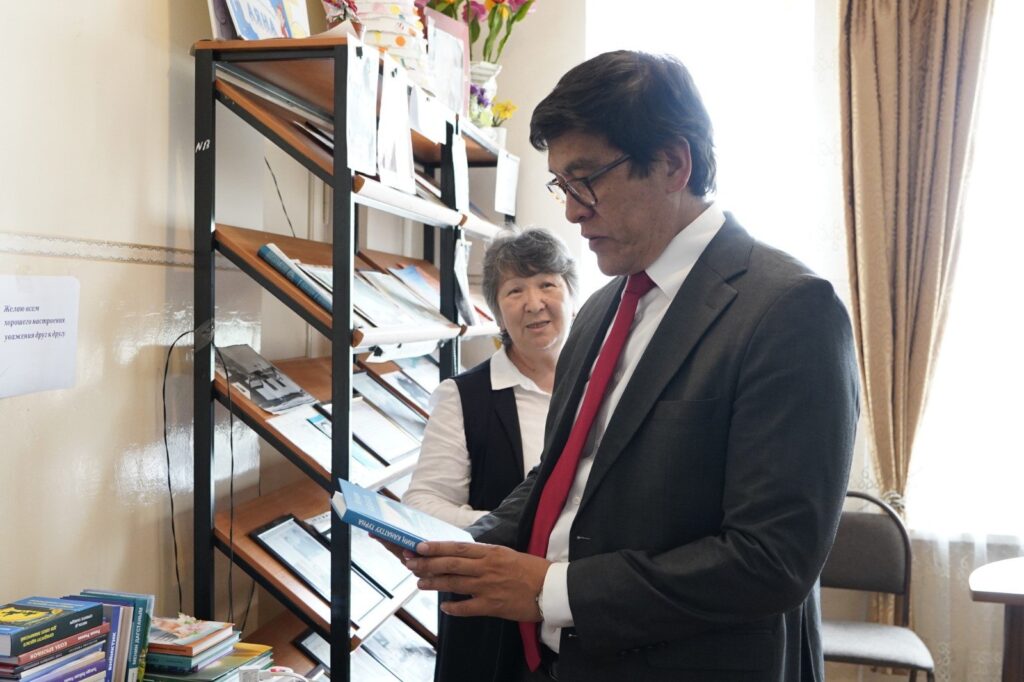
Deputy Prime Minister of Kyrgyzstan Edil Baisalov has publicly defended the role of the Russian language in the country’s education system, stating that fluency in Russian should become standard for all schoolchildren. Speaking to journalists in Bishkek, Baisalov rejected recent calls by members of parliament and the National Commission on the State Language to translate all scientific literature into Kyrgyz. He argued that access to educational and methodological materials in Russian and English broadens Kyrgyzstan’s academic and scientific opportunities. “It is important for us that every schoolchild knows Russian. This is necessary not only for internal communication, but also for access to global science, culture, and interaction with the outside world,” Baisalov said. “Of course, we will develop other languages as well, English, Chinese, Arabic, and Turkish. The more languages young people know, the better they will feel in the modern world.” His comments come amid a controversial push by the National Commission on the State Language to mandate Kyrgyz as the sole language of instruction at universities and impose fines on professionals, including civil servants, judges, lawyers, and teachers, who do not know Kyrgyz. A bill to this effect is currently under public review. Melis Murataliyev, head of the Commission, has cited the low level of Kyrgyz proficiency among civil servants as a major issue, pointing to frequent errors in official documents. The Commission claims that 70-80% of Kyrgyzstan’s universities currently use Russian as the primary language of instruction, a situation it argues must change. However, the proposals have drawn widespread criticism from the public and lawmakers. Some members of parliament have urged a more balanced approach. While Murataliyev has proposed revising legislation related to the status of Russian as an official language, Baisalov assured that the government has no intention of doing so.

Kazakhstan’s Diplomatic Dance: Securing Power in Turbulent Times

For Kazakhstan, strengthening ties with neighboring Central Asian states – as well as with Russia, China, and the West – is a top foreign policy priority. That, however, does not mean that the energy-rich nation is not also seeking to build stronger relations with other actors on the international stage. The largest regional country views itself as an aspiring middle power. As such, it intends to continue pursuing what Roman Vassilenko, Kazakhstan’s Deputy Foreign Ministry, describes as a “balanced, constructive and pragmatic foreign policy.” Yet, in an increasingly turbulent world, this approach comes with its own sets of challenges. One of them is undoubtedly the construction of the nation’s first nuclear power plant. Kazakhstan’s President Kassym-Jomart Tokayev has repeatedly stated that an international consortium with participation by companies from China, France, Russia, and South Korea should be responsible for that. But how realistic is that under the current geopolitical circumstances? “No decision of the composition of the consortium has been made yet, although we are actively negotiating with the companies interested in the construction,” Vassilenko told The Times of Central Asia, emphasizing that Tokayev has stressed that Kazakhstan will need more than one nuclear power plant. That is why, in Vassilenko’s view, there will likely be different types of consortiums building different types of nuclear plants. Such an approach perfectly illustrates the Central Asian nation’s “multi-vector” foreign policy. “As the ninth largest country in the world, with only 20 million people, and neighboring such superpowers as Russia and China, we can naturally depend only on the best diplomacy we can deploy,” Vassilenko stressed. For that reason, Kazakhstan has initiated the Astana International Forum (AIF) – an event that reflects today’s interconnected global challenges, ranging from energy security and the climate crisis to technological innovation, sustainable development, and geopolitical cooperation. This year, the AIF – taking place in the Kazakh capital on May 29-30 – will host leaders from nations such as Rwanda, Qatar, Albania, Croatia, and North Macedonia, among others. The fact that Astana will host leaders from several Balkan countries clearly suggests that Kazakhstan plans to strengthen ties with this part of Europe. According to Vassilenko, Kazakhstan’s policymakers view the Balkans as a “promising market” which is why the Central Asian nation plans to establish direct flights to Serbia later this year. “We already have direct flights to Montenegro, and we aim to connect Kazakhstan with other European countries as well,” Vassilenko said, adding that his nation has recently opened embassies in Albania and North Macedonia. This approach demonstrates that Astana sees not only the European Union but also the EU candidate countries as potential partners. Still, for Kazakhstan – a major oil and gas producer – energy plays an important role in its foreign policy strategy. Given that the Central Asian state supplies large quantities of crude oil and petroleum products to Europe via Croatia, it’s no surprise that the Prime Minister of the former Yugoslav Republic, Andrej Plenkovic, is among the major speakers at the Astana International...

Astana Gathers the World: Forum Elevates Kazakhstan’s Diplomatic Stature

The Astana International Forum 2025 (AIF2025), themed “Connecting Minds, Shaping the Future,” will take place in Kazakhstan’s capital on May 29-30. World leaders, business executives, investors, and experts will convene to address pressing global challenges and explore avenues for mutually beneficial agreements. Who is Expected in Astana? The AIF2025 aims to serve as a platform for open dialogue and to attract foreign capital. Participants will also seek to forge strategic partnerships and promote economic development initiatives. Approximately 600 international guests are expected, including prominent political figures, heads of international organizations, business leaders, investors, and members of the academic community. Confirmed attendees include Paul Kagame, President of Rwanda; Edi Rama, Prime Minister of Albania; Andrej Plenković, Prime Minister of Croatia, Gordana Siljanovska Davkova, President of the Republic of North Macedonia; and Sheikh Mohammed bin Abdulrahman Al Thani, Prime Minister and Minister of Foreign Affairs of Qatar. Ban Ki-moon, former UN Secretary-General and Chair of the Global Green Growth Institute and the Boao Forum for Asia, will also participate. Other distinguished guests include Alain Berset, Secretary General of the Council of Europe; Qu Dongyu, Director-General of the UN Food and Agriculture Organization (FAO); Amy Pope, Director General of the International Organization for Migration (IOM); Mathias Cormann, Secretary General of the OECD; and Daren Tang, Director General of the World Intellectual Property Organization. Also expected are Antonella Bassani, World Bank Vice President for Europe and Central Asia; Haoliang Xu, UNDP Deputy Secretary-General and Deputy Administrator; Jin Liqun, President of the Asian Infrastructure Investment Bank (AIIB); Jürgen Rigterink, First Vice President of the EBRD; Kubanychbek Omuraliev, Secretary General of the Organization of Turkic States; and Sebastian Kurz, former Federal Chancellor of Austria. This year, the forum will focus on three global themes: politics and international security, energy and climate change, and economics and finance. According to the Kazakh government, AIF2025 takes place amid intensifying global competition for investment and showcases Kazakhstan’s openness to international collaboration. The country continues to solidify its global presence through comprehensive reforms, legal modernization, and a strengthened investment climate. On May 28, two bilateral business forums, Kazakhstan-France and Kazakhstan-Italy will precede the main event. Italian Prime Minister Giorgia Meloni will also attend a Central Asia-Italy summit. As previously reported by The Times of Central Asia, in recent years Italy has emerged as one of the European countries most keen to maintain close relations with the countries of Central Asia. President Kassym-Jomart Tokayev is scheduled to open the forum. Global Anticipation Builds In the run-up to the event, several participants have already shared their expectations, with Maha Al-Kuwari, General Manager of the Doha Forum, saying that it was a privilege to be involved. “Together with the Qatar Development Fund, the Doha Forum will host a session focused on innovative approaches to enhancing global sustainability. Given geopolitical fragmentation, post-pandemic recovery, and disrupted supply chains, this discussion is vital, especially for developing and least developed countries,” she stated. The session will highlight new investment models and successful partnership frameworks spanning from Astana to Doha. Interviews...

Recognition of the Islamic Emirate of Afghanistan: Between Law, Diplomacy, and Pragmatism

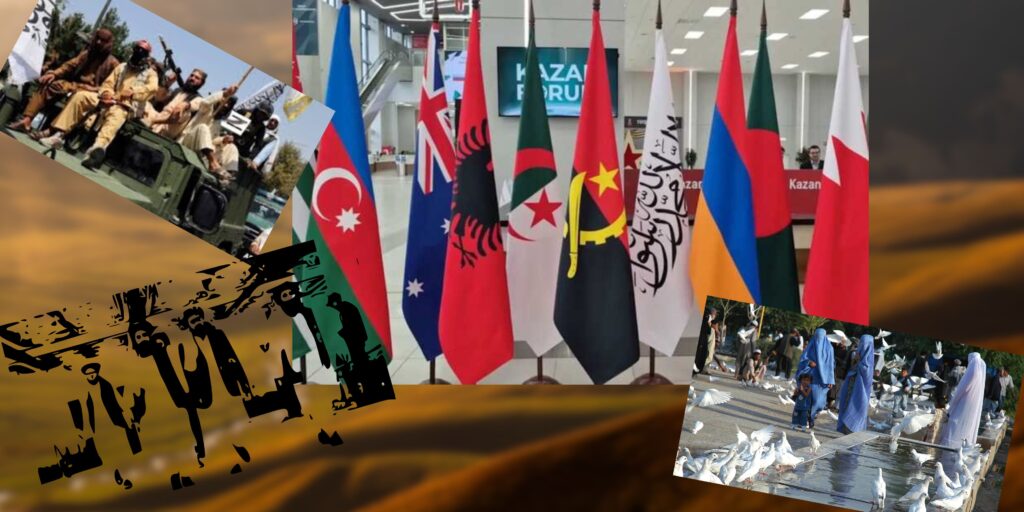
After the Taliban returned to power in August 2021, the question of recognizing the new Afghan regime became one of the key issues in regional and global politics. Although no country has granted de jure recognition to the Islamic Emirate of Afghanistan (IEA), international engagement with the de facto authorities is becoming increasingly institutionalized. This article attempts to systematize and provisionally classify countries based on their stance toward the IEA. This is not a formal legal typology but rather an analytical tool meant to identify "stable patterns of behavior" in the context of interactions with the de facto authorities in Kabul. This approach does not aim for exhaustive academic precision but provides a basis for further discussion and analysis. To begin, we must clarify some basic principles, first and foremost, the institution of recognition. In international legal doctrine, the recognition of a new state or government is a unilateral act by a state and does not require the approval of international organizations. The UN, including the Security Council, does not formally conduct acts of recognition, but its approval is required for admitting authorities to the UN General Assembly, which constitutes formal recognition of international legitimacy and a willingness by the global community to work with them. The key mechanism here is the UN Credentials Committee. This is a special committee of the UN General Assembly consisting of nine member states, which change on a rotating basis. It annually reviews the lists of delegations accredited to participate in UN General Assembly sessions. Between 2021 and 2024, the committee decided to reject the recognition of seats for the Taliban government. In effect, this constitutes a denial of international recognition at the UN level. While the decision of the Credentials Committee has no formal legal significance as an act of recognition or non-recognition, politically it sends a strong signal to other states: the UN still does not regard the IEA as the legitimate government of Afghanistan. In other words, the Credentials Committee acts as a kind of beacon: until it is "lit," a wave of de jure recognition from other states is highly unlikely. Many countries, especially those following a policy of collective decision-making, will take their cue from the UN. For now, the signal remains unchanged: the international community maintains a cautious distance from legitimizing the Taliban regime. As is well known, there are two types of recognition: de jure recognition, which is complete and official and involves the establishment of diplomatic relations, and de facto recognition, which is limited and does not imply full legitimization of the regime. Removing the Taliban from national terrorist lists (as Kazakhstan and Russia have done) does not constitute legal recognition, even though some may portray it as such. The UN itself uses the term "de facto authorities" to describe the Taliban. At the same time, the UN Security Council sanctions regime on Afghanistan (under Resolution 2255) provides for the application of sanctions on an individual basis, without qualifying the regime as a terrorist regime. The...

Astana International Forum: Not Just Another Davos

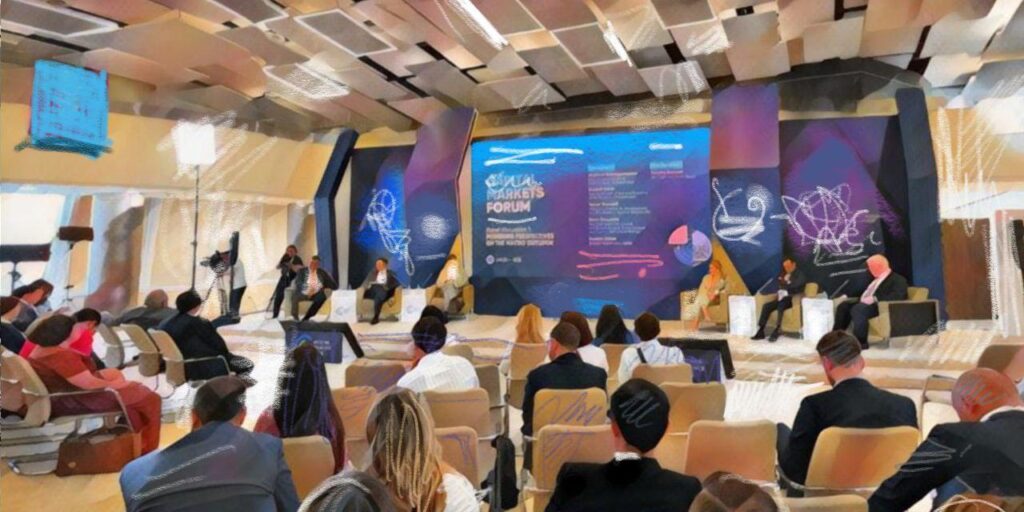
Kazakhstan’s Astana International Forum (AIF) has quietly entered a new phase in its development. Set to convene again this month, it began in 2008 as a targeted economic forum. Over time it has gradually evolved into a broader diplomatic platform aspiring to serve the so-called “Global South” as a whole. The AIF seeks to offer a deliberately open space for structured yet flexible dialogue across economic, political, and security domains, in a world full of international gatherings either overdetermined by legacy institutions or narrowly focused on crisis response. The AIF does not model itself on any existing institution. It is meant neither to replicate global summits nor to impose consensus, nor to replace regional blocs or legacy mechanisms. Rather, it reflects Kazakhstan’s own diplomatic philosophy — what President Kassym-Jomart Tokayev calls “multi-vector foreign policy” — seeking to extend this philosophy outward through a forum that prioritizes engagement over alignment and dialogue over doctrine. The AIF’s early period, from 2008 through roughly 2015, was defined by foundational work. Then called the Astana Economic Forum, it brought together central bankers, financial policymakers, and development agencies. The scope was technocratic, focusing on macroeconomic modernization and public-sector reform. Even in this limited format, however, the initiative revealed Kazakhstan's national aspiration to connect with wider global trends in institutional development and governance. Those formative years correspond to what, in terms of complex-systems theory, might be called the Forum’s phase of “emergence”: a period of assembling functions, testing formats, and learning the rhythms of international convening. These years were not marked by geopolitical ambition, but they did set in motion a process of institutional self-recognition. Kazakhstan was not just hosting events; it was experimenting with a type of global presence that would grow more distinct in later years. From 2015 to 2022, the Forum entered a more self-defining stage. It retained its core economic focus, but it increasingly attracted participants from beyond financial and development sectors. This broadened its scope to include questions of connectivity, regional stability, and sustainable development. The shift was not an accident. It accompanied Kazakhstan’s growing involvement in regional diplomacy and its active participation in a range of other multilateral structures. During this second period, the Forum took on the character of an institution with internal momentum. (This is what complex-systems theorists might term “autopoiesis,” i.e., the ability of a system to reproduce and maintain itself.) By adapting to a wider field of participants and issues, the AIF began to articulate a mission no longer limited to showcasing Kazakhstan’s domestic reforms but extending toward the creation of new transnational linkages. The rebranding of the old Astana Economic Forum as the Astana International Forum affirmed this shift in mandate, scope, and ambition. That rebranding marked the beginning of what now appears to be a critical inflection point. The cancellation of the 2024 edition due to catastrophic flooding created a rupture; but the organizers, rather than rush a replacement, deferred the Forum and used the intervening time to clarify its structure and message. The...