• KZT/USD = 0.00222
  • TJS/USD = 0.10820
  • UZS/USD = 0.00009
  • TMT/USD = 0.29760
  • KZT/USD = 0.00222
  • TJS/USD = 0.10820
  • UZS/USD = 0.00009
  • TMT/USD = 0.29760
  • KZT/USD = 0.00222
  • TJS/USD = 0.10820
  • UZS/USD = 0.00009
  • TMT/USD = 0.29760
  • KZT/USD = 0.00222
  • TJS/USD = 0.10820
  • UZS/USD = 0.00009
  • TMT/USD = 0.29760
  • KZT/USD = 0.00222
  • TJS/USD = 0.10820
  • UZS/USD = 0.00009
  • TMT/USD = 0.29760
  • KZT/USD = 0.00222
  • TJS/USD = 0.10820
  • UZS/USD = 0.00009
  • TMT/USD = 0.29760
  • KZT/USD = 0.00222
  • TJS/USD = 0.10820
  • UZS/USD = 0.00009
  • TMT/USD = 0.29760
  • KZT/USD = 0.00222
  • TJS/USD = 0.10820
  • UZS/USD = 0.00009
  • TMT/USD = 0.29760
13 September 2026

Viewing results 1 - 6 of 74

Kazakhstan Offers Neutral Ground for Peace Talks, Says Deputy Minister Vassilenko

Kazakhstan’s Deputy Minister of Foreign Affairs, Roman Vassilenko, has expressed hope for ending global conflicts, reiterating Kazakhstan's readiness to provide a platform for dialogue. Vasilenko made the remarks at the World Policy Conference held in Abu Dhabi. “I am an optimist by nature and hope that wars will stop. This applies to the ongoing conflicts in Ukraine and the Middle East,” Vasilenko said in an interview. The Deputy Minister underscored Kazakhstan’s neutral stance, highlighting the country’s balanced diplomatic relations with Russia and Western nations. “We hope that by the end of this year or possibly next year, Armenia and Azerbaijan will sign a peace treaty. We have offered to host this event in Kazakhstan,” Vasilenko stated. Vasilenko also emphasized the European Union's significance in Kazakhstan’s economic development and international partnerships. “The EU is our largest trade partner and investor. It is the largest market for Kazakhstani oil and a vital source of technology and investment. We are collaborating with the EU to develop the Middle Corridor, a trade route connecting Central Asia with Europe via the Caspian Sea and the South Caucasus. Progress has already been made. For instance, over the next three years, we aim to quadruple the volume of cargo transported along this route,” he noted. Kazakhstan continues to position itself as a bridge between dialogue and cooperation, leveraging its strategic geographic location and balanced foreign policy.

Uzbekistan Proposes 10-Year Extension of Duty Free Export Benefits to the EU

On December 4-5, Uzbekistan participated for the first time in the meeting of the General Scheme of Preferences (GSP+) working group of the European Union in Brussels. The meeting included representatives from 28 EU member states and Uzbekistan’s Ministry of Investment, Industry, and Trade (MIIT). Uzbekistan’s delegation highlighted the progress made since becoming a GSP+ beneficiary in 2021. During this time, the country’s exports to the EU nearly tripled, reaching $1.15 billion. Of the 6,200 products eligible for duty-free export, approximately 1,100 - primarily agricultural, textile, and chemical goods - are exported regularly. To further enhance market stability and competitiveness, the delegation proposed adding new fruits and vegetables to the list of preferred goods and revising seasonal export quotas. They also recommended extending the GSP+ preferential trade regime for an additional ten years to foster long-term economic ties with the EU. During the visit, Uzbek representatives held talks with European Commission officials to improve access to Uzbek products, adjust quotas for rolling metals, and secure technical assistance to align with EU standards. These discussions mark a significant step in expanding trade and economic cooperation under the GSP+ framework.

Uzbek Deputy Proposes Introducing Visa Regime With Russia

Russian politician Leonid Slutsky has proposed establishing a comprehensive set of mandatory rules for foreign workers in Russia, called the “Migrant Code.” Developed in coordination with diasporas and law enforcement agencies, the code outlines guidelines for migrants seeking legal employment in Russia. According to Slutsky, the Migrant Code will require foreign workers to learn Russian and ensure their families also acquire language skills if residing in Russia. Migrants, he says, must respect Russian culture and traditions, adhere to public behavior standards, obtain official employment, and pay taxes. Additional requirements include securing insurance against deportation or expulsion, undergoing fingerprinting, genomic registration, and mental health testing. In response, Alisher Qodirov, chairman of Uzbekistan’s Milli Tiklanish (National Revival) party, suggested introducing a visa regime with Russia to address potential instability and a rise in migration flows. Qodirov underscored the importance of Uzbekistan and other Central Asian countries implementing stricter entry and exit controls to Russia, alongside enhanced requirements for job seekers. He emphasized the need for migrants to respect their host country’s language, culture, and laws while reaffirming the significance of national values. He further stated that educating Uzbek workers on their rights and responsibilities would help mitigate social, political, and economic challenges for Uzbekistan. It would also protect citizens from exploitation and discrimination abroad, reinforcing the nation’s commitment to safeguarding its people.

A Final Deal Along Central Asia’s Deadliest Border

It took some 33 years, but on December 4, Kyrgyz and Tajik officials reached a final agreement on delimitation of the last sections of their 972-kilometer border. It is a relief for the entire Central Asian region. In those 33 years the five Central Asian countries (including Kazakhstan, Turkmenistan, and Uzbekistan) have been independent, the only open conflicts between the armed forces of two Central Asian countries happened between Kyrgyzstan and Tajikistan. In the southern Kyrgyz city of Batken on December 4, Kyrgyz security chief Kamchybek Tashiyev and Tajik counterpart Saimumin Yatimov announced an agreement that Tajik state news agency Khovar said “fully completed the delimitation of the remaining sections of the Tajik-Kyrgyz state border.” Most of the Kyrgyz-Tajik border runs through the Pamir Mountains. The eastern part, approximately two-thirds of the common frontier, passes through remote and sparsely inhabited areas. Agreement on where the dividing line between the two countries was easy to reach in this section. The remaining one-third of the border in the west proved far more difficult to find compromises. [caption id="attachment_26293" align="aligncenter" width="2256"] Road near the Kyrgyz village of Ak-Sai. On one side of the road is Tajikistan, the other side, Kyrgyzstan; image: Bruce Pannier[/caption] Kyrgyz and Tajiks are two of the oldest peoples in Central Asia. Their ancestors lived in what is now the border area many hundreds of years before there were any borders. The Soviet Union changed that when it created the Kyrgyz and Tajik Soviet Socialist Republics, not only drawing lines on a map, which were redrawn more than once, but also including enclaves on either side of the border. Roads in the area zigzagged back and forth, one minute through Kyrgyzstan, and few minutes later through Tajikistan, over and over again. As border tensions began to appear toward the end of the 2000-2010 period, both countries started building roads to avoid crossing into the neighboring state, but the terrain is rugged, limiting possibilities for alternate routes. Also, new road construction is expensive and Kyrgyzstan and Tajikistan are both poor countries. [caption id="attachment_26294" align="aligncenter" width="2256"] The entrance to Tajikistan's Vorukh enclave; image: Bruce Pannier[/caption] The lone road leading from Batken to the Kyrgyz village of Ak-Sai and the Tajik enclave of Vorukh weaves through both countries several times and in some places, the road is the border. Visible from any village in this area are the snow-capped mountains, but down in the valleys, water has always been a problem. Like the roads, small rivers and canals meander across both sides of the border, and unsurprisingly, water use is a major source of tensions and has been a significant obstacle in deciding where the border should be. The first hints of trouble came after 2000 and involved petty vandalism, usually children throwing rocks at passing vehicles with license plates from the neighboring country. This escalated and after 2010, when incidents of physical altercations between members of border communities started, followed by vandalism targeting homes and businesses in border villages. Since much of...

Trump’s Bid for Ukraine-Russia Peace: Could Kazakhstan Be the Key Mediator?

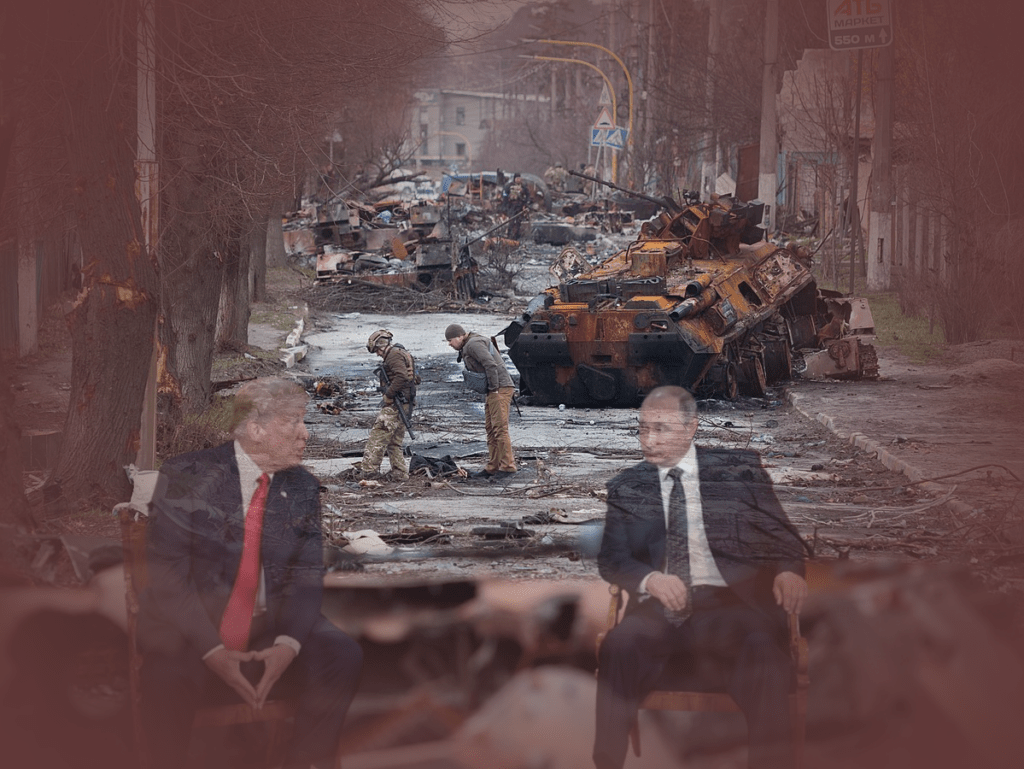
One of the anticipated top priorities of Donald Trump’s presidency is ending Russia's war in Ukraine while normalizing relations with Moscow. Writing on his Truth Social channel, Trump stated that, “Together, we will secure PEACE THROUGH STRENGTH, and Make America, and the World, SAFE AGAIN!” Trump’s nominee to serve as Special Envoy for Ukraine and Russia, 80-year-old former national security advisor, General Keith Kellogg, laid out his plan in writing for the America First policy institute, whilst focusing on characterizing the war “an avoidable crisis that, due to the Biden Administration’s incompetent policies [which] has entangled America in an endless war.” There are fears, however, that Kellogg’s proposal to reach a ceasefire by freezing the frontlines and forcing both sides the negotiating table will lead to a tumultuously violent period as Moscow seeks to swallow up territory. Meanwhile, NATO’s new secretary-general, Mark Rutte, has warned that compelling Ukraine into a “bad peace” would pose a “dire threat” to the U.S. itself. Whilst the framework for bringing a pause to hostilities is becoming clearer, it appears that Trump (or his representative) will need to meet with Vladimir Putin, and Kazakhstan has emerged as a potential venue for this high-stakes meeting. Kazakhstan's Role as Mediator Russian political analyst, Arkady Dubnov, has argued that Putin’s recent state visit to Astana may be an indication that Kazakhstan could play a pivotal role, and that given Putin’s limited travel options due to the International Criminal Court’s arrest warrant against him, Kazakhstan, with its reputation for diplomacy, would be a logical choice. “Putin is essentially restricted from visiting most of the Western Hemisphere,” Dubnov explained. “This leaves the Eurasian East, and among its cities, Astana stands out. Kazakhstan has hosted OSCE and CICA summits, mediated in the Syrian conflict, and facilitated peace talks over the future of the South Caucasus.” Dubnov sees Putin’s visit to Astana as indirectly tied to a possible meeting with Trump. “The Kremlin trusts Kazakhstan as an ally while respecting its constructive relations with the U.S. and the broader West,” he stated. Kazakhstan has long been recognized as a neutral ground where East and West can find commonality. The Astana process on Syria, initiated in 2017, helped prevent the escalation of hostilities for years, whilst Kazakhstan has mediated in other long-standing disputes, such as the conflict between Armenian and Azerbaijan. Given this history, it is conceivable that a reconciliation process between Russia and Ukraine could start in Astana. Neither the Minsk agreements of 2014, nor discussions in Istanbul in 2022 achieved lasting peace, but Kazakhstan’s diplomatic efforts could provide fresh impetus. Early Peace Efforts In March 2022, Kazakh President Kassym-Jomart Tokayev spoke with Ukrainian President Volodymyr Zelensky, emphasized the urgency of negotiations to bring a halt to hostilities, a stance that has since gained momentum as the war drags on. By 2024, the validity of Tokayev’s view — that negotiations are the only viable path to end the bloodshed — has become increasingly apparent. Kazakhstan’s diplomatic corps has actively pushed for peace....

Geopolitical Posturing or Genuine Partnership? Key Takeaways from Putin’s Trip to Kazakhstan

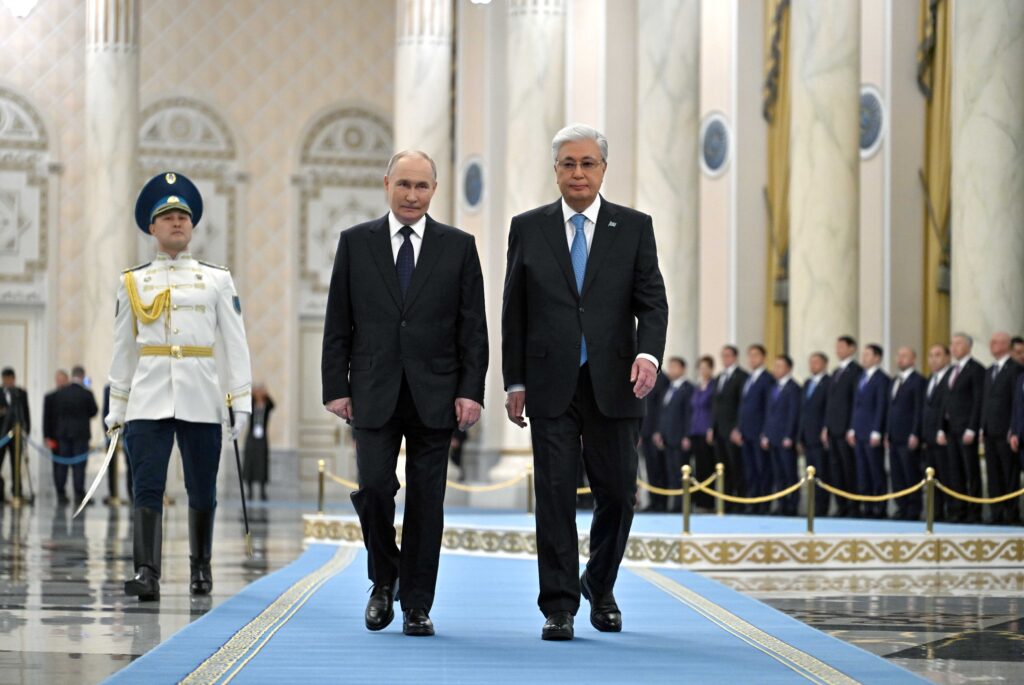
On November 27, Russian President Vladimir Putin arrived in Astana for a state visit. He was met at the airport by Kazakh President Kassym-Jomart Tokayev. The streets of Astana, along Putin’s motorcade route, were adorned with Russian flags, creating a ceremonial backdrop for a meeting touted as a symbol of strategic partnership between the two nations. At the Akorda Presidential Palace, Tokayev hosted a reception for Putin that blended official decorum with cultural displays. The program featured children reciting poetry and participation in a collaborative painting led by renowned Kazakh artist Assol (Asel Sabyrzhankyzy), who named the artwork Bridge of Friendship and presented it to Putin. However, not all Kazakhstanis welcomed the visit with enthusiasm. Some citizens, concerned by Russia’s imperial overtones or sympathetic to Ukraine, expressed their dissent through an online flash mob. A banner at Astana Airport referring to Putin as “Your Excellency” sparked outrage among critics, who viewed it as excessive deference. Political analysts later clarified that the term has been consistently used for other high-level visitors to Kazakhstan. Putin’s state visit, described as a rare diplomatic event typically occurring once per presidential term, was notably proposed by Kazakhstan. During a press briefing, Putin remarked, “At your suggestion, this visit was given the status of a state visit, but I want to note that the solemn protocol did not prevent us from working productively, as is characteristic of our meetings.” Heightened Security Amid Geopolitical Tensions The visit came against the backdrop of growing geopolitical instability. Less than a week earlier, on November 21, Tokayev had instructed government agencies to heighten security following Russia’s test of the Oreshnik ballistic system in Ukraine. This context, paired with the substantial security measures surrounding the state visit, led observers to speculate that Russia’s own security concerns may have influenced the format. The official discussions were framed by frequent references to “strategic partnership” and the “geopolitical situation.” These themes culminated in a joint declaration entitled “Joint Statement of the President of the Republic of Kazakhstan and the President of the Russian Federation on Deepening Strategic Partnership in the New Global Order.” The statement, structured in three main sections, outlined bilateral cooperation in political, economic, and security domains. Ambiguities in Counter-Terrorism and Political Statements The declaration’s political section raised some eyebrows, particularly the clause condemning recent “terrorist acts” in Russia and pledging closer intelligence cooperation to combat such threats. Questions remain over whether Kazakhstan considers only incidents like the Crocus City Hall attack on the outskirts of Moscow as terrorism, or whether the term extends to military actions tied to the Ukraine conflict. Another noteworthy point was the denunciation of “irresponsible statements” by public figures that undermine mutual respect between the two nations. This has been a sensitive issue for Kazakhstan, which has frequently faced provocative rhetoric from Russian propagandists and certain lawmakers. Tokayev himself rebuffed such remarks at the 2022 St. Petersburg International Economic Forum, firmly rejecting recognition of the Donetsk and Luhansk People's Republics. Economic Vision and Strategic Transport The economic...