• KGS/USD = 0.01143 0%
  • KZT/USD = 0.00216 0%
  • TJS/USD = 0.10684 -0.28%
  • UZS/USD = 0.00008 0%
  • TMT/USD = 0.28571 0%
  • KGS/USD = 0.01143 0%
  • KZT/USD = 0.00216 0%
  • TJS/USD = 0.10684 -0.28%
  • UZS/USD = 0.00008 0%
  • TMT/USD = 0.28571 0%
  • KGS/USD = 0.01143 0%
  • KZT/USD = 0.00216 0%
  • TJS/USD = 0.10684 -0.28%
  • UZS/USD = 0.00008 0%
  • TMT/USD = 0.28571 0%
  • KGS/USD = 0.01143 0%
  • KZT/USD = 0.00216 0%
  • TJS/USD = 0.10684 -0.28%
  • UZS/USD = 0.00008 0%
  • TMT/USD = 0.28571 0%
  • KGS/USD = 0.01143 0%
  • KZT/USD = 0.00216 0%
  • TJS/USD = 0.10684 -0.28%
  • UZS/USD = 0.00008 0%
  • TMT/USD = 0.28571 0%
  • KGS/USD = 0.01143 0%
  • KZT/USD = 0.00216 0%
  • TJS/USD = 0.10684 -0.28%
  • UZS/USD = 0.00008 0%
  • TMT/USD = 0.28571 0%
  • KGS/USD = 0.01143 0%
  • KZT/USD = 0.00216 0%
  • TJS/USD = 0.10684 -0.28%
  • UZS/USD = 0.00008 0%
  • TMT/USD = 0.28571 0%
  • KGS/USD = 0.01143 0%
  • KZT/USD = 0.00216 0%
  • TJS/USD = 0.10684 -0.28%
  • UZS/USD = 0.00008 0%
  • TMT/USD = 0.28571 0%

Viewing results 1 - 6 of 69

China Seeks to Import 20,000 Tons of Pork from Kazakhstan

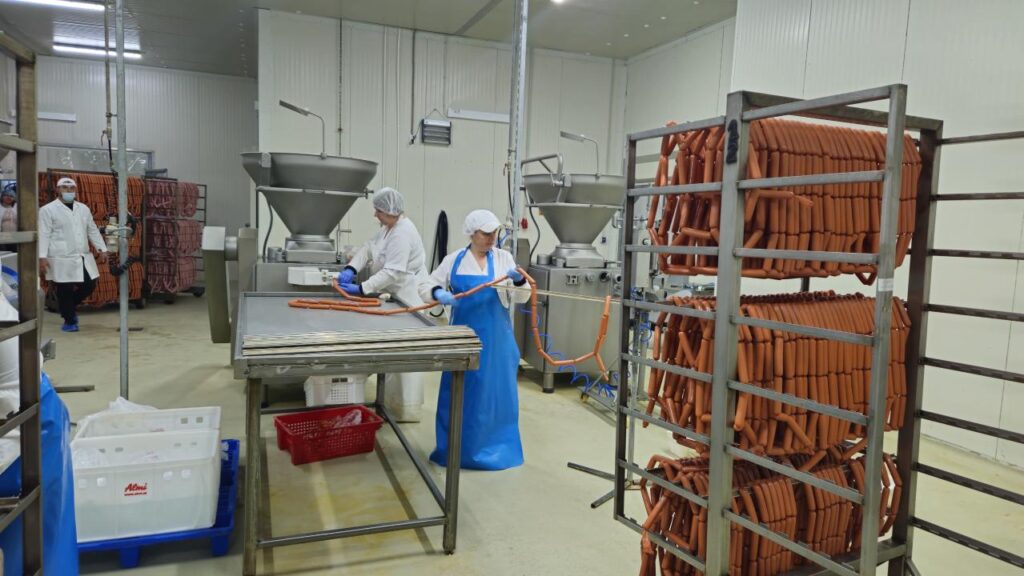
Representatives of the Chinese Meat Association visited EMC Agro, one of the largest meat processing enterprises in Kazakhstan, with an interest in importing 20 thousand tons of pork per year. The Kazakh Ministry of Agriculture reported that during their tour of the facility in North Kazakhstan, the Chinese delegation witnessed the processing cycle from slaughter to packaging. Fully automated, the process complies with international sanitary and epidemiological standards, with quality control monitored around the clock by a laboratory equipped with German analysers. The produce is then frozen. Regarding the company’s readiness to supply China with 60% of its produce, EMC Agro head Erzhan Yeleubaev stated, “China has great demands. Supply volumes must be stable and raw materials must be safe. Our meat is of high quality, we have no doubt in our products, and we are ready for fruitful cooperation. The Chinese market is important for us.” The EMC Agro meat processing plant has a production capacity of 20,000 tons of meat per year and 30 tons of finished meat products per day. In February 2024, China finally cancelled the ban in place since 2022, on the import of meat imposed by concerns over foot-and-mouth disease in Kazakhstan.  

Kazakhstan to House One of Central Asia’s Largest E-Commerce Distribution Centres

On July 1, Minister of Trade and Integration of Kazakhstan Arman Shakkaliev met Chairman of the Board and founder of China’s YTO Express Co., Yu Weijia, to discuss the construction of one of the largest e-commerce distribution centres in Central Asia. As reported by the Ministry of Trade and Integration, the introduction of intelligent IT solutions to fully automate logistics processes and provide customs support for deliveries, will enable the prompt processing of goods destined for European Union, Eurasian Economic Union and Central Asian countries. During the meeting, Minister Shakkaliev noted the rapid development of  the e-commerce market in Kazakhstan, demonstrated by  an annual growth rate exceeding 20%, and stated: “China's e-commerce market is astonishing in terms of volume, where more than 70 percent of sales are made online. Kazakhstan, with its favorable geographical location, aims to become a key transit zone for international e-commerce. The joint project with Kazpost to establish a distribution centre in Kazakhstan will give a new impetus to the development of cross-border trade.” Emphasizing  the project's unique status in Central Asia, Yu Weijia remarked, “This is a long-term project that will strengthen mutually beneficial and productive cooperation between the two countries. As part of this cooperation, we opened 3 bonded warehouses in China: in Shanghai, Nanjing and Wuhan. This project is the only one in Central Asia that will cover the whole region.”  

New Report Analyses Eurasian Transport Network

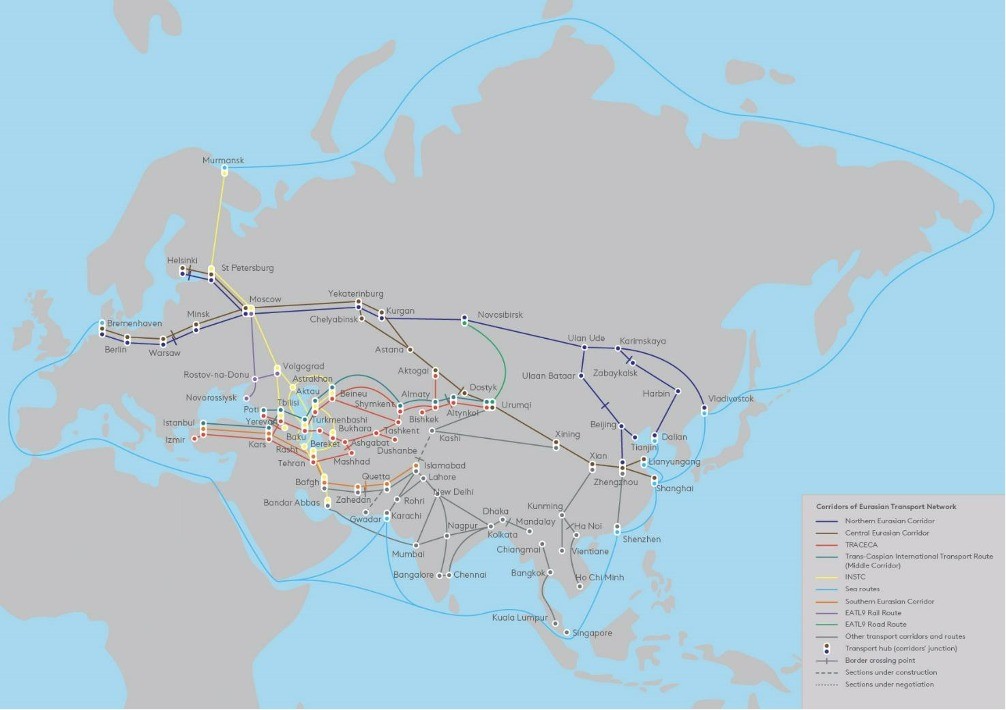
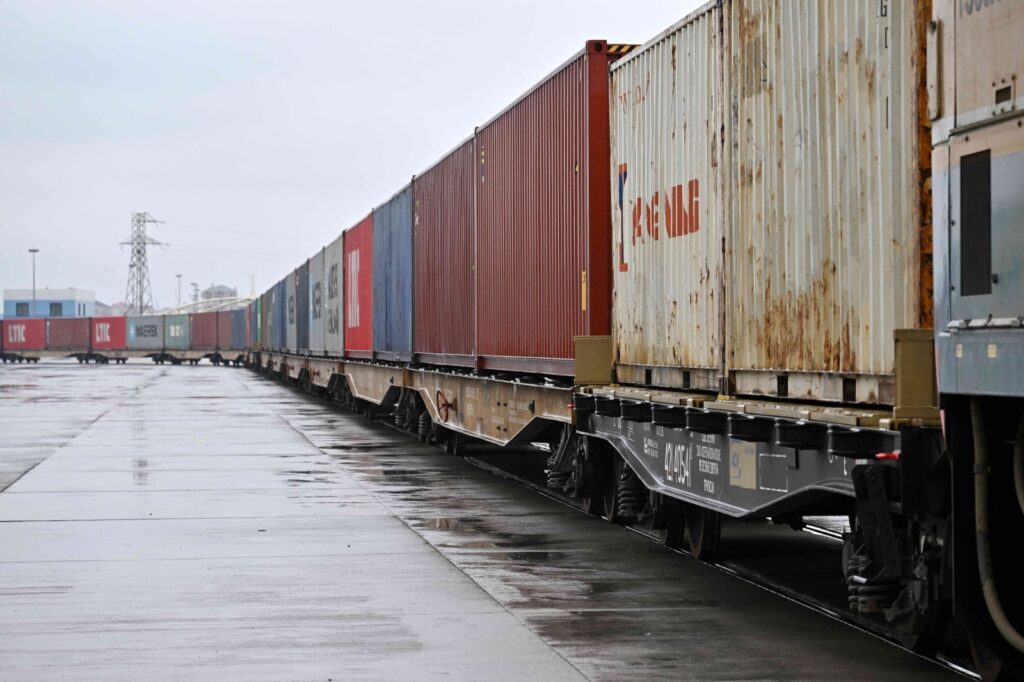
On 27 June, the Eurasian Development Bank (EDB) released a report titled “The Eurasian Transport Network”. The report introduces a new conceptual approach to future developments within the Eurasian Transport Network and outlines key projects and initiatives aimed at improving transport connectivity in Eurasia. The Eurasian Transport Network is a system of interconnected latitudinal and longitudinal international transport corridors and routes, facilitating intra- and trans-continental connectivity for Eurasian countries. It builds upon over 50,000 km of international east-west and north-south transport corridors, linking Asia, Europe, and the Middle East. The Eurasian Transport Network consists of five key international transport corridors: the Northern, Central and Southern Eurasian Corridors, TRACECA, and the International North-South Transport Corridor (INSTC), along with branch lines and regional routes. According to EDB analysts, in 2023, international freight traffic along these five corridors of the Eurasian Transport Network totaled 260 million tons, including 3.6 million 20-foot containers (TEU). Compared to 2013, the volume of international container traffic has more than tripled. The most dynamic growth has been driven by foreign trade and transit container transit with China. Since 2013, the number of container trains to and from China via the Eurasian Economic Union countries and Central Asia has increased by a factor of 200. The EDB introduced the concept of a Eurasian Transport Network in 2021, and this report presents its detailed framework. Three years ago, the EDB released a report titled “The International North–South Transport Corridor: Promoting Eurasia’s Intra- and Transcontinental Connectivity”, which estimated that connecting international transport corridors would yield a 40% increase in freight traffic. In 2024, this projection was fully confirmed by the dynamic development of the INSTC and its linkage to TRACECA. The advancement of the Eurasian Transport Network is paving the way for the establishment of a transport hub in Central Asia. The development of multimodal transport and transit corridors is the only viable solution for Central Asian countries due to the significant distances between trade partners. Establishing a transport hub will facilitate an increase in international traffic, including transit. The EDB projects that freight traffic along the three main corridors running through Central Asia will increase by 1.5 times to 95 million tons by 2030. Container traffic is expected to grow even more rapidly, by almost two-thirds, reaching 1.7 million TEU. Evgeny Vinokurov, EDB Chief Economist, underlines that “at present, transportation costs for landlocked countries are 1.4 times higher than for coastal states. Even during the time of the Silk Road, trade routes in Central Asia were predominantly latitudinal, in the east-west direction. Building new north-south transportation links is a historic opportunity for Central Asia. This is an opportunity to become the continent’s transport hub, unlock new production niches and improve conditions for foreign trade, especially with West and South Asia.” The EDB concludes that given the limited investment opportunities facing most developing countries in Eurasia, a key area of cooperation to develop transport links in Eurasia is boosting the number of projects attractive to international development banks and private investors. This includes projects implemented...

Kyrgyz-Chinese Trade and Economic Cooperation Centre Opens in Urumqi

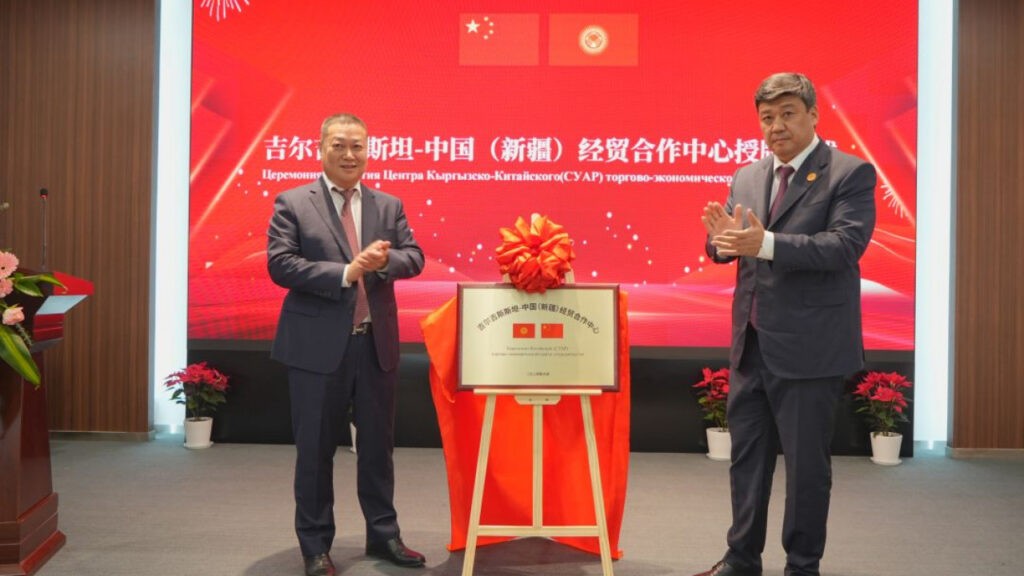
On June 26, Deputy Chairman of the Cabinet of Ministers of the Kyrgyz Republic Bakyt Torobaev attended the official opening of the Kyrgyz-Chinese (XUAR) Trade and Economic Cooperation Centre in Urumqi, in China’s northwestern Xinjiang Uygur Autonomous Region (XUAR). Established with authorization from the Trade Mission under the Ministry of Economy and Commerce of the Kyrgyz Republic in China, the centre occupies an area of over 400 square metres in the Xing Long Industrial Park, owned by Xing Long Corporation of Xinjiang. The main remit of the centre is to serve as a platform for negotiations between Kyrgyz and Chinese businesses through thematic meetings, events, presentations of projects, as well as the provision of up-to-date information on investment and opportunities for cooperation on joint projects in Kyrgyzstan. The Xing Long Corporation of Xinjiang earlier expressed interest in developing an industrial park in Kyrgyzstan to attract business from Chinese companies.      

EU-Funded Projects Strengthen Central Asia’s Trade and Economic Ties

On 26 June, Almaty hosted the closing meeting of two regional projects in Central Asia funded by the European Union: the ITC Ready4Trade Central Asia and the OECD Policy Component of the EU Central Asia Invest Programme. As reported by the Delegation of the European Union to Kazakhstan, both initiatives have done much to support Central Asian countries' efforts to advance trade reforms, enhance competitiveness, foster connectivity and strengthen regional cooperation. The event brought together policymakers and key stakeholders from private and public sectors in Central Asia, as well as representatives of the European Union, the International Trade Centre (ITC), and the Organisation for Economic Co-operation and Development (OECD). "The European Union has long been supporting the governments of Central Asian countries in their business environment and trade and transport connectivity reform efforts together with international partners, including ITC and the OECD,” said Kestutis Jankauskas, Ambassador of the European Union to Kazakhstan. “Going forward, we will endeavour to develop the potential of the Trans-Caspian Transport Corridor together with our Central Asian partners to make it a competitive, multimodal and sustainable corridor that can bring Central Asia and Europe closer together. We look forward to the new EU-funded Prosperity Programme to be implemented by ITC and the OECD to support the implementation of this goal.” The ITC Ready4Trade Central Asia project has made significant progress in enhancing intra-regional and international trade across five Central Asian countries. In close collaboration with the governments, the project tackled obstacles to cross-border trade by simplifying and digitalising trade procedures, ensuring greater transparency and efficiency terms of cost and time. The project also established national SME Trade Academies, providing tailored on-the-job coaching and enhancing the capacity of SMEs to participate in the global market. The OECD has supported reforms in areas including  private sector development, internationalization, digitalisation, trade and transport connectivity, and resilience to shocks. Zhanel Kushukova, Vice-Minister of Trade and Integration of Kazakhstan, commented: “In recent years, significant work has been done in Central Asian countries to simplify and optimize trade procedures, reduce the time for trade operations and automate customs processes. This has allowed us to almost double the volume of trade turnover over the past five years, to $10 billion. In the medium term, Kazakhstan plans to increase trade turnover with Central Asian countries to $15 billion.” Kazakhstan’s QazTrade agency estimates that the implementation of the recommendations proposed by the above projects and the transition to paperless trade will lead to a 30 percent increase in trade turnover in the medium term.  

EDB Annual Meeting and Business Forum to Focus on Eurasian Transport Network

The Eurasian Development Bank’s (EDB) Annual Meeting and Business Forum, to be held in Almaty, Kazakhstan on 27-28 June, is to focus on cross-border transport corridors in Eurasia. The EDB is a multilateral development bank serving Armenia, Belarus, Kazakhstan, Kyrgyzstan, Russia, and Tajikistan. According to the EDB press service, this year’s forum session, “The Eurasian Transport Network: Potential, Challenges and Solutions” will analyse a report on the development of cross-border transport corridors crucial to the region’s economies. The report highlights the significant constraints in economic development posed by the remoteness of Central Asian countries from global markets and their landlocked status. According to EDB estimates, trade costs in some Central Asian nations are 40% higher than those of coastal states. Overcoming the lack of transport connectivity is key to unlocking the strong economic potential of all Central Asian countries. The concept of the transport network is based on the premise that linking East–West and North–South transport corridors generates synergies, creating new routes, logistics opportunities and better through tariffs. The EDB projects that freight traffic along the three main corridors crossing Central Asia (Central Eurasian Corridor, TRACECA and North–South) could potentially increase by almost two-thirds to 1.7 million containers (TEU) by 2030. Implementing this objective will require concerted efforts from all participating countries.