• KGS/USD = 0.01144 0%
  • KZT/USD = 0.00215 0%
  • TJS/USD = 0.10680 0.19%
  • UZS/USD = 0.00008 0%
  • TMT/USD = 0.28530 0%
  • KGS/USD = 0.01144 0%
  • KZT/USD = 0.00215 0%
  • TJS/USD = 0.10680 0.19%
  • UZS/USD = 0.00008 0%
  • TMT/USD = 0.28530 0%
  • KGS/USD = 0.01144 0%
  • KZT/USD = 0.00215 0%
  • TJS/USD = 0.10680 0.19%
  • UZS/USD = 0.00008 0%
  • TMT/USD = 0.28530 0%
  • KGS/USD = 0.01144 0%
  • KZT/USD = 0.00215 0%
  • TJS/USD = 0.10680 0.19%
  • UZS/USD = 0.00008 0%
  • TMT/USD = 0.28530 0%
  • KGS/USD = 0.01144 0%
  • KZT/USD = 0.00215 0%
  • TJS/USD = 0.10680 0.19%
  • UZS/USD = 0.00008 0%
  • TMT/USD = 0.28530 0%
  • KGS/USD = 0.01144 0%
  • KZT/USD = 0.00215 0%
  • TJS/USD = 0.10680 0.19%
  • UZS/USD = 0.00008 0%
  • TMT/USD = 0.28530 0%
  • KGS/USD = 0.01144 0%
  • KZT/USD = 0.00215 0%
  • TJS/USD = 0.10680 0.19%
  • UZS/USD = 0.00008 0%
  • TMT/USD = 0.28530 0%
  • KGS/USD = 0.01144 0%
  • KZT/USD = 0.00215 0%
  • TJS/USD = 0.10680 0.19%
  • UZS/USD = 0.00008 0%
  • TMT/USD = 0.28530 0%

Viewing results 1 - 6 of 66

Iran Seeks Observer Status in EEU

A note of Iran’s request to obtain observer state status in the Eurasian Economic Union (EEU) was submitted to the Eurasian Economic Commission, the EEU’s governing body, on May 27. The EEU is an economic integration bloc uniting Armenia, Belarus, Kazakhstan, Kyrgyzstan, and Russia. According Kazakhstan’s Ministry of Trade and Integration, the economic feasibility of granting such status to Iran is currently being analysed by heads of the EEU member states and following results, consultations will be held with representatives from the republic. In 2018, the EEU and Iran signed a temporary agreement leading to the formation of a free trade zone between the two parties. More recently, on December 25, 2023, EEU heads of state signed a Free Trade Agreement between the EEU and its member states, and also, with the Islamic Republic of Iran. The agreement provides for duty-free trade for about 90% of commodities, which accounts for more than 95% of mutual trade between the parties. Kazakhstan’s Ministry of Trade and Integration emphasized the great potential of furthering trade between Kazakhstan and Iran. Mutual trade amounted to $302 million last year and in December, an Action Plan was signed between Kazakhstan and Iran to increase trade turnover to $3 billion.  

Kazakhstan and U.S. Focus on Strengthening Trade and Investment Cooperation

On 14 June, in Astana, Minister of Trade of Kazakhstan Arman Shakkaliev met U.S. Trade Representative Katherine Tai to discuss key areas of cooperation between the two countries. As reported by the Kazakh Ministry of Trade and Integration, the USA is among Kazakhstan’s ten largest trading partners. With bilateral trade turnover demonstrating a steady growth, Kazakhstan is ready to increase non-resource exports of 90 commodities worth over $770 million to the U.S. During the meeting, Kazakhstan's trade minister mooted cancelling the Jackson-Vanik amendment, which restricts trade relations between the two countries, and expressed hope for an imminent decision by the U.S. Congress on the issue. “We count on the soonest positive outcome of the work on the cancellation of the Jackson-Vanik amendment, which will give a new impetus to the development of trade and economic relations between our countries,” said Shakkaliev. He also noted the important role of the Generalized System of Preferences (GSP) of the United States in strengthening bilateral trade and economic relations. For its part, Kazakhstan is ready to undertake necessary work to resume the application of the USA GSP. Trade Representative Katherine Tai spoke optimistically on the development of trade relations and strengthening economic ties between the United States and Kazakhstan. After remarking that the extension of the USA GSP program will be considered by the US Congress next year, she confirmed her readiness to assist Kazakhstan in this matter.

U.S. and Central Asia Further Trade, Economic and Investment Cooperation

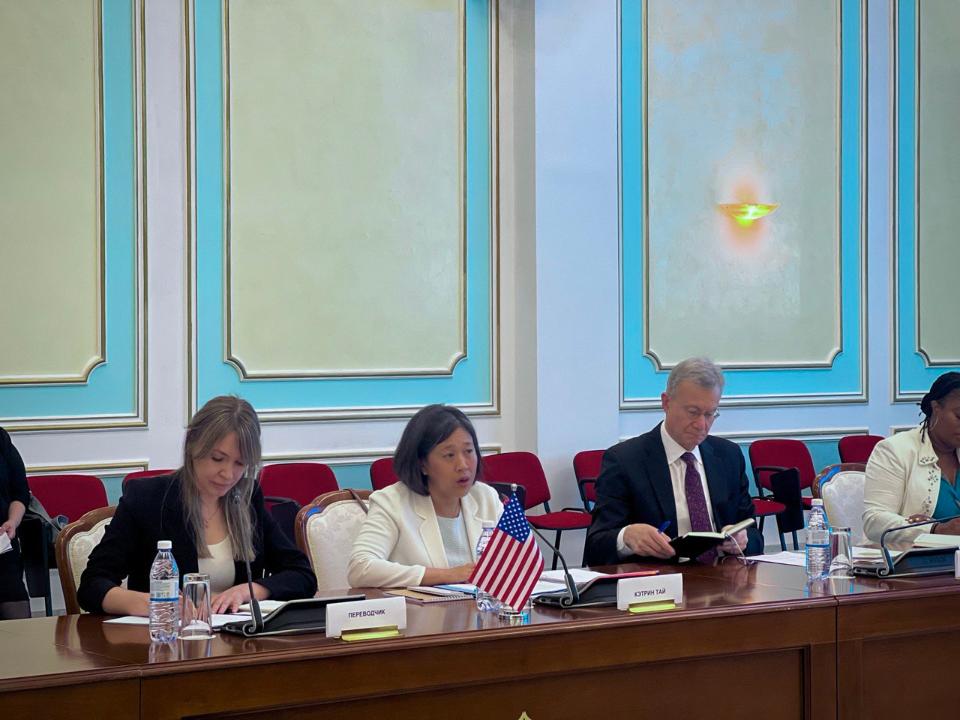
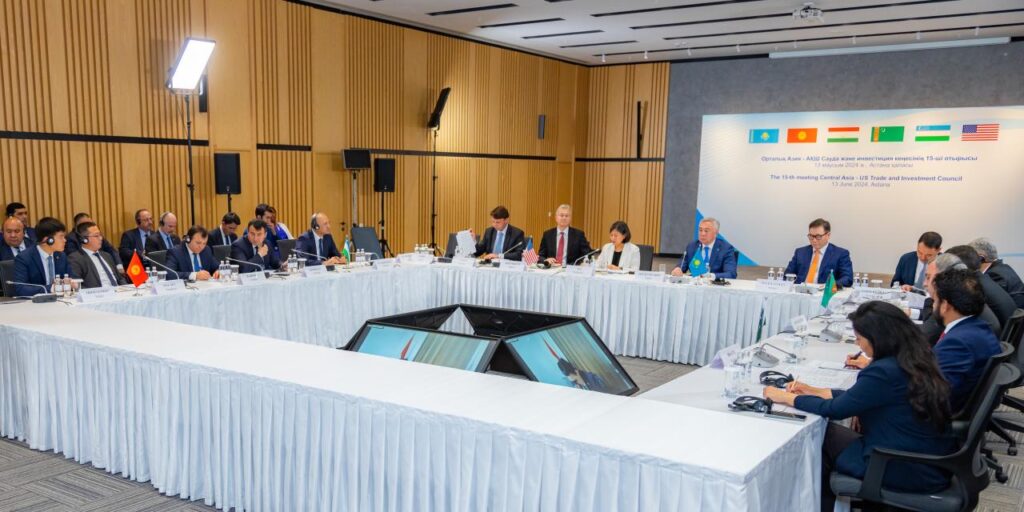
The 15th meeting of the U.S.-Central Asia Trade and Investment Framework Agreement (TIFA) Council was held in Astana on 13 June. TIFA was signed in Washington in June 2004 by the United States, Kazakhstan, Kyrgyzstan, Tajikistan, Turkmenistan, and Uzbekistan to expand international trade, attract foreign investment, and establish trade relations between Central Asian countries and Afghanistan. The US-Central Asian Trade and Investment Council was established within its framework. Reporting from Astana, the Kazakh Ministry of Trade and Integration, said that the agenda had covered prospects for diversifying trade and expanding investment cooperation. Representatives of the six countries also discussed the development of new trade routes to improve supply chain resilience and diversify the economy. During the event, Kazakh Deputy Prime Minister Serik Zhumangarin remarked, “As one of the major economies in the region and a WTO member, Kazakhstan recognizes the high potential offered by TIFA to strengthen not only bilateral but also regional trade relations. This year's meeting of the TIFA Central Asia Regional Council is further proof of the progressive development of regional cooperation and sustainability, which in turn, plays an important role in stabilizing world economy by connecting the global markets of both the West and the East.” U.S. Trade Representative Katherine Tai, emphasizing the need to coordinate joint efforts to ensure sustainable growth of TIFA economies, stated: “Central Asia remains a very important economic and strategic partner for the United States. We are also experiencing climate change and facing the consequences of technological and industrial progress. It is necessary to jointly develop traditional supply chains, the stability of which will ensure sustainable economic growth. The US is interested in improving the quality of trade, supplying critical metals for the production of cars and semiconductors.”    

SPECA Countries’ Digitalization of Multimodal Data Exchange along Trans-Caspian Transport Corridor

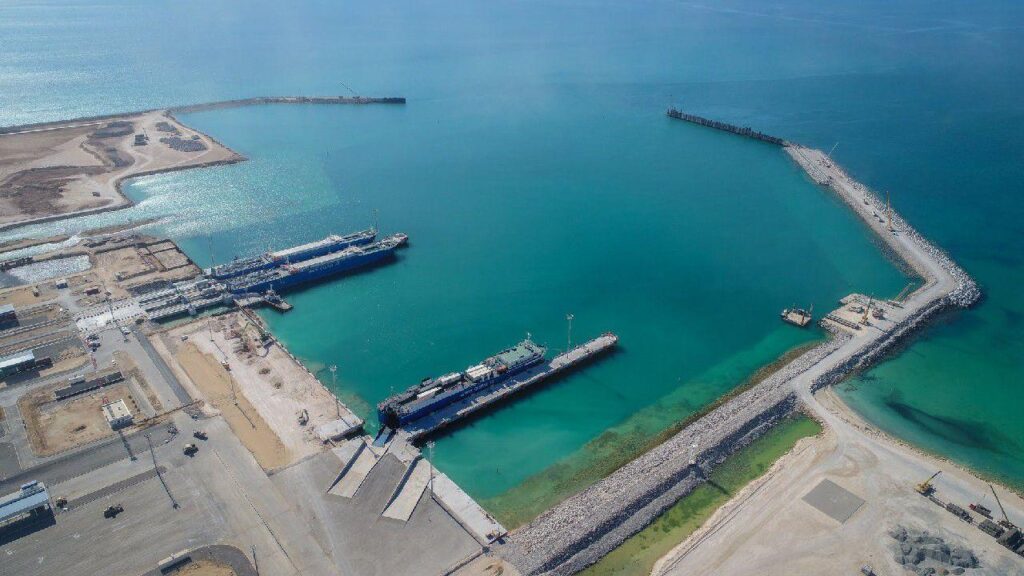
An international seminar on “Trade Facilitation and Digital Transformation of Multimodal Data and Document Exchange along the Trans-Caspian Corridor” was held in Aktau, Kazakhstan on June 11-12. Participants included the Ministry of Trade and Integration of Kazakhstan, the United Nations Economic Commission for Europe (UNECE), the International Association “Trans-Caspian International Transport Route” (TCITR), and partners including the German Society for International Cooperation (GIZ) and the Permanent Secretariat of the Intergovernmental Commission of the Transport Corridor Europe-Caucasus-Central Asia. The seminar followed the adoption of the SPECA Roadmap for Digitalization of Multimodal Exchange of Data and Documents along the Trans-Caspian Transport Corridor, using UN legal instruments and standards, at the Presidential Summit of participating States of the United Nations Special Programme for the Economies of Central Asia (SPECA), back in November 2023, The workshop in Aktau, which brought together experts in trade, transport, and digitalization from fifteen countries, focused on the digitalization of multimodal exchange of data and documents along the Trans-Caspian Transport Corridor, particularly in the ports of Baku (Azerbaijan), Aktau (Kazakhstan), and Turkmenbashi (Turkmenistan). During the event, reports were given on the implementation of UN standards for digitalization of international supply chains, port community systems, interoperability, and multimodal data exchange. A visit to Kuryk, organized by the Kazakh side, included a presentation of the port’s digitized system as well as ongoing work on transhipment and storage of cargo. The United Nations Special Program for the Economies of Central Asia (SPECA) was launched in 1998 to strengthen sub-regional cooperation in Central Asia and its integration into the world economy. SPECA countries include Afghanistan, Azerbaijan, Kazakhstan, Kyrgyzstan, Tajikistan, Turkmenistan, and Uzbekistan. Kazakhstan's trade turnover with SPECA countries in 2023 amounted to $9 billion.    

U.S. Trade Representative Katherine Tay Visits Uzbekistan

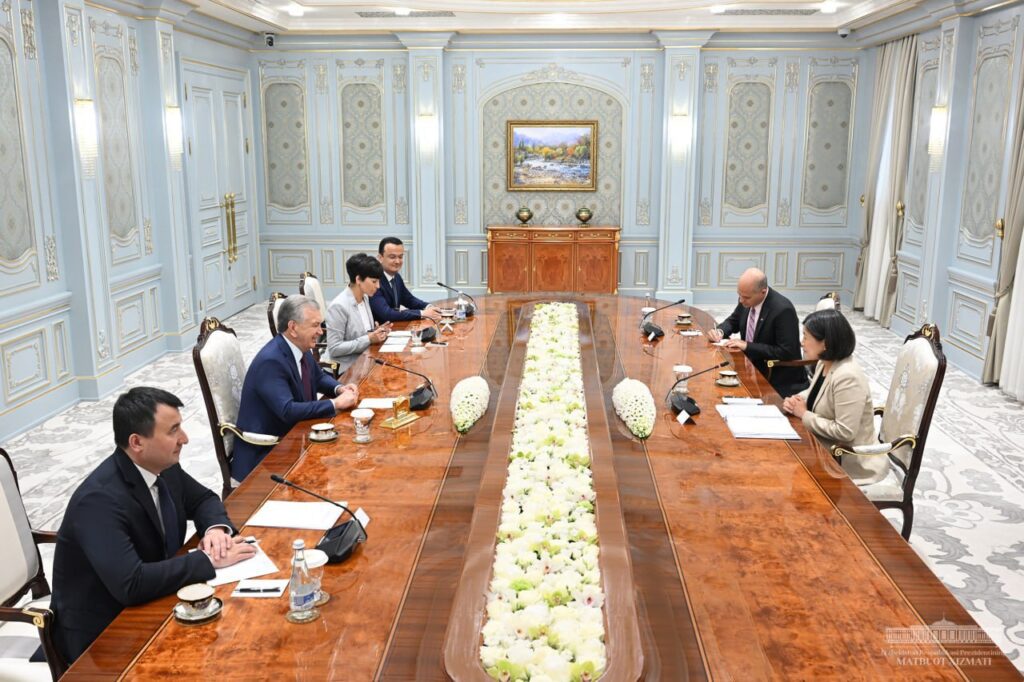
On June 11, President of Uzbekistan, Shavkat Mirziyoyev received U.S. Trade Representative Katherine Tay. According to the  president's press service,  discussions focused on strengthening bilateral trade cooperation, during which it was noted that business relations have become more active alongside a steady growth in mutual trade and investment. Cooperation with Air Products, Coca-Cola, Citibank, Visa, and many other leading companies and banks in the USA is currently under development. The agenda addressed issues related to Uzbekistan's membership in the World Trade Organization, the restoration of the GSP system, the “C5+1” format, and  deepening practical cooperation within the Agreement on Trade and Investments framework, and the importance of a joint platform for identifying new areas for industrial cooperation and promoting relevant projects was noted. During her visit, Katherine Tay also met Uzbekistan's Presidential Assistant, Saida Mirziyoyeva. Reporting on their dialogue, the Telegram channel wrote that the purpose  of Uzbekistan's economic reforms was outlined, with particular emphasis on benefits afforded to the well-being of its people. Welcoming the dialogue, Mirziyoyeva said, “We intend to become a full-fledged participant of the international trade system, and rely on the support of the United States to accelerate the process of Uzbekistan becoming a member of the WTO."

Turkey Lifts Restrictions on Import of Livestock and Poultry Products from Kazakhstan

Kazakhstan’s Ministry of Agriculture has announced that from June 7, 2024, restrictions on the supply of Kazakh livestock and poultry products to the Turkish market have been lifted. The restrictions were originally made to prevent the spread of avian influenza, in 2005, foot-and-mouth disease, in 2016, and lumpy skin disease, in 2022. In March 2024, the Minister of Agriculture of Kazakhstan, Aidarbek Saparov, raised the issue of export barriers during the meeting of ministers of agriculture of the Organization of Turkic States in Taraz, Kazakhstan. At the time, Saparov explained that Kazakhstan was ready to supply high-quality meat products to Turkey as well as Turkmenistan and Hungary, but complained that the Turkish market was all but closed to Kazakh meat exporters due to veterinary concerns. Pleading his case, he continued, “This year, similar restrictions on Kazakhstan have been lifted by China and Russia. So, we believe it is now possible to revisit this issue with the Turkish side.” With the restrictions now lifted, the next step towards exporting Kazakhstan’s livestock products will involve the coordination of veterinary requirements with Turkish authorities. The issue will be addressed during Minister Saparov’s next visit to Turkey in August.