Viewing results 1 - 6 of 49
JSC “Uztemiryulkonteyner” reports on its Telegram channel that container transportation had been launched on a new multimodal route connecting India and Uzbekistan. It was reported that transportation from the Indian ports of Mundra, Nhava Sheva, and Chennai to Uzbekistan was successfully organized using a new multimodal route. The cargo was delivered by sea from India to the Iranian port of Bandar Abbas and then by rail to the Sergeli station in Uzbekistan. The containers are first transported from the Bandar Abbas port to the Sarakhs station on Iranian platforms, reloaded onto JSC “Uzbekistan Railways” platforms, and sent to Uzbekistan via Turkmenistan. According to JSC “Uztemiryulkonteyner”, a freight train consisting of 20 20-foot containers took 20 days to cover the distance. The total length of the railway is 2673 km. In the future, the transportation period is planned to be reduced to 15 days.
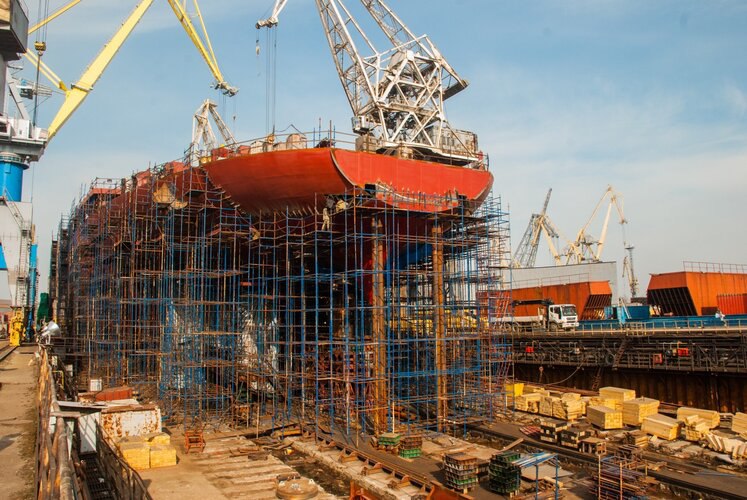
Kazakhstan plans to expand its maritime fleet by building seven new vessels on the Caspian Sea. These vessels will be three tankers, two ferries, and two container ships. The construction of the vessels is part of a broader strategy to develop Kazakhstan's transportation and logistics infrastructure, which will strengthen its position on the Caspian Sea. Today, Kazakhstan's merchant fleet consists of 17 vessels: 10 tankers, four dry bulk carriers, and three container ships. In December 2023, KazMunayGas and Abu Dhabi Ports Group signed an agreement to establish a ship repair and shipbuilding yard in Kazakhstan. This project will provide the necessary base for the repair and construction of new vessels, which will increase the competitiveness of Kazakhstan's fleet on a global level. In addition, Kazakhstan continues to strengthen its ties with Azerbaijan. Tankers have already been purchased to transport oil from Kazakhstan to Azerbaijan for subsequent shipment via the Baku-Tbilisi-Ceyhan oil pipeline. This cooperation will diversify export routes and ensure the stability of supplies. Turkey has become another significant partner of Kazakhstan in shipbuilding. Under an agreement with Turkish companies, new vessels will be built, providing the country with additional opportunities to develop trade relations in the region. This project will also reduce Kazakhstan's dependence on Russia in shipbuilding, and strengthen its position in the Caspian Sea.
Kazakhstan has begun supplying oil to Europe via the Druzhba oil pipeline system through Russia. The first oil shipments have already arrived in Germany, where amid current geopolitical challenges, it has become an important part of the country's energy security . Acting through its Kazakh subsidiary Agip Caspian Sea, the Italian company Eni, has shipped the first 20,000 tons of oil as part of a test delivery via the Atyrau-Samara route, with further transportation via the Druzhba pipeline. Kazakhstan now plans to deliver up to 1.2 million tons of oil to Germany via this system this year, following an agreement with the Russian side, to ensure uninterrupted supplies to Europe despite the sanctions restrictions on Russian oil. Historically, the pipeline has been one of the largest routes for Russian oil supplies to Europe, but its use has undergone significant changes in recent years due to sanctions. Faced with these changes, Kazakhstan's proposals to increase oil supplies through this route, could not only play a key role in ensuring energy stability in the region but also demonstrate the country's strategic importance as a major player in the global oil market and its ability to adapt to changes in global energy policy.
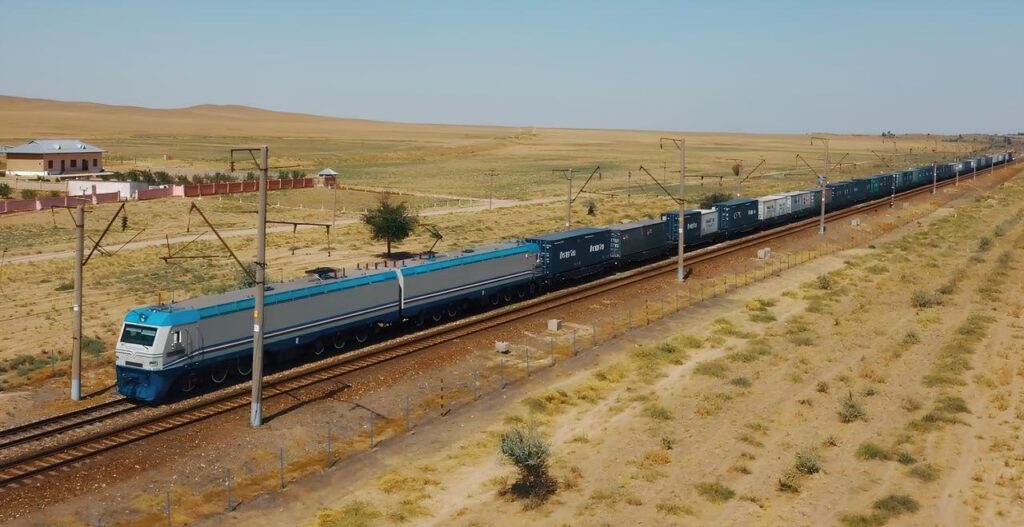
Kazakhstan’s national railways company Kazakhstan Temir Zholy (KTZ) has announced that the volume of container transportation through the country is growing rapidly. In the first seven months of this year, rail container transportation from China to Europe through Kazakhstan along the Trans-Caspian International Transport Route (TITR) grew 14-fold compared to the same period last year, The TITR is a multimodal transport corridor connecting China and Europe by bypassing Russia, also known as the Middle Corridor. To develop it, Kazakhstan Temir Zholy, together with other stakeholders, is working to increase transportation volumes, improve services, and speed up cargo delivery. To date, the transportation time from Altynkol railway station on the Kazakh-Chinese border to Absheron (Azerbaijan) has been reduced to 9 days, to Poti/Batumi (Georgia) to 12 days, and to Constanta (Romania) via Poti/Batumi to 20–22 days. In 2023, KTZ and the railway administrations of Azerbaijan and Georgia established the Middle Corridor Multimodal Ltd. Joint Venture to improve multimodal services along the route. The joint venture provides a 'one-stop shop' service and guarantees delivery times and costs. KTZ is developing Kazakh port infrastructure in the Caspian Sea with the involvement of large international logistics companies.
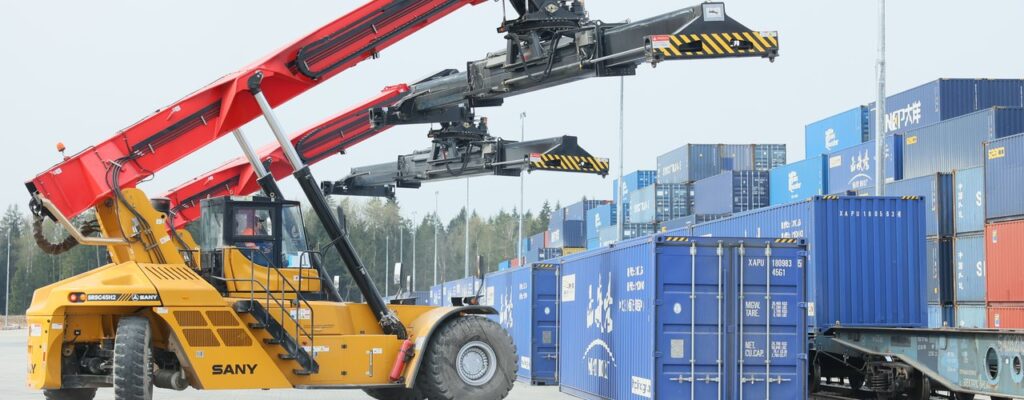
At the Kazakhstan-China roundtable held in Astana on July 2, several agreements were signed by Kazakhstan’s national railways company Kazakhstan Temir Zholy (KTZ) and Chinese partners to expand Kazakhstan-China cooperation within the Belt and Road Initiative. Kazakhstan Temir Zholy and Lianyungang Port Group agreed on joint investment in the construction of a container hub at the port of Aktau on Kazakhstan’s Caspian coast. The project aims to improve both the effectiveness of the port’s existing infrastructure and the processing of container cargoes shipped through Kazakhstan. KTZ Express (a subsidiary of KTZ), Xi'an Free Trade Port (China), and Slavtrans-Service JSC (Russia) agreed to create a unified digital corridor on the China-Kazakhstan-Russia route to provide a seamless system for processing customs clearance, electronic trade, and other functions. Once in place, it will significantly accelerate logistics, promote the development of electronic trade, simplify customs procedures, reduce trade barriers, increase the transparency and efficiency of supply chains. An agreement was also signed with China’s CRRC for the supply of 200 locomotives to Kazakhstan. Built with improved structural and traction parameters, the locomotives will be adapted to withstand Kazakhstan’s climate and to emit low levels of harmful substances into the atmosphere.
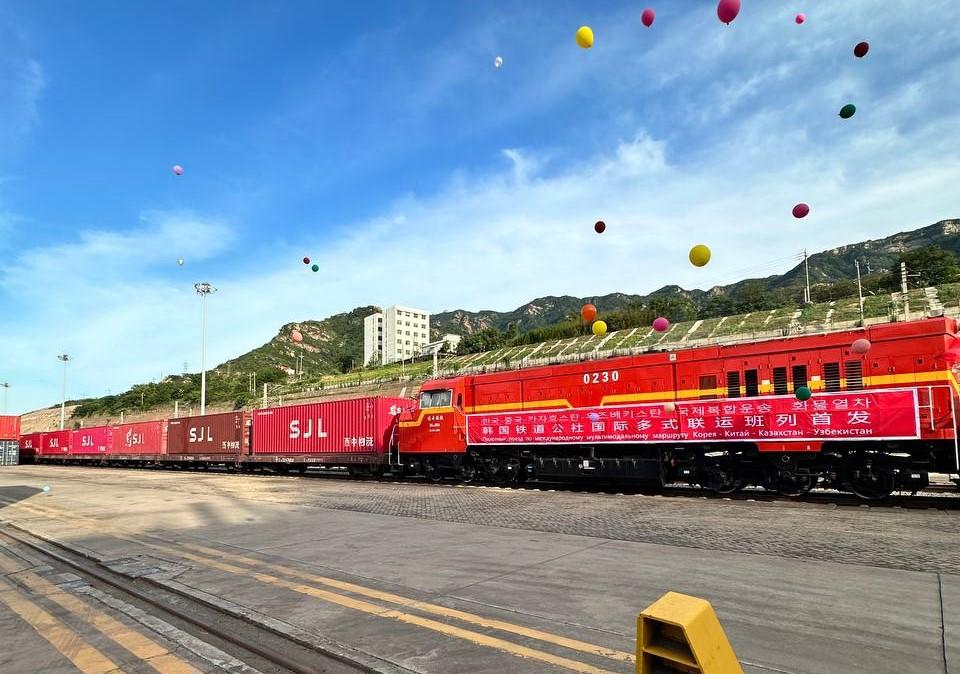
On June 26, on the initiative of South Korea, China, Kazakhstan, and Uzbekistan railway administrations, and in cooperation with SJ Logistics Group, a ceremony was held at the Kazakh-Chinese logistics terminal in the port of Lianyungang, to launch the first container train from South Korea to Uzbekistan through China and Kazakhstan. The national railways company Kazakhstan Temir Zholy (KTZ), the subsidiary of which, KTZ Express, operates the route through Kazakhstan, reported that covering 7 thousand kilometres, the railway opens new avenues for economic interaction between the associated countries. Speaking at the ceremony, Deputy General Director for Commerce of KTZ Express Ulugbek Orazov, noted: “The launch of the pilot train demonstrates our common desire to develop joint multimodal transportation, which will certainly open up new horizons for trade and interaction in the region.” He continued by adding that the event marked an important step in the development of new opportunities to increase the transit potential of Kazakhstan as well as its establishment as a key transport hub in the international supply chain.